The Globe Map

Home · Rome · Solo Travelers

Discover Rome’s 200 best spots for a Solo Travelers' trip

From the classic Vatican Museums and Pantheon, to lesser-known spots worth adding to your trip.

  • Prices & booking information
  • Opening hours & visit duration
  • Best time to visit
  • Location & practical information
  • Local tips for every spot
Vatican Museums1
🎨
4.6 (208,892)$$ · Mid-range

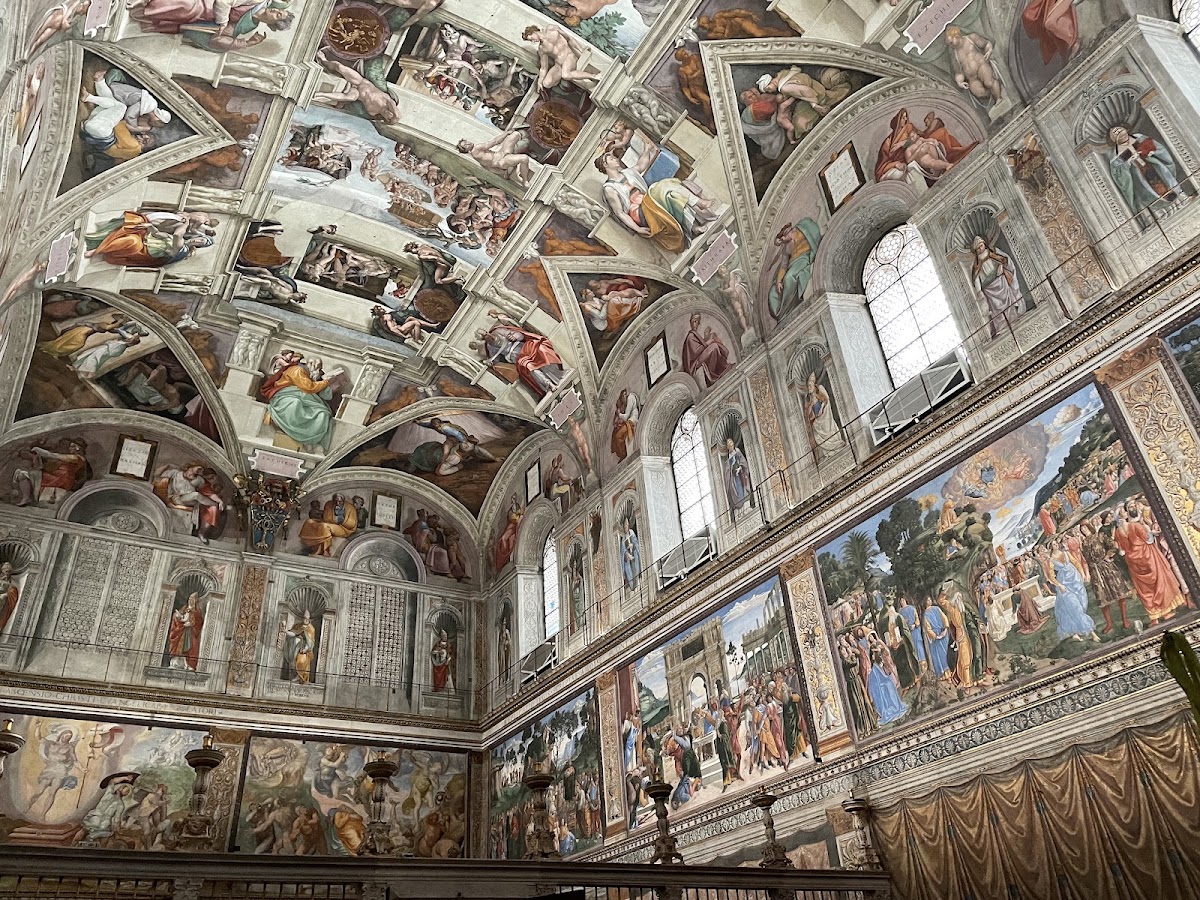
The Vatican Museums house centuries of papal art collecting across a vast network of galleries, sculpture courts, and frescoed halls, most famously Raphael's Rooms and the climactic Sistine Chapel with Michelangelo's ceiling and Last Judgment. With over 200,000 reviews and a perfect must-see and culture score, it ranks among the most visited museum complexes on earth, and its scale means long lines and dense crowds are part of the experience regardless of preparation.

A strong rating reflects overwhelmingly positive reactions despite the logistical challenges of visiting somewhere this popular. Three hours is a realistic minimum to see the highlights without feeling rushed.

✨ Reasons to go

  • 1The Sistine Chapel ceiling and Last Judgment, both by Michelangelo, sit at the end of the museum route.
  • 2Raphael's Rooms are among the complex's most famous frescoed halls.
  • 3The museums rank among the most visited museum complexes in the world, drawing crowds that require timed-entry booking to manage.

💡 Good to know

  • 1Book timed-entry tickets online well in advance, as queues without a reservation can stretch for hours
  • 2arrive right at opening or in the late afternoon for comparatively lighter crowds
  • 3the Sistine Chapel is at the end of a long route, so pace yourself accordingly.

⏱️ Typical visit

3h

🕰️ Best time

early morning, morning, lunchtime, afternoon, early evening or evening

🚶 Walking intensity

Moderate walking

📍

Address

00120, Vatican City · Vatican City
🕐

Hours

  • Monday: 8:00 AM – 8:00 PM
  • Tuesday: 8:00 AM – 8:00 PM
  • Wednesday: 8:00 AM – 8:00 PM
  • Thursday: 8:00 AM – 8:00 PM
  • Friday: 8:00 AM – 8:00 PM
  • Saturday: 8:00 AM – 8:00 PM
  • Sunday: Closed
Pantheon2
🏛️
4.8 (285,258)Free

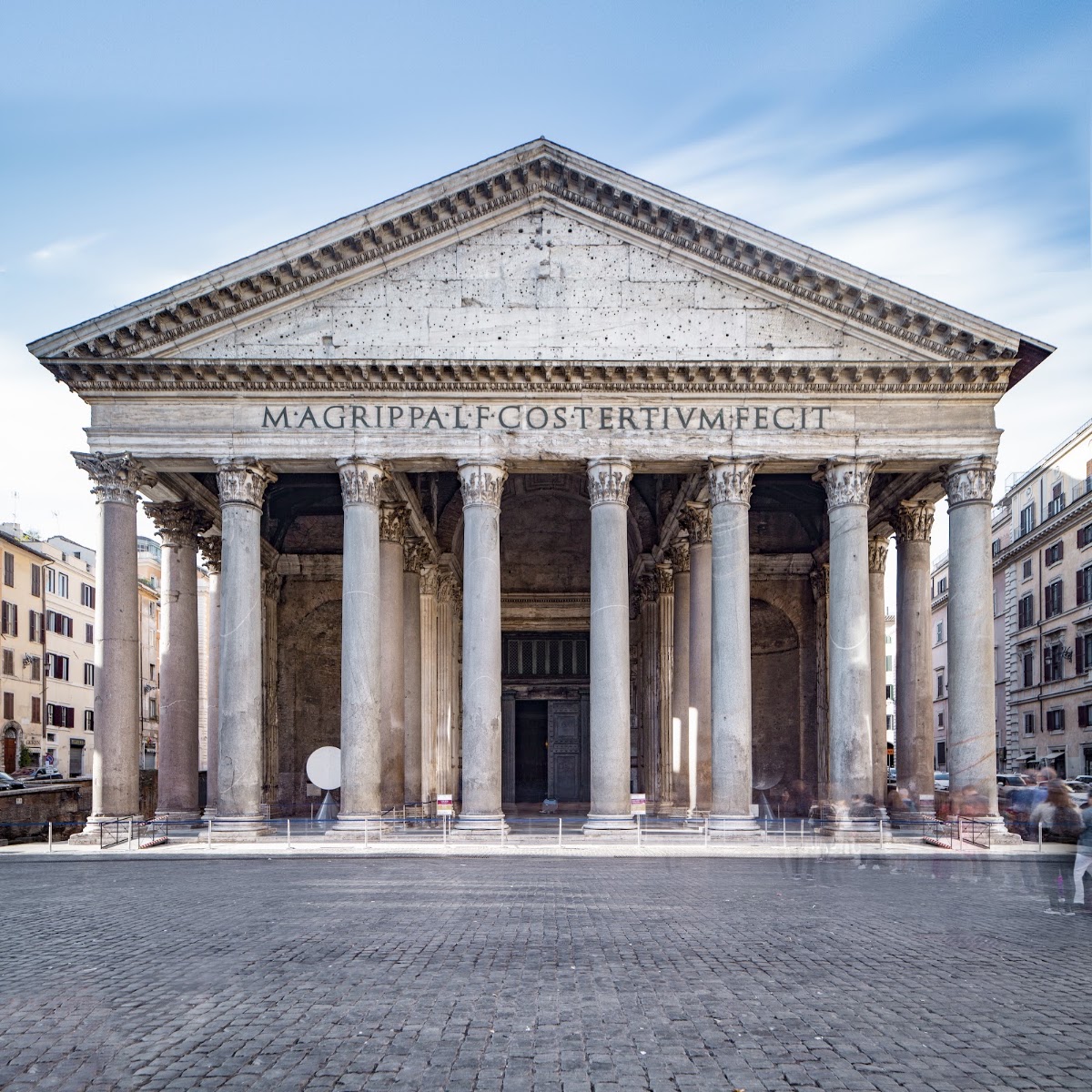
Originally commissioned by Marcus Agrippa under Augustus and rebuilt in its current form by Hadrian around AD 126, the Pantheon has survived nearly two millennia largely intact thanks to its continuous use, first as a Roman temple to all the gods and later, from the 7th century, as a Christian church. Its dome remains the largest unreinforced concrete dome ever built, with a central oculus open to the sky that floods the interior with light and occasional rain, and reviewers with a 4.8 rating from over 285,000 reviews consistently call the sheer scale of the columned portico and dome unforgettable in person.

Free to enter but increasingly requiring booked timed slots, it's a quick but essential stop that rewards visiting more than once at different times of day for how the light changes inside.

✨ Reasons to go

  • 1Its dome is still the largest unreinforced concrete dome in the world, nearly 2,000 years after construction.
  • 2Built by Hadrian around AD 126 on the site of an earlier temple commissioned by Marcus Agrippa under Augustus.
  • 3The central oculus is open to the sky, letting rain and shifting light fall directly into the interior.

💡 Good to know

  • 1Reserve a free timed-entry slot online in advance, since walk-up access has become more restricted
  • 2visit near opening or in the late evening for a quieter experience and better light through the oculus
  • 3step just outside to Piazza della Rotonda afterward for a coffee with the facade in view.

⏱️ Typical visit

30 min

🕰️ Best time

morning, lunchtime, afternoon, early evening, evening or late night

🚶 Walking intensity

Easy pace

📍

Address

Piazza della Rotonda, 00186 Roma RM, Italy · Roma
🕐

Hours

  • Monday: 9:00 AM – 11:00 PM
  • Tuesday: 9:00 AM – 11:00 PM
  • Wednesday: 9:00 AM – 11:00 PM
  • Thursday: 9:00 AM – 7:00 PM
  • Friday: 9:00 AM – 11:00 PM
  • Saturday: 9:00 AM – 11:00 PM
  • Sunday: 9:00 AM – 11:00 PM
Roman Forum3
🏛️
4.8 (145,665)$$ · Mid-range

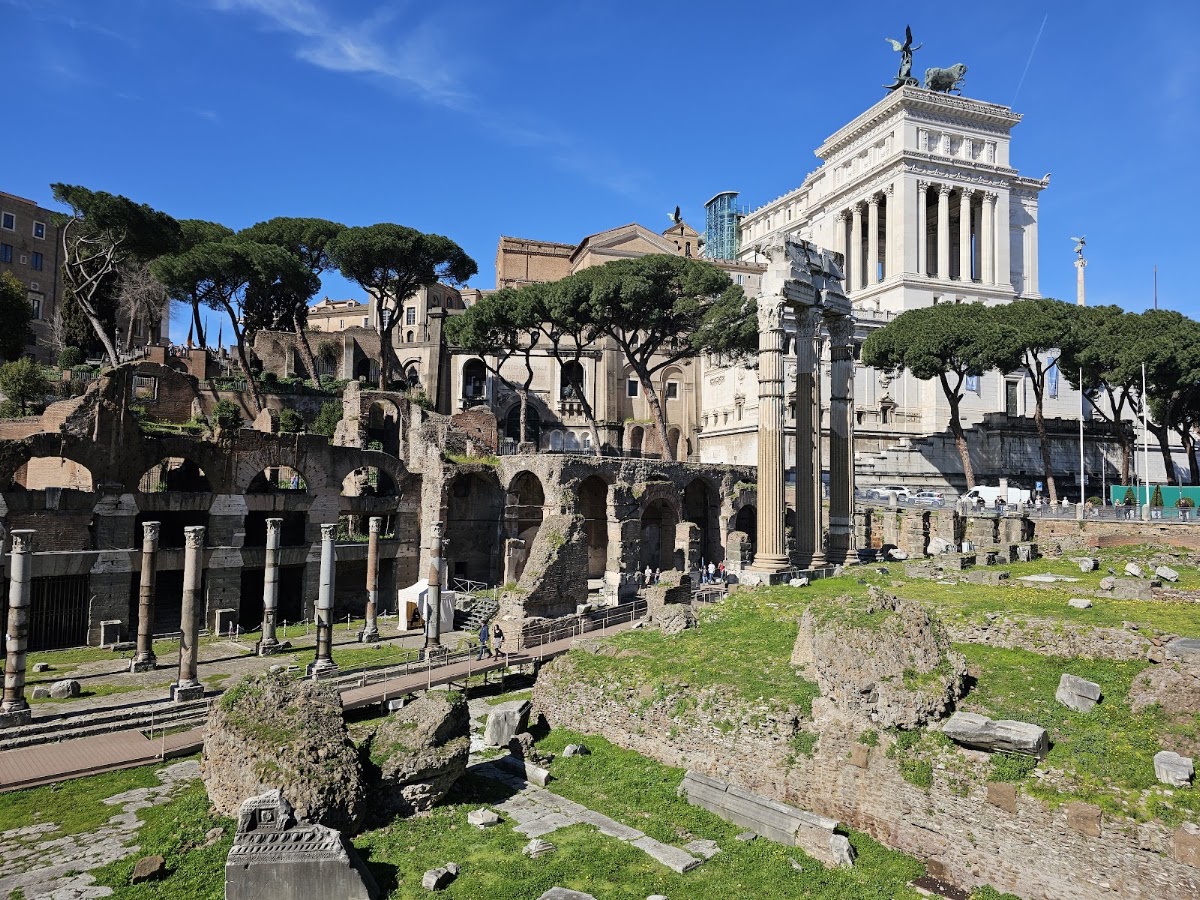
For centuries the Roman Forum served as the civic core of the Roman Republic and Empire, its temples, basilicas and triumphal arches hosting elections, speeches, trials and processions at the heart of a city that ruled much of the ancient world. Today it's a sprawling field of columns, foundations and partial structures climbing toward the Palatine Hill, and reviewers with a 4.8 rating consistently recommend a guided tour, noting that the ruins can be hard to interpret from signage alone without context on what once stood where.

The high 90-minute duration and high walking intensity in the data reflect real, often uneven ground to cover, best tackled with sun protection and sturdy shoes.

✨ Reasons to go

  • 1Served for centuries as the political, religious, and commercial heart of ancient Rome, hosting elections, trials, and public speeches
  • 2The site includes remains of temples, basilicas, and triumphal arches that once anchored the ancient city's civic life
  • 3Combined ticketing links the Forum with the Colosseum and Palatine Hill on a single entry

💡 Good to know

  • 1Book a combined ticket with the Colosseum and Palatine Hill, which covers all three sites on one entry
  • 2consider a guided tour, since reviewers consistently say the ruins are far more meaningful with context than reading site signage alone
  • 3wear sturdy shoes and bring water, as the site involves significant uneven walking with little shade.

⏱️ Typical visit

1h30

🕰️ Best time

morning, lunchtime or afternoon

🚶 Walking intensity

Active — lots of walking

📍

Address

00186 Rome, Metropolitan City of Rome Capital, Italy · Rome
🕐

Hours

  • Monday: 9:00 AM – 4:30 PM
  • Tuesday: 9:00 AM – 4:30 PM
  • Wednesday: 9:00 AM – 4:30 PM
  • Thursday: 9:00 AM – 4:30 PM
  • Friday: 9:00 AM – 4:30 PM
  • Saturday: 9:00 AM – 4:30 PM
  • Sunday: 9:00 AM – 4:30 PM
Sistine Chapel4
🏛️
4.7 (96,233)$$ · Mid-range

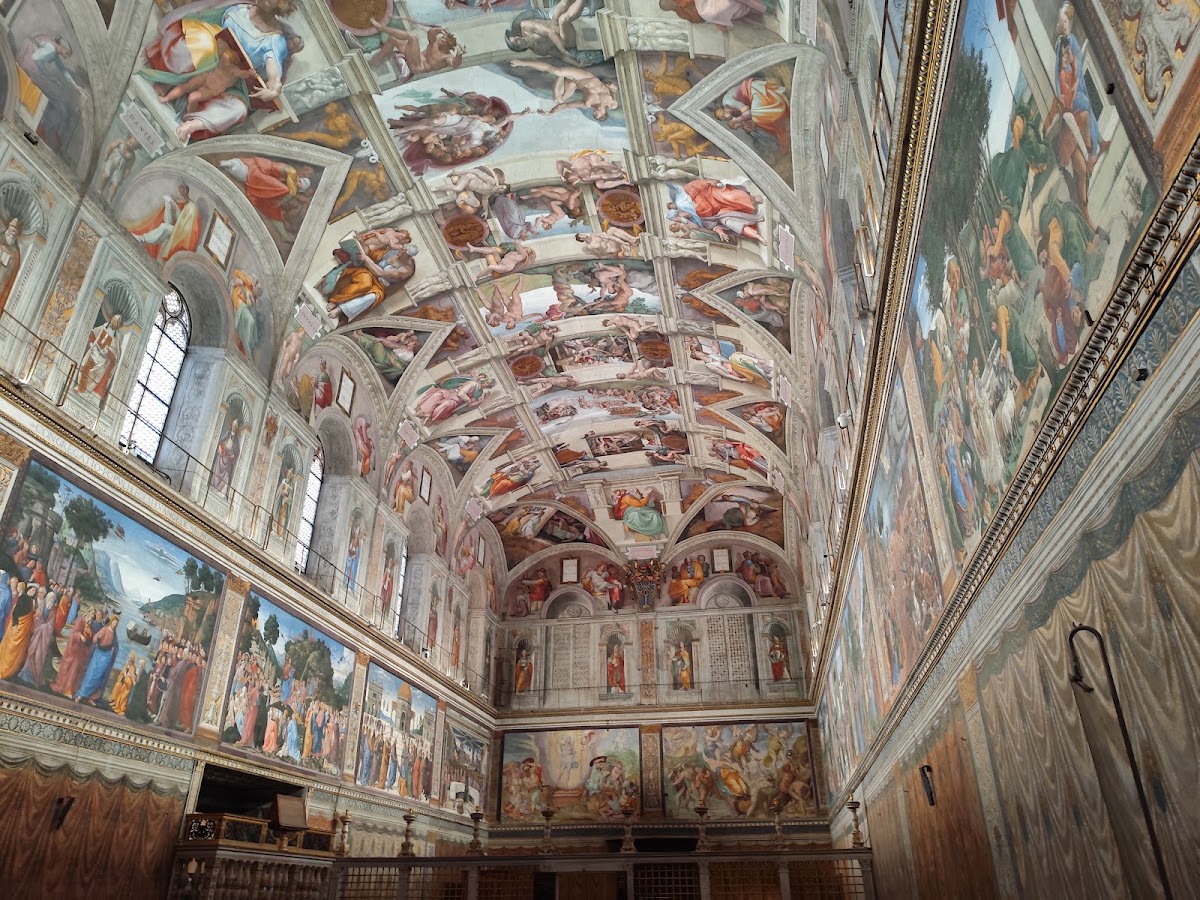
Painted largely single-handedly by Michelangelo between 1508 and 1512, with the Last Judgment added on the altar wall over two decades later, the chapel's frescoes cover the creation of Adam alongside scenes from Genesis and remain the high point of most Vatican Museums visits. It's still a working chapel — the site of papal conclaves — which adds a layer of living history to the art.

The room is often tightly packed and silence is officially enforced, which can make a hurried visit feel rushed; those who linger and look up longer get more out of it. It's essential for anyone with an interest in Renaissance art, though not a restful stop given the crowds.

✨ Reasons to go

  • 1Michelangelo painted the ceiling largely single-handedly between 1508 and 1512, then returned two decades later to add the Last Judgment on the altar wall.
  • 2It remains a working chapel and is the site where papal conclaves are held to elect a new pope.
  • 3Photography and talking are both prohibited inside, with attendants enforcing silence.

💡 Good to know

  • 1Book Vatican Museums tickets online in advance and choose an early or last-entry slot to reduce crowding
  • 2photography is prohibited and silence is enforced by attendants
  • 3the chapel comes at the end of a long museum route, so budget time and energy for the walk beforehand.

⏱️ Typical visit

1h30

🕰️ Best time

early morning, morning, lunchtime, afternoon, early evening or evening

🚶 Walking intensity

Moderate walking

📍

Address

00120, Vatican City · Vatican City
🕐

Hours

  • Monday: 8:00 AM – 8:00 PM
  • Tuesday: 8:00 AM – 8:00 PM
  • Wednesday: 8:00 AM – 8:00 PM
  • Thursday: 8:00 AM – 8:00 PM
  • Friday: 8:00 AM – 8:00 PM
  • Saturday: 8:00 AM – 8:00 PM
  • Sunday: Closed
Colosseum5
🏛️
4.8 (503,734)$$$ · Expensive

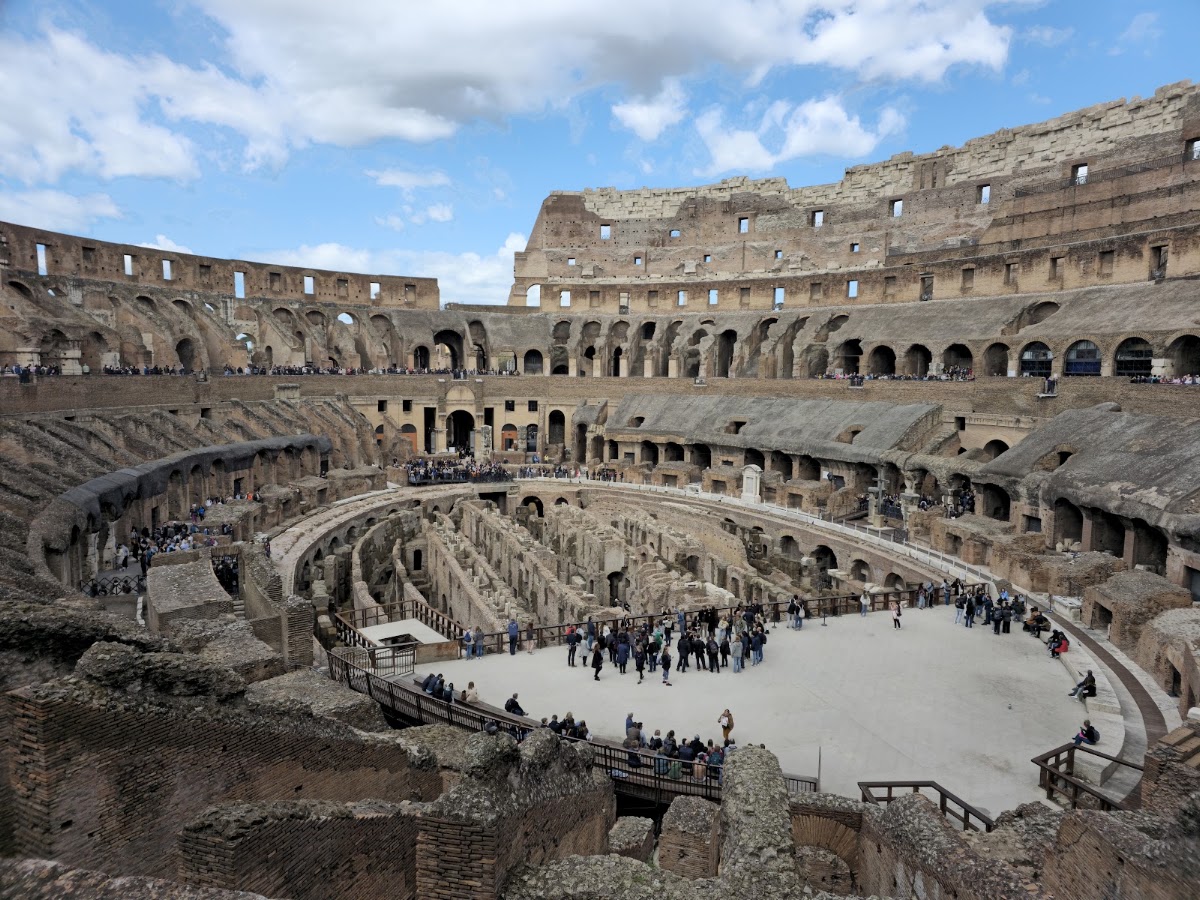
Completed in AD 80 under Emperor Titus, the Colosseum could hold tens of thousands of spectators for gladiatorial combat, staged animal hunts and mock naval battles, its ring of arches and underground hypogeum chambers still standing as one of the ancient world's most complete surviving structures. With a 4.8 rating from over half a million reviews — the most-reviewed spot in this entire batch — it's unambiguously one of the must-see sights in Europe, and its scale rewards taking real time rather than rushing through.

The 120-minute suggested duration and required booking reflect how much there is to see, especially for anyone adding access to the arena floor or underground levels.

✨ Reasons to go

  • 1Completed in AD 80 under Emperor Titus, it could hold tens of thousands of spectators for gladiatorial combat and staged animal hunts.
  • 2The arena floor could be flooded or fitted with sets for mock naval battles and elaborate hunts.
  • 3Underground hypogeum chambers, where gladiators and animals entered the arena, are still preserved and accessible on specialized tickets.

💡 Good to know

  • 1Book tickets online well in advance, ideally a combined ticket covering the Roman Forum and Palatine Hill
  • 2consider an arena-floor or underground ticket for a more complete experience of where gladiators and animals actually entered
  • 3go at opening time or on a combined evening slot to avoid the worst of the midday queues and heat.

⏱️ Typical visit

2h

🕰️ Best time

early morning, morning, lunchtime or afternoon

🚶 Walking intensity

Moderate walking

📍

Address

P.za del Colosseo, 1, 00184 Roma RM, Italy · Roma
🕐

Hours

  • Monday: 8:30 AM – 4:30 PM
  • Tuesday: 8:30 AM – 4:30 PM
  • Wednesday: 8:30 AM – 4:30 PM
  • Thursday: 8:30 AM – 4:30 PM
  • Friday: 8:30 AM – 4:30 PM
  • Saturday: 8:30 AM – 4:30 PM
  • Sunday: 8:30 AM – 4:30 PM
Trevi Fountain6
🏛️
4.7 (519,201)Free

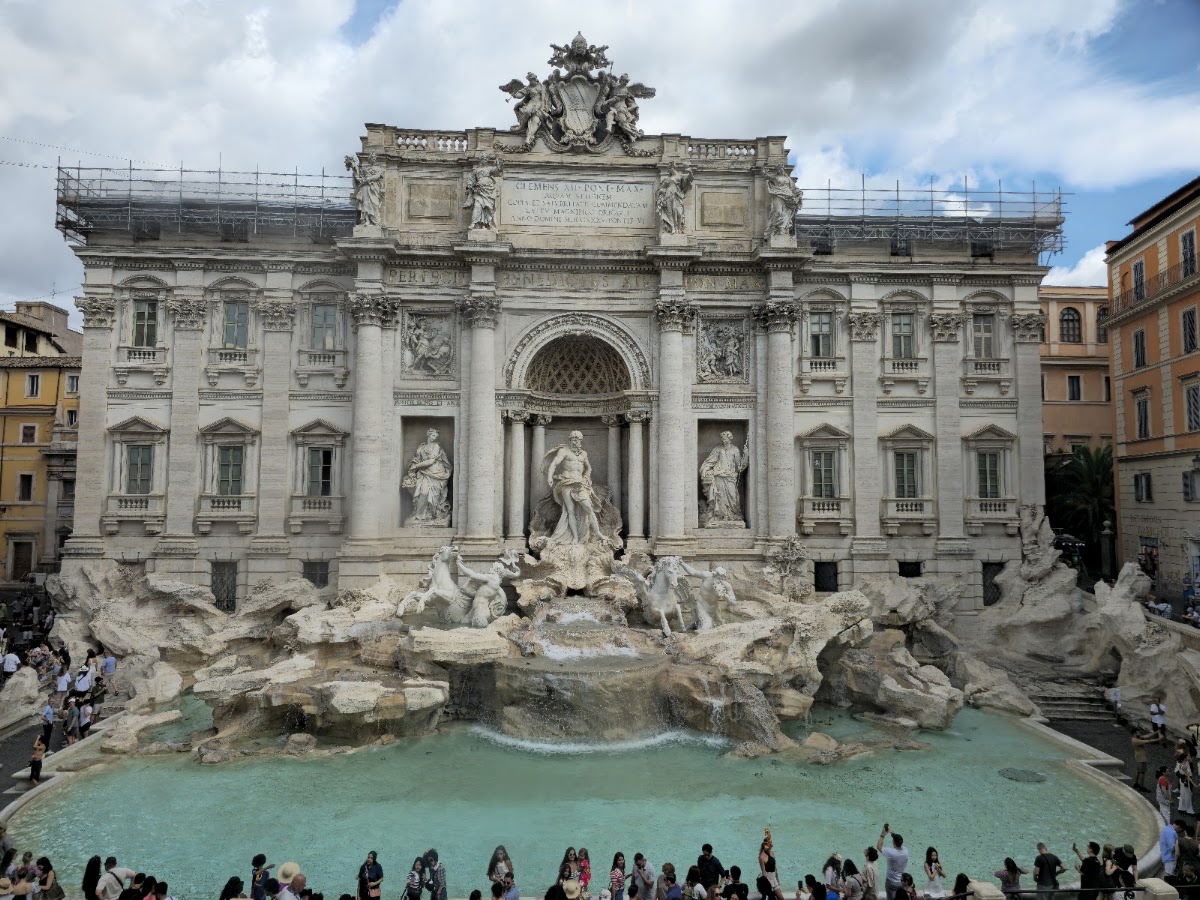
Built into the back of the Palazzo Poli and completed in 1762 to Nicola Salvi's design, the Trevi Fountain channels water from the ancient Aqua Virgo aqueduct through a theatrical sculpture of Oceanus riding a shell chariot flanked by tritons and sea-horses. It's the terminus of a Roman aqueduct still in use after roughly two thousand years, and the tradition of tossing a coin over your shoulder to guarantee a return to Rome (immortalized in La Dolce Vita) keeps the piazza packed at all hours.

The scale surprises first-time visitors, since it fills an entire small square rather than sitting as a modest feature. It's a five-minute stop for most, but a magnet regardless — expect a crowd no matter when you show up.

✨ Reasons to go

  • 1Designed by Nicola Salvi and completed in 1762 against the facade of Palazzo Poli
  • 2Fed by the Aqua Virgo, an ancient Roman aqueduct still functioning after about two thousand years
  • 3The coin-toss tradition for a guaranteed return to Rome was popularized by the film La Dolce Vita

💡 Good to know

  • 1Visit at sunrise or very late evening to see it with far fewer people
  • 2keep a hand on your bag in the crowds, a known pickpocket spot
  • 3a coin toss over the left shoulder with the right hand is said to guarantee your return to Rome.

⏱️ Typical visit

20 min

🕰️ Best time

morning, lunchtime, afternoon, early evening or evening

🚶 Walking intensity

Easy pace

📍

Address

Piazza di Trevi, 00187 Roma RM, Italy · Roma
🕐

Hours

  • Monday: 11:30 AM – 10:00 PM
  • Tuesday: 9:00 AM – 10:00 PM
  • Wednesday: 9:00 AM – 10:00 PM
  • Thursday: 9:00 AM – 10:00 PM
  • Friday: 11:30 AM – 10:00 PM
  • Saturday: 9:00 AM – 10:00 PM
  • Sunday: 9:00 AM – 10:00 PM
Saint Peter’s Basilica7
🏛️
4.8 (182,291)Free

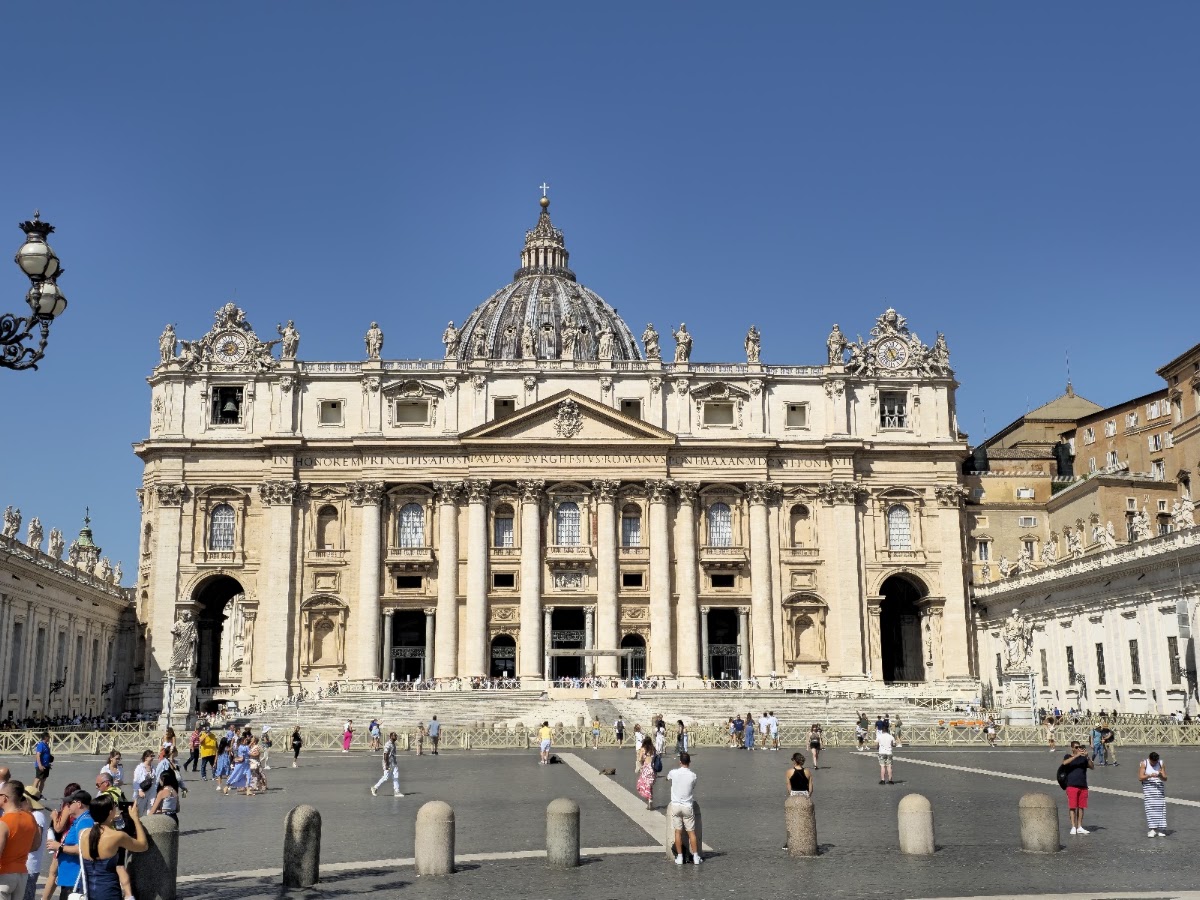
Rebuilt over more than a century starting in 1506 on the site of a 4th-century basilica, St. Peter's brings together work by Bramante, Michelangelo, and Bernini, whose sweeping colonnade frames the piazza outside.

Inside, the scale is disorienting — Bernini's bronze baldachin alone rises over the papal altar — and highlights include Michelangelo's Pietà and the climb to the dome for one of the best views over Rome. As the spiritual center of the Catholic Church, it draws pilgrims as much as sightseers, and free entry keeps queues long despite the building's size.

It rewards an unhurried visit rather than a quick photo stop.

✨ Reasons to go

  • 1Built over more than a century starting in 1506 on the site of a 4th-century basilica, with work by Bramante, Michelangelo, and Bernini.
  • 2Michelangelo's Pietà and Bernini's bronze baldachin over the papal altar are housed inside.
  • 3The dome, also designed by Michelangelo, can be climbed for a panoramic view over Rome, with no lift for the final stretch.

💡 Good to know

  • 1Book a free timed-entry slot online to skip the security line
  • 2dress modestly — covered shoulders and knees are enforced
  • 3climb the dome (extra ticket, no lift for the last stretch) for the best panorama in Rome.

⏱️ Typical visit

1h

🕰️ Best time

early morning, morning, lunchtime, afternoon, early evening or evening

🚶 Walking intensity

Moderate walking

📍

Address

Piazza San Pietro, 00120 Città del Vaticano, Vatican City · Città del Vaticano
🕐

Hours

  • Monday: 7:00 AM – 7:10 PM
  • Tuesday: 7:00 AM – 7:10 PM
  • Wednesday: 7:00 AM – 7:10 PM
  • Thursday: 7:00 AM – 7:10 PM
  • Friday: 7:00 AM – 7:10 PM
  • Saturday: 7:00 AM – 7:10 PM
  • Sunday: 7:00 AM – 7:10 PM
The Park of the Aqueducts8
🌳
4.7 (20,451)Free

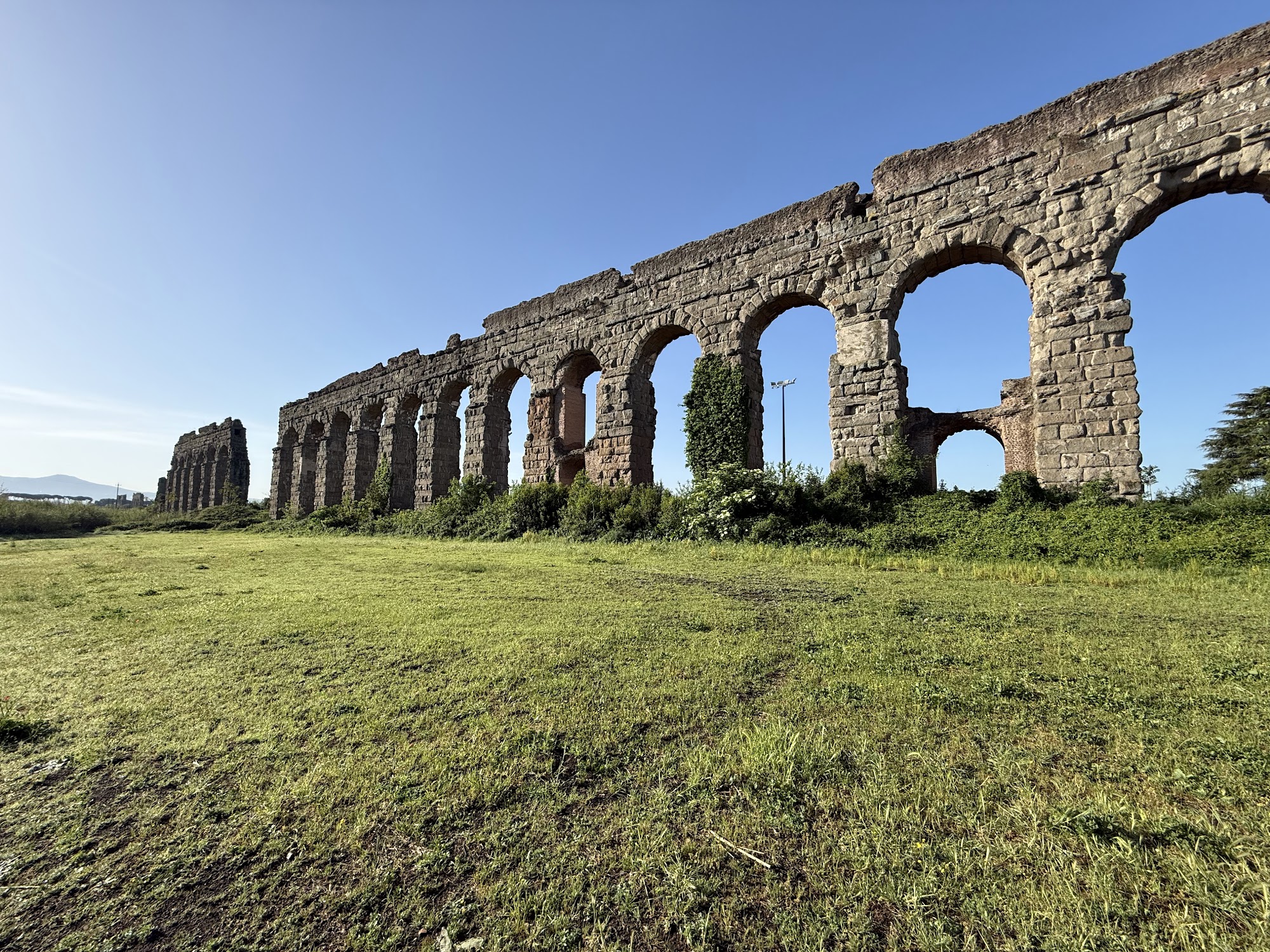
The Parco degli Acquedotti preserves several ancient Roman aqueducts, including sections of the Aqua Claudia and Aqua Felice, running for kilometres across open pastureland on the city's outskirts. The scale and setting are strikingly different from Rome's dense historic centre, giving the sense of stepping into open countryside while ancient engineering looms overhead — a combination that made it a favoured filming location for Federico Fellini.

Reviewers consistently describe an almost otherworldly sense of peace here, rare for a site this significant historically.

✨ Reasons to go

  • 1The park preserves standing sections of the ancient Aqua Claudia and Aqua Felice aqueducts spanning open pastureland.
  • 2Its wide-open, rural setting made it a favored filming location for director Federico Fellini.
  • 3Entry is free and unrestricted, with no fixed opening hours.

💡 Good to know

  • 1Free to enter, with no fixed opening hours
  • 2go early morning or late afternoon for the best light on the aqueducts and to avoid summer heat
  • 3reachable by metro, a short walk from the Subaugusta or Giulio Agricola stations.

⏱️ Typical visit

1h30

🚶 Walking intensity

Active — lots of walking

📍

Address

Via Lemonia, 00174 Roma RM, Italy · Roma
🕐

Hours

  • Monday: Open 24 hours
  • Tuesday: Open 24 hours
  • Wednesday: Open 24 hours
  • Thursday: Open 24 hours
  • Friday: Open 24 hours
  • Saturday: Open 24 hours
  • Sunday: Open 24 hours
Saint Peter's Square9
🏛️
Free

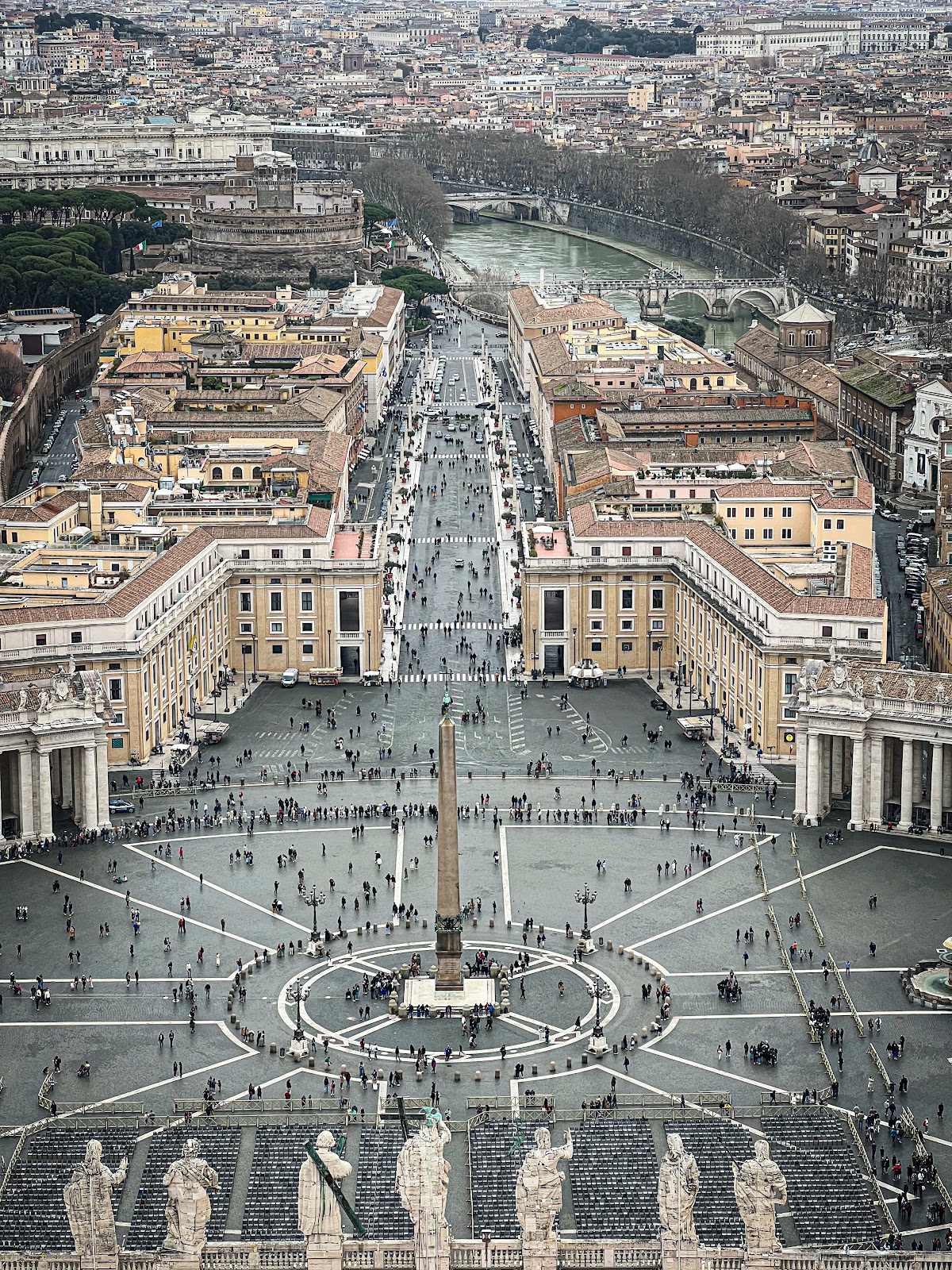
Designed by Gian Lorenzo Bernini in the mid-17th century, the square's sweeping travertine colonnades were conceived as the 'motherly arms' of the Church reaching out to welcome visitors, with an Egyptian obelisk brought to Rome by Caligula at its center. It's the stage for papal audiences and blessings, so its atmosphere shifts noticeably on days when the Pope appears at the window or holds a general audience.

Even without an event, the sheer geometry and scale make it worth pausing in before or after visiting the Basilica. It works well early or late in the day, when the light and lower crowds let the architecture stand out.

✨ Reasons to go

  • 1The colonnades comprise 284 Doric columns topped by 140 saint statues, designed by Bernini to resemble the outstretched arms of the Church.
  • 2Two circular stone markers between the obelisk and fountains reveal an optical illusion where the four rows of columns visually merge into a single row.
  • 3The central obelisk was brought from Egypt by Emperor Caligula and, according to tradition, marks the spot of Saint Peter's crucifixion.

💡 Good to know

  • 1Check the Vatican's schedule if you want to catch a papal audience or blessing, held on select mornings
  • 2go through security bag checks before entering, as at the Basilica
  • 3early morning or evening avoids both the crowds and the midday sun in this shade-free square.

⏱️ Typical visit

20 min

🕰️ Best time

early morning or evening

🚶 Walking intensity

Easy pace

📍

Address

Piazza San Pietro, 00120
Basilica of San Clemente10
🏛️
4.7 (7,986)$ · Budget-friendly

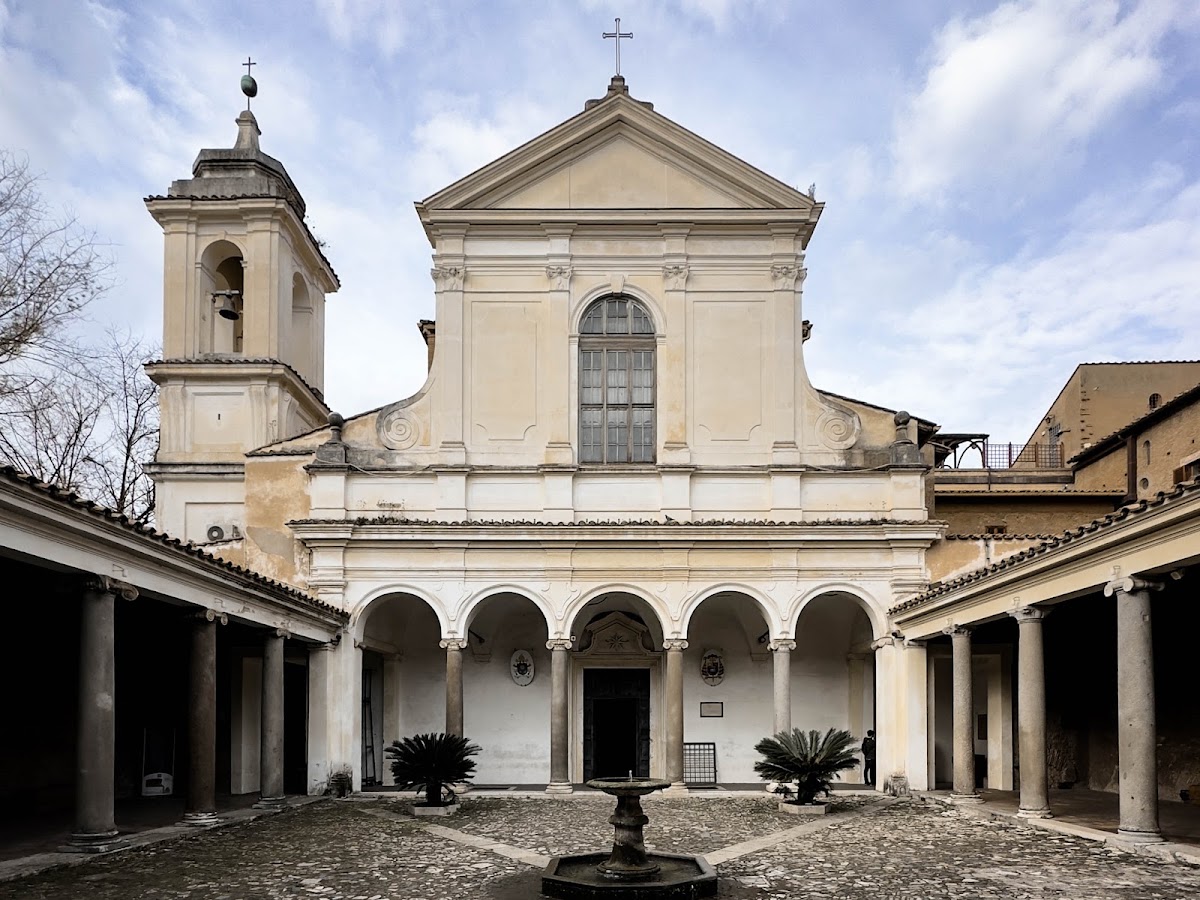
What looks like a fairly standard medieval basilica at street level opens, via a staircase inside, onto an excavated earlier church below, and then further down onto Roman-era rooms including an ancient temple to Mithras with its altar still in place. This vertical excavation, with underground water still audibly flowing at the lowest level, makes it one of the clearest illustrations anywhere of how modern Rome is literally built on its own past.

Ground-level entry is free, while access to the excavated lower levels requires a ticket. It's a favorite among visitors who want real depth, in every sense, rather than another single-era church.

✨ Reasons to go

  • 1The site stacks three distinct eras vertically: a medieval basilica, a 4th-century church, and Roman-era rooms including a Mithraic temple with its altar intact.
  • 2Underground water can still be heard flowing at the lowest excavated level.
  • 3The lowest level is noticeably cool and damp, preserved by its depth beneath the modern street.

💡 Good to know

  • 1Buy tickets for the underground levels, either online or at the counter to the right on entry, as it's separate from the free ground floor
  • 2entries to the lower levels are timed, so arrive with some flexibility
  • 3wear a light layer, as the lowest level is noticeably cool and slightly damp.

⏱️ Typical visit

45 min

🕰️ Best time

morning, lunchtime, afternoon or early evening

🚶 Walking intensity

Moderate walking

📍

Address

Piazza di S. Clemente, 00184 Roma RM, Italy · Roma
🕐

Hours

  • Monday: 9:00 AM – 12:30 PM, 2:00 – 6:00 PM
  • Tuesday: 9:00 AM – 12:30 PM, 2:00 – 6:00 PM
  • Wednesday: 9:00 AM – 12:30 PM, 2:00 – 6:00 PM
  • Thursday: 9:00 AM – 12:30 PM, 2:00 – 6:00 PM
  • Friday: 9:00 AM – 12:30 PM, 2:00 – 6:00 PM
  • Saturday: 9:00 AM – 12:30 PM, 2:00 – 6:00 PM
  • Sunday: 12:00 – 6:00 PM
Palatine Hill11
🏛️
4.7 (14,571)$$ · Mid-range

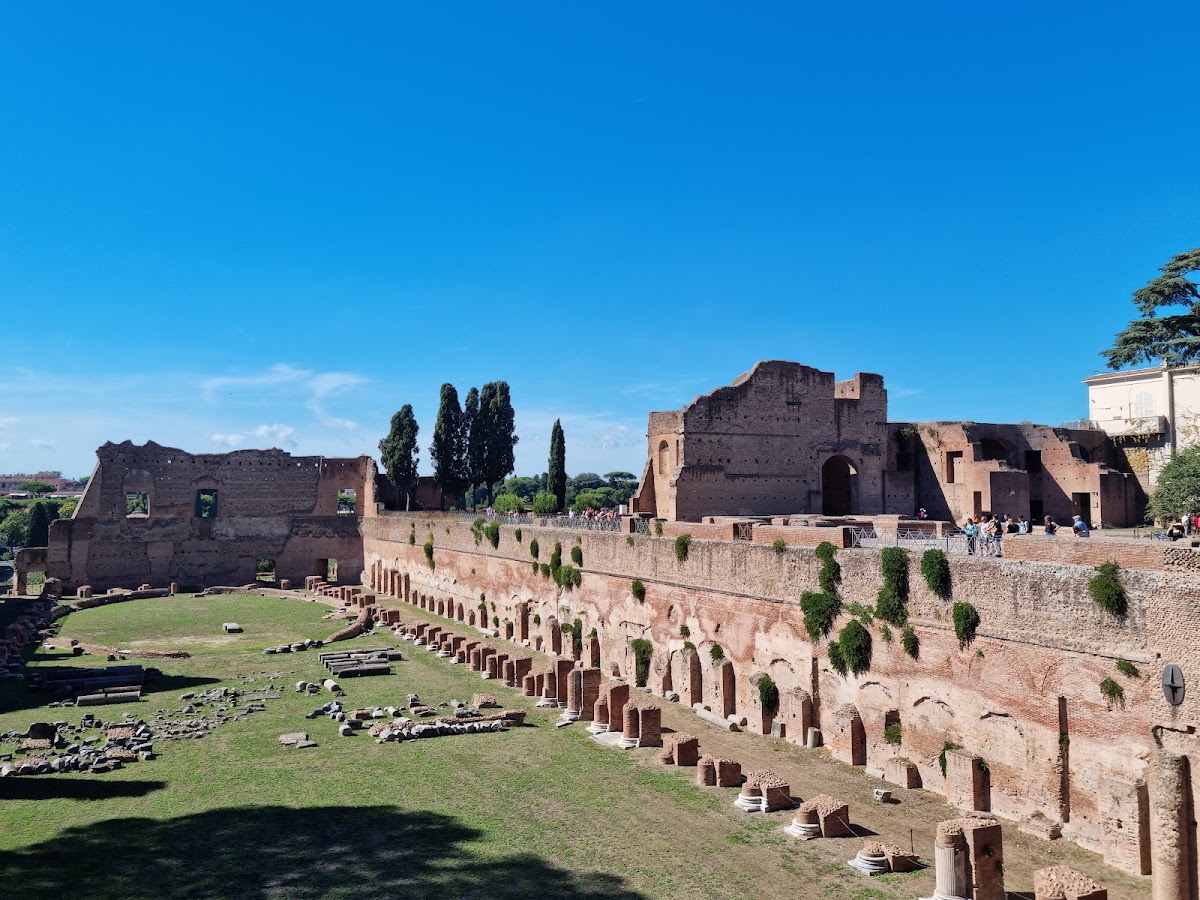
Archaeological digs on the Palatine have uncovered Iron Age huts that fit the founding myth almost too neatly, and the hill later became the address of choice for emperors, whose sprawling palace ruins — the word 'palace' itself derives from Palatium — still dominate the site. Views down over the Roman Forum on one side and the Circus Maximus on the other make it one of the most rewarding vantage points in the city, especially combined with a Forum and Colosseum ticket.

It takes real walking and some shade-free stretches, so it's a fuller commitment than a typical piazza stop. History-minded visitors get the most out of it, ideally with a guide or audio guide to make sense of the fragmented ruins.

✨ Reasons to go

  • 1Iron Age huts found here align closely with the legendary founding site of Rome
  • 2The English word 'palace' derives from Palatium, the Latin name for this hill
  • 3Emperors built their sprawling residences here, with ruins overlooking both the Roman Forum and Circus Maximus

💡 Good to know

  • 1Buy the combined Colosseum-Forum-Palatine ticket in advance and go early to beat both crowds and heat
  • 2wear sturdy shoes, as the ground is uneven ancient paving
  • 3bring water and sun protection since there's little shade.

⏱️ Typical visit

1h30

🕰️ Best time

morning, lunchtime, afternoon, early evening or evening

🚶 Walking intensity

Active — lots of walking

📍

Address

Via di S. Gregorio, 30, 00186 Roma RM, Italy · Roma
🕐

Hours

  • Monday: 9:00 AM – 7:30 PM
  • Tuesday: 9:00 AM – 7:30 PM
  • Wednesday: 9:00 AM – 7:30 PM
  • Thursday: 9:00 AM – 7:30 PM
  • Friday: 9:00 AM – 7:30 PM
  • Saturday: 9:00 AM – 7:30 PM
  • Sunday: 9:00 AM – 7:30 PM
Piazza Navona12
🏛️
4.7 (217,015)Free

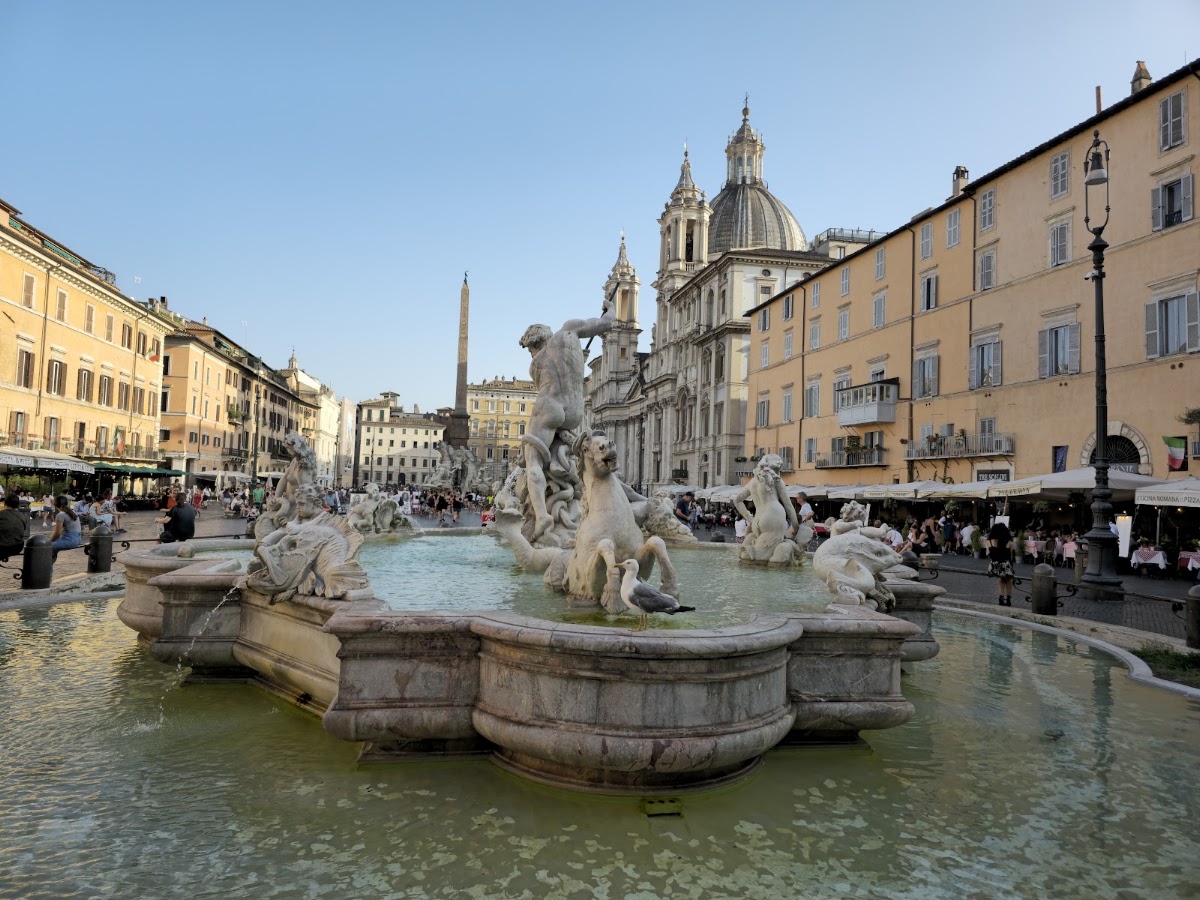
The piazza's elongated oval shape traces the outline of the 1st-century Stadium of Domitian that once stood here, and the buried arena arches can still be visited beneath the square. Bernini's Fontana dei Quattro Fiumi anchors the center, facing off according to popular legend against Borromini's façade for the church of Sant'Agnese in Agone.

By day it's full of street artists and portrait painters; by evening the surrounding cafés and restaurants take over, making it one of the liveliest spots in the historic center. It suits a slow wander and a coffee more than a checklist visit.

✨ Reasons to go

  • 1The piazza's oval shape follows the outline of the 1st-century Stadium of Domitian, whose buried arena arches survive underground and can be toured separately.
  • 2Bernini's Fontana dei Quattro Fiumi sits at the center, with a popular legend claiming it was designed to rival Borromini's facade for Sant'Agnese in Agone across the square.

💡 Good to know

  • 1Sit at a café for the atmosphere but expect tourist-inflated prices
  • 2visit early morning for photos without the crowds
  • 3the underground Stadio di Domiziano ruins can be visited separately for a look at what's beneath the square.

⏱️ Typical visit

25 min

🚶 Walking intensity

Easy pace

📍

Address

Piazza Navona, 00186 Roma RM, Italy · Roma
🕐

Hours

  • Monday: Open 24 hours
  • Tuesday: Open 24 hours
  • Wednesday: Open 24 hours
  • Thursday: Open 24 hours
  • Friday: Open 24 hours
  • Saturday: Open 24 hours
  • Sunday: Open 24 hours
Castel Sant'Angelo13
🏛️
4.7 (110,399)$$ · Mid-range

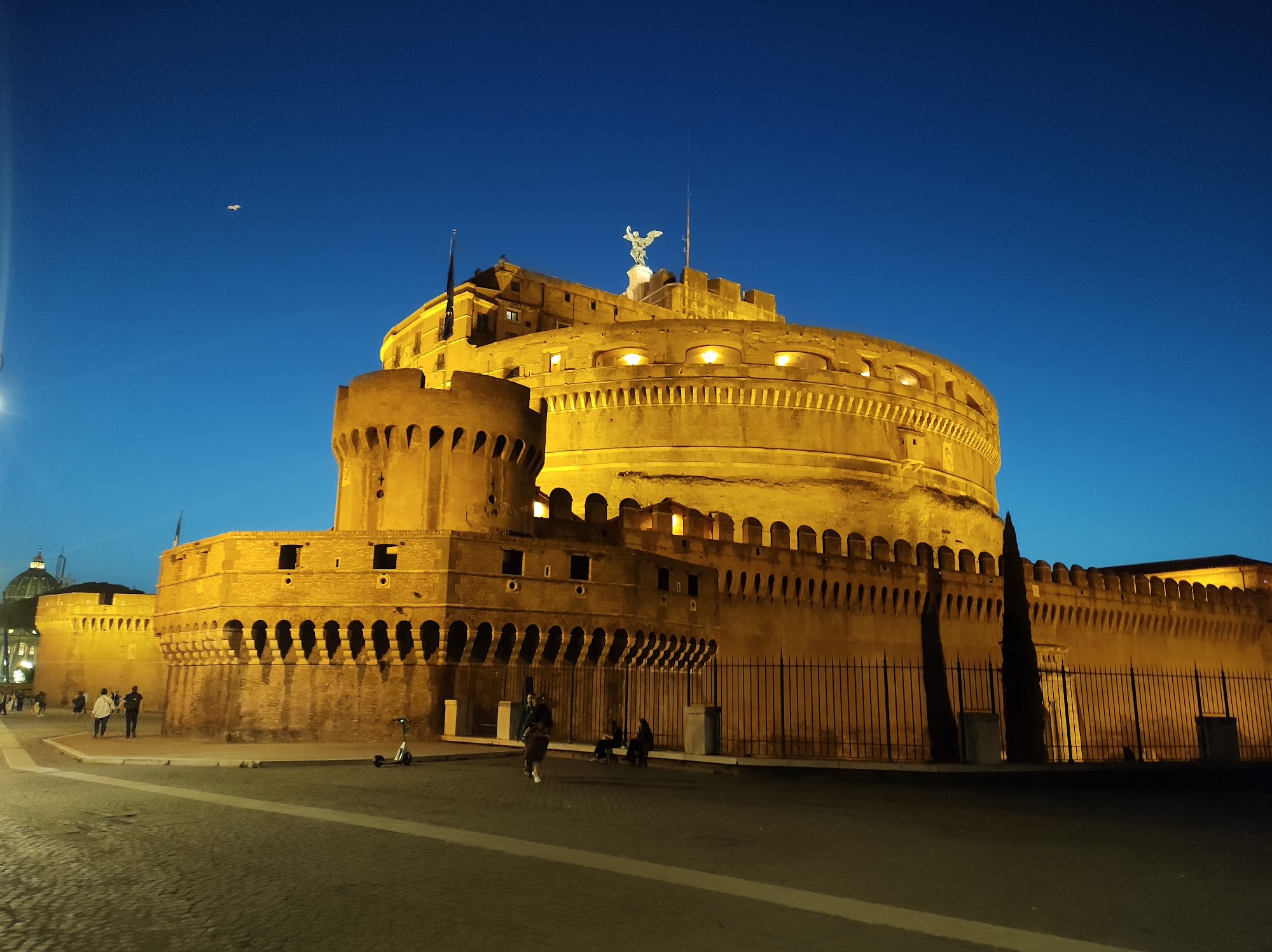
Built as Emperor Hadrian's tomb in the 2nd century, the cylindrical fortress was later fortified by the popes, who used the Passetto di Borgo — a raised corridor still visible along its walls — to flee here from the Vatican during sieges, most famously in 1527. Its layered history as mausoleum, fortress, prison, and papal residence shows in the mix of ancient masonry, Renaissance apartments, and military architecture inside.

The rooftop terrace, where the opera Tosca is set for its final act, gives sweeping views over the Tiber and St. Peter's dome.

It suits visitors who want history with a view rather than pure art or architecture.

✨ Reasons to go

  • 1Originally built in the 2nd century as Emperor Hadrian's mausoleum before becoming a papal fortress
  • 2Popes escaped here from the Vatican via the still-visible Passetto di Borgo corridor, most notably during the 1527 Sack of Rome
  • 3The rooftop terrace is the setting for the final act of Puccini's opera Tosca

💡 Good to know

  • 1Book tickets online in advance, especially for the terrace views at sunset
  • 2the small onsite café makes a good rest stop mid-visit
  • 3combine with a walk across Ponte Sant'Angelo, the statue-lined bridge just outside.

⏱️ Typical visit

1h30

🕰️ Best time

morning, lunchtime, afternoon, early evening or evening

🚶 Walking intensity

Moderate walking

📍

Address

Lungotevere Castello, 50, 00193 Roma RM, Italy · Roma
🕐

Hours

  • Monday: Closed
  • Tuesday: 9:00 AM – 7:30 PM
  • Wednesday: 9:00 AM – 7:30 PM
  • Thursday: 9:00 AM – 7:30 PM
  • Friday: 9:00 AM – 7:30 PM
  • Saturday: 9:00 AM – 7:30 PM
  • Sunday: 9:00 AM – 7:30 PM
Parco Regionale dell'Appia Antica14
🌳
4.6 (1,961)Free

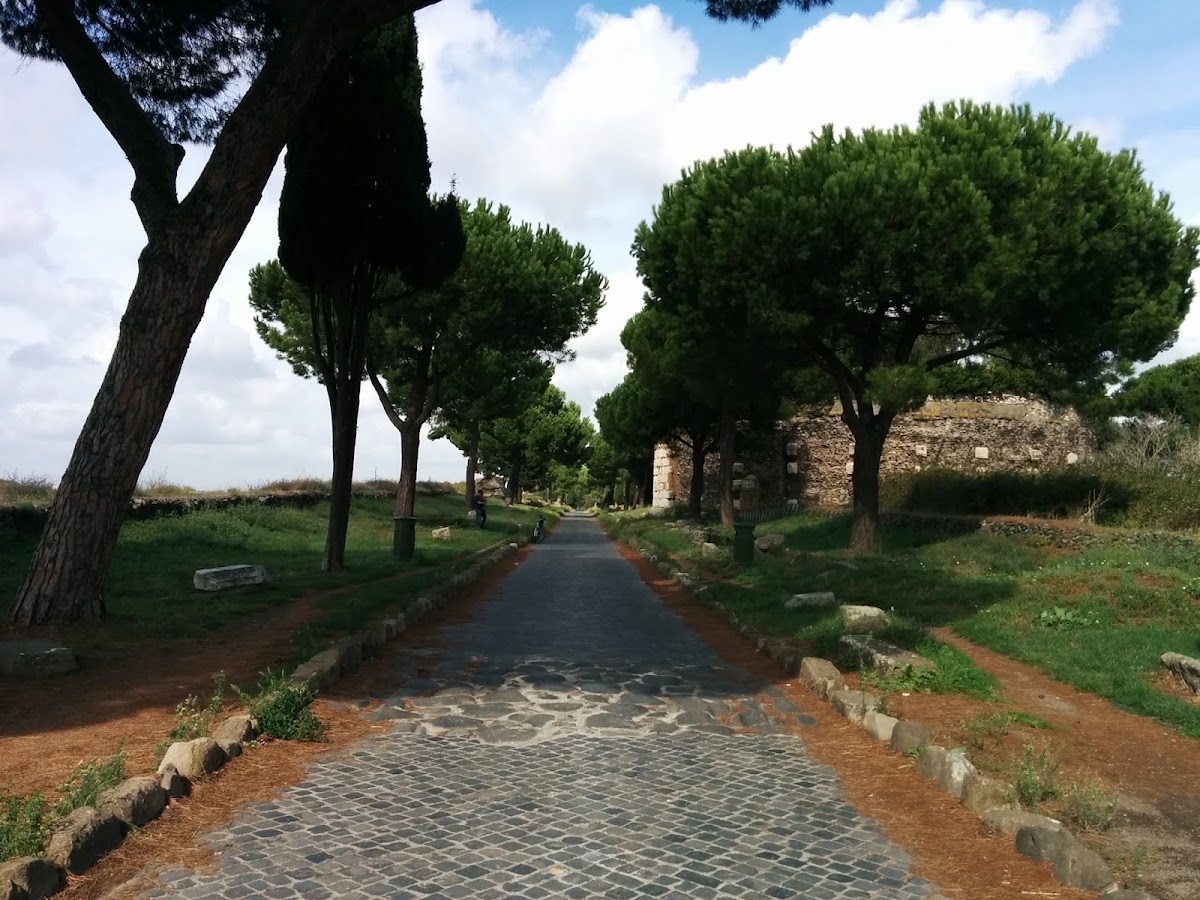
The Appia Antica park protects one of the most important roads of the ancient world, the Via Appia, alongside the farmland, aqueducts, and early Christian catacombs that line its route south of the city. Cycling or walking the old paving stones past crumbling tombs and pine-lined stretches gives a sense of rural Rome that's largely vanished elsewhere in the city.

It remains an active protected landscape rather than a curated museum site, and its scale rewards visitors who set aside real time to explore it.

✨ Reasons to go

  • 1The Via Appia was laid out in 312 BC by the censor Appius Claudius Caecus as a military road to Capua, earning it the nickname "regina viarum," queen of roads.
  • 2The park's paving stones run past the underground Christian catacombs of San Callisto and San Sebastiano and the massive cylindrical tomb of Cecilia Metella.
  • 3In 2024 the Via Appia was inscribed on the UNESCO World Heritage List, over 2,300 years after its construction began.

💡 Good to know

  • 1Free to enter, though catacombs along the route charge separate admission
  • 2rent a bike, as the park is large and best covered gradually
  • 3bring water and sun protection in summer, as much of the route is exposed farmland.

⏱️ Typical visit

2h

🚶 Walking intensity

Active — lots of walking

📍

Address

Via Appia Antica, 42, 00178 Roma RM, Italy · Roma
🕐

Hours

  • Monday: Open 24 hours
  • Tuesday: Open 24 hours
  • Wednesday: Open 24 hours
  • Thursday: Open 24 hours
  • Friday: Open 24 hours
  • Saturday: Open 24 hours
  • Sunday: Open 24 hours
Parish Basilica of Santa Maria del Popolo15
🏛️
4.7 (2,852)Free

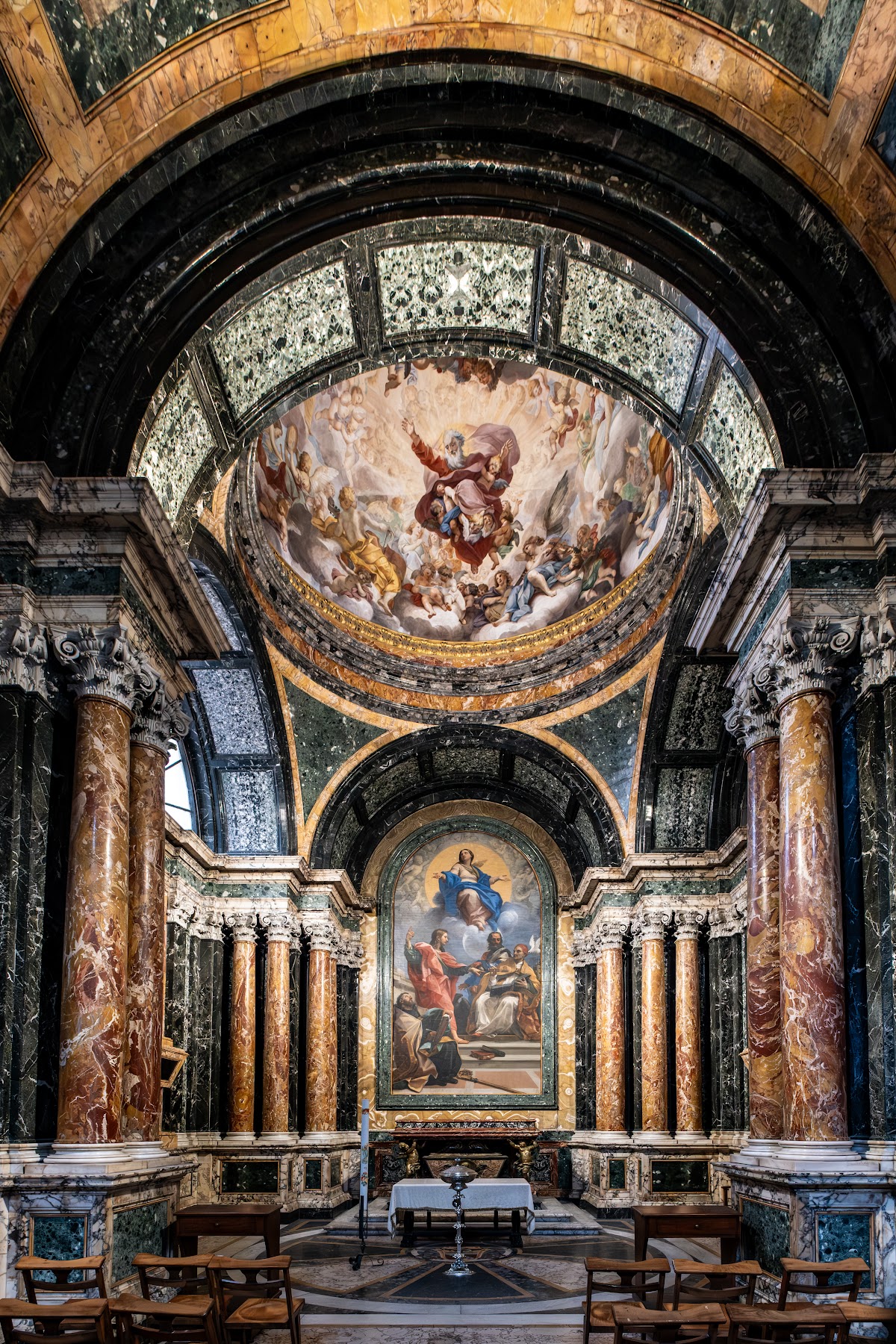
Built in the 15th century on a site once believed haunted by Nero's ghost, the church's plain exterior gives no hint of the artistic weight inside: the Cerasi Chapel holds two Caravaggio paintings, the Crucifixion of Saint Peter and the Conversion of Saint Paul, while the Chigi Chapel was designed by Raphael. Because it sits just off the busy Piazza del Popolo but rarely appears on quick-stop itineraries, it stays comparatively calm even at peak tourist hours.

Art lovers in particular shouldn't skip it, since seeing two Caravaggios in situ, in natural light, for free, is rare in Rome. A short but high-value visit for anyone interested in Baroque and Renaissance painting.

✨ Reasons to go

  • 1Built in the 15th century on a site once believed haunted by the ghost of Emperor Nero.
  • 2The Cerasi Chapel houses two Caravaggio paintings, the Crucifixion of Saint Peter and the Conversion of Saint Paul, viewable in natural light.
  • 3The Chigi Chapel was designed by Raphael.

💡 Good to know

  • 1Bring coins for the light box that illuminates the Caravaggio paintings, or wait for another visitor to activate it
  • 2it's free and often overlooked, so visit any time without worrying about crowds
  • 3pair with a stop at Piazza del Popolo just outside.

⏱️ Typical visit

30 min

🕰️ Best time

early morning, morning, afternoon or early evening

🚶 Walking intensity

Easy pace

📍

Address

Piazza del Popolo, 12, 00187 Roma RM, Italy · Roma
🕐

Hours

  • Monday: 8:30 – 9:45 AM, 10:30 AM – 12:00 PM, 4:00 – 6:00 PM
  • Tuesday: 8:30 – 9:45 AM, 10:30 AM – 12:00 PM, 4:00 – 6:00 PM
  • Wednesday: 8:30 – 9:45 AM, 10:30 AM – 12:00 PM, 4:00 – 6:00 PM
  • Thursday: 8:30 – 9:45 AM, 10:30 AM – 12:00 PM, 4:00 – 6:00 PM
  • Friday: 8:30 – 9:45 AM, 10:30 AM – 12:00 PM, 4:00 – 6:00 PM
  • Saturday: 8:30 – 9:45 AM, 10:30 AM – 12:00 PM, 4:00 – 6:00 PM
  • Sunday: 4:30 – 6:00 PM
Galleria Borghese16
🎨
4.6 (30,270)$$ · Mid-range

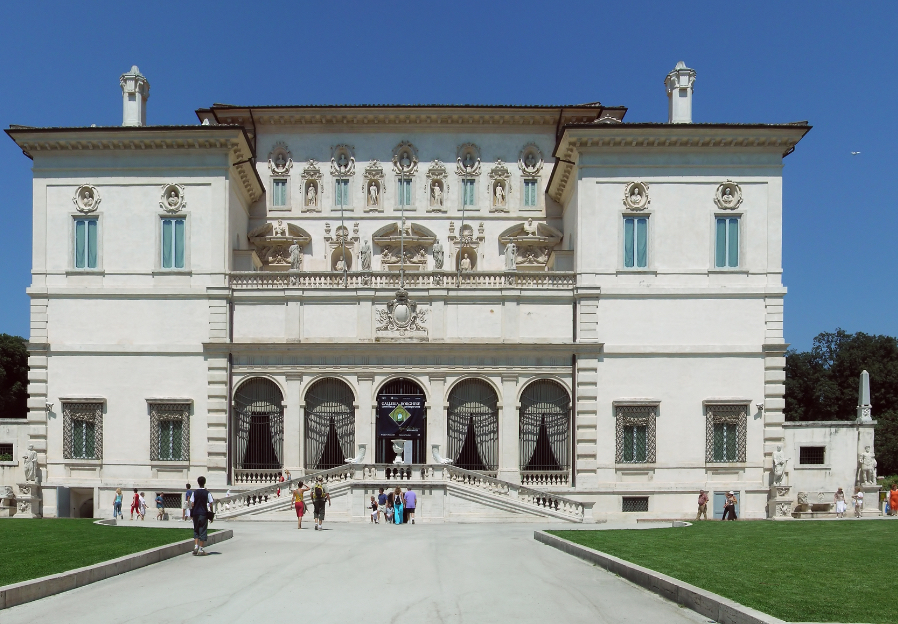
Cardinal Scipione Borghese's 17th-century pleasure villa now houses one of the finest small art collections in the world, built around Gian Lorenzo Bernini's virtuoso marble sculptures and paintings by Caravaggio, Titian, and Raphael. Entry is strictly limited to two-hour windows to protect the collection and keep rooms uncrowded, which makes advance booking essential rather than optional.

At 4.6 stars over more than 30,000 reviews, with maximum scores for must-see status, culture, and aesthetics, it's regarded as an unmissable Rome highlight on par with the grandest institutions. The frescoed ceilings and gilded interiors are as much a draw as the sculpture itself.

✨ Reasons to go

  • 1Houses Bernini marble sculptures including Apollo and Daphne and The Rape of Proserpina, carved to be viewed from multiple angles
  • 2The collection includes paintings by Caravaggio, Titian, and Raphael assembled by Cardinal Scipione Borghese in the 17th century
  • 3Entry is capped at strict two-hour timed slots to limit crowding in the villa's rooms

💡 Good to know

  • 1Book tickets weeks in advance, as slots sell out
  • 2arrive 30 minutes early since latecomers can be refused entry
  • 3the Bernini sculptures reward a slow look from multiple angles.

⏱️ Typical visit

2h

🕰️ Best time

morning, lunchtime, afternoon or early evening

🚶 Walking intensity

Moderate walking

📍

Address

Piazzale Scipione Borghese, 5, 00197 Roma RM, Italy · Roma
🕐

Hours

  • Monday: Closed
  • Tuesday: 9:00 AM – 7:00 PM
  • Wednesday: 9:00 AM – 7:00 PM
  • Thursday: 9:00 AM – 7:00 PM
  • Friday: 9:00 AM – 7:00 PM
  • Saturday: 9:00 AM – 7:00 PM
  • Sunday: 9:00 AM – 7:00 PM
Trastevere17
🚶
Free

Trastevere ('across the Tiber') kept a working-class, insular character for centuries, separate enough from central Rome to develop its own dialect and traditions, and that slightly separate feel survives in its tangle of narrow, ochre-walled streets. Santa Maria in Trastevere, one of Rome's oldest churches, anchors a piazza that fills with students, tourists, and street musicians by evening.

Ivy and laundry lines hang over cobblestones barely wide enough for a Vespa, and the neighbourhood's density of trattorias and bars makes it the city's favourite spot for a long dinner or a late night out. It's at its most atmospheric after dark, once the day-trip crowds thin out.

✨ Reasons to go

  • 1Santa Maria in Trastevere's mosaics were created by Pietro Cavallini in the late 13th century, among the finest examples of Roman mosaic art.
  • 2The basilica anchoring the piazza traces its origins to the 3rd century AD, making it one of Rome's oldest churches.
  • 3Trastevere's centuries of separation from central Rome across the Tiber let it develop its own dialect and traditions, still felt in its narrow, ochre-walled streets.

💡 Good to know

  • 1Come in the early evening and stay for dinner, as the neighbourhood peaks after dark
  • 2sit for a while in Piazza Santa Maria in Trastevere
  • 3wander without a map — getting a little lost is part of the appeal.

⏱️ Typical visit

1h15

🕰️ Best time

early evening or evening

🚶 Walking intensity

Active — lots of walking

📍

Address

Trastevere, Rome, Metropolitan City of Rome Capital, Italy · Trastevere
Capitoline Museums18
🎨
4.7 (18,878)$$ · Mid-range

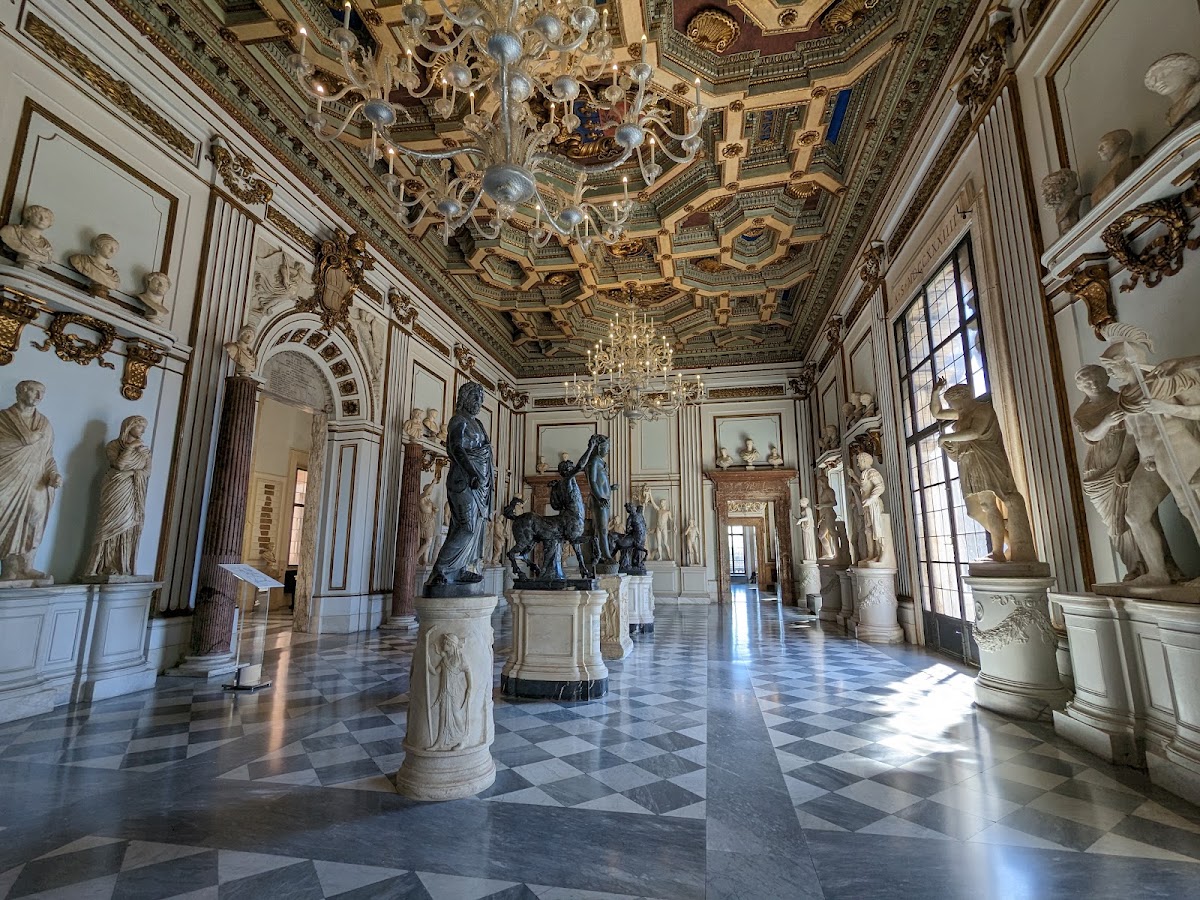
Founded in 1471 when Pope Sixtus IV donated a group of bronze statues to the people of Rome, the Capitoline Museums claim the title of the oldest public museum in the world, spread across two Michelangelo-designed palaces atop the Capitoline Hill. Highlights include the Capitoline Wolf suckling Romulus and Remus, colossal fragments of a statue of Constantine, and the original gilt-bronze equestrian statue of Marcus Aurelius.

With a 4.7 rating across nearly 19,000 reviews and top marks for culture and aesthetics, it ranks among Rome's essential stops rather than a niche detour. Plan on a full two hours to take in both palaces and the underground gallery connecting them.

✨ Reasons to go

  • 1Founded in 1471 when Pope Sixtus IV donated bronze statues to Rome, making it the oldest public museum in the world
  • 2The museum spans two palaces on Capitoline Hill designed by Michelangelo, linked by an underground Tabularium passage with views over the Roman Forum
  • 3Home to the Capitoline Wolf, colossal fragments of a statue of Constantine, and the original gilt-bronze equestrian statue of Marcus Aurelius

💡 Good to know

  • 1Book tickets online to skip the line, especially in peak season
  • 2the underground Tabularium passage offers one of the best views of the Roman Forum
  • 3combine a morning visit with nearby Forum sites since it's an early best time slot.

⏱️ Typical visit

2h

🕰️ Best time

morning, lunchtime, afternoon, early evening or evening

🚶 Walking intensity

Moderate walking

📍

Address

Piazza del Campidoglio, 1, 00186 Roma RM, Italy · Roma
🕐

Hours

  • Monday: 9:30 AM – 7:30 PM
  • Tuesday: 9:30 AM – 7:30 PM
  • Wednesday: 9:30 AM – 7:30 PM
  • Thursday: 9:30 AM – 7:30 PM
  • Friday: 9:30 AM – 7:30 PM
  • Saturday: 9:30 AM – 7:30 PM
  • Sunday: 9:30 AM – 7:30 PM
The Keats - Shelley House19
🎨
4.6 (321)$ · Budget-friendly

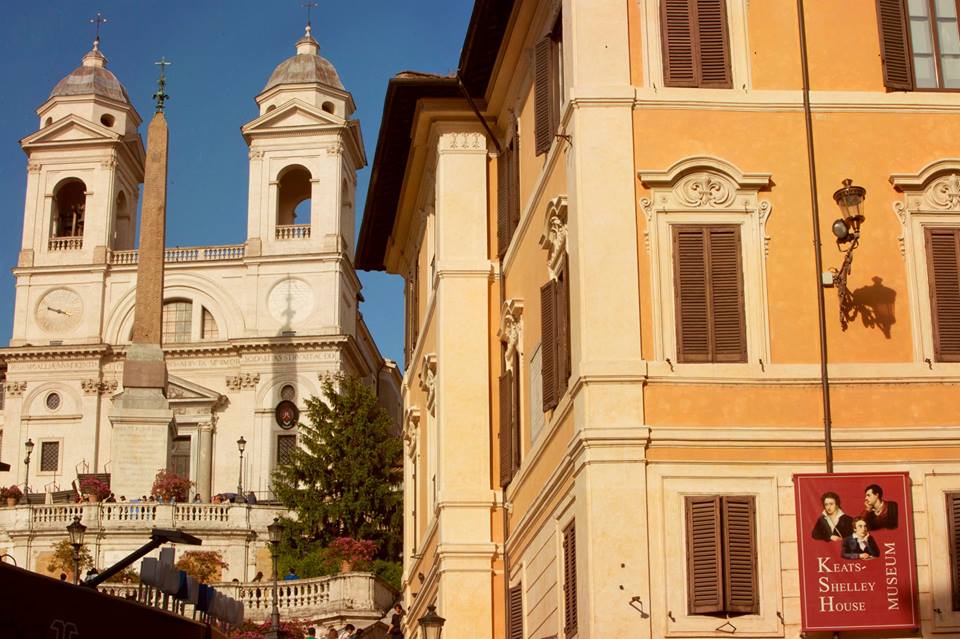
This modest house at the foot of the Spanish Steps is where John Keats spent his final months and died of tuberculosis at just 25, and it has been maintained since as a memorial library and museum dedicated to Keats, Shelley, Byron, and their contemporaries. The room where Keats died, along with letters, manuscripts, and death masks, gives the museum an intimate, literary-pilgrimage quality distinct from Rome's grand art institutions.

A 4.6 rating and the highest hidden-gem score among comparable central-Rome sites suggest it's genuinely under-visited relative to its significance, appealing strongly to literature enthusiasts who seek it out deliberately. Its small scale and modest ticket price make it an easy, quick addition to a Spanish Steps visit for the right traveler.

✨ Reasons to go

  • 1John Keats died in this house at age 25, in the room now preserved as part of the museum
  • 2The collection includes letters, manuscripts, and death masks of Keats, Shelley, Byron, and their circle
  • 3It sits right beside the Spanish Steps but remains easy to miss and comparatively under-visited

💡 Good to know

  • 1Seek it out deliberately - it's easy to miss right beside the Spanish Steps
  • 2particularly worthwhile for anyone with an interest in Romantic-era English literature
  • 330 minutes is enough for the compact collection.

⏱️ Typical visit

30 min

🕰️ Best time

morning, lunchtime, afternoon or early evening

🚶 Walking intensity

Easy pace

📍

Address

Piazza di Spagna, 26, 00187 Roma RM, Italy · Roma
🕐

Hours

  • Monday: 10:00 AM – 1:00 PM, 2:00 – 6:00 PM
  • Tuesday: 10:00 AM – 1:00 PM, 2:00 – 6:00 PM
  • Wednesday: 10:00 AM – 1:00 PM, 2:00 – 6:00 PM
  • Thursday: 10:00 AM – 1:00 PM, 2:00 – 6:00 PM
  • Friday: 10:00 AM – 1:00 PM, 2:00 – 6:00 PM
  • Saturday: 10:00 AM – 1:00 PM, 2:00 – 6:00 PM
  • Sunday: Closed
Gallerie Nazionali di Arte Antica - Palazzo Barberini20
🎨
4.6 (9,057)$$ · Mid-range

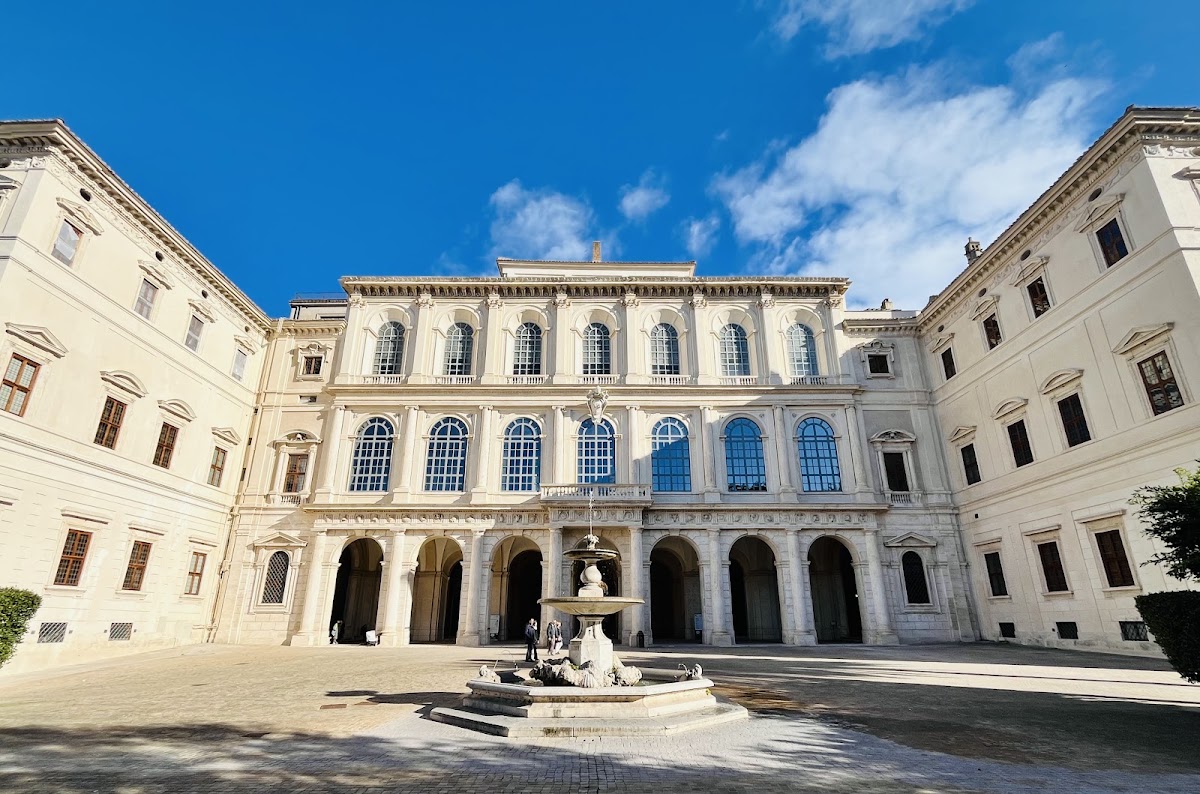
Begun for the powerful Barberini family and completed with contributions from Bernini and Borromini, this palace is as much an architectural showpiece as a museum, crowned by Pietro da Cortona's enormous illusionistic ceiling fresco in the Gran Salone. Its collection for the National Gallery of Ancient Art spans the Renaissance through Baroque, including Caravaggio's Judith Beheading Holofernes and Raphael's La Fornarina.

At 4.6 stars with maximum culture, must-see, and aesthetic scores, reviewers frequently note it offers a comparable caliber of art to the Vatican Museums with far shorter lines and lower ticket demand. A single ticket also covers Galleria Corsini across the river, extending the visit for art-focused travelers.

✨ Reasons to go

  • 1The palace was built with contributions from both Bernini and Borromini, rival architects rarely credited on the same building.
  • 2Pietro da Cortona's illusionistic ceiling fresco in the Gran Salone creates a painted architecture that appears to open into the sky.
  • 3The collection includes Caravaggio's Judith Beheading Holofernes and Raphael's La Fornarina.

💡 Good to know

  • 1The combined ticket with Galleria Corsini is good value if you have time for both
  • 2get the audio guide, which reviewers rate highly, especially for the Bernini rooms
  • 3expect a fair amount of stair climbing between grand halls.

⏱️ Typical visit

2h

🕰️ Best time

morning, lunchtime, afternoon or early evening

🚶 Walking intensity

Active — lots of walking

📍

Address

Via delle Quattro Fontane, 13, 00187 Roma RM, Italy · Roma
🕐

Hours

  • Monday: Closed
  • Tuesday: 10:00 AM – 7:00 PM
  • Wednesday: 10:00 AM – 7:00 PM
  • Thursday: 10:00 AM – 7:00 PM
  • Friday: 10:00 AM – 7:00 PM
  • Saturday: 10:00 AM – 7:00 PM
  • Sunday: 10:00 AM – 7:00 PM
National Roman Museum - Palazzo Massimo alle Terme21
🎨
4.6 (6,328)$$ · Mid-range

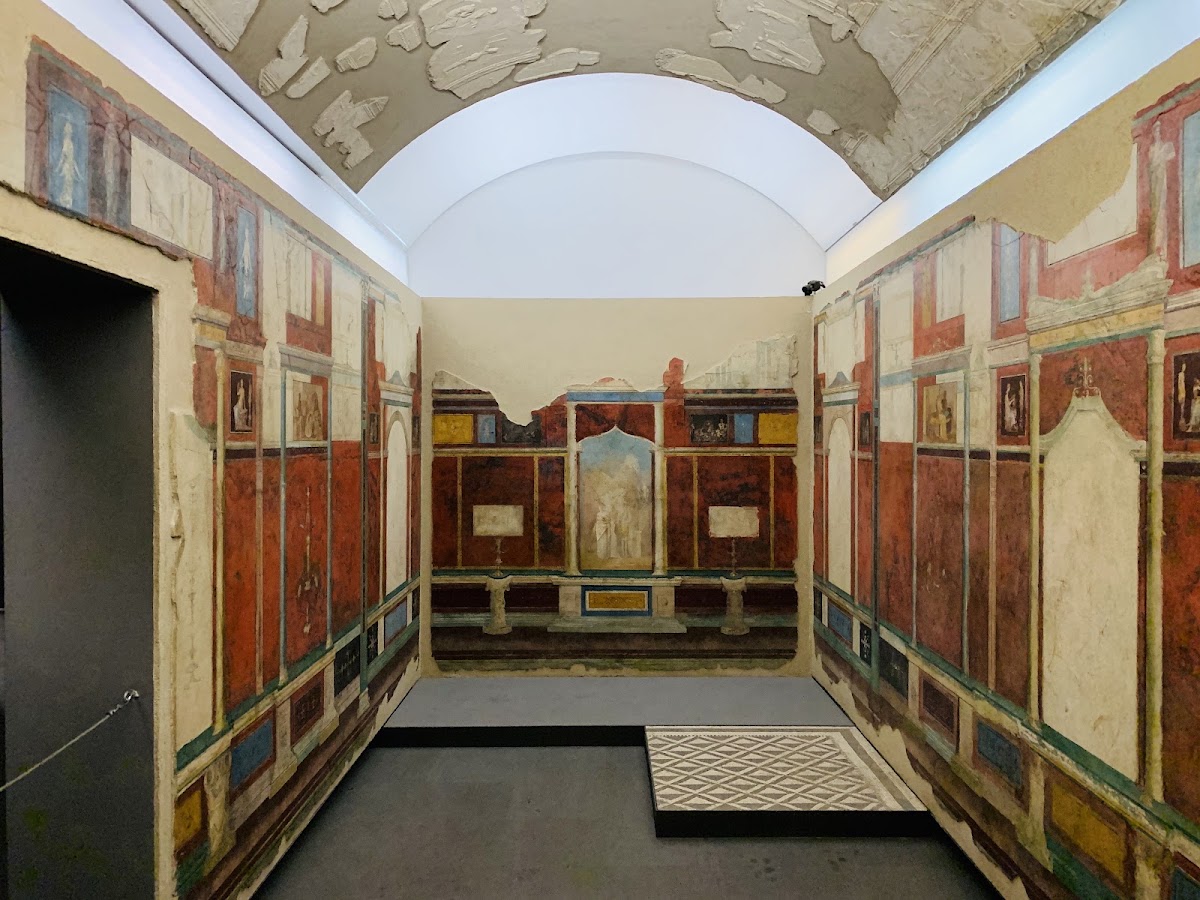
Housed in a 19th-century palazzo across from Termini station, Palazzo Massimo alle Terme is one of the four sites making up the National Roman Museum and holds some of the best-preserved Roman wall paintings anywhere, including the garden frescoes lifted from Livia's villa. Reviewers consistently note how calm and uncrowded it feels compared to Rome's headline sights, a rare quality for a collection this significant.

Its 4.6 rating and maximum culture score reflect genuine scholarly weight, while its still-modest hidden-gem score suggests it's known to serious visitors more than casual passersby. The lower floors also hold an outstanding numismatic collection for anyone interested in ancient coinage.

✨ Reasons to go

  • 1Holds the frescoed garden room reconstructed from Livia's villa, one of the best-preserved examples of Roman wall painting
  • 2The basement houses an extensive ancient coin collection often overlooked by visitors
  • 3Home to the Boxer at Rest, a renowned bronze sculpture

💡 Good to know

  • 1Visit in late morning or afternoon when it's typically quiet
  • 2the ticket often covers the other National Roman Museum sites, so ask about a combined pass
  • 3don't skip the basement coin collection, which is easy to overlook.

⏱️ Typical visit

2h

🕰️ Best time

morning, lunchtime, afternoon or early evening

🚶 Walking intensity

Moderate walking

📍

Address

Largo di Villa Peretti, 2, 00185 Roma RM, Italy · Roma
🕐

Hours

  • Monday: Closed
  • Tuesday: 9:00 AM – 7:00 PM
  • Wednesday: 9:00 AM – 7:00 PM
  • Thursday: 9:00 AM – 7:00 PM
  • Friday: 9:00 AM – 7:00 PM
  • Saturday: 9:00 AM – 7:00 PM
  • Sunday: 9:00 AM – 7:00 PM
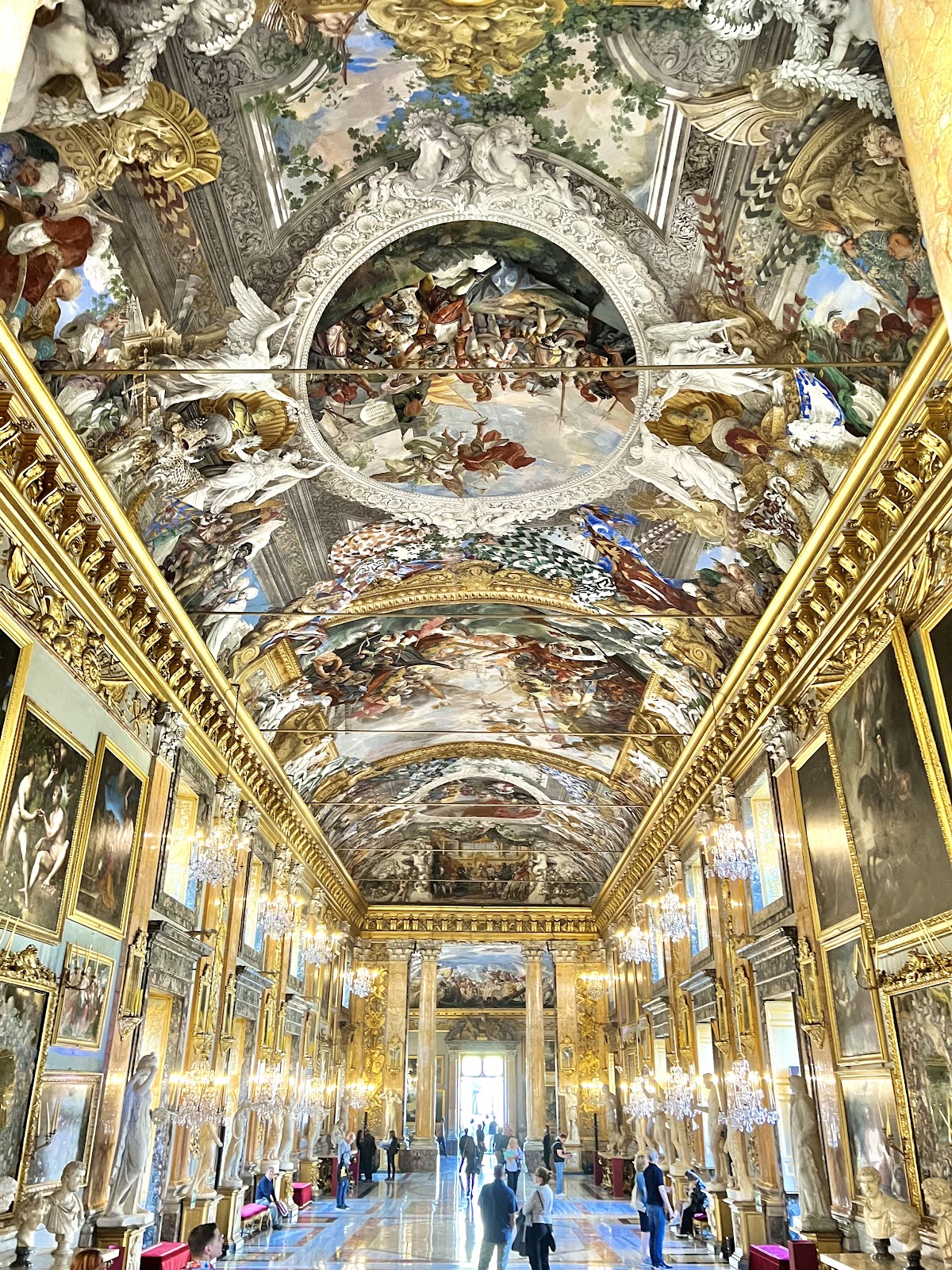
Galleria Colonna22
🎨
4.9 (3,289)$$ · Mid-range

Still owned by the Colonna family, this palace near Piazza Venezia is famously restrictive about opening hours, which only adds to its mystique - reviewers describe squeezing in a visit as a genuine reward. The centerpiece Sala Grande, a mirrored, frescoed gallery lined with ancestral portraits and Roman antiquities, draws comparisons to a film set for its theatrical grandeur.

An exceptional 4.9 rating, one of the highest of any Rome museum in this set, reflects near-unanimous enthusiasm despite the collection's smaller scale and limited hours. Its perfect must-see, culture, and aesthetic scores confirm this isn't a niche curiosity but a genuine showstopper that simply happens to be hard to catch.

✨ Reasons to go

  • 1Still owned today by the Colonna family, one of Rome's oldest noble dynasties
  • 2The mirrored, frescoed Sala Grande was used as the filming location for the final scene of Roman Holiday
  • 3Open to the public only on Fridays and Saturdays, making it one of Rome's most restricted-access palaces

💡 Good to know

  • 1Check the limited opening days and hours carefully before planning your trip, as it's not open daily
  • 2book ahead given the restricted access
  • 3an hour is enough time for the compact but dazzling route.

⏱️ Typical visit

1h

🕰️ Best time

morning or lunchtime

🚶 Walking intensity

Moderate walking

📍

Address

Via della Pilotta, 17, 00187 Roma RM, Italy · Roma
🕐

Hours

  • Monday: Closed
  • Tuesday: Closed
  • Wednesday: Closed
  • Thursday: Closed
  • Friday: 9:30 AM – 1:00 PM
  • Saturday: 9:30 AM – 1:00 PM
  • Sunday: Closed
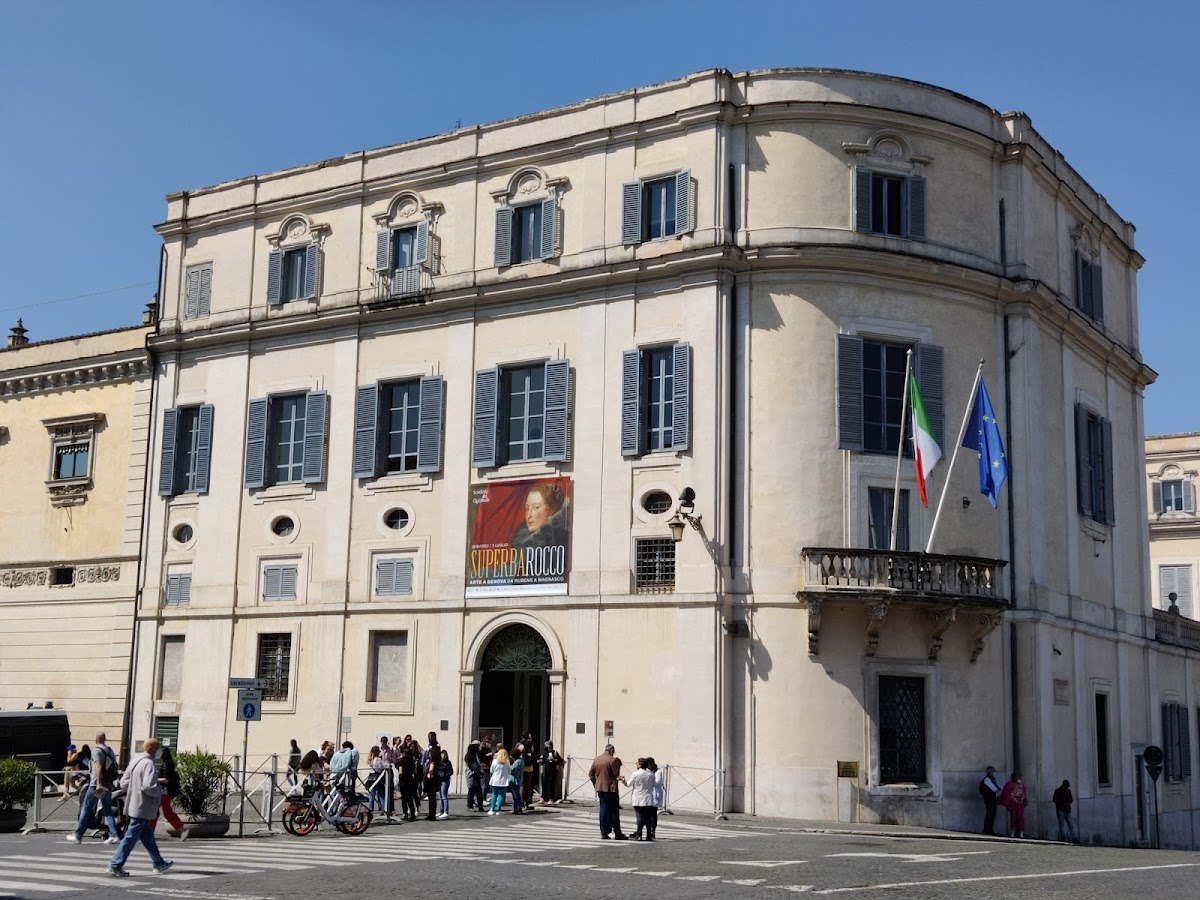
Scuderie del Quirinale23
🎨
4.7 (7,363)$$$ · Expensive

Built as stables for the popes and later Italy's royal family, this building beside the Quirinal Palace on Rome's highest hill was converted into an exhibition hall and now hosts major touring shows, from Egyptian treasures of the pharaohs to retrospectives of individual masters. Its higher price point and mandatory booking reflect a model closer to a special exhibition venue than a standard museum with a fixed permanent collection.

A 4.7 rating and maximum must-see and culture scores show strong consistent satisfaction regardless of which specific exhibition is running, and reviewers frequently mention the Quirinal Palace itself - one of Europe's largest - as a worthwhile sight in its own right nearby. Allow a full two hours given the scale of the shows typically staged here.

✨ Reasons to go

  • 1Originally built as stables for the popes and later Italy's royal family, beside the Quirinal Palace on Rome's highest hill
  • 2Now functions as a rotating exhibition hall rather than a fixed collection, hosting major touring shows from Egyptian pharaoh treasures to master retrospectives
  • 3Sits next to the Quirinal Palace, one of Europe's largest palaces and official residence of Italy's President

💡 Good to know

  • 1Book tickets in advance, as exhibitions can sell out
  • 2check what show is currently running, since programming rotates completely
  • 3combine with a visit to the nearby Quirinal Palace and its panoramic hilltop views.

⏱️ Typical visit

2h

🕰️ Best time

morning or afternoon

🚶 Walking intensity

Moderate walking

📍

Address

V. Ventiquattro Maggio, 16, 00186 Roma RM, Italy · Roma
Galleria Doria Pamphilj24
🎨
4.7 (8,467)$$ · Mid-range

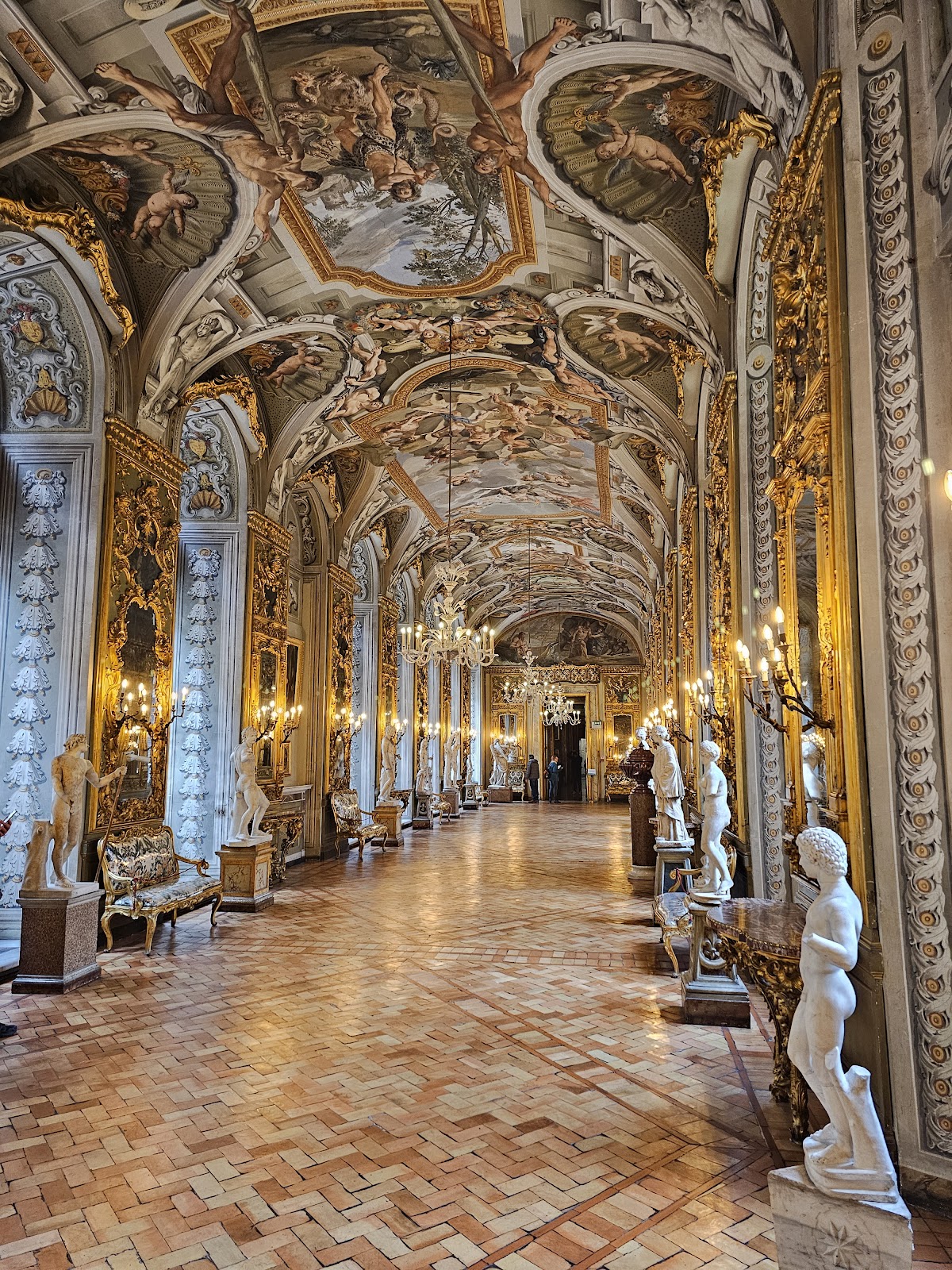
Unlike Rome's state-run museums, Galleria Doria Pamphilj remains the private property of the aristocratic Doria Pamphilj family, who still occupy part of the building and personally narrate the excellent complimentary audio guide with family anecdotes. The gallery's dense, salon-style hang includes Velazquez's celebrated portrait of Pope Innocent X alongside Caravaggio, Titian, and Bernini, all set within opulent gilded rooms.

At 4.7 stars over more than 8,000 reviews, with maximum scores for must-see status, culture, and aesthetics, it rivals the city's grander institutions while offering a more personal, family-history angle that reviewers consistently praise. A handful of complaints about indoor climate control are the rare blemish on an otherwise glowing reputation.

✨ Reasons to go

  • 1Still privately owned and partly inhabited by the Doria Pamphilj family, with a family member narrating the audio guide
  • 2Home to Velázquez's portrait of Pope Innocent X, alongside works by Caravaggio, Titian, and Bernini
  • 3Housed in the largest privately owned palace in Rome

💡 Good to know

  • 1Take the free audio guide - reviewers consistently call it a highlight
  • 2visit on a cooler day, as some reviewers note the rooms can get warm
  • 3allow around 90 minutes for the full collection.

⏱️ Typical visit

1h30

🕰️ Best time

morning, lunchtime, afternoon or early evening

🚶 Walking intensity

Moderate walking

📍

Address

V. del Corso, 305, 00186 Roma RM, Italy · Roma
🕐

Hours

  • Monday: 9:00 AM – 7:00 PM
  • Tuesday: 9:00 AM – 7:00 PM
  • Wednesday: Closed
  • Thursday: 9:00 AM – 7:00 PM
  • Friday: 10:00 AM – 8:00 PM
  • Saturday: 10:00 AM – 8:00 PM
  • Sunday: 10:00 AM – 8:00 PM
Mercati di Traiano Museo dei Fori Imperiali25
🎨
4.7 (9,619)$$ · Mid-range

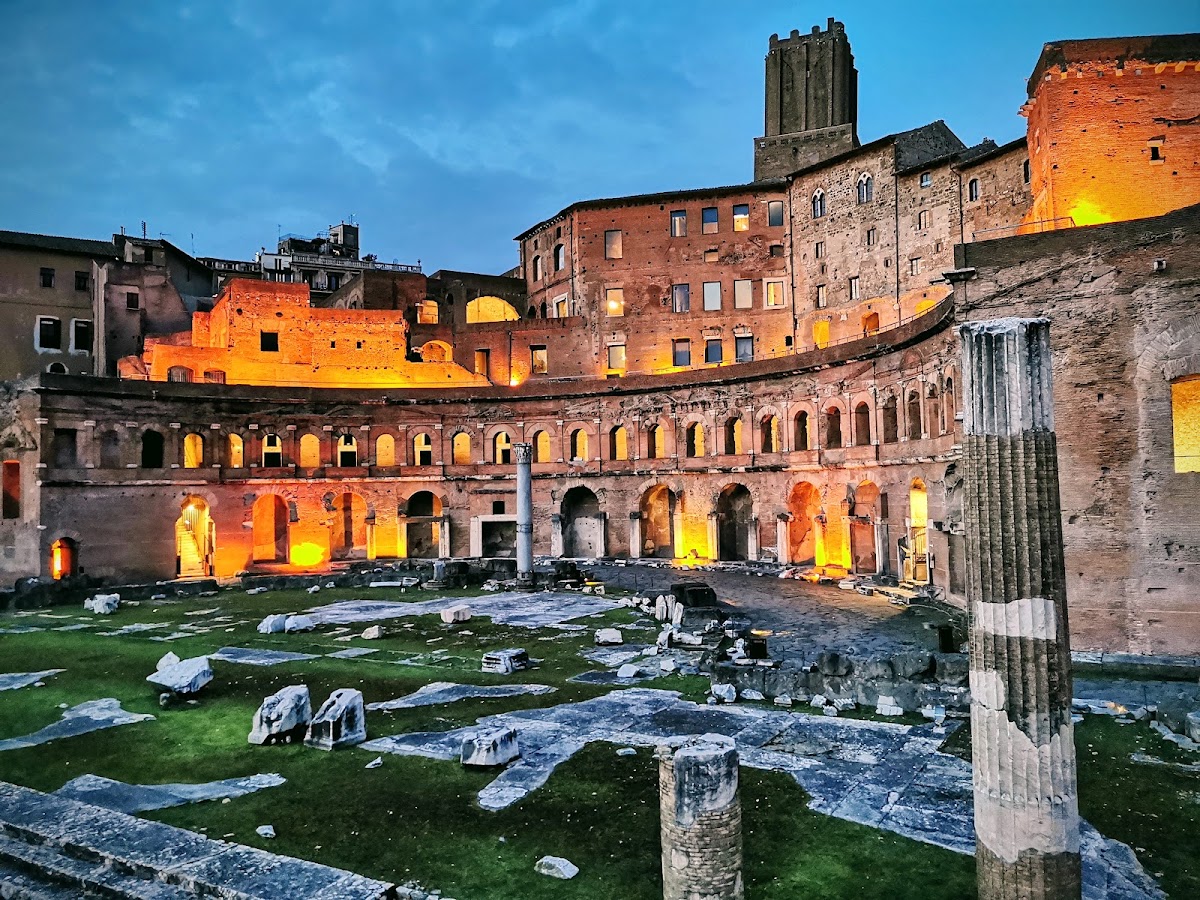
Built under Emperor Trajan in the early 2nd century, this multi-level complex of brick vaults and shop fronts is one of the best-preserved pieces of everyday ancient Roman architecture and now doubles as the Museum of the Imperial Fora. Rather than viewing objects behind glass, visitors walk directly through the original structure, following ramps and passageways that once served commercial and administrative space overlooking the fora below.

A 4.7 rating and perfect must-see and culture scores mark it as a top-tier Rome experience, with reviewers praising the immersive sense of stepping into Roman daily life rather than just admiring artifacts. Plan on a couple of hours given the site's scale and the views it offers over the excavated forum complex.

✨ Reasons to go

  • 1Built in the early 2nd century under Emperor Trajan as a multi-level complex of shops and offices overlooking the Imperial Fora
  • 2Visitors walk through the original brick vaults and passageways rather than viewing artifacts behind glass
  • 3Less crowded than the nearby Forum and Colosseum despite being an extensive, well-preserved multi-level site

💡 Good to know

  • 1Wear comfortable shoes, as the route covers several levels and uneven ancient surfaces
  • 2combine with a Forum/Colosseum day since it overlooks the Imperial Fora
  • 3the terrace views over the forum area are worth lingering for.

⏱️ Typical visit

2h

🕰️ Best time

morning, lunchtime, afternoon, early evening or evening

🚶 Walking intensity

Moderate walking

📍

Address

Via Quattro Novembre, 94, 00187 Roma RM, Italy · Roma
🕐

Hours

  • Monday: 9:30 AM – 7:30 PM
  • Tuesday: 9:30 AM – 7:30 PM
  • Wednesday: 9:30 AM – 7:30 PM
  • Thursday: 9:30 AM – 7:30 PM
  • Friday: 9:30 AM – 7:30 PM
  • Saturday: 9:30 AM – 7:30 PM
  • Sunday: 9:30 AM – 7:30 PM
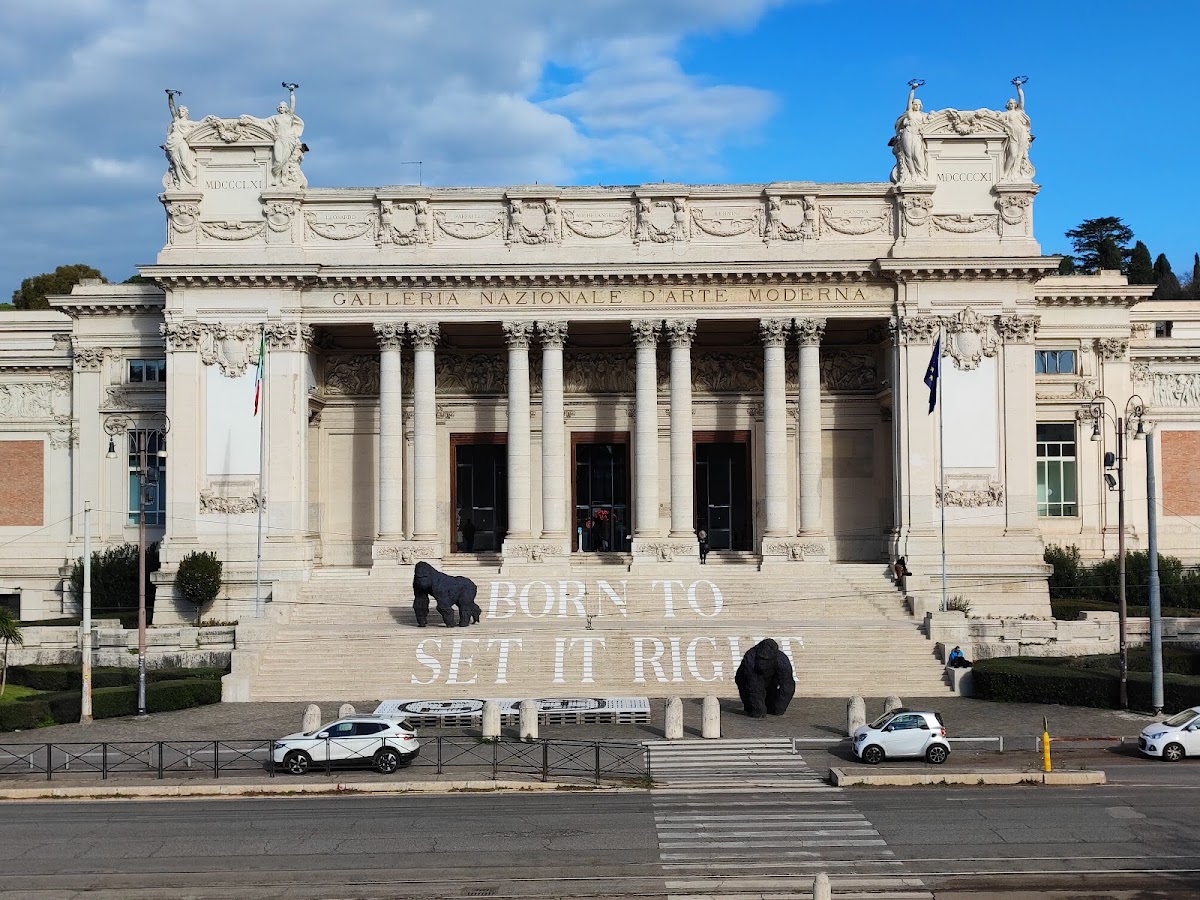
National Gallery of Modern and Contemporary Art26
🎨
4.6 (11,050)$$ · Mid-range

The Galleria Nazionale d'Arte Moderna occupies a purpose-built Beaux-Arts palace near Villa Borghese, tracing Italian art from the 19th century into modernism alongside international names like Klimt, Cezanne, and Van Gogh. Reviewers repeatedly remark on how empty it can feel even at busy times of year, a quiet counterpoint to the crush at the nearby Borghese Gallery.

Its perfect culture and aesthetic scores signal a genuinely important collection, and the high trendy score reflects an ongoing program of contemporary exhibitions layered onto the historic holdings. The scale of the exhibition halls is itself part of the appeal, offering room to breathe that's rare in central Rome.

✨ Reasons to go

  • 1Houses works by Klimt, Cezanne, and Van Gogh alongside Italian art from the 19th century through modernism
  • 2Set in a purpose-built Beaux-Arts palace near Villa Borghese with large, uncrowded exhibition halls
  • 3Runs an ongoing program of temporary contemporary exhibitions alongside its permanent collection

💡 Good to know

  • 1Come in the morning for the emptiest galleries
  • 2check for temporary exhibitions, which are often a highlight
  • 3it pairs naturally with a walk through the surrounding Villa Borghese park.

⏱️ Typical visit

2h

🕰️ Best time

morning, lunchtime, afternoon or early evening

🚶 Walking intensity

Moderate walking

📍

Address

Viale delle Belle Arti, 131, 00197 Roma RM, Italy · Roma
🕐

Hours

  • Monday: Closed
  • Tuesday: 9:00 AM – 7:00 PM
  • Wednesday: 9:00 AM – 7:00 PM
  • Thursday: 9:00 AM – 7:00 PM
  • Friday: 9:00 AM – 7:00 PM
  • Saturday: 9:00 AM – 7:00 PM
  • Sunday: 9:00 AM – 7:00 PM
Basilica of San Pietro in Vincoli27
🏛️
4.7 (18,391)Free

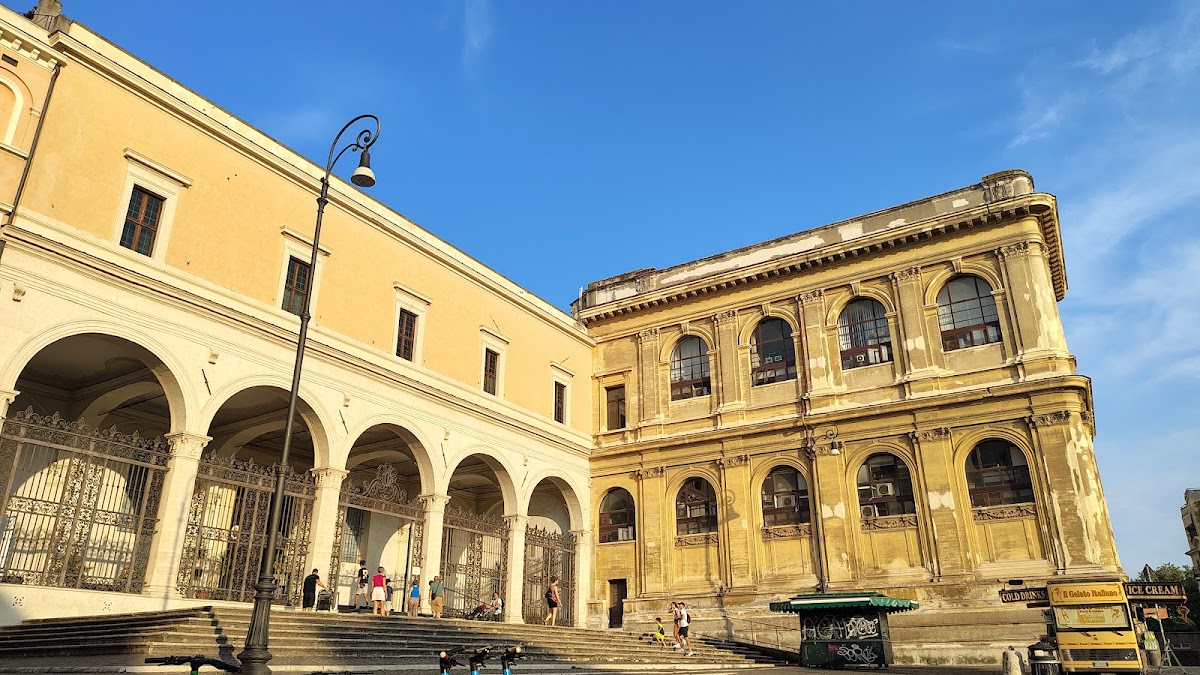
Its name — 'Saint Peter in Chains' — refers to the relic displayed beneath the high altar, said to be the shackles that bound the apostle in Jerusalem and Rome. The bigger draw for most visitors is Michelangelo's sculpture of Moses, originally intended for the unfinished tomb of Pope Julius II, and considered one of his most powerful works outside the Sistine Chapel.

Because it sits a short but uphill walk from the Colosseum rather than directly on the main tourist path, it gets a fraction of the crowds despite the caliber of what's inside. It's a quick, worthwhile detour for anyone touring ancient Rome who also wants a dose of Michelangelo.

✨ Reasons to go

  • 1Houses the relic believed to be the chains that bound St. Peter in Jerusalem and Rome, displayed beneath the high altar.
  • 2Contains Michelangelo's Moses, carved for the unfinished tomb of Pope Julius II and ranked among his major sculptures outside the Sistine Chapel.
  • 3Sits just uphill from the Colosseum but off the main tourist route, so it draws far fewer visitors despite the artwork inside.

💡 Good to know

  • 1It's a short uphill walk from the Colosseum, easy to combine with that visit
  • 2entry is free, so there's no need to book ahead
  • 3go in the morning for the best natural light on the Moses sculpture.

⏱️ Typical visit

30 min

🕰️ Best time

early morning, morning, lunchtime, afternoon or early evening

🚶 Walking intensity

Easy pace

📍

Address

Piazza di San Pietro in Vincoli, 4/A, 00184 Roma RM, Italy · Roma
🕐

Hours

  • Monday: 7:30 AM – 12:20 PM, 3:00 – 6:50 PM
  • Tuesday: 7:30 AM – 12:20 PM, 3:00 – 6:50 PM
  • Wednesday: 7:30 AM – 12:20 PM, 3:00 – 6:50 PM
  • Thursday: 7:30 AM – 12:20 PM, 3:00 – 6:50 PM
  • Friday: 7:30 AM – 12:20 PM, 3:00 – 6:50 PM
  • Saturday: 7:30 AM – 12:20 PM, 3:00 – 6:50 PM
  • Sunday: 9:00 AM – 12:00 PM, 3:00 – 6:50 PM
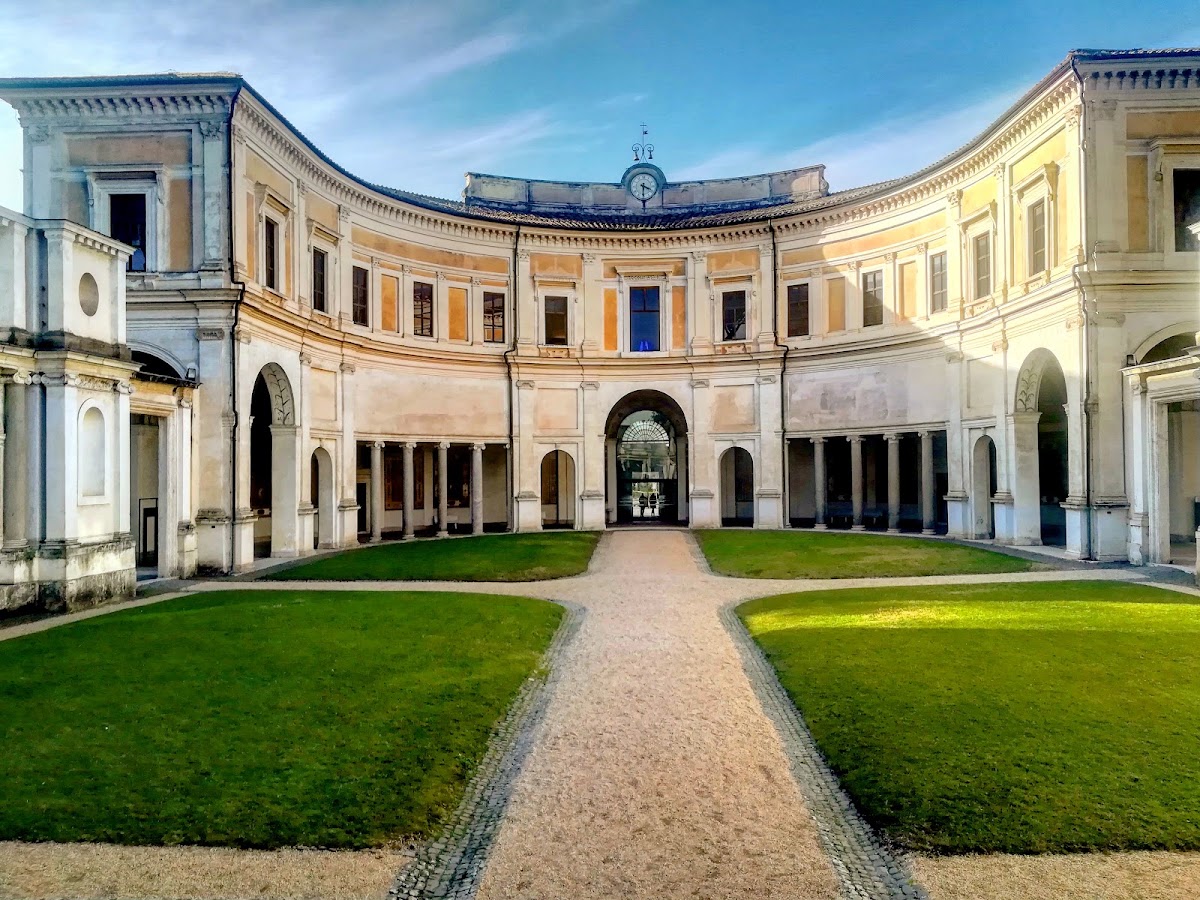
National Etruscan Museum of Villa Giulia28
🎨
4.7 (4,511)$$ · Mid-range

Built as a country retreat for Pope Julius III in the 1550s, Villa Giulia now houses the world's most important collection of Etruscan civilization artifacts, anchored by the terracotta Sarcophagus of the Spouses depicting a reclining married couple. Reviewers single out an unusually well-produced introductory video and the sheer scope of objects - bronzes, ceramics, jewelry, and tomb goods - spanning centuries of pre-Roman Italy.

A 4.7 rating and top marks across must-see, culture, and aesthetic scores place it among Rome's essential collections, even though it sits slightly off the main tourist path and rewards those who specifically seek out ancient Italian history beyond Rome itself. The villa's courtyards and gardens are worth exploring in their own right.

✨ Reasons to go

  • 1Houses the world's most important collection of Etruscan civilization artifacts, including the terracotta Sarcophagus of the Spouses
  • 2The villa was built in the 1550s as a country retreat for Pope Julius III
  • 3Its collection includes ancient perfume and oil bottles alongside bronzes, ceramics, jewelry, and tomb goods

💡 Good to know

  • 1Allow a full two hours given the scale of the collection
  • 2wear comfortable shoes as the grounds involve walking between wings
  • 3the introductory video is worth watching first for context.

⏱️ Typical visit

2h

🕰️ Best time

early morning, morning, lunchtime, afternoon, early evening or evening

🚶 Walking intensity

Active — lots of walking

📍

Address

Piazzale di Villa Giulia 9, 00197 Roma RM, Italy · Roma
🕐

Hours

  • Monday: Closed
  • Tuesday: 8:30 AM – 7:30 PM
  • Wednesday: 8:30 AM – 7:30 PM
  • Thursday: 8:30 AM – 7:30 PM
  • Friday: 8:30 AM – 7:30 PM
  • Saturday: 8:30 AM – 7:30 PM
  • Sunday: 8:30 AM – 7:30 PM
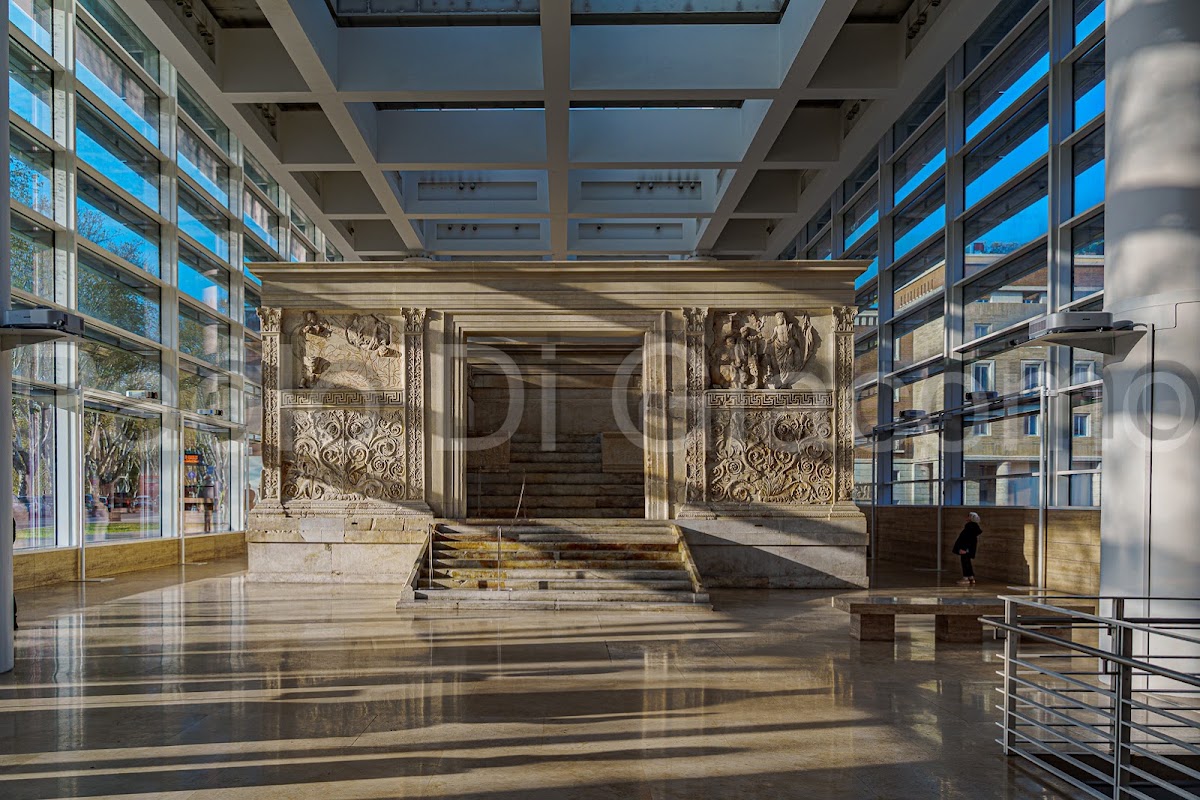
Ara Pacis Museum29
🎨
4.5 (10,477)$$ · Mid-range

The Ara Pacis Augustae - an intricately carved marble altar commissioned by Emperor Augustus to mark the peace of the early empire - is displayed inside a striking modern glass hall designed by American architect Richard Meier, completed in 2006. The pairing of ancient relief carving with contemporary architecture divided opinion when it opened but has become one of central Rome's more distinctive museum experiences.

A 4.5 rating and maximum culture and must-see scores reflect its status as both an important ancient monument and a well-executed modern presentation, and the museum regularly supplements the altar with temporary exhibitions on painting and design. Its riverside location near Piazza del Popolo makes it an easy add-on to a walking day in the historic center.

✨ Reasons to go

  • 1The altar was commissioned by Emperor Augustus to commemorate the peace of the early Roman Empire.
  • 2The enclosing glass hall was designed by American architect Richard Meier and completed in 2006, the first new monumental structure built in Rome's historic center since fascist-era times.
  • 3The carved precinct walls depict mythological scenes and a procession of the imperial family.

💡 Good to know

  • 1Check what temporary exhibition is running, since it can be a strong draw on its own
  • 2visit in the morning or early evening for good natural light through the glass walls
  • 3it's a relatively quick visit, easy to combine with Piazza del Popolo.

⏱️ Typical visit

1h15

🕰️ Best time

morning, lunchtime, afternoon, early evening or evening

🚶 Walking intensity

Moderate walking

📍

Address

Lungotevere in Augusta, 00186 Roma RM, Italy · Roma
🕐

Hours

  • Monday: 9:30 AM – 7:30 PM
  • Tuesday: 9:30 AM – 7:30 PM
  • Wednesday: 9:30 AM – 7:30 PM
  • Thursday: 9:30 AM – 7:30 PM
  • Friday: 9:30 AM – 7:30 PM
  • Saturday: 9:30 AM – 7:30 PM
  • Sunday: 9:30 AM – 7:30 PM
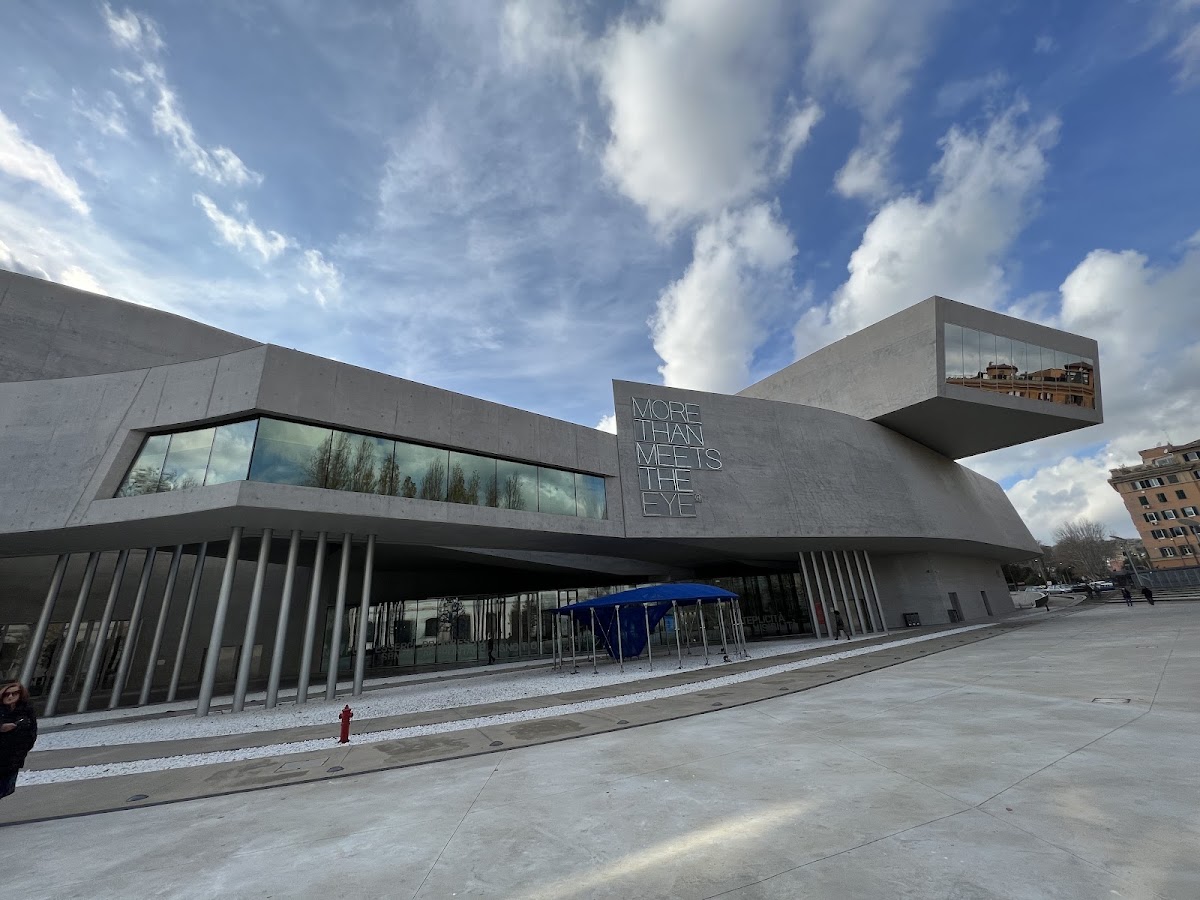
MAXXI - National Museum of 21st Century Art30
🎨
4.5 (12,919)$$ · Mid-range

Opened in 2010, MAXXI is Rome's dedicated museum for contemporary art and architecture, its fluid, curving concrete galleries designed by the late Zaha Hadid drawing almost as much attention as the exhibitions inside. It sits outside the historic center in Flaminio, which keeps it off the standard tourist circuit and gives it the city's highest trendiness score among major museums.

At 4.5 stars over nearly 13,000 reviews, visitors describe it as a refreshing counterpoint to Rome's ancient-and-Renaissance default, rewarding those who specifically want contemporary and interactive work. Expect rotating exhibitions rather than a fixed permanent collection to anchor a visit around.

✨ Reasons to go

  • 1Designed by Zaha Hadid, whose fluid concrete galleries won the RIBA Stirling Prize in 2010
  • 2Opened in 2010 as Rome's dedicated museum for contemporary art and architecture, breaking from the city's ancient and Renaissance focus
  • 3Located in Flaminio outside the historic center, exhibitions rotate rather than a fixed permanent collection

💡 Good to know

  • 1Check the current exhibition schedule before going, since the lineup changes often
  • 2allow a full afternoon and pair it with a stroll along the Tiber
  • 3it's a deliberate trip out from the center, so plan transport in advance.

⏱️ Typical visit

2h

🕰️ Best time

morning, lunchtime, afternoon or early evening

🚶 Walking intensity

Moderate walking

📍

Address

Via Guido Reni, 4a, 00196 Roma RM, Italy · Roma
🕐

Hours

  • Monday: Closed
  • Tuesday: 11:00 AM – 7:00 PM
  • Wednesday: 11:00 AM – 7:00 PM
  • Thursday: 11:00 AM – 7:00 PM
  • Friday: 11:00 AM – 7:00 PM
  • Saturday: 11:00 AM – 7:00 PM
  • Sunday: 11:00 AM – 7:00 PM