The Globe Map

Home · Rome · Friend Groups

Discover Rome’s 200 best spots for a Friend Groups' trip

From the classic Colosseum and Roman Forum, to lesser-known spots worth adding to your trip.

  • Prices & booking information
  • Opening hours & visit duration
  • Best time to visit
  • Location & practical information
  • Local tips for every spot
Colosseum1
🏛️
4.8 (503,734)$$$ · Expensive

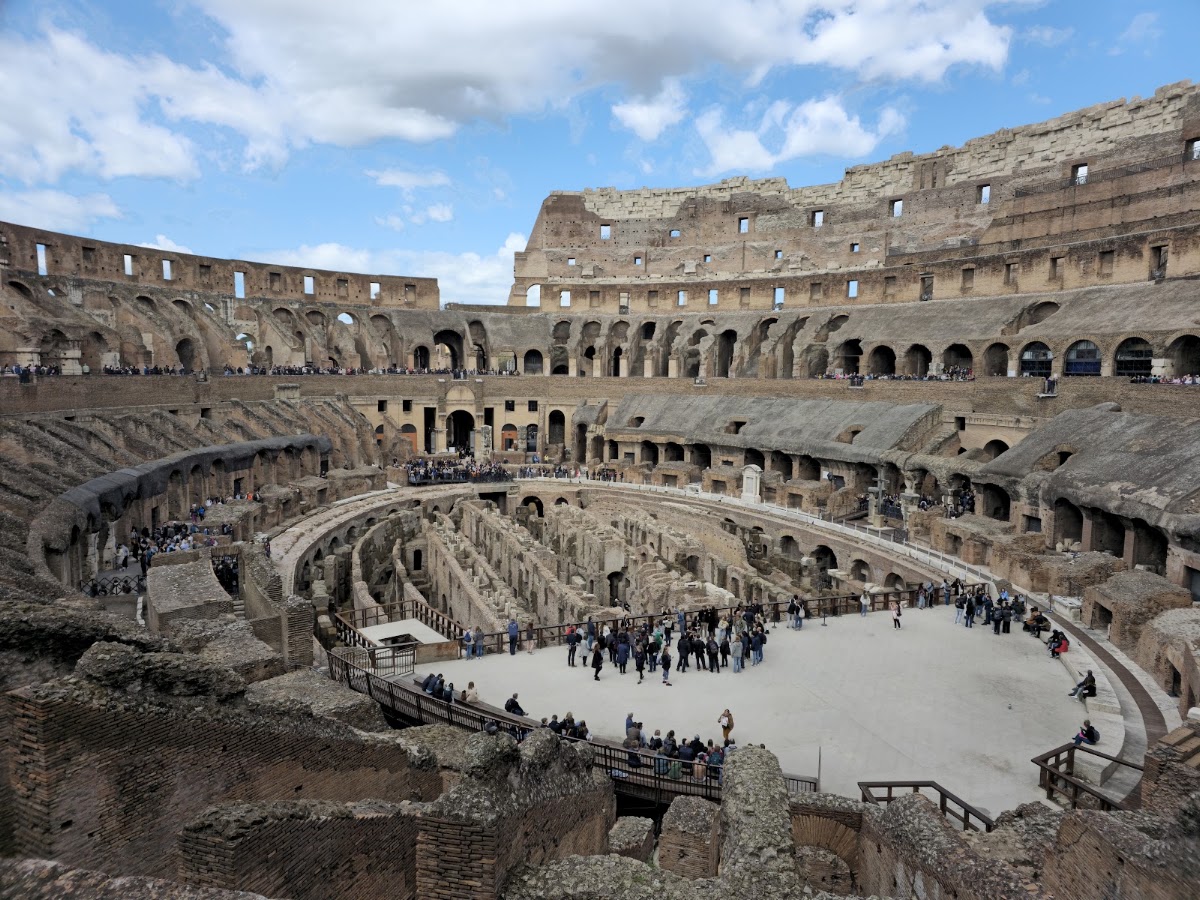
Completed in AD 80 under Emperor Titus, the Colosseum could hold tens of thousands of spectators for gladiatorial combat, staged animal hunts and mock naval battles, its ring of arches and underground hypogeum chambers still standing as one of the ancient world's most complete surviving structures. With a 4.8 rating from over half a million reviews — the most-reviewed spot in this entire batch — it's unambiguously one of the must-see sights in Europe, and its scale rewards taking real time rather than rushing through.

The 120-minute suggested duration and required booking reflect how much there is to see, especially for anyone adding access to the arena floor or underground levels.

✨ Reasons to go

  • 1Completed in AD 80 under Emperor Titus, it could hold tens of thousands of spectators for gladiatorial combat and staged animal hunts.
  • 2The arena floor could be flooded or fitted with sets for mock naval battles and elaborate hunts.
  • 3Underground hypogeum chambers, where gladiators and animals entered the arena, are still preserved and accessible on specialized tickets.

💡 Good to know

  • 1Book tickets online well in advance, ideally a combined ticket covering the Roman Forum and Palatine Hill
  • 2consider an arena-floor or underground ticket for a more complete experience of where gladiators and animals actually entered
  • 3go at opening time or on a combined evening slot to avoid the worst of the midday queues and heat.

⏱️ Typical visit

2h

🕰️ Best time

early morning, morning, lunchtime or afternoon

🚶 Walking intensity

Moderate walking

📍

Address

P.za del Colosseo, 1, 00184 Roma RM, Italy · Roma
🕐

Hours

  • Monday: 8:30 AM – 4:30 PM
  • Tuesday: 8:30 AM – 4:30 PM
  • Wednesday: 8:30 AM – 4:30 PM
  • Thursday: 8:30 AM – 4:30 PM
  • Friday: 8:30 AM – 4:30 PM
  • Saturday: 8:30 AM – 4:30 PM
  • Sunday: 8:30 AM – 4:30 PM
Roman Forum2
🏛️
4.8 (145,665)$$ · Mid-range

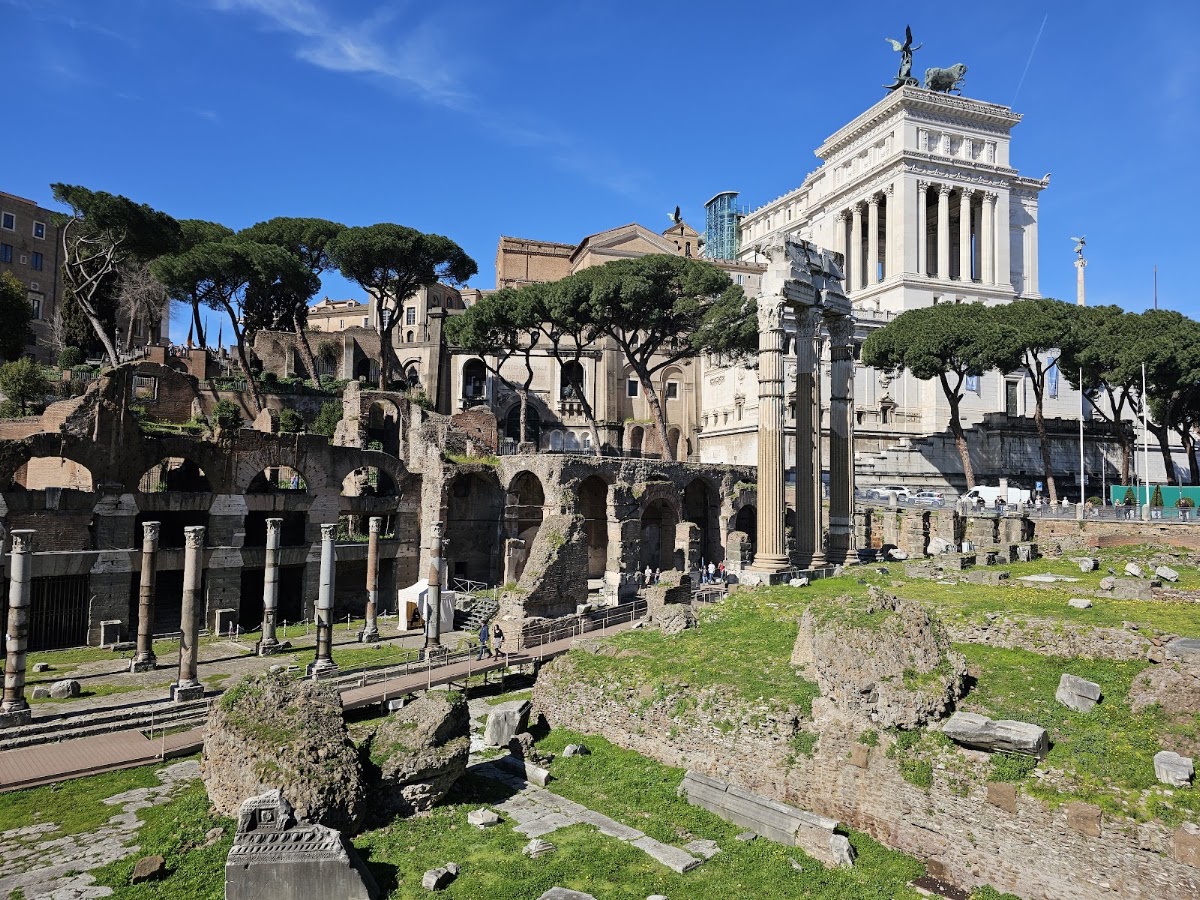
For centuries the Roman Forum served as the civic core of the Roman Republic and Empire, its temples, basilicas and triumphal arches hosting elections, speeches, trials and processions at the heart of a city that ruled much of the ancient world. Today it's a sprawling field of columns, foundations and partial structures climbing toward the Palatine Hill, and reviewers with a 4.8 rating consistently recommend a guided tour, noting that the ruins can be hard to interpret from signage alone without context on what once stood where.

The high 90-minute duration and high walking intensity in the data reflect real, often uneven ground to cover, best tackled with sun protection and sturdy shoes.

✨ Reasons to go

  • 1Served for centuries as the political, religious, and commercial heart of ancient Rome, hosting elections, trials, and public speeches
  • 2The site includes remains of temples, basilicas, and triumphal arches that once anchored the ancient city's civic life
  • 3Combined ticketing links the Forum with the Colosseum and Palatine Hill on a single entry

💡 Good to know

  • 1Book a combined ticket with the Colosseum and Palatine Hill, which covers all three sites on one entry
  • 2consider a guided tour, since reviewers consistently say the ruins are far more meaningful with context than reading site signage alone
  • 3wear sturdy shoes and bring water, as the site involves significant uneven walking with little shade.

⏱️ Typical visit

1h30

🕰️ Best time

morning, lunchtime or afternoon

🚶 Walking intensity

Active — lots of walking

📍

Address

00186 Rome, Metropolitan City of Rome Capital, Italy · Rome
🕐

Hours

  • Monday: 9:00 AM – 4:30 PM
  • Tuesday: 9:00 AM – 4:30 PM
  • Wednesday: 9:00 AM – 4:30 PM
  • Thursday: 9:00 AM – 4:30 PM
  • Friday: 9:00 AM – 4:30 PM
  • Saturday: 9:00 AM – 4:30 PM
  • Sunday: 9:00 AM – 4:30 PM
Piazza Navona3
🏛️
4.7 (217,015)Free

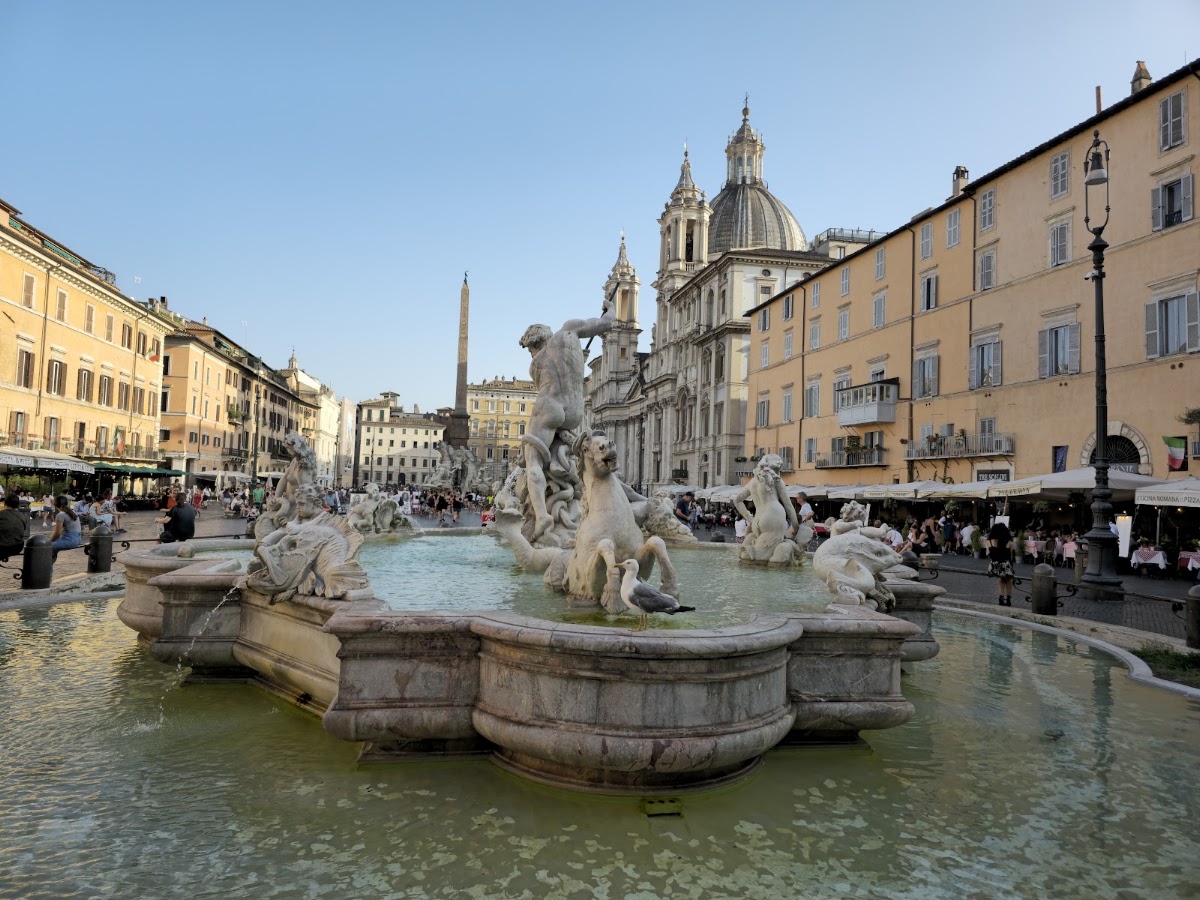
The piazza's elongated oval shape traces the outline of the 1st-century Stadium of Domitian that once stood here, and the buried arena arches can still be visited beneath the square. Bernini's Fontana dei Quattro Fiumi anchors the center, facing off according to popular legend against Borromini's façade for the church of Sant'Agnese in Agone.

By day it's full of street artists and portrait painters; by evening the surrounding cafés and restaurants take over, making it one of the liveliest spots in the historic center. It suits a slow wander and a coffee more than a checklist visit.

✨ Reasons to go

  • 1The piazza's oval shape follows the outline of the 1st-century Stadium of Domitian, whose buried arena arches survive underground and can be toured separately.
  • 2Bernini's Fontana dei Quattro Fiumi sits at the center, with a popular legend claiming it was designed to rival Borromini's facade for Sant'Agnese in Agone across the square.

💡 Good to know

  • 1Sit at a café for the atmosphere but expect tourist-inflated prices
  • 2visit early morning for photos without the crowds
  • 3the underground Stadio di Domiziano ruins can be visited separately for a look at what's beneath the square.

⏱️ Typical visit

25 min

🚶 Walking intensity

Easy pace

📍

Address

Piazza Navona, 00186 Roma RM, Italy · Roma
🕐

Hours

  • Monday: Open 24 hours
  • Tuesday: Open 24 hours
  • Wednesday: Open 24 hours
  • Thursday: Open 24 hours
  • Friday: Open 24 hours
  • Saturday: Open 24 hours
  • Sunday: Open 24 hours
Trevi Fountain4
🏛️
4.7 (519,201)Free

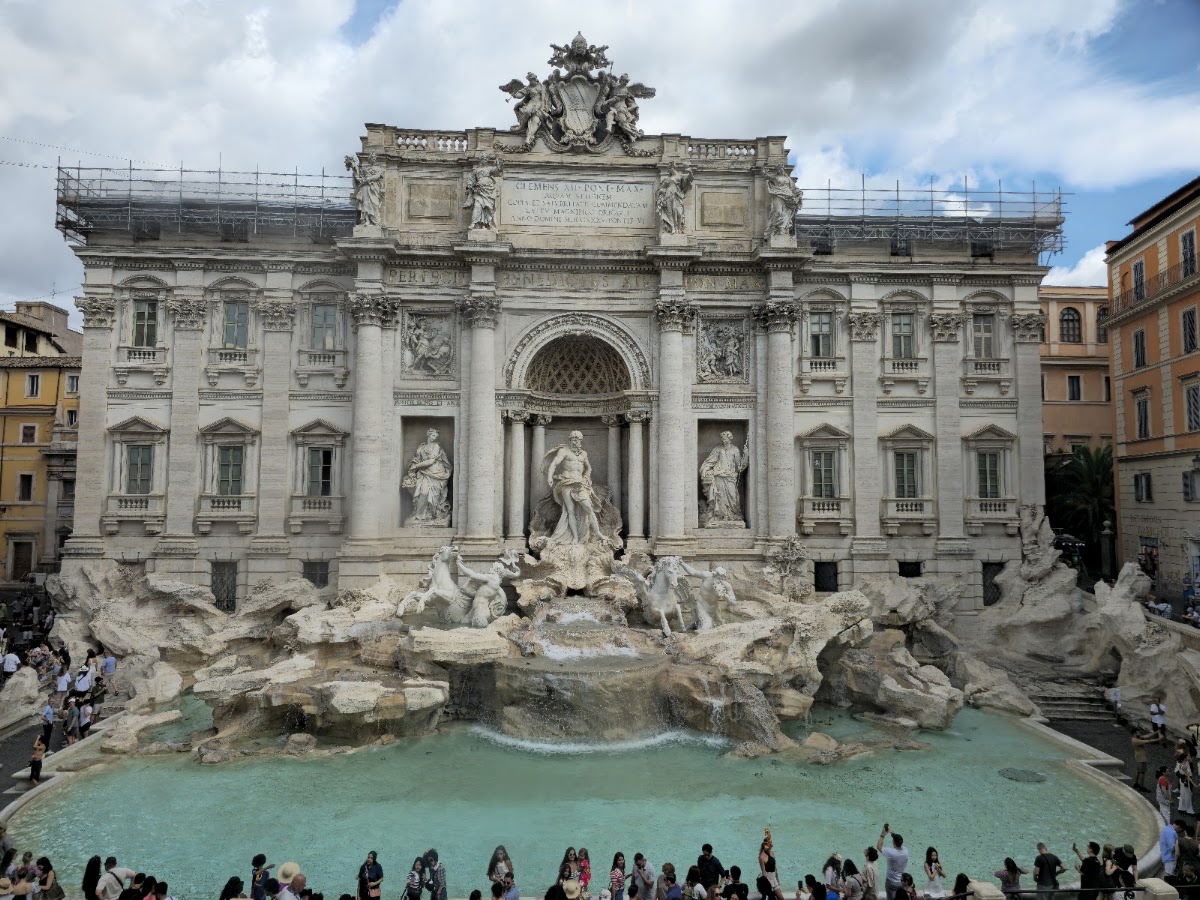
Built into the back of the Palazzo Poli and completed in 1762 to Nicola Salvi's design, the Trevi Fountain channels water from the ancient Aqua Virgo aqueduct through a theatrical sculpture of Oceanus riding a shell chariot flanked by tritons and sea-horses. It's the terminus of a Roman aqueduct still in use after roughly two thousand years, and the tradition of tossing a coin over your shoulder to guarantee a return to Rome (immortalized in La Dolce Vita) keeps the piazza packed at all hours.

The scale surprises first-time visitors, since it fills an entire small square rather than sitting as a modest feature. It's a five-minute stop for most, but a magnet regardless — expect a crowd no matter when you show up.

✨ Reasons to go

  • 1Designed by Nicola Salvi and completed in 1762 against the facade of Palazzo Poli
  • 2Fed by the Aqua Virgo, an ancient Roman aqueduct still functioning after about two thousand years
  • 3The coin-toss tradition for a guaranteed return to Rome was popularized by the film La Dolce Vita

💡 Good to know

  • 1Visit at sunrise or very late evening to see it with far fewer people
  • 2keep a hand on your bag in the crowds, a known pickpocket spot
  • 3a coin toss over the left shoulder with the right hand is said to guarantee your return to Rome.

⏱️ Typical visit

20 min

🕰️ Best time

morning, lunchtime, afternoon, early evening or evening

🚶 Walking intensity

Easy pace

📍

Address

Piazza di Trevi, 00187 Roma RM, Italy · Roma
🕐

Hours

  • Monday: 11:30 AM – 10:00 PM
  • Tuesday: 9:00 AM – 10:00 PM
  • Wednesday: 9:00 AM – 10:00 PM
  • Thursday: 9:00 AM – 10:00 PM
  • Friday: 11:30 AM – 10:00 PM
  • Saturday: 9:00 AM – 10:00 PM
  • Sunday: 9:00 AM – 10:00 PM
Pantheon5
🏛️
4.8 (285,258)Free

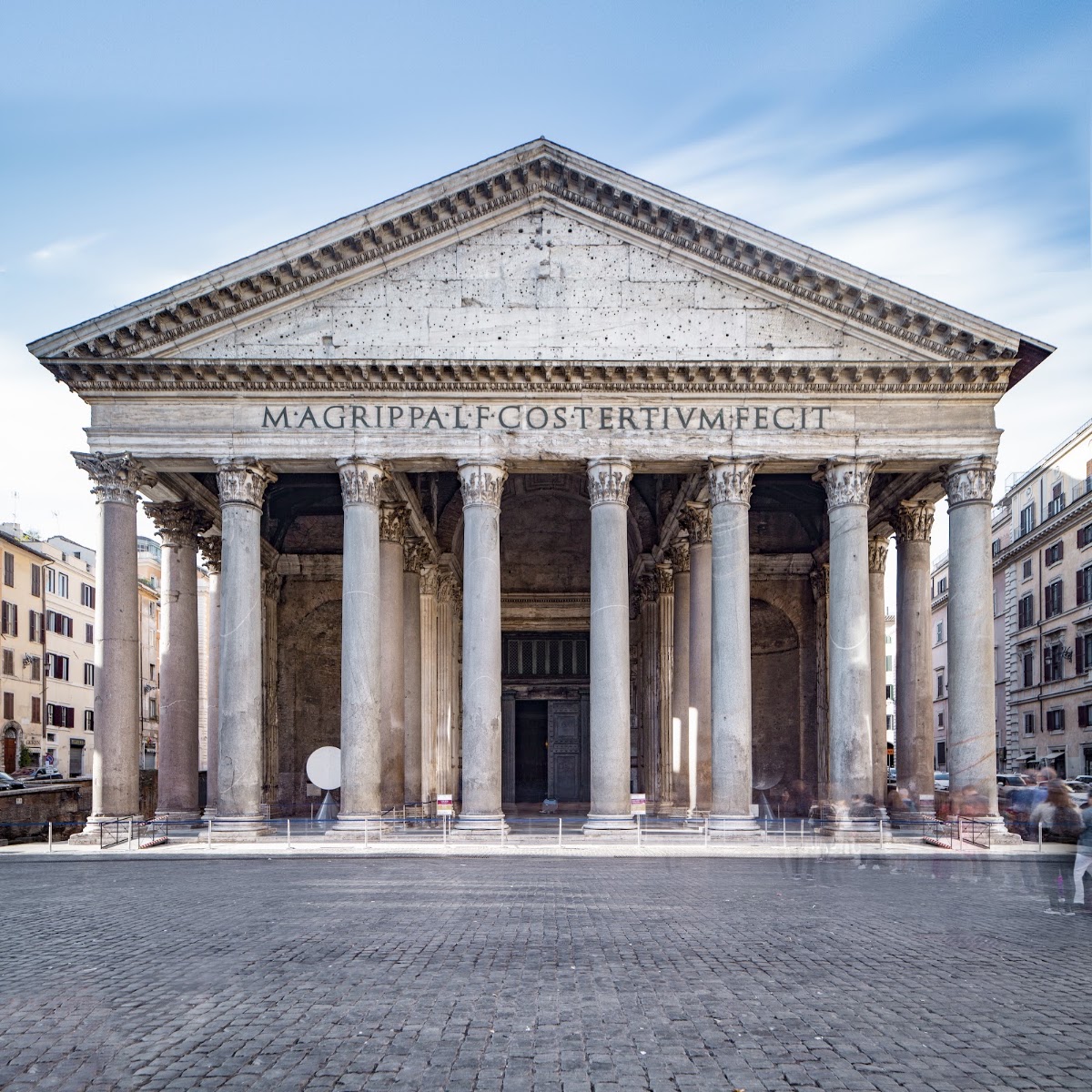
Originally commissioned by Marcus Agrippa under Augustus and rebuilt in its current form by Hadrian around AD 126, the Pantheon has survived nearly two millennia largely intact thanks to its continuous use, first as a Roman temple to all the gods and later, from the 7th century, as a Christian church. Its dome remains the largest unreinforced concrete dome ever built, with a central oculus open to the sky that floods the interior with light and occasional rain, and reviewers with a 4.8 rating from over 285,000 reviews consistently call the sheer scale of the columned portico and dome unforgettable in person.

Free to enter but increasingly requiring booked timed slots, it's a quick but essential stop that rewards visiting more than once at different times of day for how the light changes inside.

✨ Reasons to go

  • 1Its dome is still the largest unreinforced concrete dome in the world, nearly 2,000 years after construction.
  • 2Built by Hadrian around AD 126 on the site of an earlier temple commissioned by Marcus Agrippa under Augustus.
  • 3The central oculus is open to the sky, letting rain and shifting light fall directly into the interior.

💡 Good to know

  • 1Reserve a free timed-entry slot online in advance, since walk-up access has become more restricted
  • 2visit near opening or in the late evening for a quieter experience and better light through the oculus
  • 3step just outside to Piazza della Rotonda afterward for a coffee with the facade in view.

⏱️ Typical visit

30 min

🕰️ Best time

morning, lunchtime, afternoon, early evening, evening or late night

🚶 Walking intensity

Easy pace

📍

Address

Piazza della Rotonda, 00186 Roma RM, Italy · Roma
🕐

Hours

  • Monday: 9:00 AM – 11:00 PM
  • Tuesday: 9:00 AM – 11:00 PM
  • Wednesday: 9:00 AM – 11:00 PM
  • Thursday: 9:00 AM – 7:00 PM
  • Friday: 9:00 AM – 11:00 PM
  • Saturday: 9:00 AM – 11:00 PM
  • Sunday: 9:00 AM – 11:00 PM
Sistine Chapel6
🏛️
4.7 (96,233)$$ · Mid-range

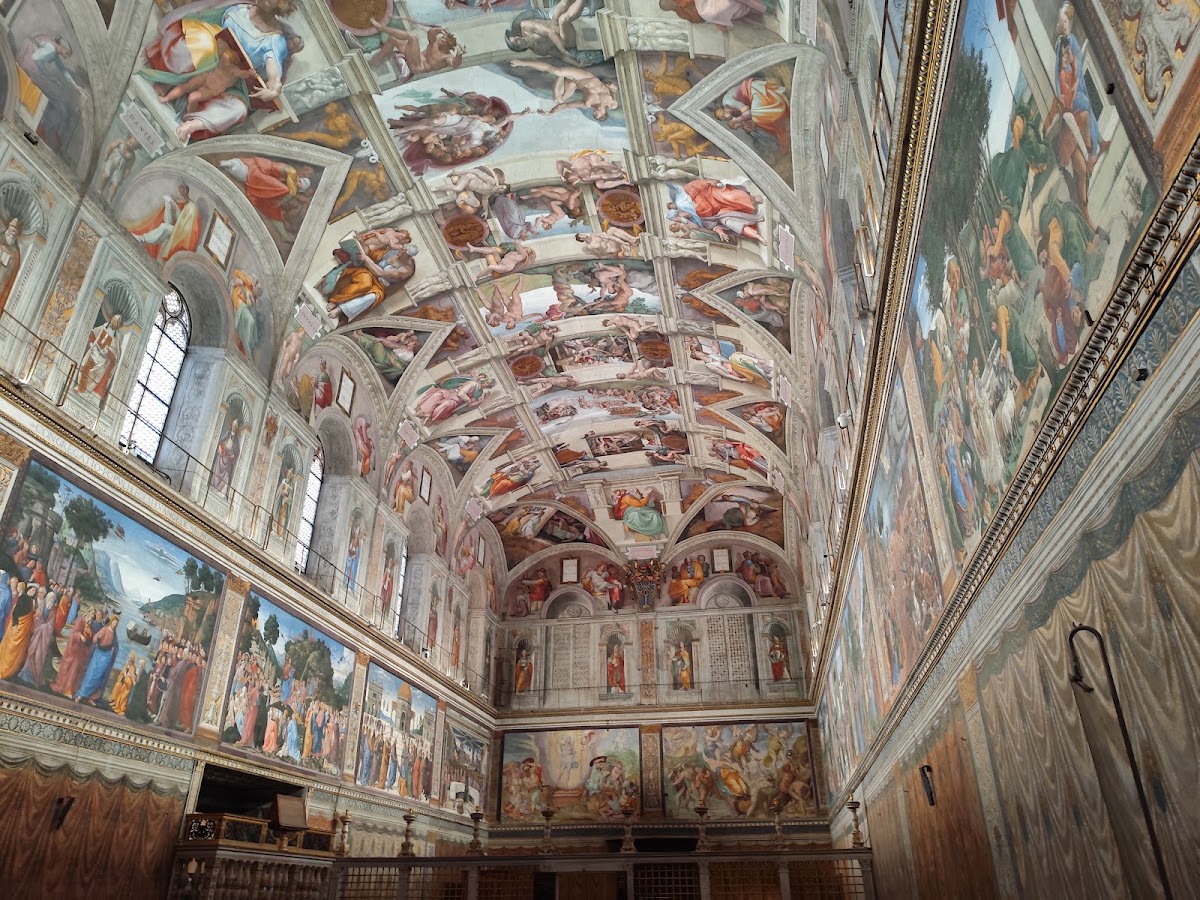
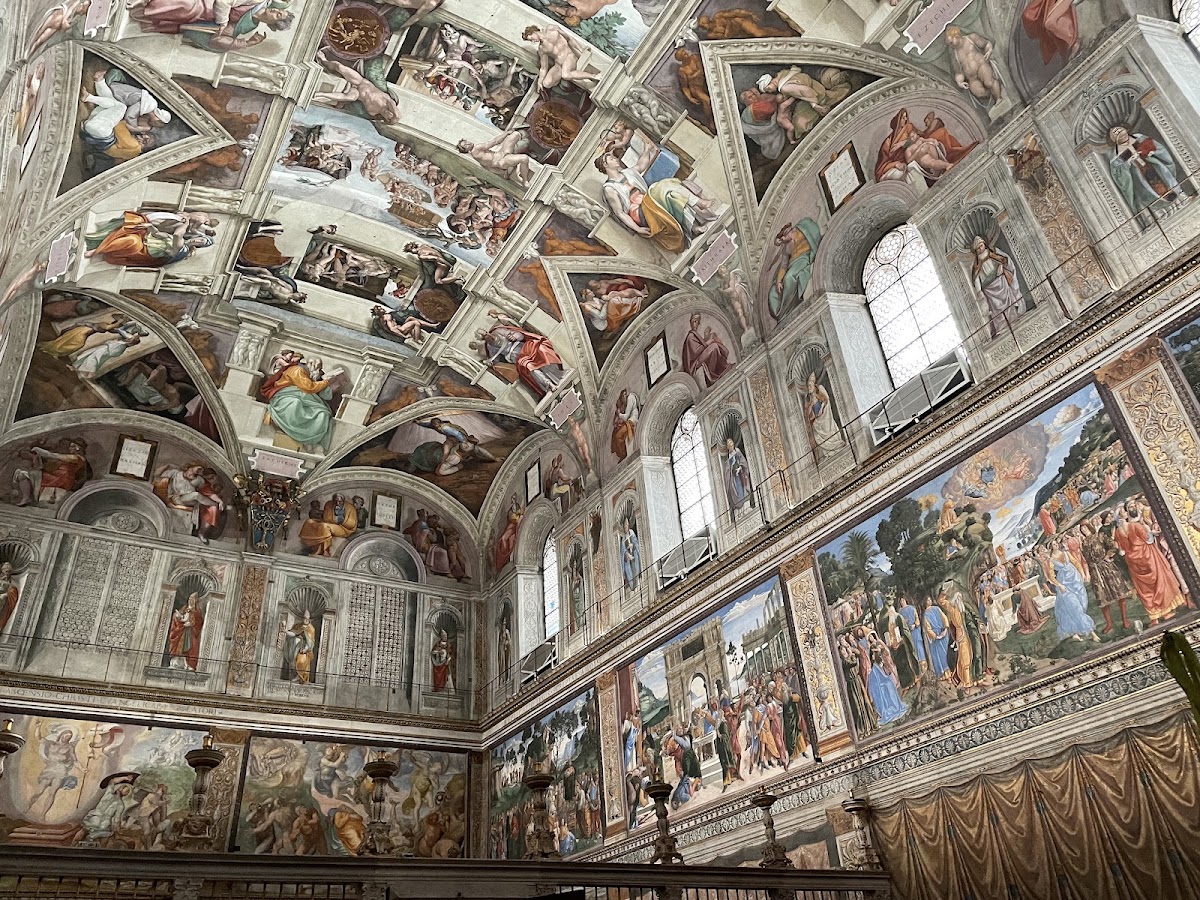
Painted largely single-handedly by Michelangelo between 1508 and 1512, with the Last Judgment added on the altar wall over two decades later, the chapel's frescoes cover the creation of Adam alongside scenes from Genesis and remain the high point of most Vatican Museums visits. It's still a working chapel — the site of papal conclaves — which adds a layer of living history to the art.

The room is often tightly packed and silence is officially enforced, which can make a hurried visit feel rushed; those who linger and look up longer get more out of it. It's essential for anyone with an interest in Renaissance art, though not a restful stop given the crowds.

✨ Reasons to go

  • 1Michelangelo painted the ceiling largely single-handedly between 1508 and 1512, then returned two decades later to add the Last Judgment on the altar wall.
  • 2It remains a working chapel and is the site where papal conclaves are held to elect a new pope.
  • 3Photography and talking are both prohibited inside, with attendants enforcing silence.

💡 Good to know

  • 1Book Vatican Museums tickets online in advance and choose an early or last-entry slot to reduce crowding
  • 2photography is prohibited and silence is enforced by attendants
  • 3the chapel comes at the end of a long museum route, so budget time and energy for the walk beforehand.

⏱️ Typical visit

1h30

🕰️ Best time

early morning, morning, lunchtime, afternoon, early evening or evening

🚶 Walking intensity

Moderate walking

📍

Address

00120, Vatican City · Vatican City
🕐

Hours

  • Monday: 8:00 AM – 8:00 PM
  • Tuesday: 8:00 AM – 8:00 PM
  • Wednesday: 8:00 AM – 8:00 PM
  • Thursday: 8:00 AM – 8:00 PM
  • Friday: 8:00 AM – 8:00 PM
  • Saturday: 8:00 AM – 8:00 PM
  • Sunday: Closed
Saint Peter’s Basilica7
🏛️
4.8 (182,291)Free

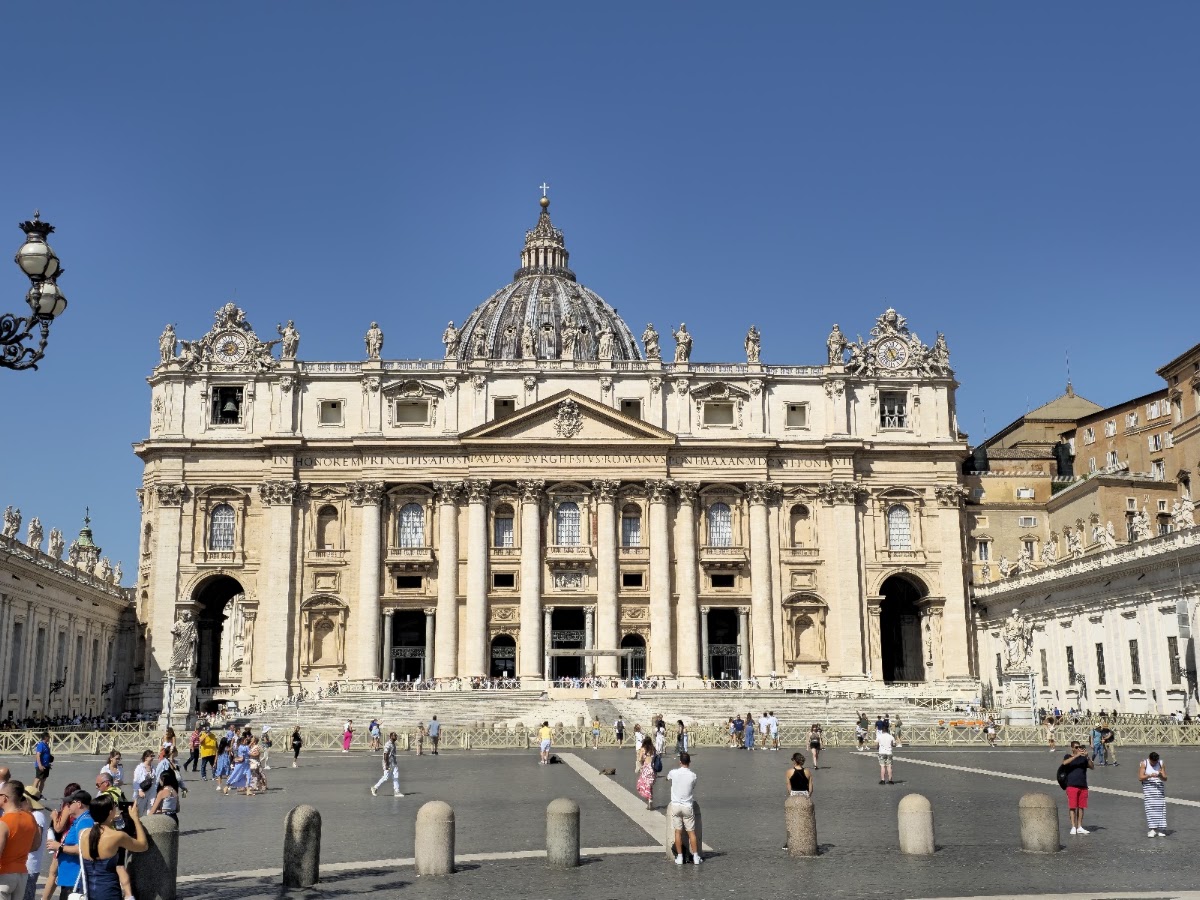
Rebuilt over more than a century starting in 1506 on the site of a 4th-century basilica, St. Peter's brings together work by Bramante, Michelangelo, and Bernini, whose sweeping colonnade frames the piazza outside.

Inside, the scale is disorienting — Bernini's bronze baldachin alone rises over the papal altar — and highlights include Michelangelo's Pietà and the climb to the dome for one of the best views over Rome. As the spiritual center of the Catholic Church, it draws pilgrims as much as sightseers, and free entry keeps queues long despite the building's size.

It rewards an unhurried visit rather than a quick photo stop.

✨ Reasons to go

  • 1Built over more than a century starting in 1506 on the site of a 4th-century basilica, with work by Bramante, Michelangelo, and Bernini.
  • 2Michelangelo's Pietà and Bernini's bronze baldachin over the papal altar are housed inside.
  • 3The dome, also designed by Michelangelo, can be climbed for a panoramic view over Rome, with no lift for the final stretch.

💡 Good to know

  • 1Book a free timed-entry slot online to skip the security line
  • 2dress modestly — covered shoulders and knees are enforced
  • 3climb the dome (extra ticket, no lift for the last stretch) for the best panorama in Rome.

⏱️ Typical visit

1h

🕰️ Best time

early morning, morning, lunchtime, afternoon, early evening or evening

🚶 Walking intensity

Moderate walking

📍

Address

Piazza San Pietro, 00120 Città del Vaticano, Vatican City · Città del Vaticano
🕐

Hours

  • Monday: 7:00 AM – 7:10 PM
  • Tuesday: 7:00 AM – 7:10 PM
  • Wednesday: 7:00 AM – 7:10 PM
  • Thursday: 7:00 AM – 7:10 PM
  • Friday: 7:00 AM – 7:10 PM
  • Saturday: 7:00 AM – 7:10 PM
  • Sunday: 7:00 AM – 7:10 PM
Saint Peter's Square8
🏛️
Free

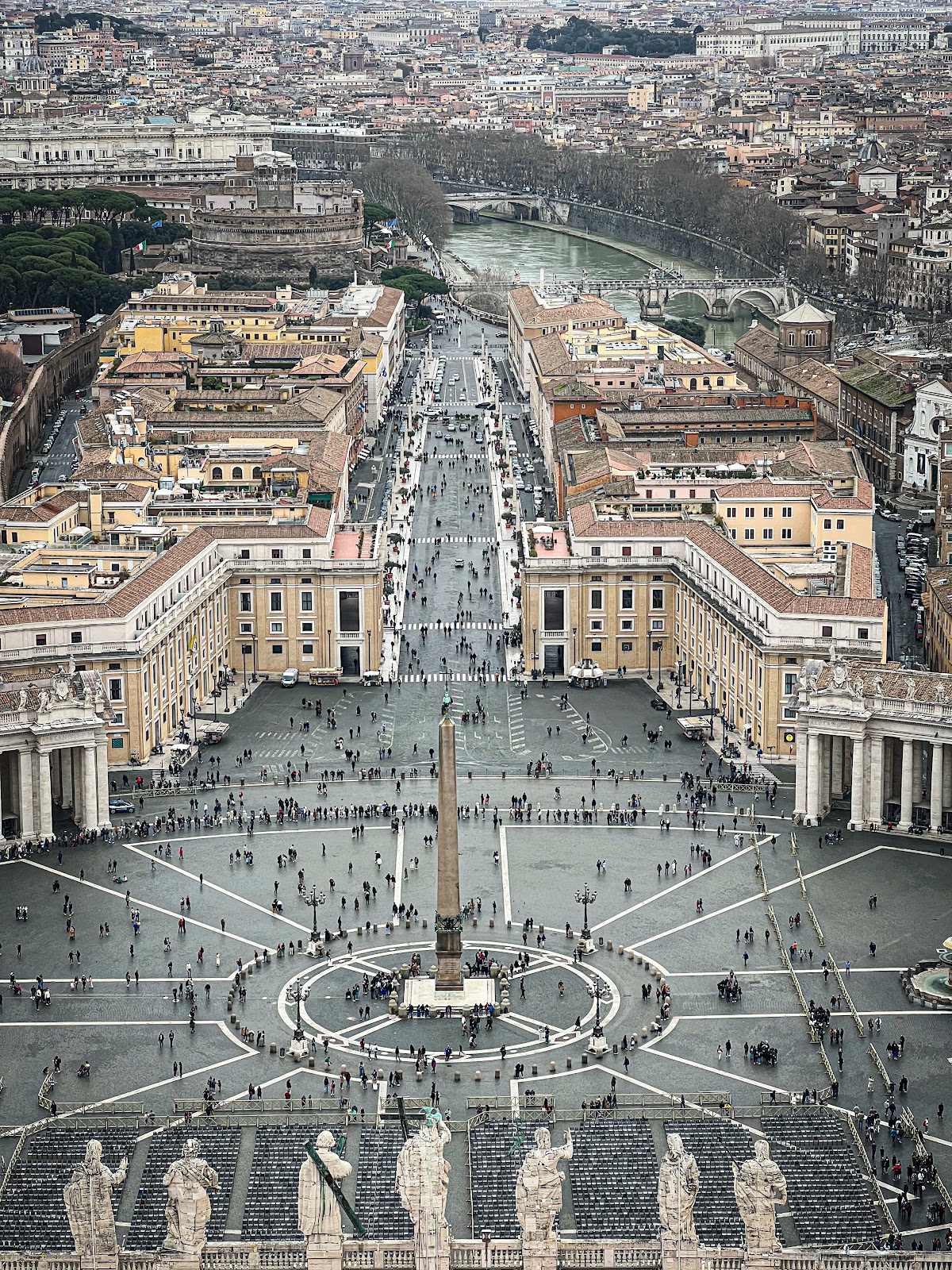
Designed by Gian Lorenzo Bernini in the mid-17th century, the square's sweeping travertine colonnades were conceived as the 'motherly arms' of the Church reaching out to welcome visitors, with an Egyptian obelisk brought to Rome by Caligula at its center. It's the stage for papal audiences and blessings, so its atmosphere shifts noticeably on days when the Pope appears at the window or holds a general audience.

Even without an event, the sheer geometry and scale make it worth pausing in before or after visiting the Basilica. It works well early or late in the day, when the light and lower crowds let the architecture stand out.

✨ Reasons to go

  • 1The colonnades comprise 284 Doric columns topped by 140 saint statues, designed by Bernini to resemble the outstretched arms of the Church.
  • 2Two circular stone markers between the obelisk and fountains reveal an optical illusion where the four rows of columns visually merge into a single row.
  • 3The central obelisk was brought from Egypt by Emperor Caligula and, according to tradition, marks the spot of Saint Peter's crucifixion.

💡 Good to know

  • 1Check the Vatican's schedule if you want to catch a papal audience or blessing, held on select mornings
  • 2go through security bag checks before entering, as at the Basilica
  • 3early morning or evening avoids both the crowds and the midday sun in this shade-free square.

⏱️ Typical visit

20 min

🕰️ Best time

early morning or evening

🚶 Walking intensity

Easy pace

📍

Address

Piazza San Pietro, 00120
Spanish Steps9
🏛️
4.6 (111,240)Free

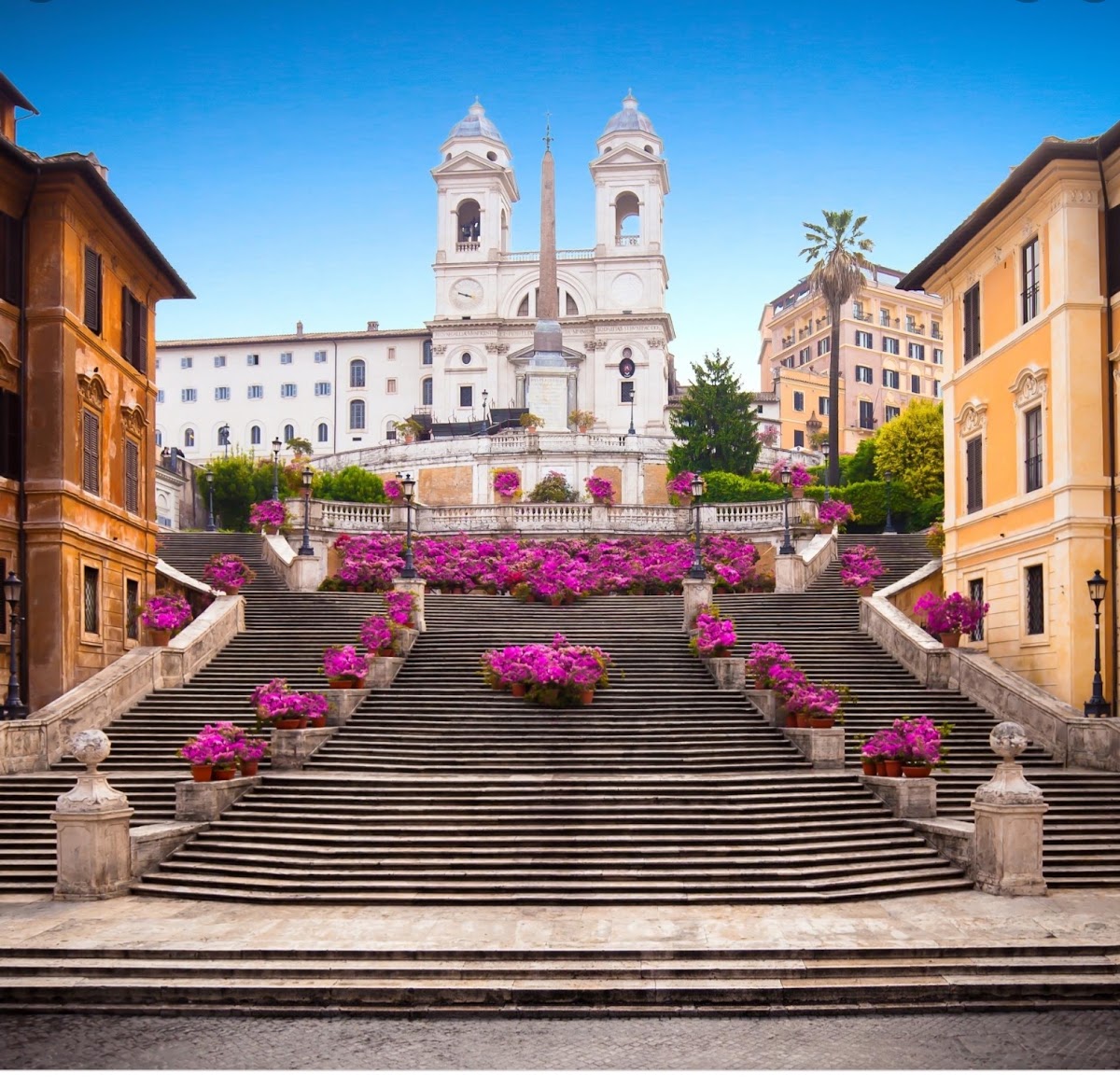
Completed in 1725 to connect the Bourbon-funded piazza below with the French-owned church above, the 135-step staircase takes its English name from the Spanish embassy that has stood in the square since the 17th century. Its scenographic, terraced design made it a magnet for Grand Tour painters and later for photographers, and the Keats-Shelley House at its foot marks where the poet died in 1821.

Sitting on the steps themselves is now banned, so the crowd tends to gather near the Barcaccia fountain at the base instead. It's a quick, essential stop for anyone tracing central Rome's key sights.

✨ Reasons to go

  • 1Completed in 1725 to link the Bourbon-funded piazza with the French-owned church above, with 135 steps in its terraced design
  • 2The staircase's Italian and French patrons gave it an English name derived from the Spanish embassy that has stood in the square since the 1600s
  • 3The Keats-Shelley House at the base marks where the poet John Keats died in 1821

💡 Good to know

  • 1Sitting on the steps is prohibited and fined, so plan to view rather than linger on them
  • 2go at early morning or evening for a clearer view without the day's crowds
  • 3combine with a walk up Via dei Condotti, Rome's luxury shopping street, at the base.

⏱️ Typical visit

20 min

🕰️ Best time

early morning, early evening or evening

🚶 Walking intensity

Easy pace

📍

Address

Piazza di Spagna, 00187 Roma RM, Italy · Roma
Castel Sant'Angelo10
🏛️
4.7 (110,399)$$ · Mid-range

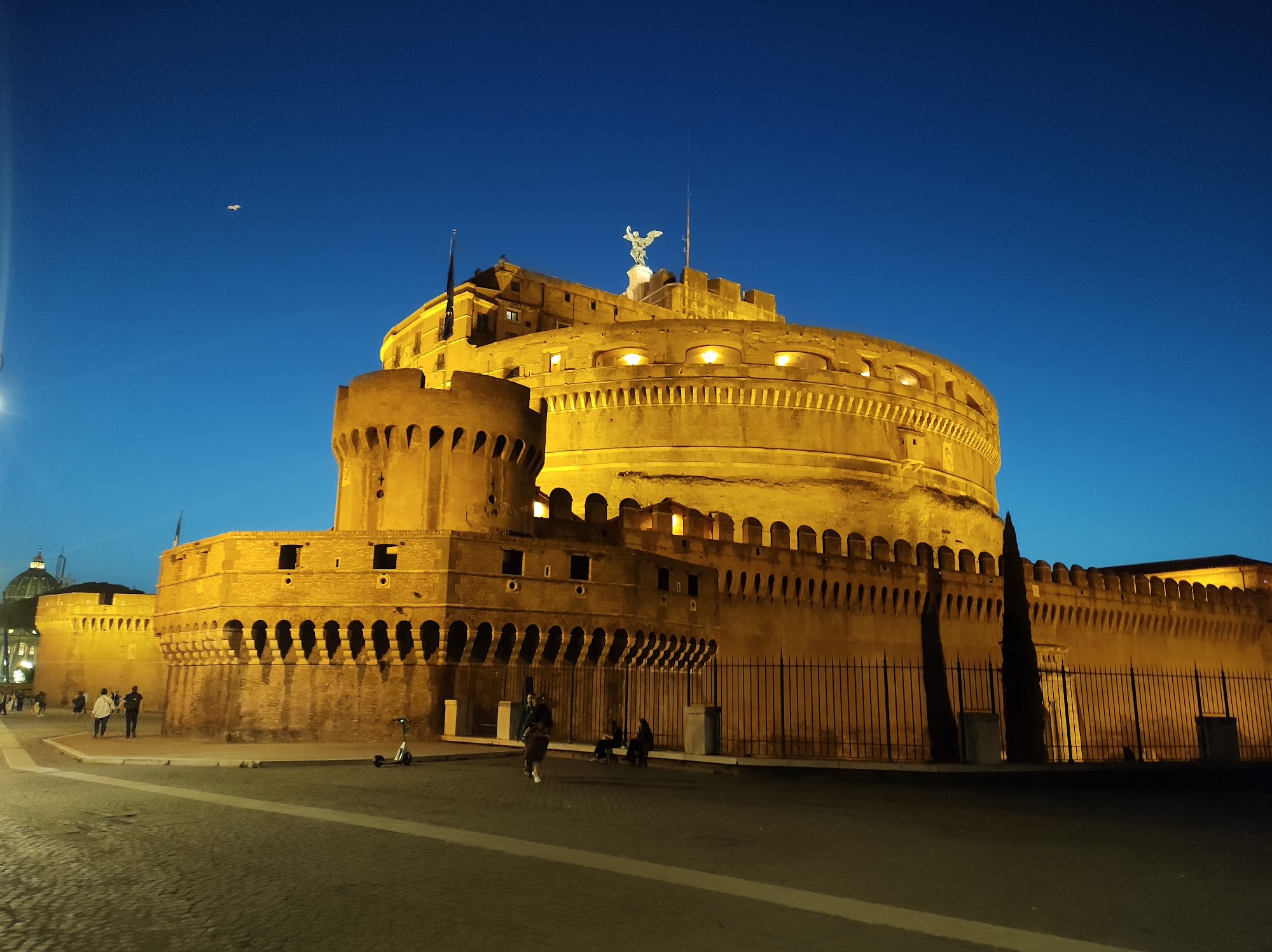
Built as Emperor Hadrian's tomb in the 2nd century, the cylindrical fortress was later fortified by the popes, who used the Passetto di Borgo — a raised corridor still visible along its walls — to flee here from the Vatican during sieges, most famously in 1527. Its layered history as mausoleum, fortress, prison, and papal residence shows in the mix of ancient masonry, Renaissance apartments, and military architecture inside.

The rooftop terrace, where the opera Tosca is set for its final act, gives sweeping views over the Tiber and St. Peter's dome.

It suits visitors who want history with a view rather than pure art or architecture.

✨ Reasons to go

  • 1Originally built in the 2nd century as Emperor Hadrian's mausoleum before becoming a papal fortress
  • 2Popes escaped here from the Vatican via the still-visible Passetto di Borgo corridor, most notably during the 1527 Sack of Rome
  • 3The rooftop terrace is the setting for the final act of Puccini's opera Tosca

💡 Good to know

  • 1Book tickets online in advance, especially for the terrace views at sunset
  • 2the small onsite café makes a good rest stop mid-visit
  • 3combine with a walk across Ponte Sant'Angelo, the statue-lined bridge just outside.

⏱️ Typical visit

1h30

🕰️ Best time

morning, lunchtime, afternoon, early evening or evening

🚶 Walking intensity

Moderate walking

📍

Address

Lungotevere Castello, 50, 00193 Roma RM, Italy · Roma
🕐

Hours

  • Monday: Closed
  • Tuesday: 9:00 AM – 7:30 PM
  • Wednesday: 9:00 AM – 7:30 PM
  • Thursday: 9:00 AM – 7:30 PM
  • Friday: 9:00 AM – 7:30 PM
  • Saturday: 9:00 AM – 7:30 PM
  • Sunday: 9:00 AM – 7:30 PM
Palatine Hill11
🏛️
4.7 (14,571)$$ · Mid-range

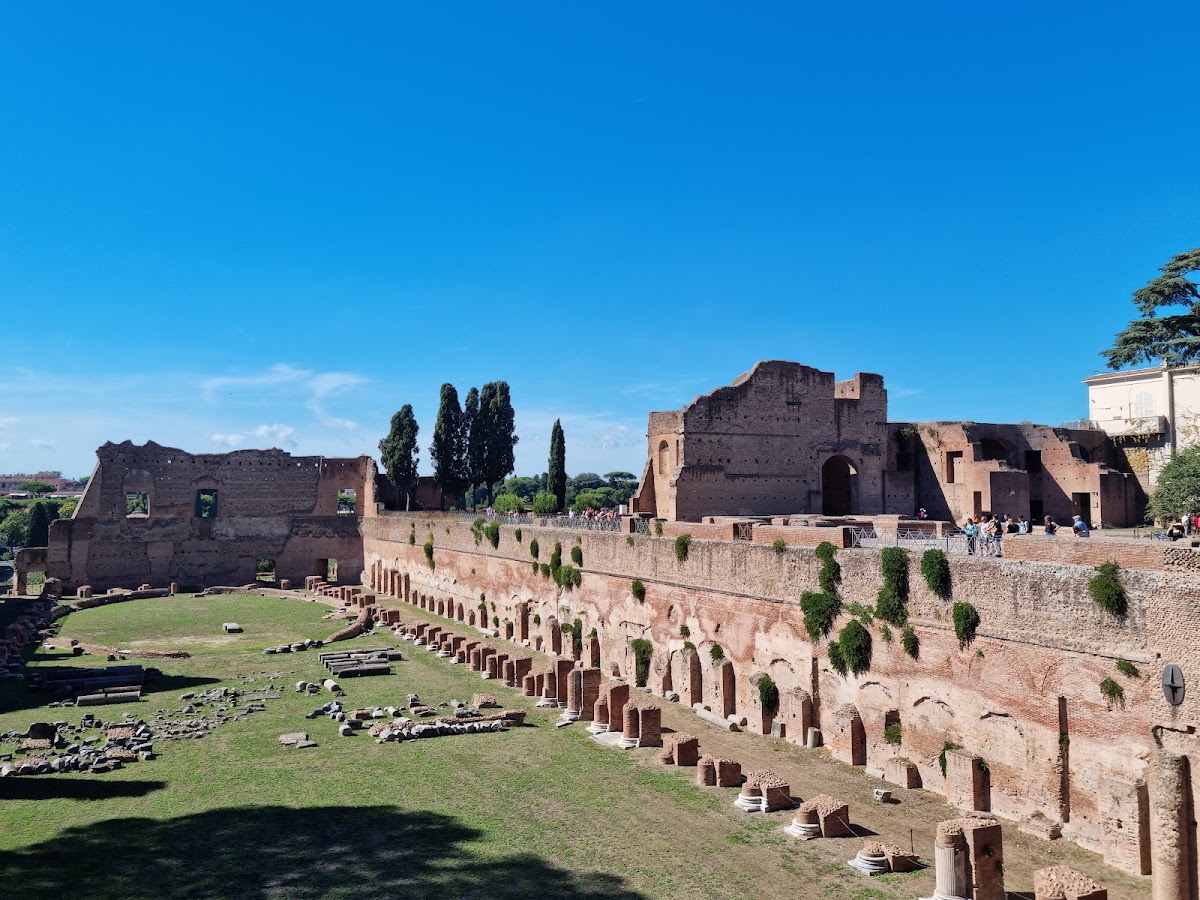
Archaeological digs on the Palatine have uncovered Iron Age huts that fit the founding myth almost too neatly, and the hill later became the address of choice for emperors, whose sprawling palace ruins — the word 'palace' itself derives from Palatium — still dominate the site. Views down over the Roman Forum on one side and the Circus Maximus on the other make it one of the most rewarding vantage points in the city, especially combined with a Forum and Colosseum ticket.

It takes real walking and some shade-free stretches, so it's a fuller commitment than a typical piazza stop. History-minded visitors get the most out of it, ideally with a guide or audio guide to make sense of the fragmented ruins.

✨ Reasons to go

  • 1Iron Age huts found here align closely with the legendary founding site of Rome
  • 2The English word 'palace' derives from Palatium, the Latin name for this hill
  • 3Emperors built their sprawling residences here, with ruins overlooking both the Roman Forum and Circus Maximus

💡 Good to know

  • 1Buy the combined Colosseum-Forum-Palatine ticket in advance and go early to beat both crowds and heat
  • 2wear sturdy shoes, as the ground is uneven ancient paving
  • 3bring water and sun protection since there's little shade.

⏱️ Typical visit

1h30

🕰️ Best time

morning, lunchtime, afternoon, early evening or evening

🚶 Walking intensity

Active — lots of walking

📍

Address

Via di S. Gregorio, 30, 00186 Roma RM, Italy · Roma
🕐

Hours

  • Monday: 9:00 AM – 7:30 PM
  • Tuesday: 9:00 AM – 7:30 PM
  • Wednesday: 9:00 AM – 7:30 PM
  • Thursday: 9:00 AM – 7:30 PM
  • Friday: 9:00 AM – 7:30 PM
  • Saturday: 9:00 AM – 7:30 PM
  • Sunday: 9:00 AM – 7:30 PM
Trastevere12
🚶
Free

Trastevere ('across the Tiber') kept a working-class, insular character for centuries, separate enough from central Rome to develop its own dialect and traditions, and that slightly separate feel survives in its tangle of narrow, ochre-walled streets. Santa Maria in Trastevere, one of Rome's oldest churches, anchors a piazza that fills with students, tourists, and street musicians by evening.

Ivy and laundry lines hang over cobblestones barely wide enough for a Vespa, and the neighbourhood's density of trattorias and bars makes it the city's favourite spot for a long dinner or a late night out. It's at its most atmospheric after dark, once the day-trip crowds thin out.

✨ Reasons to go

  • 1Santa Maria in Trastevere's mosaics were created by Pietro Cavallini in the late 13th century, among the finest examples of Roman mosaic art.
  • 2The basilica anchoring the piazza traces its origins to the 3rd century AD, making it one of Rome's oldest churches.
  • 3Trastevere's centuries of separation from central Rome across the Tiber let it develop its own dialect and traditions, still felt in its narrow, ochre-walled streets.

💡 Good to know

  • 1Come in the early evening and stay for dinner, as the neighbourhood peaks after dark
  • 2sit for a while in Piazza Santa Maria in Trastevere
  • 3wander without a map — getting a little lost is part of the appeal.

⏱️ Typical visit

1h15

🕰️ Best time

early evening or evening

🚶 Walking intensity

Active — lots of walking

📍

Address

Trastevere, Rome, Metropolitan City of Rome Capital, Italy · Trastevere
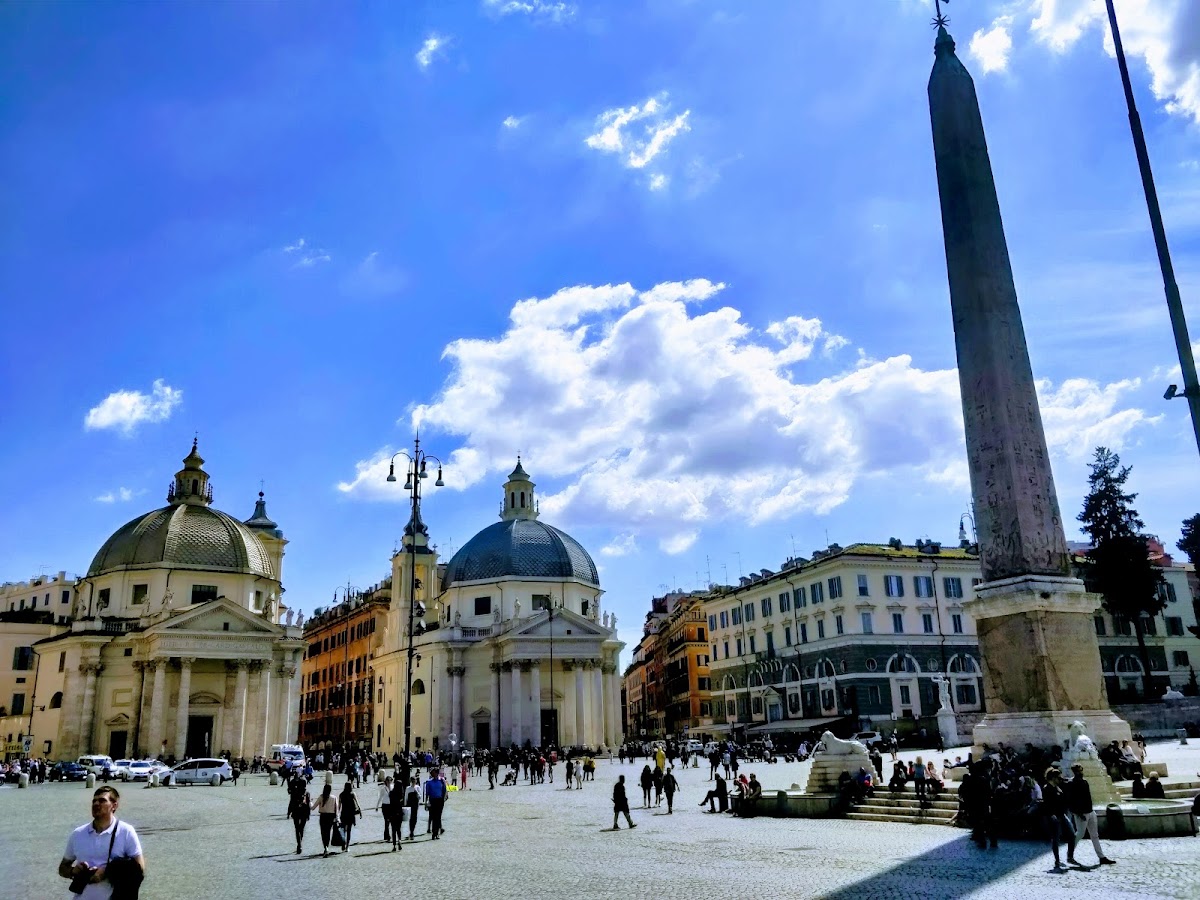
Piazza del Popolo13
🏛️
Free

Long the ceremonial entry point for travelers arriving in Rome from the north, the piazza takes its dramatic symmetrical form from a 19th-century redesign, with the twin, almost-identical churches of Santa Maria dei Miracoli and Santa Maria in Montesanto framing the three streets that fan out from it. The central obelisk, brought to Rome by Augustus, predates the surrounding architecture by nearly two thousand years.

Its open, uncluttered layout and surrounding cafés make it a comfortable place to pause, especially compared to the tighter, busier squares nearer the Pantheon. It works well combined with the Spanish Steps, roughly a ten-minute walk away.

✨ Reasons to go

  • 1The central obelisk was brought to Rome by Augustus, predating the piazza's surrounding architecture by nearly two millennia.
  • 2The square's symmetrical layout, framed by the twin churches Santa Maria dei Miracoli and Santa Maria in Montesanto, dates from a 19th-century redesign.
  • 3Santa Maria del Popolo church at the piazza's northern end houses Caravaggio paintings.

💡 Good to know

  • 1Climb the steps up to the Pincio terrace on one side for a panoramic view over the square and the city
  • 2visit the Santa Maria del Popolo church at the northern end for its Caravaggio paintings
  • 3use it as a good starting or ending point for a walk toward the Spanish Steps.

⏱️ Typical visit

20 min

🕰️ Best time

morning, afternoon or early evening

🚶 Walking intensity

Easy pace

📍

Address

Piazza del Popolo, Roma RM, Italy · Roma
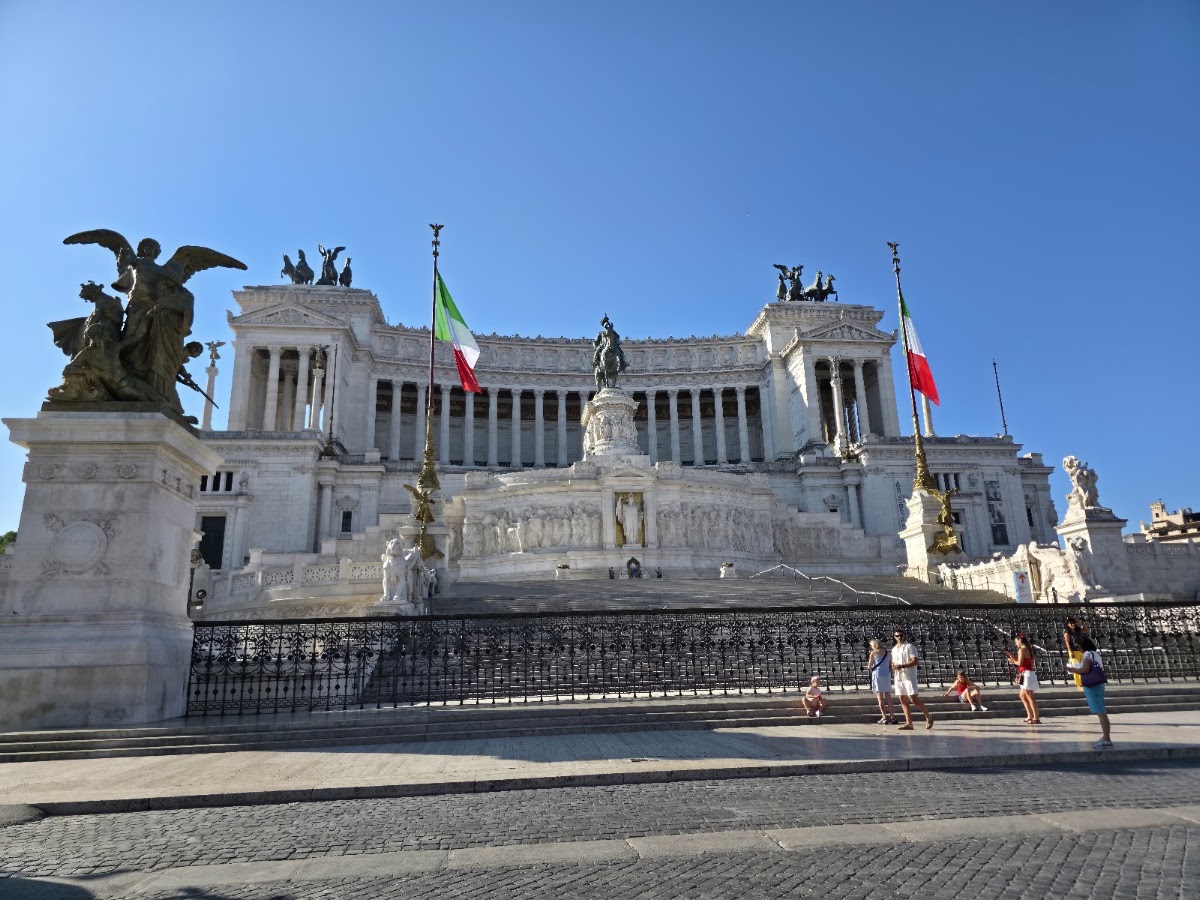
Altar of the Fatherland14
🏛️
4.8 (5,376)Free

Built in the decades around 1900 to honor Victor Emmanuel II, the first king of a unified Italy, the monument also houses the Tomb of the Unknown Soldier beneath an eternal flame. Its bright white Brescian marble and monumental staircases dominate Piazza Venezia and much of the historic center's skyline, drawing both admiration and — since its construction required demolishing part of the medieval city — decades of local criticism over its scale.

The main terrace and stairs are free, while the rooftop terrace and small museums inside require tickets. The rooftop, reached by a glass elevator, gives one of the best 360-degree views over Rome.

✨ Reasons to go

  • 1Built to honor Victor Emmanuel II, Italy's first king after unification
  • 2Houses the Tomb of the Unknown Soldier beneath an eternal flame, with periodic changing-of-the-guard ceremonies
  • 3Its construction required demolishing part of the medieval city, sparking decades of local criticism

💡 Good to know

  • 1The main structure and lower terraces are free, but the rooftop terrace with the best views requires a separate paid ticket and elevator ride
  • 2visit around sunset for the view and cooler temperatures
  • 3a changing-of-the-guard ceremony happens periodically at the Tomb of the Unknown Soldier.

⏱️ Typical visit

30 min

🕰️ Best time

morning, lunchtime, afternoon, early evening or evening

🚶 Walking intensity

Moderate walking

📍

Address

Piazza Venezia, 00186 Roma RM, Italy · Roma
🕐

Hours

  • Monday: 9:30 AM – 7:30 PM
  • Tuesday: 9:30 AM – 7:30 PM
  • Wednesday: 9:30 AM – 7:30 PM
  • Thursday: 9:30 AM – 7:30 PM
  • Friday: 9:30 AM – 7:30 PM
  • Saturday: 9:30 AM – 7:30 PM
  • Sunday: 9:30 AM – 7:00 PM
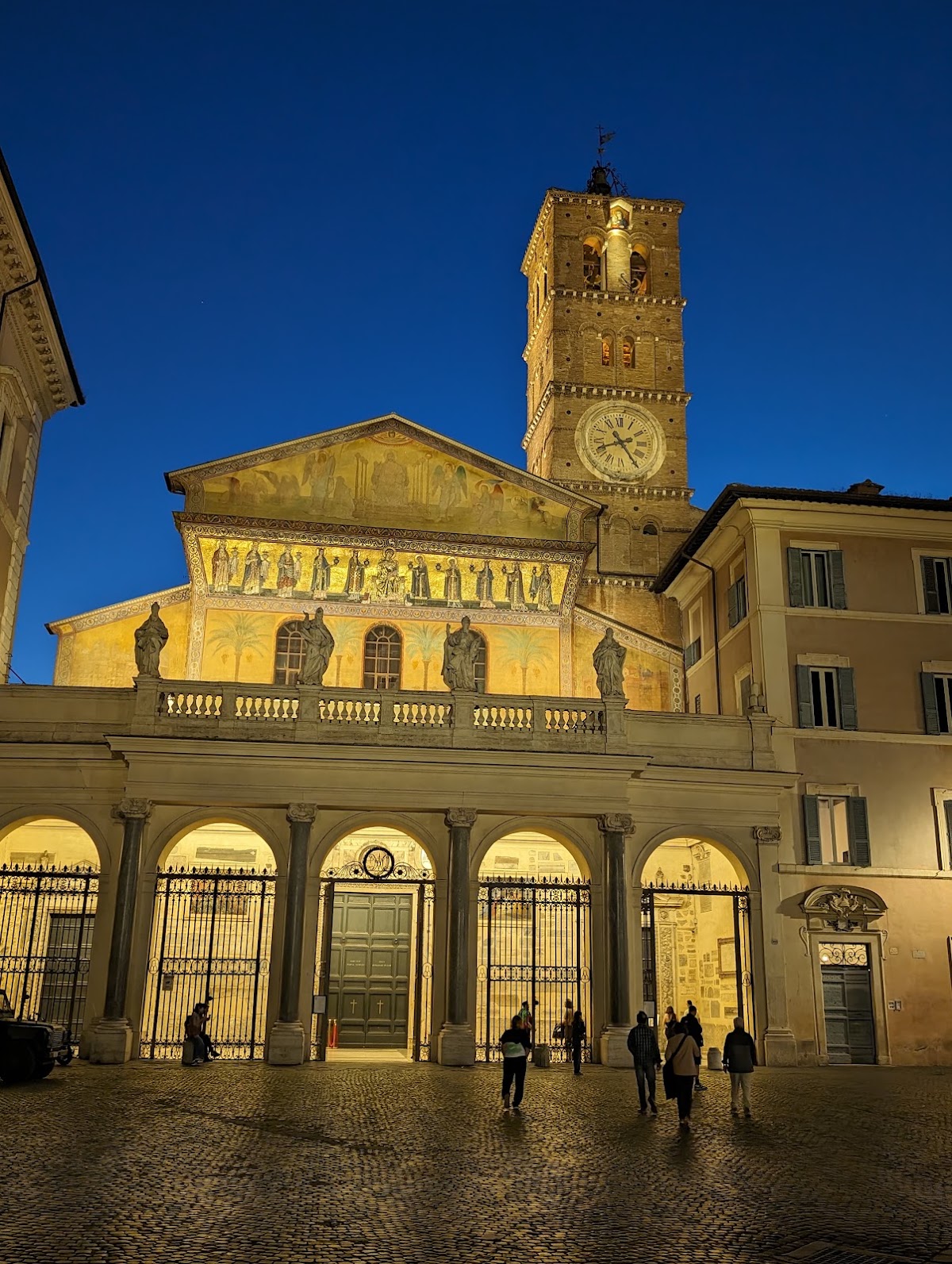
Basilica of Santa Maria in Trastevere15
🏛️
4.8 (23,169)Free

Tradition holds this was the first church in Rome officially dedicated to the Virgin Mary, with roots reaching back to the early Christian centuries, though the current structure and its luminous gold mosaics date largely from the 12th and 13th centuries. The façade mosaics and interior apse work are considered among the finest surviving examples of medieval Roman art.

Its setting in Trastevere's main piazza, ringed by cafés and a fountain, means the atmosphere outside is as much a draw as the church itself. It's an easy, free stop to fold into an evening exploring the neighborhood.

✨ Reasons to go

  • 1Tradition holds this was the first church in Rome officially dedicated to the Virgin Mary.
  • 2The gold mosaics on the façade and apse date largely from the 12th and 13th centuries and rank among the finest surviving examples of medieval Roman art.
  • 3It sits on Trastevere's main piazza, anchored by a fountain and surrounded by cafés.

💡 Good to know

  • 1Visit around dusk when the mosaics catch the interior lighting and the piazza outside comes alive
  • 2check opening hours around Mass times if you want a quieter look
  • 3combine with a Trastevere evening, since the surrounding streets are full of restaurants and bars.

⏱️ Typical visit

30 min

🕰️ Best time

early morning, morning, lunchtime, afternoon, early evening or evening

🚶 Walking intensity

Easy pace

📍

Address

Piazza di Santa Maria in Trastevere, 00153 Roma RM, Italy · Roma
🕐

Hours

  • Monday: 7:30 AM – 8:30 PM
  • Tuesday: 7:30 AM – 8:30 PM
  • Wednesday: 7:30 AM – 8:30 PM
  • Thursday: 7:30 AM – 8:30 PM
  • Friday: 7:30 AM – 8:30 PM
  • Saturday: 7:30 AM – 8:00 PM
  • Sunday: 7:30 AM – 8:00 PM
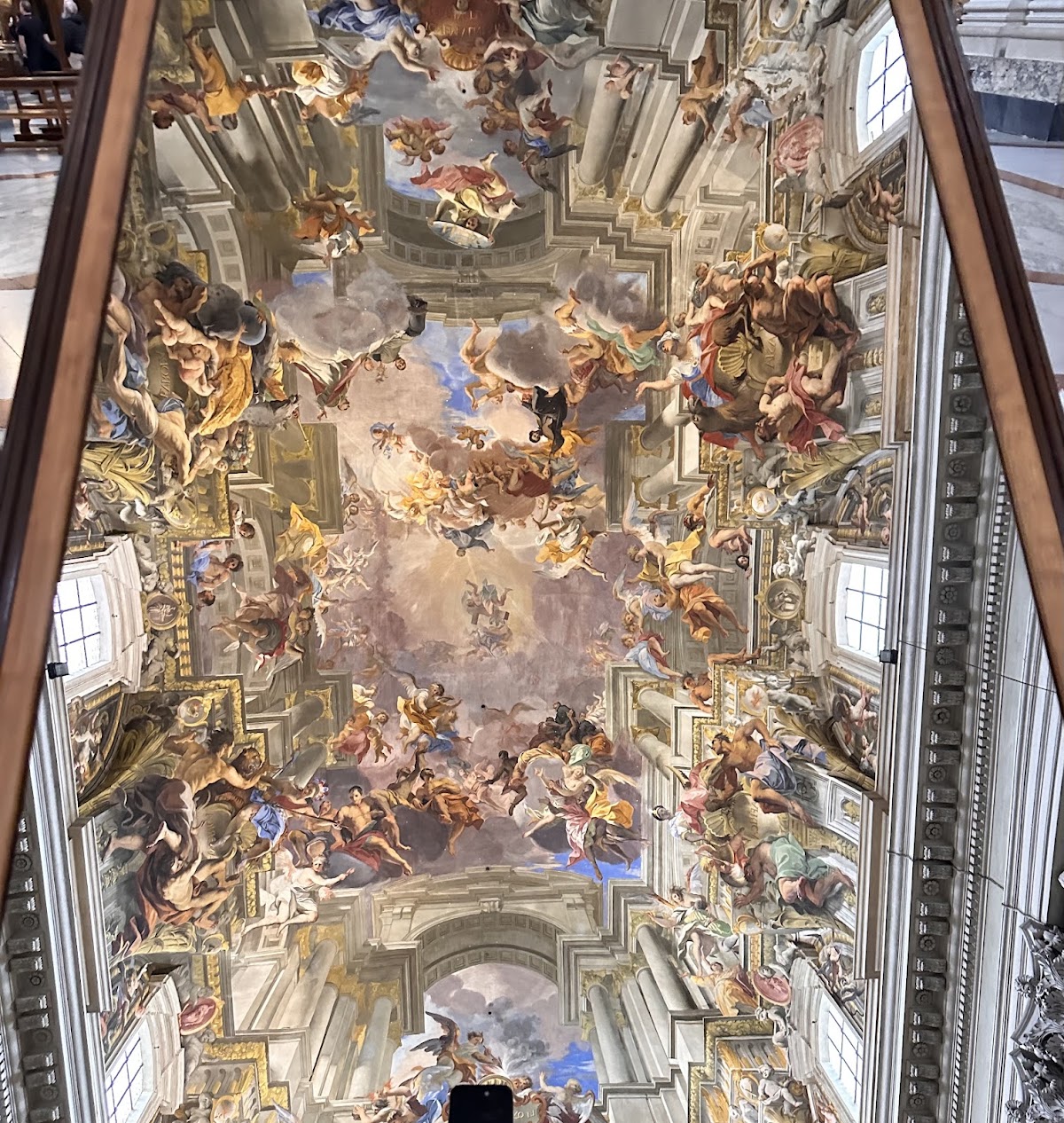
Chiesa di Sant'Ignazio di Loyola16
🏛️
4.8 (21,155)Free

When funds ran short for an actual dome, the Jesuits commissioned painter Andrea Pozzo to create one in trompe l'oeil on the flat ceiling in the late 17th century — an illusion so effective from the marked spot on the floor that it fools most first-time visitors completely. The nave ceiling carries a similarly dramatic painted perspective depicting the missionary work of Saint Ignatius.

It's free, centrally located near the Pantheon, and takes only a few minutes, yet consistently surprises people who weren't expecting the trick. A must for anyone interested in Baroque illusionism.

✨ Reasons to go

  • 1The dome is a flat-ceiling painting by Andrea Pozzo, created in the late 1600s when funds for a real dome ran out
  • 2A marked disc on the nave floor pinpoints the exact spot where the trompe l'oeil perspective aligns correctly
  • 3The nave ceiling fresco depicts the missionary work of Saint Ignatius using the same illusionistic technique

💡 Good to know

  • 1Stand on the small marked disc on the floor of the nave for the ceiling illusion to work correctly
  • 2it's free with no booking needed
  • 3combine with a walk to the Pantheon, just a few minutes away.

⏱️ Typical visit

30 min

🕰️ Best time

morning, lunchtime, afternoon, early evening, evening or late night

🚶 Walking intensity

Easy pace

📍

Address

Piazza S. Ignazio, 00186 Roma RM, Italy · Roma
🕐

Hours

  • Monday: 9:00 AM – 11:30 PM
  • Tuesday: 9:00 AM – 11:30 PM
  • Wednesday: 9:00 AM – 11:30 PM
  • Thursday: 9:00 AM – 11:30 PM
  • Friday: 9:00 AM – 11:30 PM
  • Saturday: 9:00 AM – 11:30 PM
  • Sunday: 9:00 AM – 11:30 PM
Baths of Caracalla17
🏛️
4.6 (26,139)$$ · Mid-range

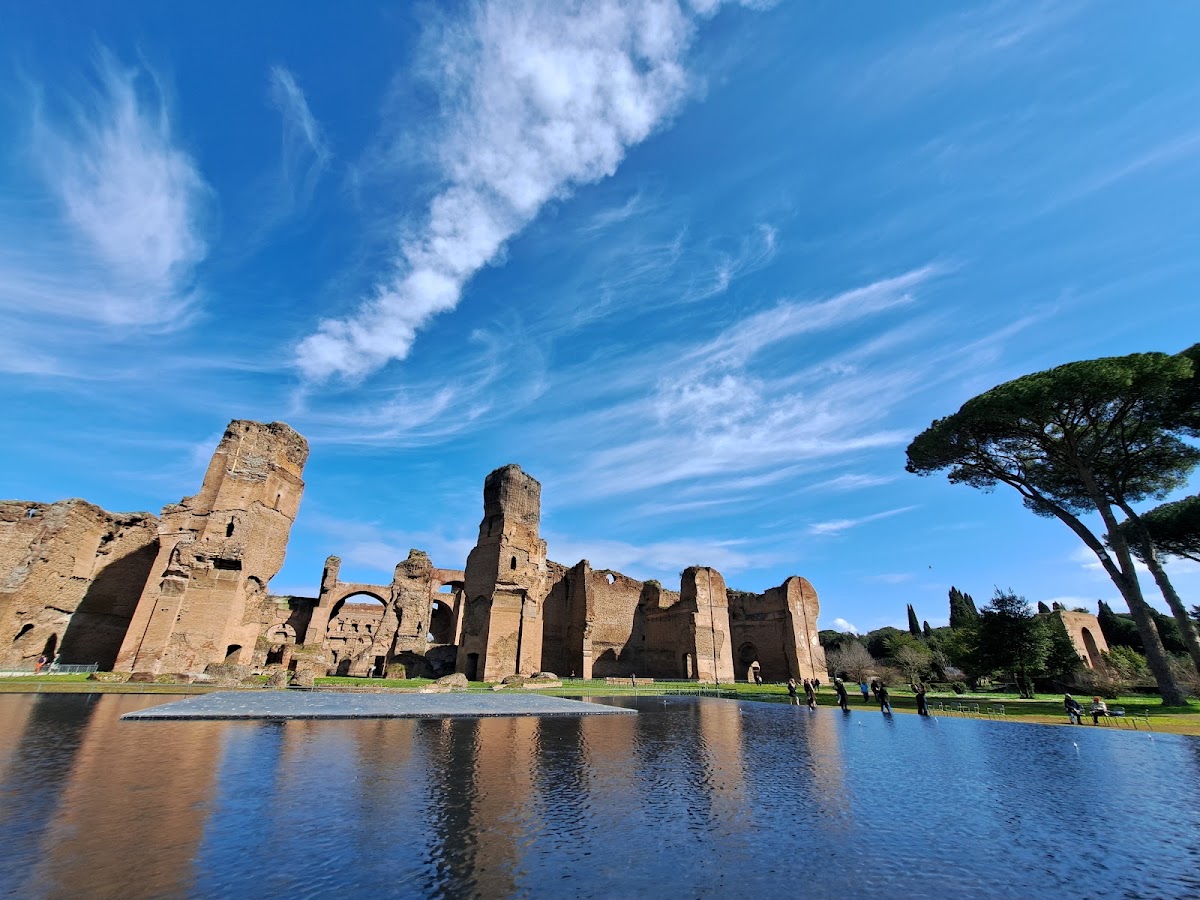
Completed under Emperor Caracalla around 216 AD, the complex combined hot and cold bathing halls, gyms, libraries, and gardens across a footprint that still overwhelms visitors today despite the loss of its marble cladding and mosaics. The scale of the surviving brick vaulting hints at engineering — including an underground network of service tunnels — that was remarkably advanced for its time.

In summer, the ruins host open-air opera performances, giving the site a very different character after dark than its usual daytime quiet. It's a rewarding stop for anyone interested in Roman engineering, and notably less crowded than the Forum or Colosseum.

✨ Reasons to go

  • 1Completed around 216 AD under Emperor Caracalla as a vast public bathing and leisure complex with gyms, libraries, and gardens.
  • 2The site includes an underground network of service tunnels that supported advanced heating and water systems for their era.
  • 3In summer, the ancient ruins are converted into a stage for open-air opera performances.

💡 Good to know

  • 1Book tickets online, especially for summer evenings when opera performances take over the site
  • 2visit mid-morning to avoid both crowds and the worst heat, as there's little shade
  • 3check the summer opera and concert schedule if an evening visit interests you.

⏱️ Typical visit

1h15

🕰️ Best time

morning, lunchtime, afternoon or early evening

🚶 Walking intensity

Moderate walking

📍

Address

Viale delle Terme di Caracalla, 00153 Roma RM, Italy · Roma
🕐

Hours

  • Monday: Closed
  • Tuesday: 9:00 AM – 6:00 PM
  • Wednesday: 9:00 AM – 6:00 PM
  • Thursday: 9:00 AM – 6:00 PM
  • Friday: 9:00 AM – 6:00 PM
  • Saturday: 9:00 AM – 6:00 PM
  • Sunday: 9:00 AM – 6:00 PM
RINASCENTE Rome18
🛍️
4.4 (16,525)Free

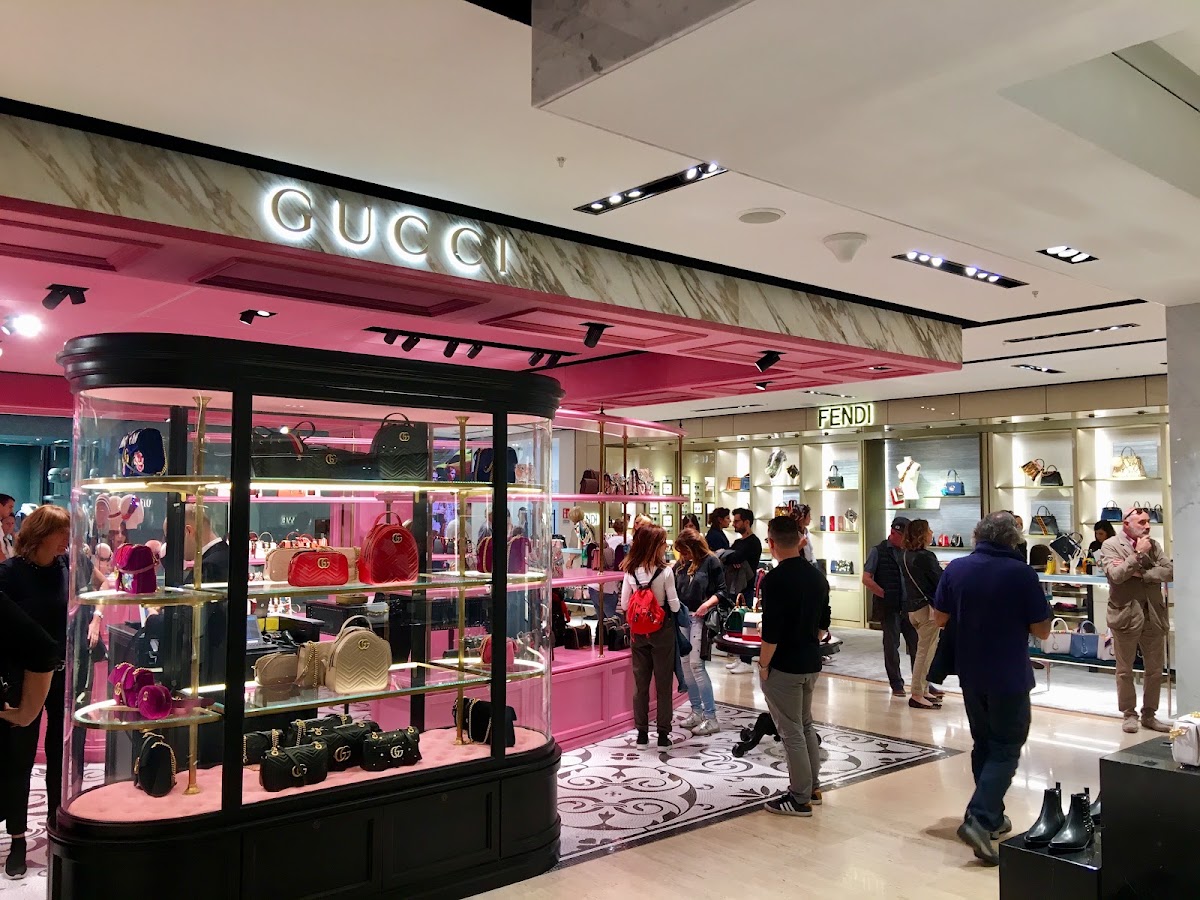
RINASCENTE Rome occupies a sleek multi-level building just steps from the Trevi Fountain, stocking floors of Italian and international fashion, beauty, and design under one roof. It's one of the flagship locations of Italy's best-known department store chain, and its rooftop terrace with views over Rome's rooftops has become an attraction in its own right.

With a 4.4 rating across more than 16,000 reviews, it draws a heavy mix of tourists and shoppers rather than being a locals-only secret, and its very high must-see and aesthetic scores reflect its status as a polished sightseeing stop as much as a place to shop. It suits a stylish browse or a gift run more than a bargain hunt.

✨ Reasons to go

  • 1It's a flagship store of Italy's best-known department store chain, located steps from the Trevi Fountain.
  • 2The rooftop terrace offers views over Rome's rooftops and is a draw even for non-shoppers.
  • 3The top floor houses a food hall that doubles as a break spot during a shopping visit.

💡 Good to know

  • 1Ride up to the rooftop terrace for the view even if you don't buy anything
  • 2visit on a weekday morning to avoid the worst crowds
  • 3the top-floor food hall is a good spot to break up a shopping stop

⏱️ Typical visit

1h

🕰️ Best time

morning, lunchtime, afternoon, early evening or evening

🚶 Walking intensity

Moderate walking

📍

Address

V. del Tritóne, 61, 00187 Roma RM, Italy · Roma
🕐

Hours

  • Monday: 10:00 AM – 9:00 PM
  • Tuesday: 10:00 AM – 9:00 PM
  • Wednesday: 10:00 AM – 9:00 PM
  • Thursday: 10:00 AM – 9:00 PM
  • Friday: 10:00 AM – 9:00 PM
  • Saturday: 10:00 AM – 10:00 PM
  • Sunday: 10:00 AM – 9:00 PM
Vatican Museums19
🎨
4.6 (208,892)$$ · Mid-range

The Vatican Museums house centuries of papal art collecting across a vast network of galleries, sculpture courts, and frescoed halls, most famously Raphael's Rooms and the climactic Sistine Chapel with Michelangelo's ceiling and Last Judgment. With over 200,000 reviews and a perfect must-see and culture score, it ranks among the most visited museum complexes on earth, and its scale means long lines and dense crowds are part of the experience regardless of preparation.

A strong rating reflects overwhelmingly positive reactions despite the logistical challenges of visiting somewhere this popular. Three hours is a realistic minimum to see the highlights without feeling rushed.

✨ Reasons to go

  • 1The Sistine Chapel ceiling and Last Judgment, both by Michelangelo, sit at the end of the museum route.
  • 2Raphael's Rooms are among the complex's most famous frescoed halls.
  • 3The museums rank among the most visited museum complexes in the world, drawing crowds that require timed-entry booking to manage.

💡 Good to know

  • 1Book timed-entry tickets online well in advance, as queues without a reservation can stretch for hours
  • 2arrive right at opening or in the late afternoon for comparatively lighter crowds
  • 3the Sistine Chapel is at the end of a long route, so pace yourself accordingly.

⏱️ Typical visit

3h

🕰️ Best time

early morning, morning, lunchtime, afternoon, early evening or evening

🚶 Walking intensity

Moderate walking

📍

Address

00120, Vatican City · Vatican City
🕐

Hours

  • Monday: 8:00 AM – 8:00 PM
  • Tuesday: 8:00 AM – 8:00 PM
  • Wednesday: 8:00 AM – 8:00 PM
  • Thursday: 8:00 AM – 8:00 PM
  • Friday: 8:00 AM – 8:00 PM
  • Saturday: 8:00 AM – 8:00 PM
  • Sunday: Closed
Capitoline Museums20
🎨
4.7 (18,878)$$ · Mid-range

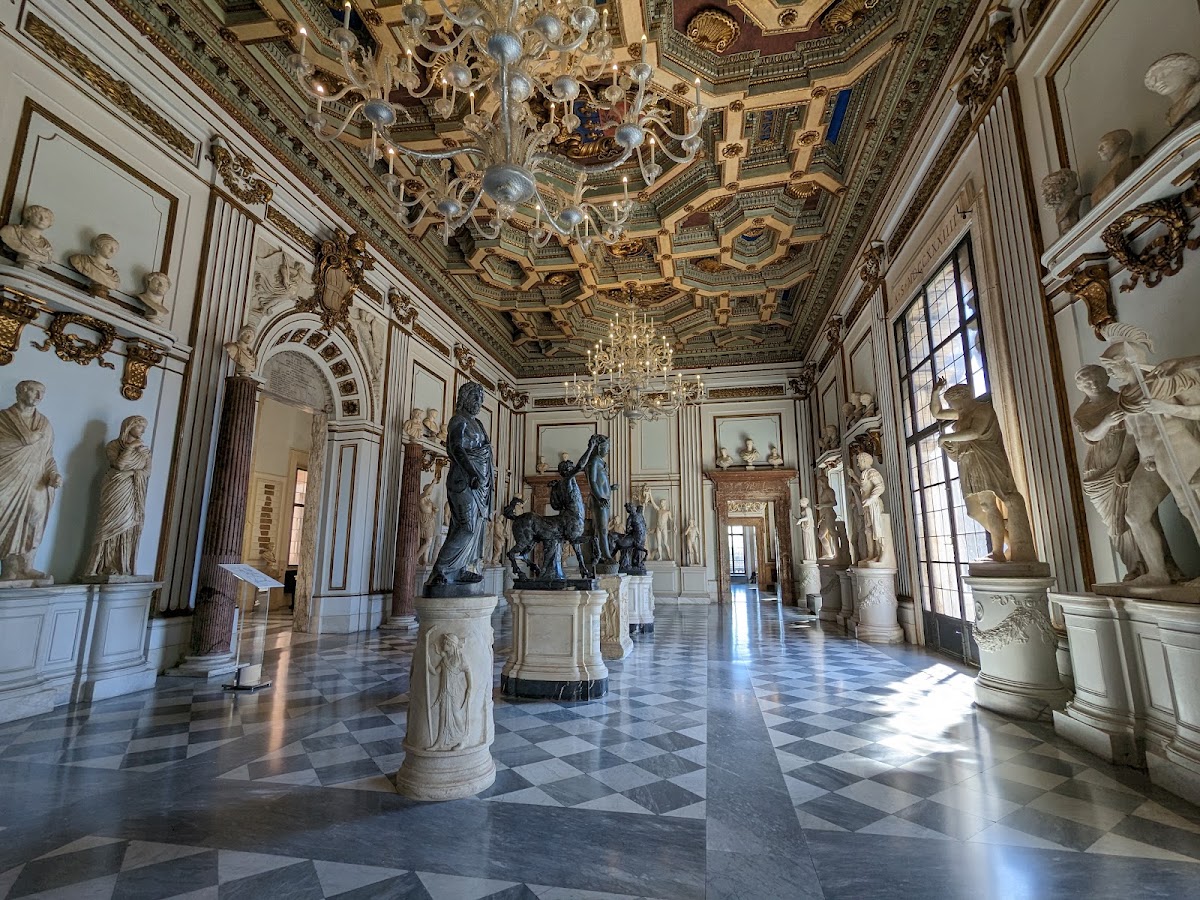
Founded in 1471 when Pope Sixtus IV donated a group of bronze statues to the people of Rome, the Capitoline Museums claim the title of the oldest public museum in the world, spread across two Michelangelo-designed palaces atop the Capitoline Hill. Highlights include the Capitoline Wolf suckling Romulus and Remus, colossal fragments of a statue of Constantine, and the original gilt-bronze equestrian statue of Marcus Aurelius.

With a 4.7 rating across nearly 19,000 reviews and top marks for culture and aesthetics, it ranks among Rome's essential stops rather than a niche detour. Plan on a full two hours to take in both palaces and the underground gallery connecting them.

✨ Reasons to go

  • 1Founded in 1471 when Pope Sixtus IV donated bronze statues to Rome, making it the oldest public museum in the world
  • 2The museum spans two palaces on Capitoline Hill designed by Michelangelo, linked by an underground Tabularium passage with views over the Roman Forum
  • 3Home to the Capitoline Wolf, colossal fragments of a statue of Constantine, and the original gilt-bronze equestrian statue of Marcus Aurelius

💡 Good to know

  • 1Book tickets online to skip the line, especially in peak season
  • 2the underground Tabularium passage offers one of the best views of the Roman Forum
  • 3combine a morning visit with nearby Forum sites since it's an early best time slot.

⏱️ Typical visit

2h

🕰️ Best time

morning, lunchtime, afternoon, early evening or evening

🚶 Walking intensity

Moderate walking

📍

Address

Piazza del Campidoglio, 1, 00186 Roma RM, Italy · Roma
🕐

Hours

  • Monday: 9:30 AM – 7:30 PM
  • Tuesday: 9:30 AM – 7:30 PM
  • Wednesday: 9:30 AM – 7:30 PM
  • Thursday: 9:30 AM – 7:30 PM
  • Friday: 9:30 AM – 7:30 PM
  • Saturday: 9:30 AM – 7:30 PM
  • Sunday: 9:30 AM – 7:30 PM
Bio Hotel Raphaël – Relais & Châteaux21
🍸
4.5 (649)$$$$ · Premium

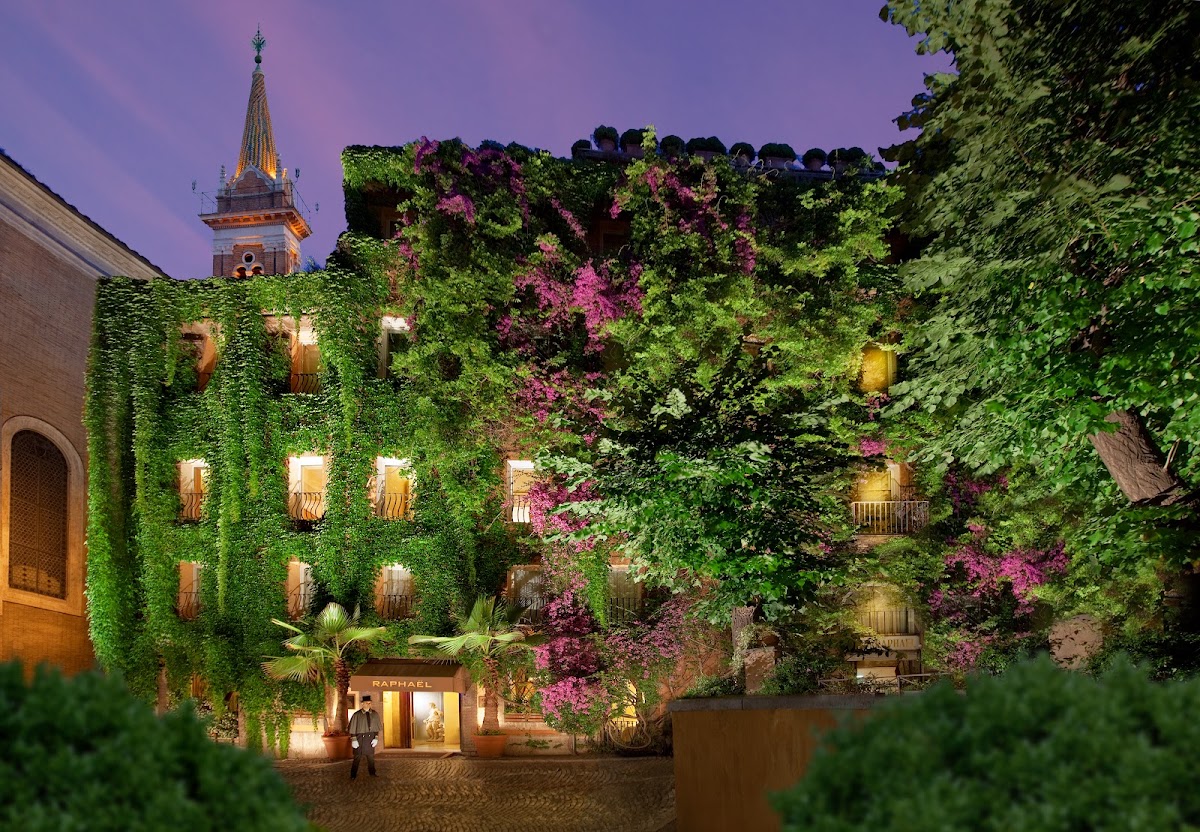
The bar at Hotel Raphaël occupies a genuinely five-star property just a block from Piazza Navona, part of the Relais & Châteaux collection, and reviewers describe an experience of polished, professional hospitality from arrival onward, often including a welcome glass of champagne. Its central location makes it easy to combine with sightseeing across the historic centre.

It's suited to guests and visitors seeking a refined, service-led evening over a trend-driven cocktail bar.

✨ Reasons to go

  • 1Part of the Relais & Châteaux collection, located just a block from Piazza Navona.
  • 2Guests are greeted with a welcome glass of champagne and small bites on arrival.
  • 3The hotel's rooftop restaurant, Mater Terrae, offers views over the historic centre.

💡 Good to know

  • 1Booking is required given the hotel's high-end, low-volume setting
  • 2take advantage of the central location to combine with a walk around Piazza Navona
  • 3expect premium pricing reflecting the five-star service.

⏱️ Typical visit

1h40

🚶 Walking intensity

Easy pace

📍

Address

Largo Febo, 2, 00186 Roma RM, Italy · Roma
🕐

Hours

  • Monday: Open 24 hours
  • Tuesday: Open 24 hours
  • Wednesday: Open 24 hours
  • Thursday: Open 24 hours
  • Friday: Open 24 hours
  • Saturday: Open 24 hours
  • Sunday: Open 24 hours
Campo de' Fiori22
🛍️
4.4 (70,970)Free

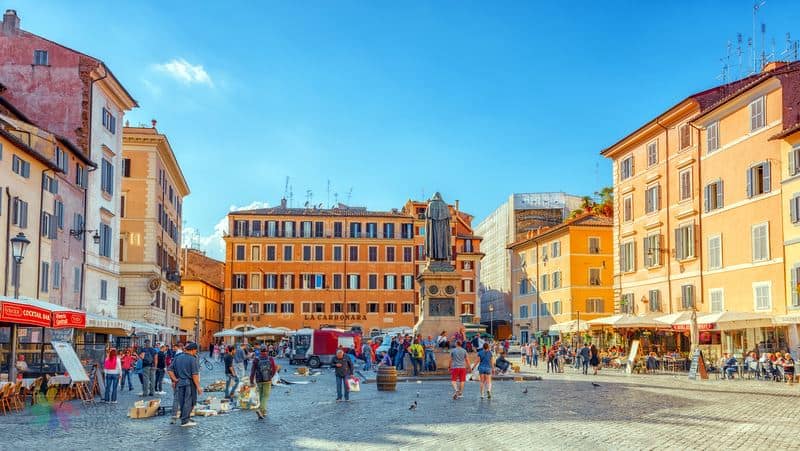
By day, Campo de' Fiori hosts a colorful open-air market of fresh produce, flowers, and spices that has operated in the square for centuries, while by night the same space fills with bars and restaurants drawing a lively crowd. Its perfect must-see score alongside a strong culture rating reflects both its market tradition and its historical weight — a statue at its center marks where philosopher Giordano Bruno was executed in 1600, adding a somber note to an otherwise festive setting.

Reviewers describe the atmosphere as especially memorable during major sporting events, when the square fills to capacity. It rewards a morning visit for the market and a return trip in the evening for the very different nighttime energy.

✨ Reasons to go

  • 1A statue at the center of the square marks the spot where philosopher Giordano Bruno was executed in 1600.
  • 2The daily produce market has operated in the square for centuries, running roughly 7am to 2pm.
  • 3By night the square transforms into a bar and restaurant hub, drawing large crowds especially during major sporting events.

💡 Good to know

  • 1Visit in the morning, ideally before 2pm, to catch the produce market before it packs up
  • 2return in the evening to experience the square's very different nightlife atmosphere
  • 3keep an eye on belongings when the square is at its most crowded.

⏱️ Typical visit

30 min

🕰️ Best time

morning or lunchtime

🚶 Walking intensity

Easy pace

📍

Address

Campo de' Fiori, 00186 Roma RM, Italy · Roma
Galleria Borghese23
🎨
4.6 (30,270)$$ · Mid-range

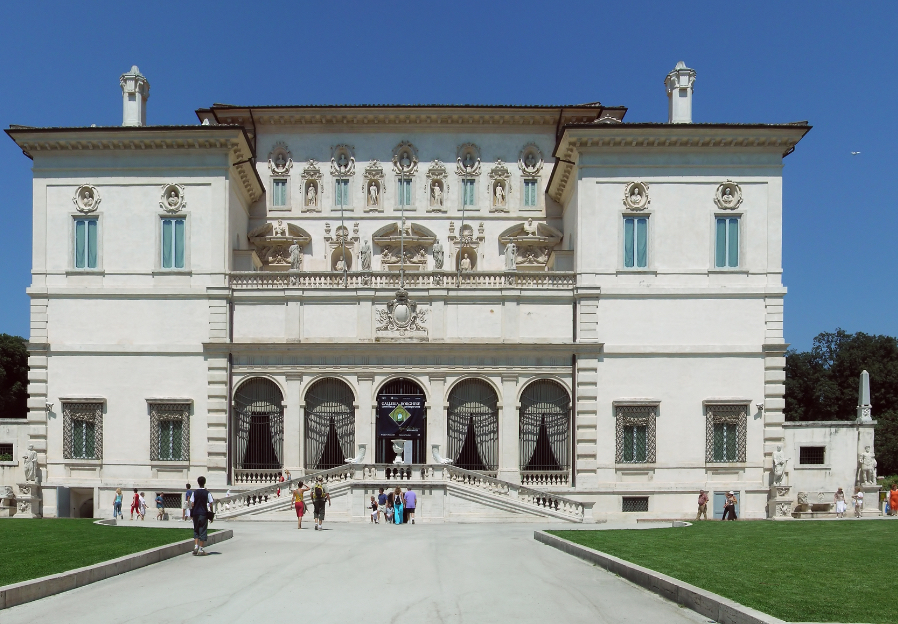
Cardinal Scipione Borghese's 17th-century pleasure villa now houses one of the finest small art collections in the world, built around Gian Lorenzo Bernini's virtuoso marble sculptures and paintings by Caravaggio, Titian, and Raphael. Entry is strictly limited to two-hour windows to protect the collection and keep rooms uncrowded, which makes advance booking essential rather than optional.

At 4.6 stars over more than 30,000 reviews, with maximum scores for must-see status, culture, and aesthetics, it's regarded as an unmissable Rome highlight on par with the grandest institutions. The frescoed ceilings and gilded interiors are as much a draw as the sculpture itself.

✨ Reasons to go

  • 1Houses Bernini marble sculptures including Apollo and Daphne and The Rape of Proserpina, carved to be viewed from multiple angles
  • 2The collection includes paintings by Caravaggio, Titian, and Raphael assembled by Cardinal Scipione Borghese in the 17th century
  • 3Entry is capped at strict two-hour timed slots to limit crowding in the villa's rooms

💡 Good to know

  • 1Book tickets weeks in advance, as slots sell out
  • 2arrive 30 minutes early since latecomers can be refused entry
  • 3the Bernini sculptures reward a slow look from multiple angles.

⏱️ Typical visit

2h

🕰️ Best time

morning, lunchtime, afternoon or early evening

🚶 Walking intensity

Moderate walking

📍

Address

Piazzale Scipione Borghese, 5, 00197 Roma RM, Italy · Roma
🕐

Hours

  • Monday: Closed
  • Tuesday: 9:00 AM – 7:00 PM
  • Wednesday: 9:00 AM – 7:00 PM
  • Thursday: 9:00 AM – 7:00 PM
  • Friday: 9:00 AM – 7:00 PM
  • Saturday: 9:00 AM – 7:00 PM
  • Sunday: 9:00 AM – 7:00 PM
Arch of Constantine24
🏛️
4.7 (7,512)Free

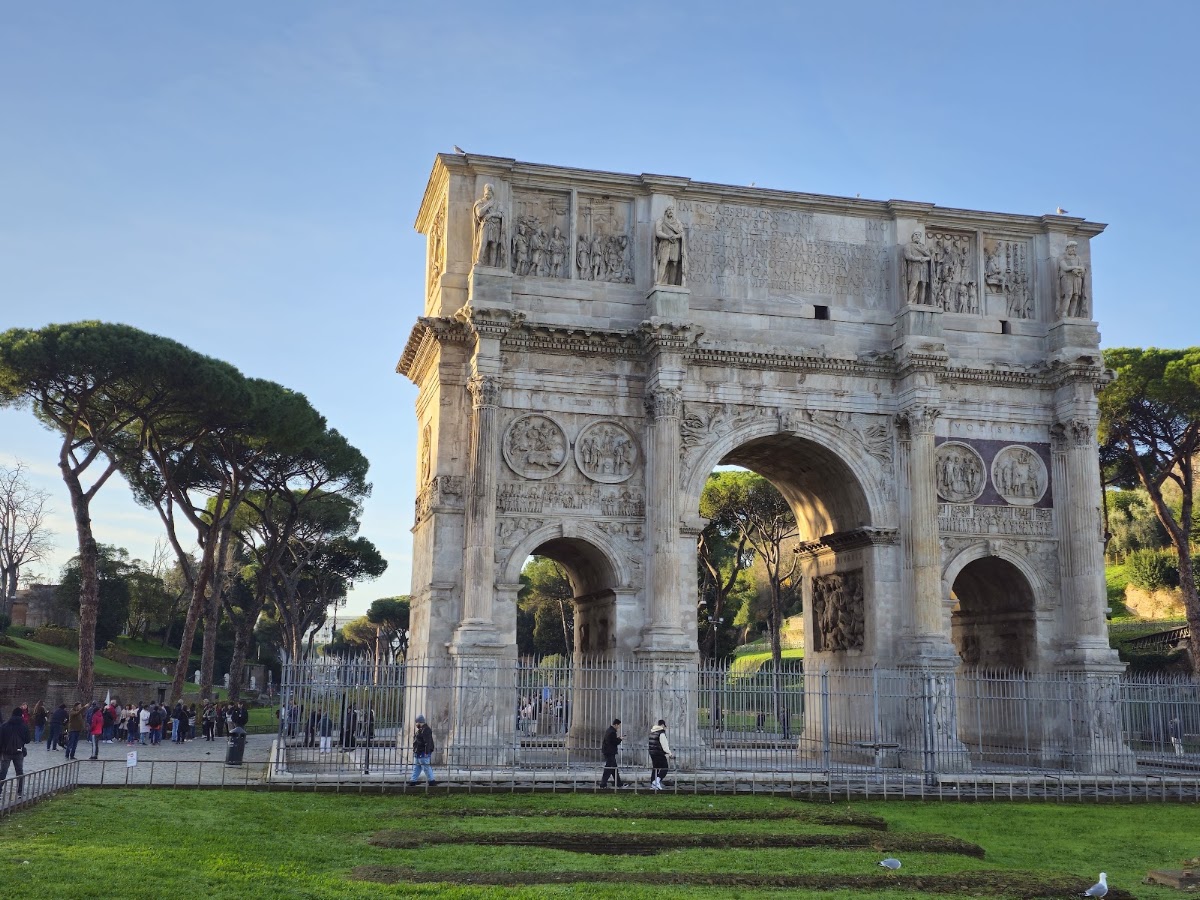
Dedicated to Constantine following his victory at the Milvian Bridge, the arch is notable for reusing sculpted reliefs scavenged from earlier monuments to emperors like Trajan and Hadrian, a practical shortcut that also visually linked Constantine to his predecessors. Its position directly between the Colosseum and Palatine Hill makes it an easy, free stop that most visitors pass without a dedicated trip.

The level of surviving detail, especially given its age, is a highlight for anyone interested in Roman sculpture. A few minutes here rounds out a Colosseum visit nicely.

✨ Reasons to go

  • 1It was erected to commemorate Constantine's victory at the Battle of the Milvian Bridge.
  • 2Much of its sculpted relief was reused from earlier monuments honoring Trajan and Hadrian.
  • 3It is considered the largest and best-preserved ancient Roman triumphal arch in existence.

💡 Good to know

  • 1Visit as a quick add-on before or after the Colosseum, since they're steps apart
  • 2there's no ticket or line, so it's an easy stop regardless of your schedule
  • 3go early morning or evening for photos without the traffic and crowds around Piazza del Colosseo.

⏱️ Typical visit

20 min

🚶 Walking intensity

Easy pace

📍

Address

P.za del Colosseo, 00184 Roma RM, Italy · Roma
🕐

Hours

  • Monday: Open 24 hours
  • Tuesday: Open 24 hours
  • Wednesday: Open 24 hours
  • Thursday: Open 24 hours
  • Friday: Open 24 hours
  • Saturday: Open 24 hours
  • Sunday: Open 24 hours
Chiesa del Ss.mo Nome di Gesù all'Argentina25
🏛️
4.8 (7,076)Free

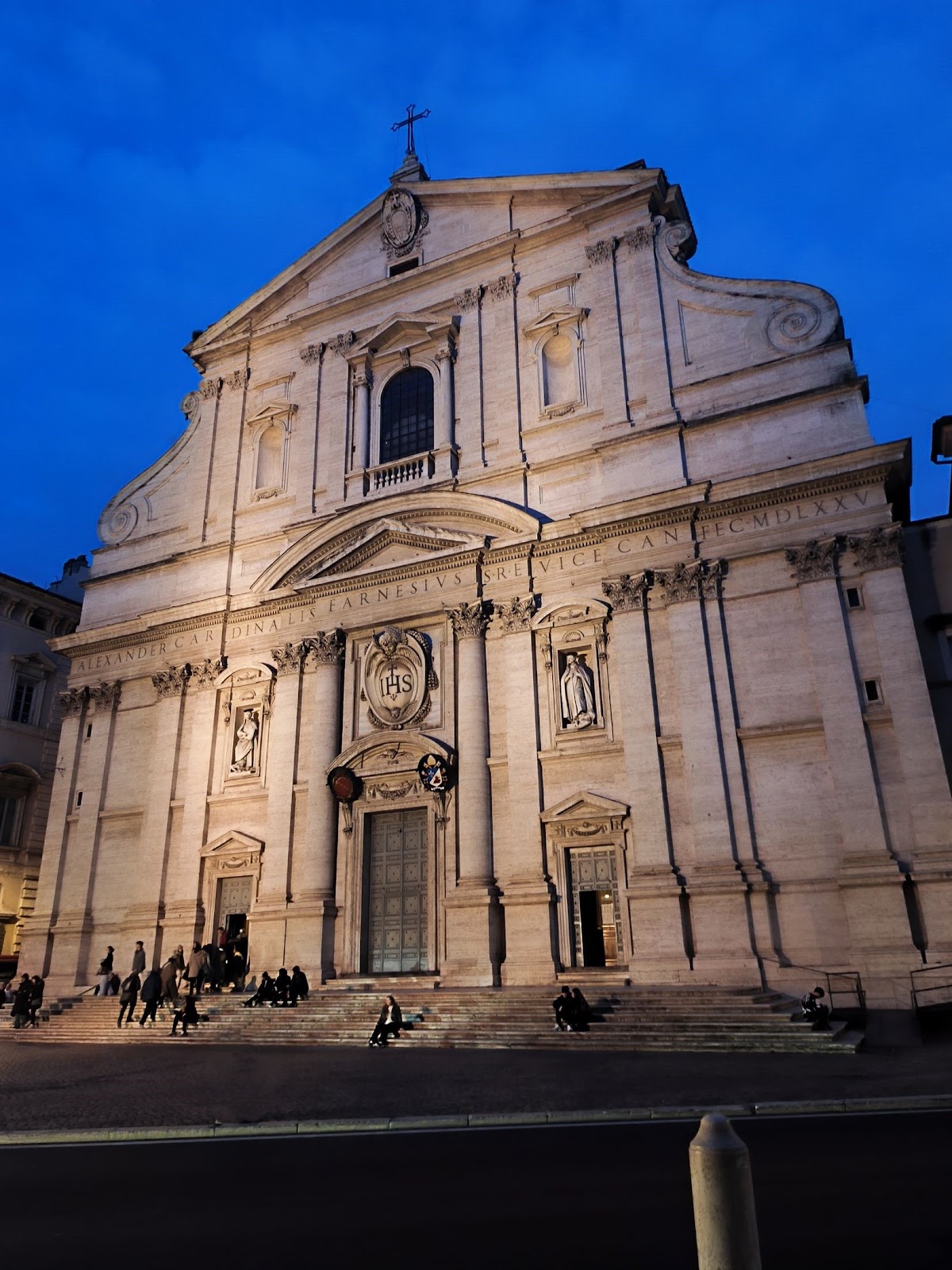
Completed in 1584 as the headquarters church of the newly formed Society of Jesus, the Chiesa del Gesù established the architectural blueprint that Jesuit churches worldwide would follow for centuries: a single wide nave designed to let large congregations see and hear clearly. Its ceiling fresco, the Triumph of the Name of Jesus by Baciccio, uses the same illusionistic techniques found nearby at Sant'Ignazio, blurring the line between painted and sculpted figures.

The tomb of Ignatius of Loyola himself lies within, richly decorated with lapis lazuli. It's a quick but architecturally significant stop for anyone tracing the roots of Baroque style in Rome.

✨ Reasons to go

  • 1Completed in 1584 as the mother church of the Jesuit order, it became the architectural template for Jesuit churches worldwide.
  • 2The ceiling fresco, Triumph of the Name of Jesus by Baciccio, blends painted and sculpted figures in an illusionistic Baroque technique.
  • 3Ignatius of Loyola's tomb inside is decorated with lapis lazuli.

💡 Good to know

  • 1Look for the small mirror sometimes placed in the nave to view the ceiling fresco without straining your neck
  • 2it's free and centrally located, an easy add to a walk near Largo Argentina
  • 3visit in daylight hours for the best light on the frescoes.

⏱️ Typical visit

30 min

🕰️ Best time

early morning, morning, early evening or evening

🚶 Walking intensity

Easy pace

📍

Address

Piazza del Gesù, 00186 Roma RM, Italy · Roma
🕐

Hours

  • Monday: 7:30 AM – 12:00 PM, 5:00 – 7:30 PM
  • Tuesday: 7:30 AM – 12:00 PM, 5:00 – 7:30 PM
  • Wednesday: 7:30 AM – 12:00 PM, 5:00 – 7:30 PM
  • Thursday: 7:30 AM – 12:00 PM, 5:00 – 7:30 PM
  • Friday: 7:30 AM – 12:00 PM, 5:00 – 7:30 PM
  • Saturday: 7:30 AM – 12:00 PM, 5:00 – 8:00 PM
  • Sunday: 8:30 AM – 12:30 PM, 5:00 – 8:00 PM
Church of Saint Louis of the French26
🏛️
4.8 (8,544)Free

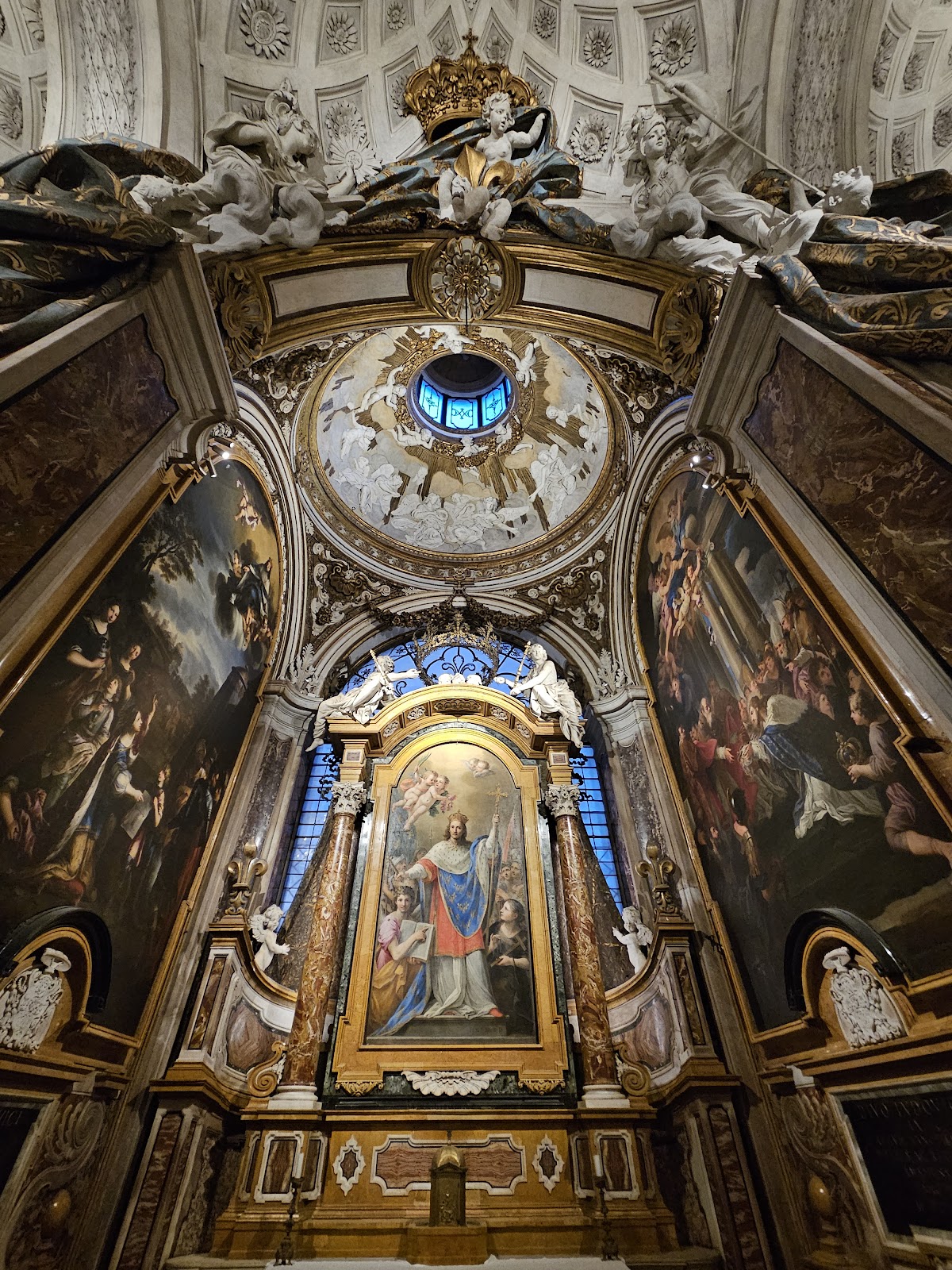
Built in the early 1500s to serve Rome's French community, the church is best known today for the Contarelli Chapel, where three Caravaggio canvases — the Calling, Inspiration, and Martyrdom of Saint Matthew — hang together in the setting they were painted for. Seeing all three in situ, rather than in a museum, is a rare experience even by Roman standards, and the interplay of light in the paintings mirrors the church's own dramatic lighting.

Its location just steps from Piazza Navona and the Pantheon makes it an easy detour rather than a special trip. A must for Caravaggio admirers, and free to enter.

✨ Reasons to go

  • 1The Contarelli Chapel holds three Caravaggio paintings — the Calling, Inspiration, and Martyrdom of Saint Matthew — displayed together in the exact setting they were painted for.
  • 2A coin-operated light box illuminates the Caravaggio chapel for a few minutes at a time, echoing the dramatic chiaroscuro of the paintings themselves.
  • 3Built in the early 1500s as the national church for Rome's French community, it remains free to enter despite housing one of the city's most significant art treasures.

💡 Good to know

  • 1Bring coins for the light box that illuminates the Caravaggio chapel for a couple of minutes at a time
  • 2it's free, just a short walk from Piazza Navona
  • 3go outside of Mass times to view the chapel without interruption.

⏱️ Typical visit

30 min

🕰️ Best time

morning, lunchtime, afternoon or early evening

🚶 Walking intensity

Easy pace

📍

Address

Piazza di S. Luigi de' Francesi, 00186 Roma RM, Italy · Roma
🕐

Hours

  • Monday: 9:30 AM – 12:45 PM, 2:30 – 6:30 PM
  • Tuesday: 9:30 AM – 12:45 PM, 2:30 – 6:30 PM
  • Wednesday: 9:30 AM – 12:45 PM, 2:30 – 6:30 PM
  • Thursday: 9:30 AM – 12:45 PM, 2:30 – 6:30 PM
  • Friday: 9:30 AM – 12:45 PM, 2:30 – 6:30 PM
  • Saturday: 9:30 AM – 12:00 PM, 2:30 – 6:30 PM
  • Sunday: 12:00 – 12:45 PM, 2:30 – 6:30 PM
Ponte Sant'Angelo27
🏛️
Free

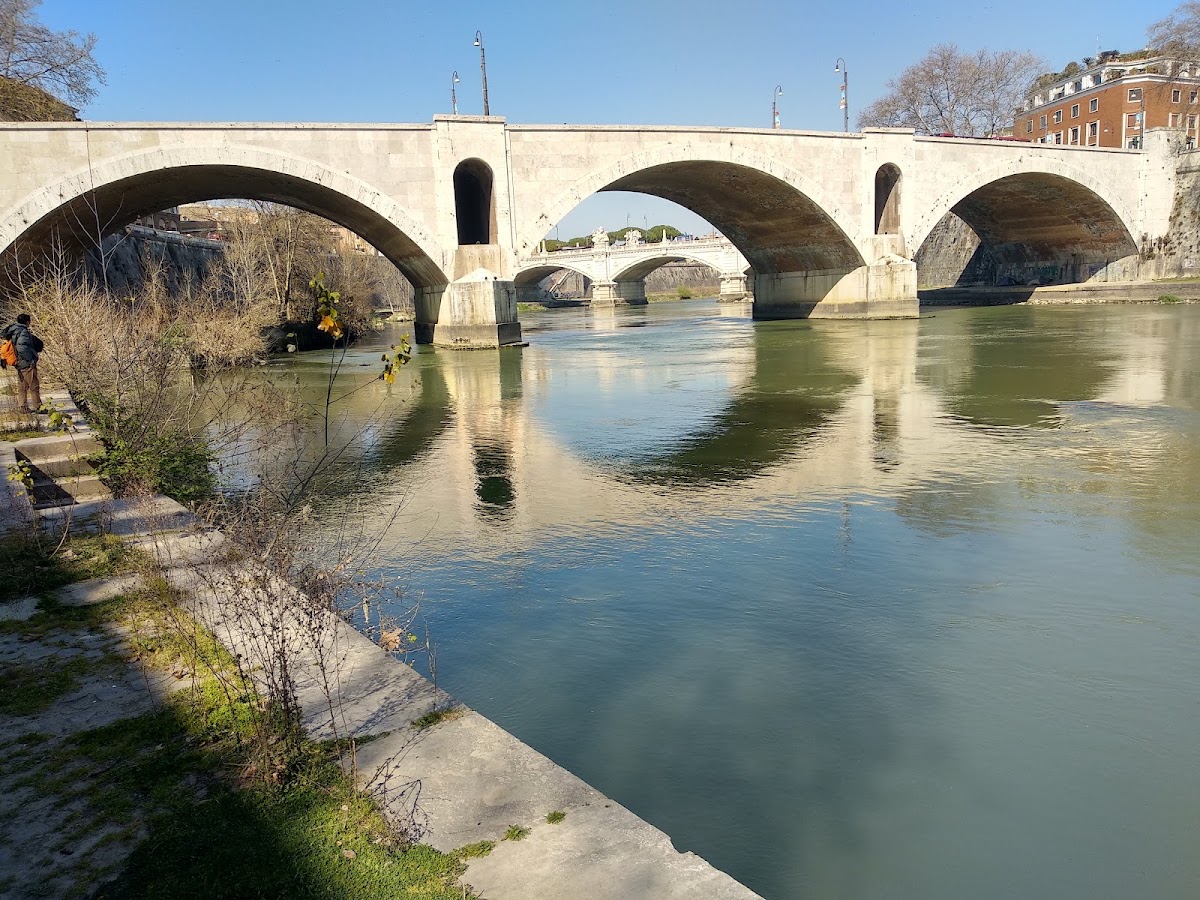
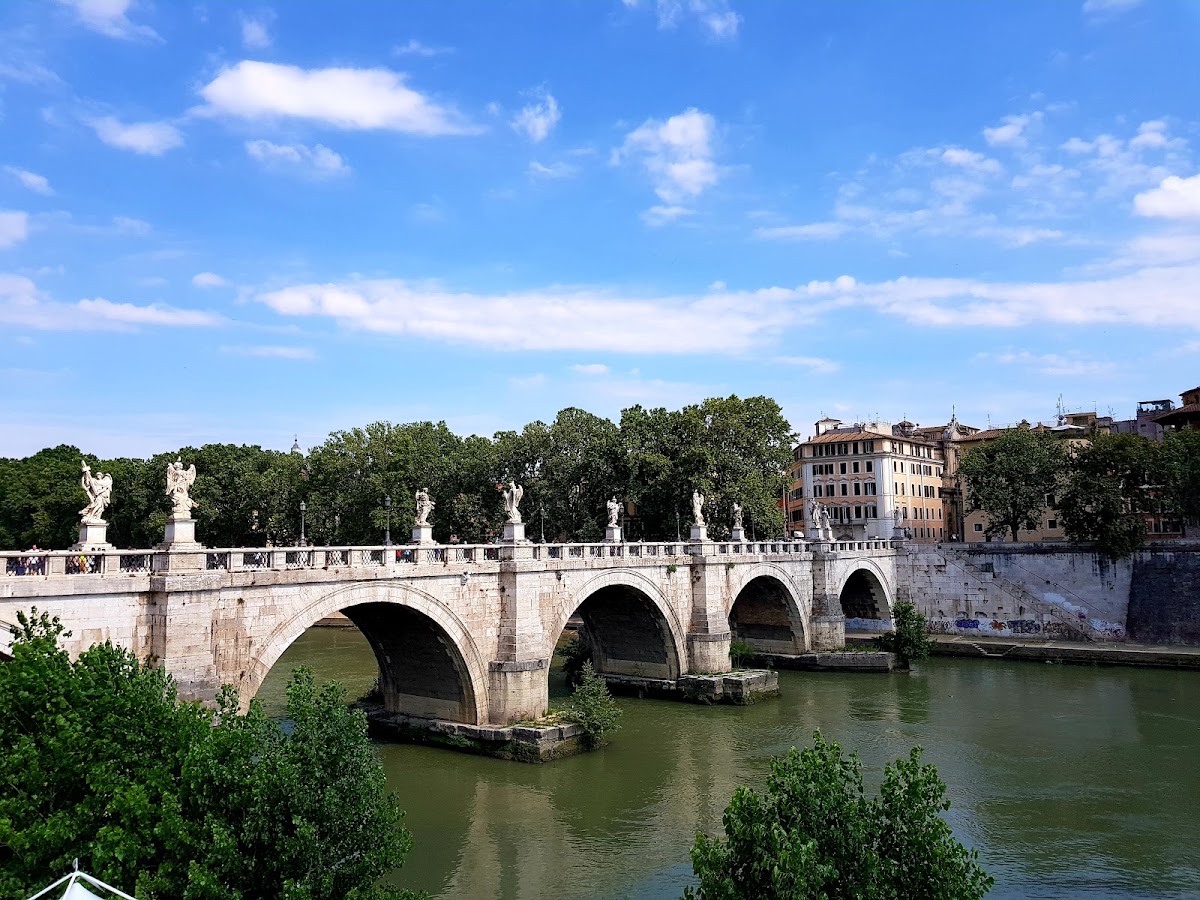
Originally built by Hadrian in 134 AD to connect his mausoleum to the rest of the city, the bridge still carries pedestrians across the Tiber on largely its original foundations, one of the oldest river crossings still in use in Rome. In the 17th century, Bernini and his workshop added ten dramatic angel statues along its balustrade, each holding a symbol of Christ's Passion, transforming a functional Roman crossing into an open-air Baroque gallery.

The view from the bridge toward Castel Sant'Angelo and St. Peter's dome beyond is one of the most photographed in the city, especially at sunset.

It's a natural link between a Vatican-area visit and the surrounding streets of the Borgo.

✨ Reasons to go

  • 1Built by Emperor Hadrian in 134 AD, it remains one of the oldest river crossings in Rome still standing on its original foundations.
  • 2Bernini and his workshop added ten angel statues in the 17th century, each carrying a different symbol of Christ's Passion.
  • 3The bridge frames a well-known view of Castel Sant'Angelo with St. Peter's dome behind it, best seen at sunset.

💡 Good to know

  • 1Visit around sunset for the classic view of Castel Sant'Angelo and St. Peter's dome together
  • 2the bridge is pedestrian-only, so there's no need to dodge traffic
  • 3it gets busy at golden hour, so arrive a little early to find a clear spot for photos.

⏱️ Typical visit

20 min

🕰️ Best time

early evening or evening

🚶 Walking intensity

Easy pace

📍

Address

Ponte Sant'Angelo, 00186 Roma RM, Italy · Roma
Papal Basilica of Saint Mary Major28
🏛️
4.8 (56,840)Free

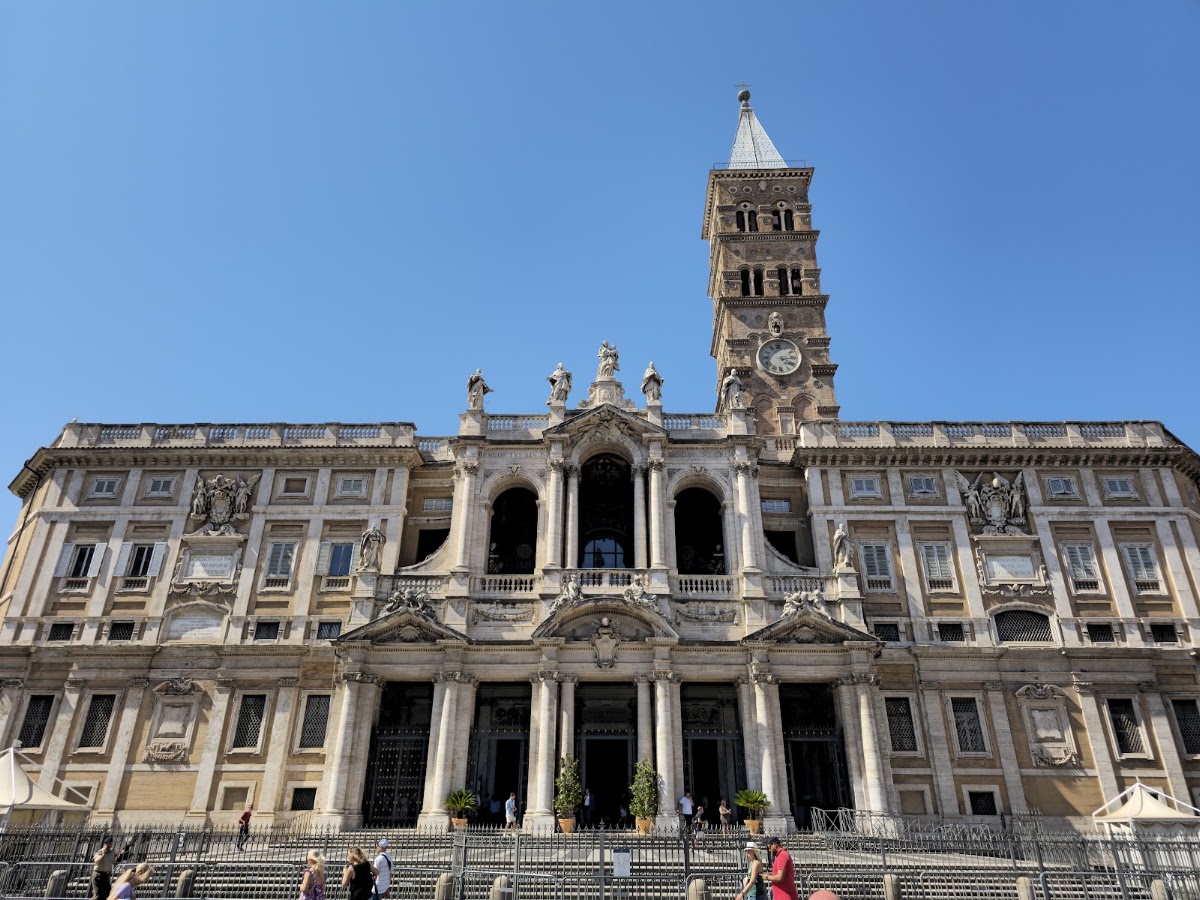
Built in the mid-5th century following a legendary summer snowfall that marked out its site, Santa Maria Maggiore preserves some of the oldest surviving Christian mosaics in Rome inside a mostly Baroque exterior. It's one of only four papal basilicas — alongside St.

Peter's, St. John Lateran, and St.

Paul Outside the Walls — and holds relics along with the tomb of Pope Francis. Its location near Termini station makes it an easy stop even on a tight itinerary, and it draws steadier crowds than the outer basilicas without ever matching St.

Peter's. It suits anyone interested in early Christian art as much as pilgrims.

✨ Reasons to go

  • 1Built in the mid-5th century, it holds some of the oldest surviving Christian mosaics in Rome
  • 2Legend says its site was marked by a miraculous summer snowfall
  • 3One of only four papal basilicas in Rome, it contains the tomb of Pope Francis

💡 Good to know

  • 1It's an easy stop near Termini station, convenient at the start or end of a Rome day
  • 2look up at the coffered ceiling and ancient nave mosaics, easy to miss if rushing
  • 3dress modestly, as with all major Roman basilicas.

⏱️ Typical visit

45 min

🕰️ Best time

early morning, morning, lunchtime, afternoon or early evening

🚶 Walking intensity

Moderate walking

📍

Address

P.za di Santa Maria Maggiore, 00100 Roma RM, Italy · Roma
🕐

Hours

  • Monday: 7:00 AM – 6:30 PM
  • Tuesday: 7:00 AM – 6:30 PM
  • Wednesday: 7:00 AM – 6:30 PM
  • Thursday: 7:00 AM – 6:30 PM
  • Friday: 7:00 AM – 6:30 PM
  • Saturday: 7:00 AM – 6:30 PM
  • Sunday: 7:00 AM – 6:30 PM
MAXXI - National Museum of 21st Century Art29
🎨
4.5 (12,919)$$ · Mid-range

Opened in 2010, MAXXI is Rome's dedicated museum for contemporary art and architecture, its fluid, curving concrete galleries designed by the late Zaha Hadid drawing almost as much attention as the exhibitions inside. It sits outside the historic center in Flaminio, which keeps it off the standard tourist circuit and gives it the city's highest trendiness score among major museums.

At 4.5 stars over nearly 13,000 reviews, visitors describe it as a refreshing counterpoint to Rome's ancient-and-Renaissance default, rewarding those who specifically want contemporary and interactive work. Expect rotating exhibitions rather than a fixed permanent collection to anchor a visit around.

✨ Reasons to go

  • 1Designed by Zaha Hadid, whose fluid concrete galleries won the RIBA Stirling Prize in 2010
  • 2Opened in 2010 as Rome's dedicated museum for contemporary art and architecture, breaking from the city's ancient and Renaissance focus
  • 3Located in Flaminio outside the historic center, exhibitions rotate rather than a fixed permanent collection

💡 Good to know

  • 1Check the current exhibition schedule before going, since the lineup changes often
  • 2allow a full afternoon and pair it with a stroll along the Tiber
  • 3it's a deliberate trip out from the center, so plan transport in advance.

⏱️ Typical visit

2h

🕰️ Best time

morning, lunchtime, afternoon or early evening

🚶 Walking intensity

Moderate walking

📍

Address

Via Guido Reni, 4a, 00196 Roma RM, Italy · Roma
🕐

Hours

  • Monday: Closed
  • Tuesday: 11:00 AM – 7:00 PM
  • Wednesday: 11:00 AM – 7:00 PM
  • Thursday: 11:00 AM – 7:00 PM
  • Friday: 11:00 AM – 7:00 PM
  • Saturday: 11:00 AM – 7:00 PM
  • Sunday: 11:00 AM – 7:00 PM
Ara Pacis Museum30
🎨
4.5 (10,477)$$ · Mid-range

The Ara Pacis Augustae - an intricately carved marble altar commissioned by Emperor Augustus to mark the peace of the early empire - is displayed inside a striking modern glass hall designed by American architect Richard Meier, completed in 2006. The pairing of ancient relief carving with contemporary architecture divided opinion when it opened but has become one of central Rome's more distinctive museum experiences.

A 4.5 rating and maximum culture and must-see scores reflect its status as both an important ancient monument and a well-executed modern presentation, and the museum regularly supplements the altar with temporary exhibitions on painting and design. Its riverside location near Piazza del Popolo makes it an easy add-on to a walking day in the historic center.

✨ Reasons to go

  • 1The altar was commissioned by Emperor Augustus to commemorate the peace of the early Roman Empire.
  • 2The enclosing glass hall was designed by American architect Richard Meier and completed in 2006, the first new monumental structure built in Rome's historic center since fascist-era times.
  • 3The carved precinct walls depict mythological scenes and a procession of the imperial family.

💡 Good to know

  • 1Check what temporary exhibition is running, since it can be a strong draw on its own
  • 2visit in the morning or early evening for good natural light through the glass walls
  • 3it's a relatively quick visit, easy to combine with Piazza del Popolo.

⏱️ Typical visit

1h15

🕰️ Best time

morning, lunchtime, afternoon, early evening or evening

🚶 Walking intensity

Moderate walking

📍

Address

Lungotevere in Augusta, 00186 Roma RM, Italy · Roma
🕐

Hours

  • Monday: 9:30 AM – 7:30 PM
  • Tuesday: 9:30 AM – 7:30 PM
  • Wednesday: 9:30 AM – 7:30 PM
  • Thursday: 9:30 AM – 7:30 PM
  • Friday: 9:30 AM – 7:30 PM
  • Saturday: 9:30 AM – 7:30 PM
  • Sunday: 9:30 AM – 7:30 PM