The Globe Map

Home · Berlin · Walking tours

Discover Berlin’s 19 best Walking tours spots for your trip

From the classic Mitte and Kreuzberg, to lesser-known spots worth adding to your trip.

  • Prices & booking information
  • Opening hours & visit duration
  • Best time to visit
  • Location & practical information
  • Local tips for every spot
Mitte1
🚶
Free

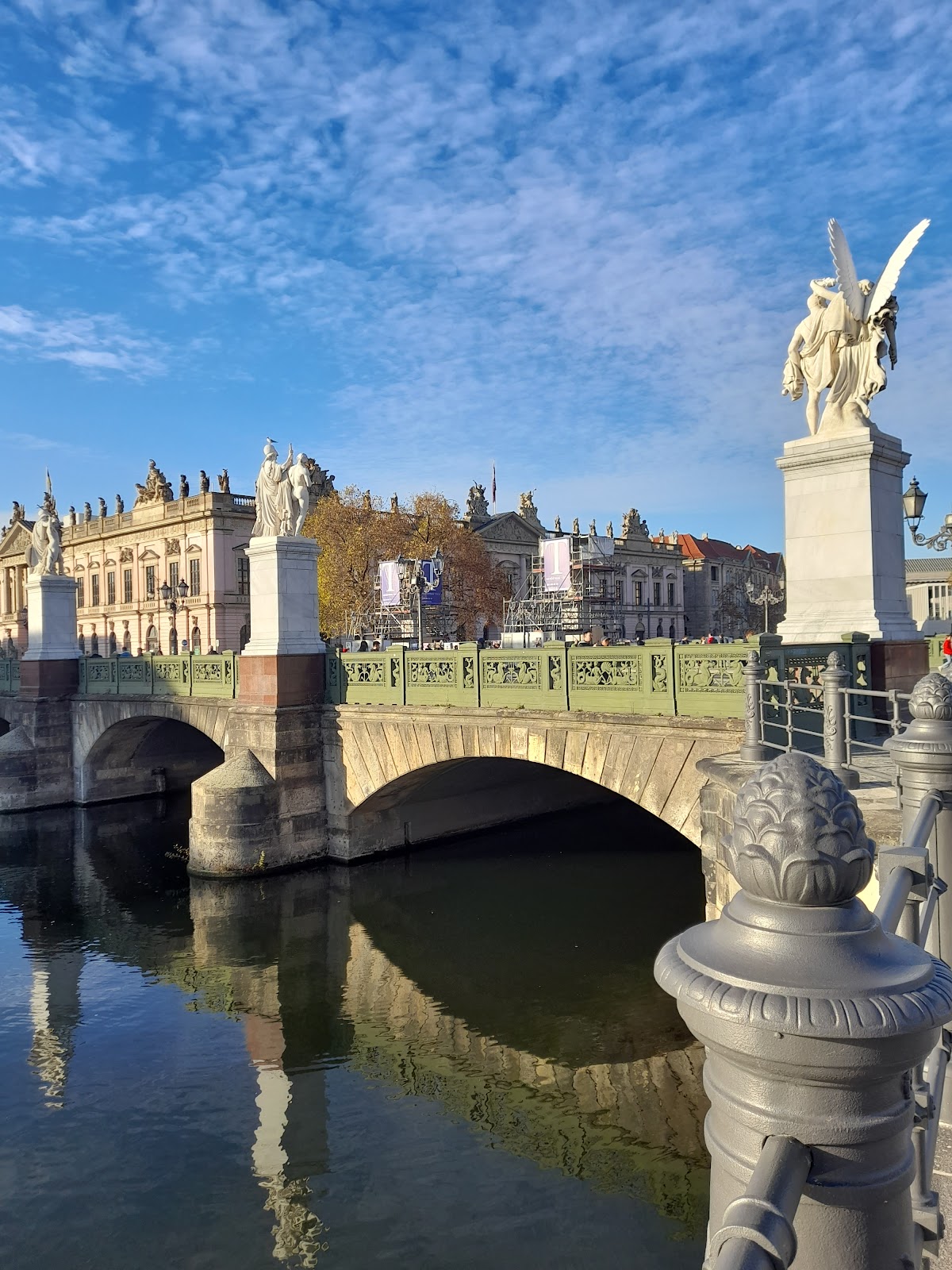
Mitte — literally middle — is the historic heart of Berlin and the district most visitors spend the bulk of their time in, home to the Brandenburg Gate, the Reichstag, Unter den Linden boulevard, and Museum Island's cluster of world-class museums on the Spree. It was the core of East Berlin during the Cold War, and traces of that era remain alongside older Prussian architecture and, since reunification, a wave of new government buildings, hotels, and offices.

The district also contains the Holocaust Memorial, Checkpoint Charlie, and the TV Tower at Alexanderplatz, making it dense with must-see sights within easy walking distance of each other. Because it's the tourist and administrative core, it can feel less residential and more monumental than Berlin's outer neighborhoods.

✨ Reasons to go

  • 1Museum Island's five museums sit on a Spree river islet and form a UNESCO World Heritage Site.
  • 2Mitte was the administrative core of East Berlin during the Cold War, and its street layout still reflects that division.
  • 3Checkpoint Charlie, once the main Allied border crossing between East and West Berlin, stands within walking distance of the Brandenburg Gate.

💡 Good to know

  • 1Start early at the Brandenburg Gate and Reichstag before tour groups arrive
  • 2allow at least half a day for Museum Island if visiting more than one museum
  • 3walk Unter den Linden to connect the major sights on foot rather than using transit for short hops.

⏱️ Typical visit

1h15

🕰️ Best time

morning or afternoon

🚶 Walking intensity

Active — lots of walking

📍

Address

Mitte, Berlin, Germany · Mitte
Kreuzberg2
🚶
Free

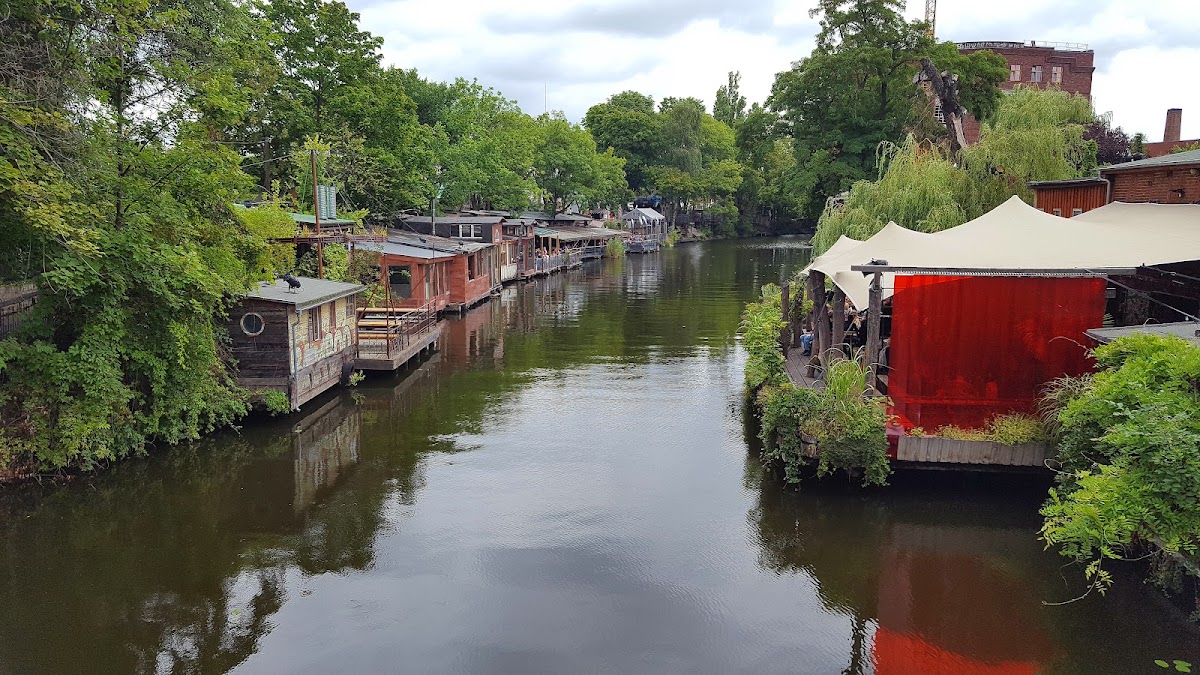
Once a walled-in, low-rent corner of West Berlin that attracted squatters, punks, and Turkish guest-worker families, Kreuzberg has kept much of that anti-establishment energy even as gentrification has crept in. The neighborhood splits into distinct characters: Kreuzberg 36 around Kottbusser Tor and the Landwehr Canal is grittier and more countercultural, with graffiti-covered facades, the Turkish market along Maybachufer, and late-night bars, while Kreuzberg 61 around Bergmannstraße is calmer and more gentrified.

It's also home to a stretch of the East Side Gallery and the Jewish Museum's striking Libeskind building. Few Berlin neighborhoods pack in as much street art, döner kebab shops, and genuinely mixed nightlife into one area.

✨ Reasons to go

  • 1Once part of walled-in West Berlin, the district became a haven for squatters, punks, and Turkish guest-worker families.
  • 2It contains the Libeskind-designed Jewish Museum building and a stretch of the East Side Gallery.
  • 3The neighborhood splits into two contrasting halves: the countercultural Kreuzberg 36 near Kottbusser Tor and the calmer, gentrified Kreuzberg 61 around Bergmannstraße.

💡 Good to know

  • 1Browse the Turkish market along Maybachufer on Tuesday or Friday afternoons
  • 2explore street art and canal-side bars around Kottbusser Tor and Görlitzer Park
  • 3contrast the two halves by also walking Bergmannstraße for a quieter, more residential feel.

⏱️ Typical visit

1h15

🕰️ Best time

afternoon, early evening or evening

🚶 Walking intensity

Active — lots of walking

📍

Address

Kreuzberg, Berlin-Friedrichshain-Kreuzberg, Germany · Friedrichshain-Kreuzberg
Nikolaiviertel3
🚶
4.6 (2,694)Free

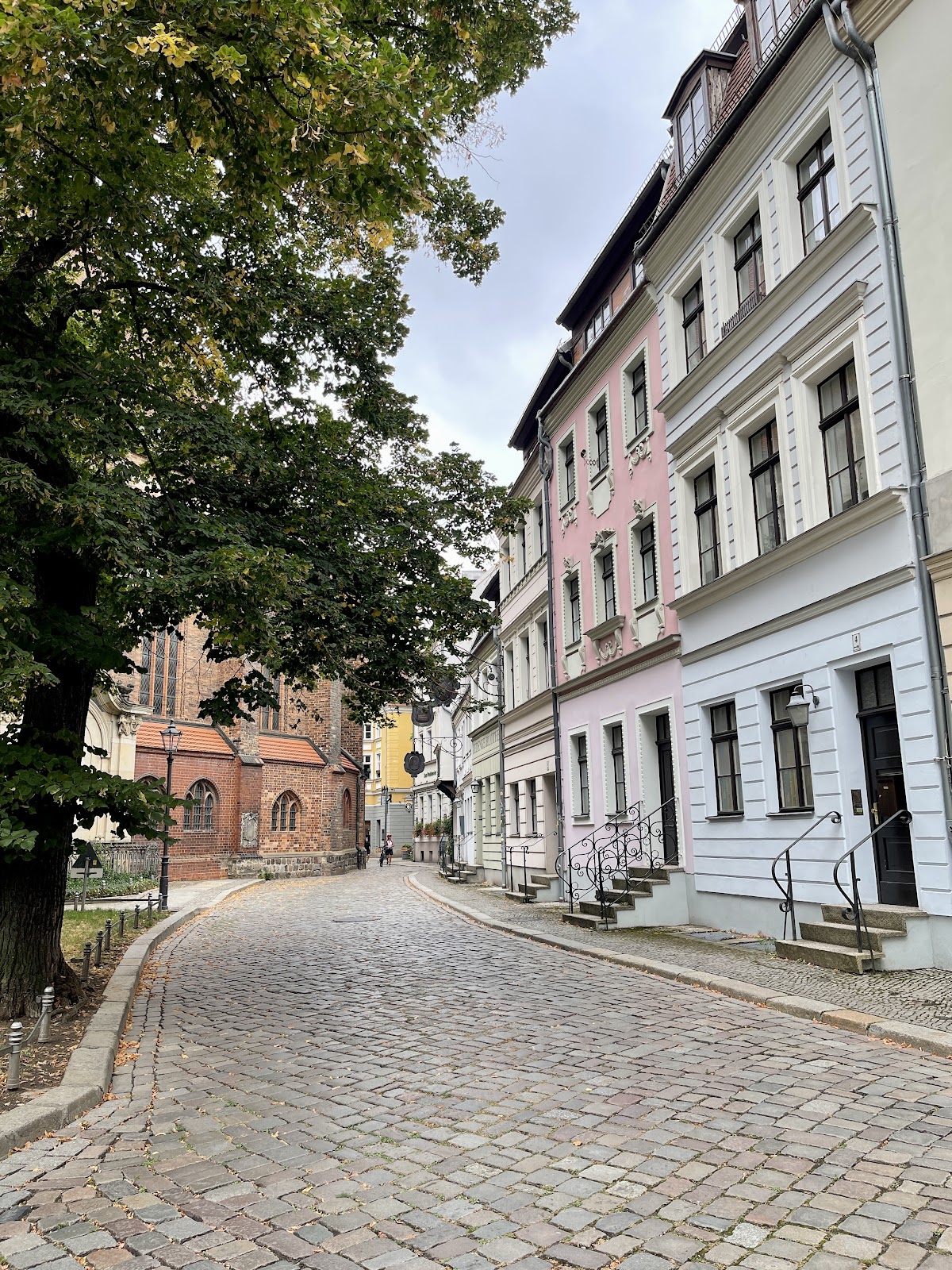
The Nikolaiviertel, or Nicholas Quarter, occupies the site of Berlin's original medieval settlement, but almost everything visible today is a GDR-era reconstruction built for the city's 750th anniversary in 1987, recreating cobblestone lanes and gabled facades in a style meant to evoke old Berlin. At its center is the Nikolaikirche, Berlin's oldest surviving church, whose twin spires date back centuries even though much of what surrounds it doesn't.

The quarter has a somewhat theme-park feel compared to genuinely historic old towns elsewhere in Europe, but it's a pleasant, compact area for a stroll, with traditional German restaurants and souvenir shops tucked into its narrow alleys. It sits right by the Spree, close to Alexanderplatz and the Rotes Rathaus.

✨ Reasons to go

  • 1The quarter sits on the site of Berlin's original medieval settlement
  • 2Nikolaikirche's twin spires belong to Berlin's oldest surviving church
  • 3Most of the neighborhood is a GDR-era reconstruction built for Berlin's 750th anniversary in 1987

💡 Good to know

  • 1Visit for an hour or so as a pleasant add-on near Alexanderplatz rather than a major destination
  • 2go around a meal time to try a traditional German restaurant in the alleys
  • 3combine with the nearby Rotes Rathaus and Museum Island, both a short walk away.

⏱️ Typical visit

1h15

🚶 Walking intensity

Active — lots of walking

📍

Address

Rathausstraße 21, 10178 Berlin, Germany · Mitte
🕐

Hours

  • Monday: Open 24 hours
  • Tuesday: Open 24 hours
  • Wednesday: Open 24 hours
  • Thursday: Open 24 hours
  • Friday: Open 24 hours
  • Saturday: Open 24 hours
  • Sunday: Open 24 hours
Friedrichshain4
🚶
Free

Friedrichshain was part of East Berlin and still shows traces of GDR-era architecture along Karl-Marx-Allee's monumental Stalinist boulevard, but it's best known today as ground zero for Berlin's techno and club culture, anchored by Berghain, one of the world's most famous nightclubs, housed in a former power station. The longest surviving stretch of the Berlin Wall, the East Side Gallery, runs along the Spree here, covered in murals painted by artists from around the world after 1990.

Boxhagener Platz is the neighborhood's social heart by day, with a lively flea market on Sundays and cafés filled with young Berliners and expats. It sits just across the river from Kreuzberg, and the two districts blend into one continuous, youthful nightlife zone.

✨ Reasons to go

  • 1Karl-Marx-Allee is a Stalinist-era monumental boulevard from East Berlin's postwar reconstruction.
  • 2Berghain, one of the world's most famous techno clubs, operates inside a former East German power station.
  • 3The East Side Gallery is the longest surviving stretch of the Berlin Wall, painted with murals by international artists after 1990.

💡 Good to know

  • 1Walk the East Side Gallery murals along the river, ideally in daylight
  • 2browse the Boxhagener Platz flea market on Sunday
  • 3if aiming for Berghain or other clubs, know that door policy is notoriously unpredictable and lines can be long.

⏱️ Typical visit

1h15

🕰️ Best time

early evening or evening

🚶 Walking intensity

Active — lots of walking

📍

Address

Friedrichshain, Berlin-Friedrichshain-Kreuzberg, Germany · Friedrichshain-Kreuzberg
Scheunenviertel5
🚶
Free

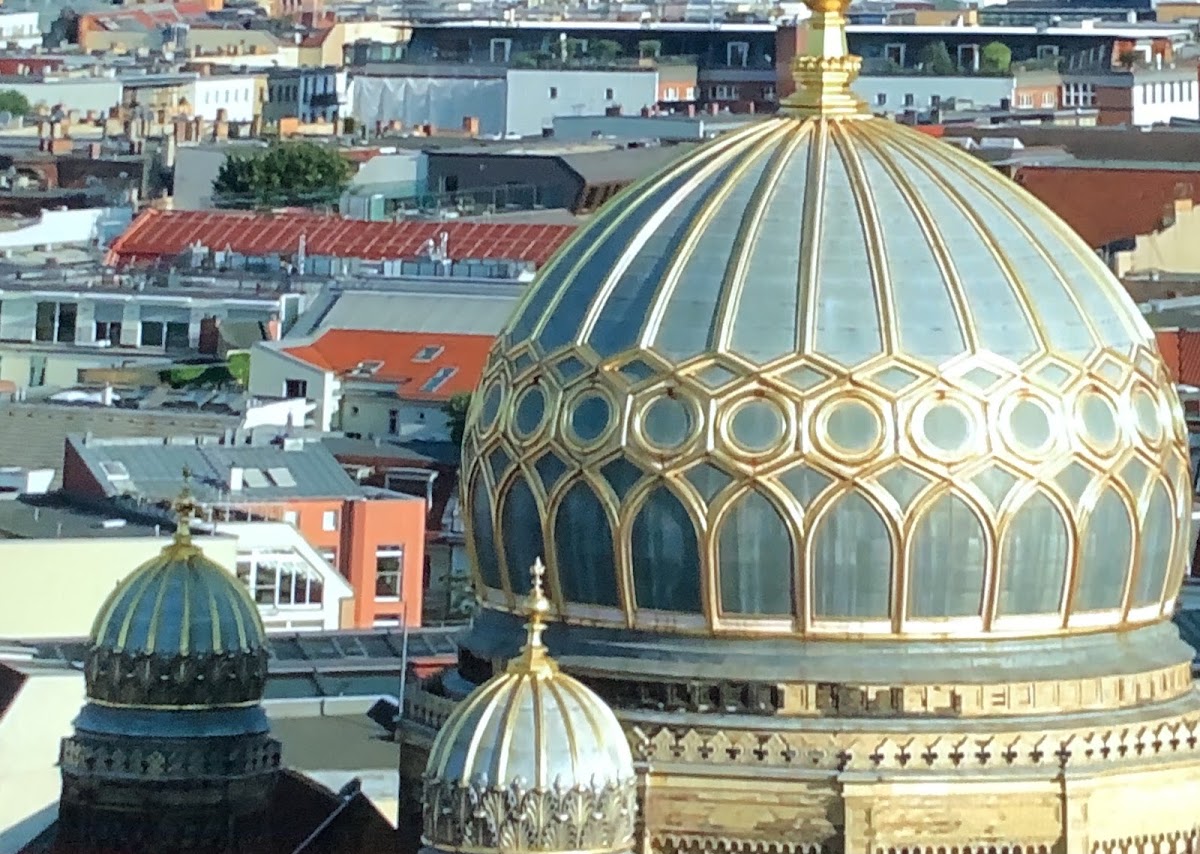
The Scheunenviertel, meaning barn quarter, was historically Berlin's poorest district and the heart of its Jewish community before the Holocaust; the New Synagogue's gold dome on Oranienburger Straße still marks that history, alongside small memorial plaques set into the pavement for deported residents. Today the neighborhood is one of Mitte's most fashionable, centered on the Hackesche Höfe, a beautifully restored complex of interlinked Art Nouveau courtyards housing galleries, boutiques, and cafés.

The surrounding streets — Rosenthaler Straße, Auguststraße — are dense with independent design shops, contemporary art galleries, and some of Berlin's better cocktail bars, drawing a mix of design-conscious locals and visitors. It rewards slow wandering through courtyards rather than following a fixed sightseeing route.

✨ Reasons to go

  • 1The New Synagogue's gold dome on Oranienburger Straße marks the historic heart of Berlin's pre-Holocaust Jewish community.
  • 2Small brass Stolpersteine memorial plaques are set into the pavement to commemorate individual deported residents.
  • 3The Hackesche Höfe is a restored complex of interlinked Art Nouveau courtyards with original tilework, now housing galleries and boutiques.

💡 Good to know

  • 1Duck into the Hackesche Höfe courtyards to see the restored Art Nouveau tilework and browse the shops inside
  • 2look down for the Stolpersteine memorial plaques set into the pavement
  • 3wander Auguststraße for the neighborhood's gallery scene in the late afternoon.

⏱️ Typical visit

1h15

🕰️ Best time

afternoon, early evening or evening

🚶 Walking intensity

Active — lots of walking

📍

Address

Scheunenviertel, 10178 Berlin, Germany · Scheunenviertel
Tempelhof6
🚶
Free

Tempelhof's defining feature is its former airport, a monumental Nazi-era terminal building and the site of the 1948-49 Berlin Airlift, which was decommissioned in 2008 and reopened as Tempelhofer Feld — a vast public park where the old runways are now used for cycling, kite-surfing, urban gardening, and picnicking. The surrounding neighborhood itself is a fairly ordinary, middle-class residential district with tree-lined streets and little in the way of conventional sights beyond the airfield.

It has a strong claim to being one of Berlin's most unusual green spaces precisely because of what it used to be, and Berliners voted in a 2014 referendum to keep it undeveloped rather than build housing on it. It borders Neukölln and Schöneberg, making it easy to combine with either district's nightlife or shopping.

✨ Reasons to go

  • 1The airport terminal was built by the Nazis and was once among the world's largest buildings.
  • 2It served as a key landing site for Allied planes during the 1948-49 Berlin Airlift.
  • 3In a 2014 referendum, Berliners voted to keep the former runways as open parkland rather than allow housing development.

💡 Good to know

  • 1Rent a bike to properly cover Tempelhofer Feld's scale, since it's far larger than a typical city park
  • 2visit at golden hour for open-sky views rare in central Berlin
  • 3combine with neighboring Neukölln for dinner or drinks afterward.

⏱️ Typical visit

1h15

🕰️ Best time

morning or afternoon

🚶 Walking intensity

Active — lots of walking

📍

Address

Tempelhof, Berlin-Tempelhof-Schöneberg, Germany · Tempelhof-Schöneberg
Charlottenburg7
🚶
Free

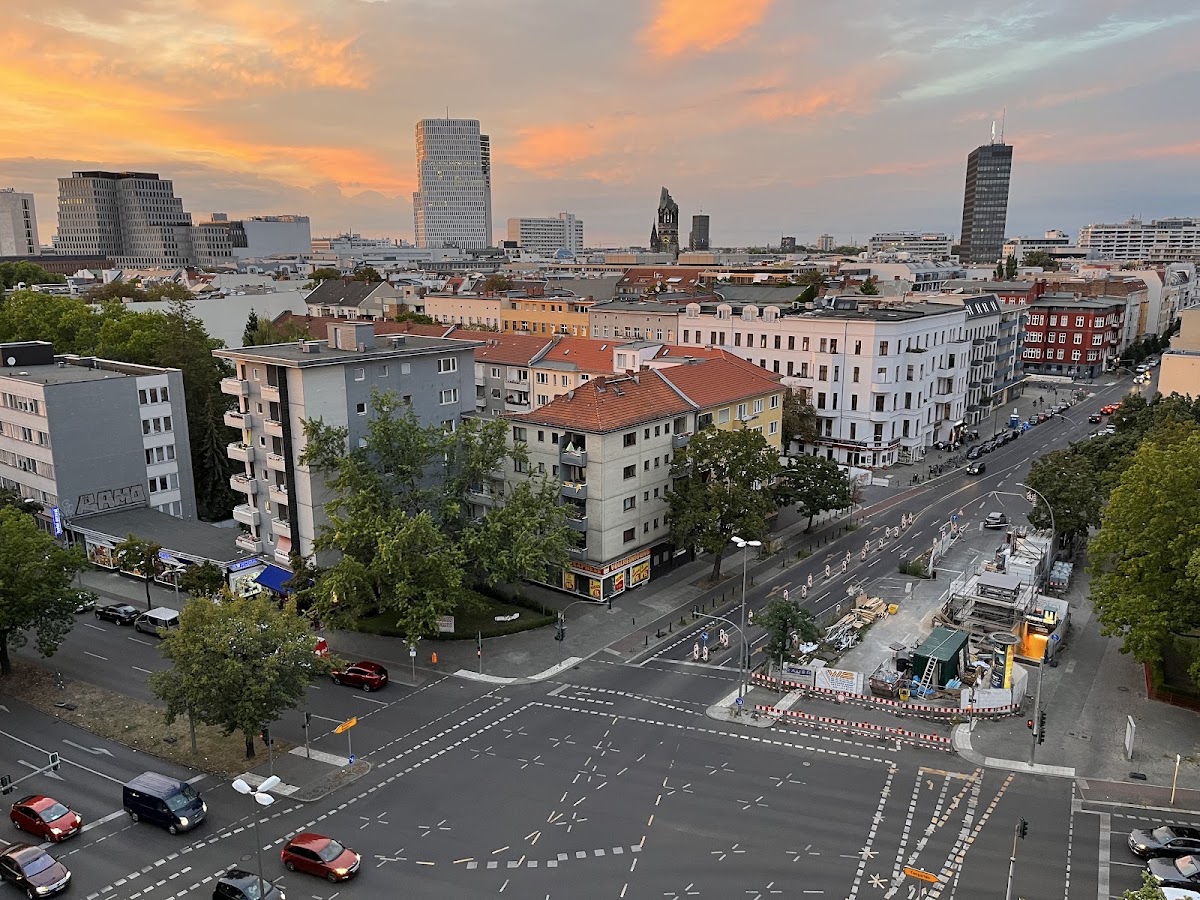
Charlottenburg was the commercial and cultural heart of West Berlin during the Cold War division, when Mitte sat behind the Wall, and it still carries that old-money, bourgeois character. Kurfürstendamm, known to Berliners as Ku'damm, is its grand shopping boulevard, lined with international flagship stores and the bombed-out shell of the Kaiser Wilhelm Memorial Church, deliberately left in ruins as a war memorial.

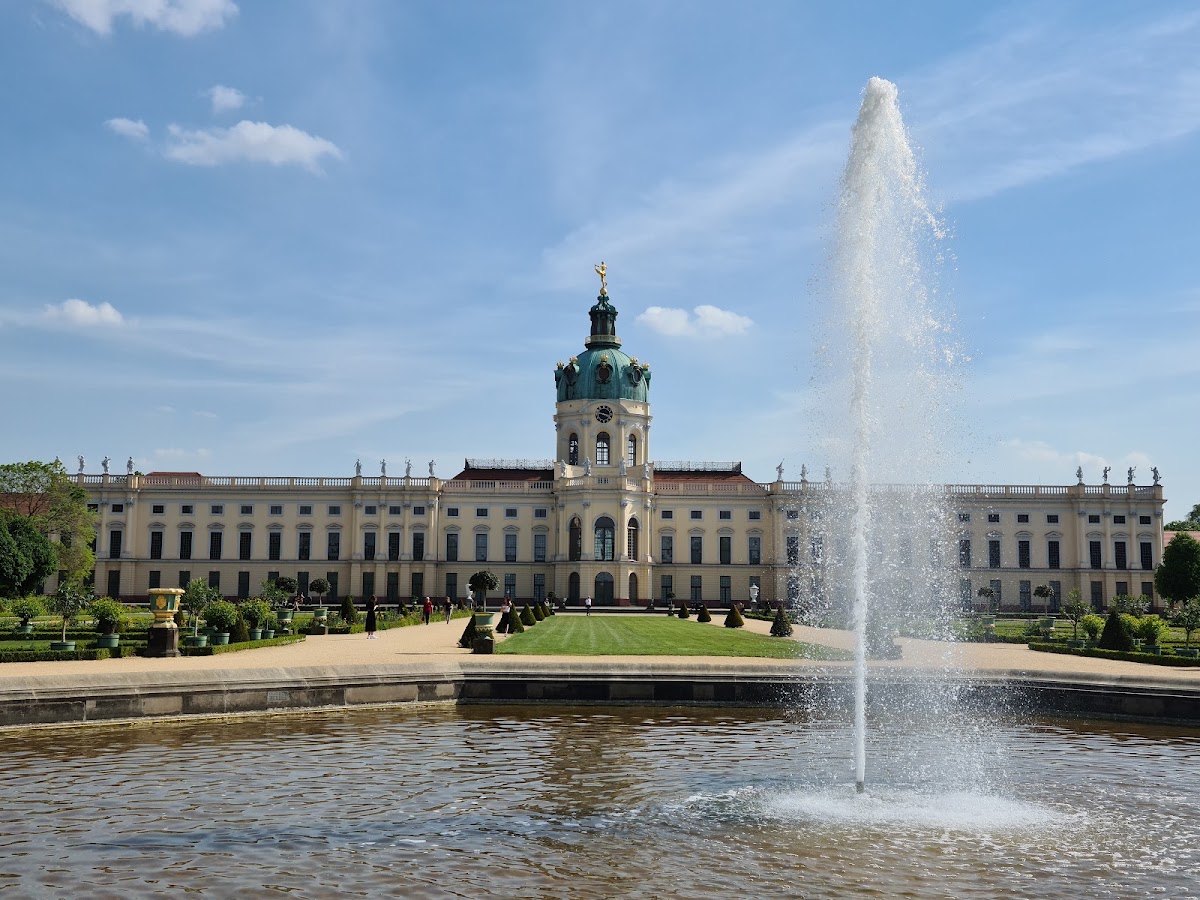
The district's namesake, Charlottenburg Palace, is Berlin's largest surviving Hohenzollern residence, with formal baroque gardens that offer a rare palace-and-park experience within city limits. Compared to Mitte's monumental history or Kreuzberg's edge, Charlottenburg feels calmer, wealthier, and more traditionally European.

✨ Reasons to go

  • 1Charlottenburg Palace is the largest surviving Hohenzollern royal residence in Berlin, complete with baroque gardens.
  • 2The Kaiser Wilhelm Memorial Church's bombed-out tower was deliberately left in ruins as a war memorial rather than rebuilt.
  • 3During the Cold War, this district served as the commercial and cultural center of West Berlin while Mitte lay behind the Wall.

💡 Good to know

  • 1Visit Charlottenburg Palace in the morning to have the gardens relatively quiet
  • 2combine with shopping or a coffee break on Ku'damm
  • 3see the ruined tower of Kaiser Wilhelm Memorial Church, kept intentionally unrestored as a memorial.

⏱️ Typical visit

1h15

🕰️ Best time

morning, lunchtime or afternoon

🚶 Walking intensity

Active — lots of walking

📍

Address

Charlottenburg, Berlin-Charlottenburg-Wilmersdorf, Germany · Charlottenburg-Wilmersdorf
Neukölln8
🚶
Free

Neukölln has long been one of Berlin's most ethnically diverse districts, shaped by waves of Turkish, Arab, and more recently international immigration, and it retains that mix along Sonnenallee's Middle Eastern bakeries and shisha bars. Over the past fifteen years it's also become one of the city's most gentrified nightlife areas, with Weserstraße and the streets around Reuterplatz filling up with cocktail bars, vintage shops, and a young, international crowd priced out of Kreuzberg and Friedrichshain.

The tension between old and new residents is still visible and often discussed by Berliners themselves, giving the neighborhood a rawer, more contested feel than more settled trendy districts. Tempelhofer Feld, the former airport turned enormous public park, sits on its northern edge.

✨ Reasons to go

  • 1Sonnenallee's Middle Eastern bakeries and shisha bars reflect decades of Turkish and Arab immigration to the district.
  • 2Tempelhofer Feld, a former airport turned vast public park, borders Neukölln to the north.
  • 3Weserstraße's rapid shift into a cocktail-bar and vintage-shop strip has made the district's gentrification tensions a frequent topic of debate among Berliners.

💡 Good to know

  • 1Have dinner or shisha along Sonnenallee for the neighborhood's immigrant food scene
  • 2bar-hop on Weserstraße in the evening
  • 3combine with a walk or bike ride across Tempelhofer Feld, the old airfield park bordering the district.

⏱️ Typical visit

1h15

🕰️ Best time

early evening or evening

🚶 Walking intensity

Active — lots of walking

📍

Address

Berlin-Neukölln, Germany · Neukölln
Prenzlauer Berg9
🚶
Free

Prenzlauer Berg largely escaped wartime bombing and later East German demolition, leaving it with some of Berlin's best-preserved Gründerzeit apartment blocks, which have since been renovated into one of the city's most desirable — and expensive — residential areas. It has a reputation as Berlin's stroller capital, full of young families, organic cafés, and independent boutiques, a striking contrast to its scruffier past as a hub for artists and dissidents before the Wall fell.

Kollwitzplatz and the streets around it host a popular Saturday farmers' market, while Kastanienallee remains a strip of trendy shops and bars. Mauerpark, on the neighborhood's edge, draws huge weekend crowds for its flea market and open-air karaoke.

✨ Reasons to go

  • 1Its Gründerzeit apartment blocks survived both wartime bombing and East German-era demolition largely intact.
  • 2Before 1989 it was a center for artists and political dissidents in East Berlin.
  • 3Mauerpark's Sunday open-air karaoke draws large crowds along the former Berlin Wall death strip.

💡 Good to know

  • 1Visit Mauerpark on a Sunday for the flea market and outdoor karaoke
  • 2browse the Saturday market at Kollwitzplatz
  • 3wander Kastanienallee and the surrounding side streets for the neighborhood's best-preserved architecture.

⏱️ Typical visit

1h15

🕰️ Best time

morning, lunchtime or afternoon

🚶 Walking intensity

Active — lots of walking

📍

Address

Prenzlauer Berg, Berlin-Pankow, Germany · Pankow
Kreuzberg Guided Walking Evening Tour10
🚶
4.7 (613)$$ · Mid-rangeGuided Tour

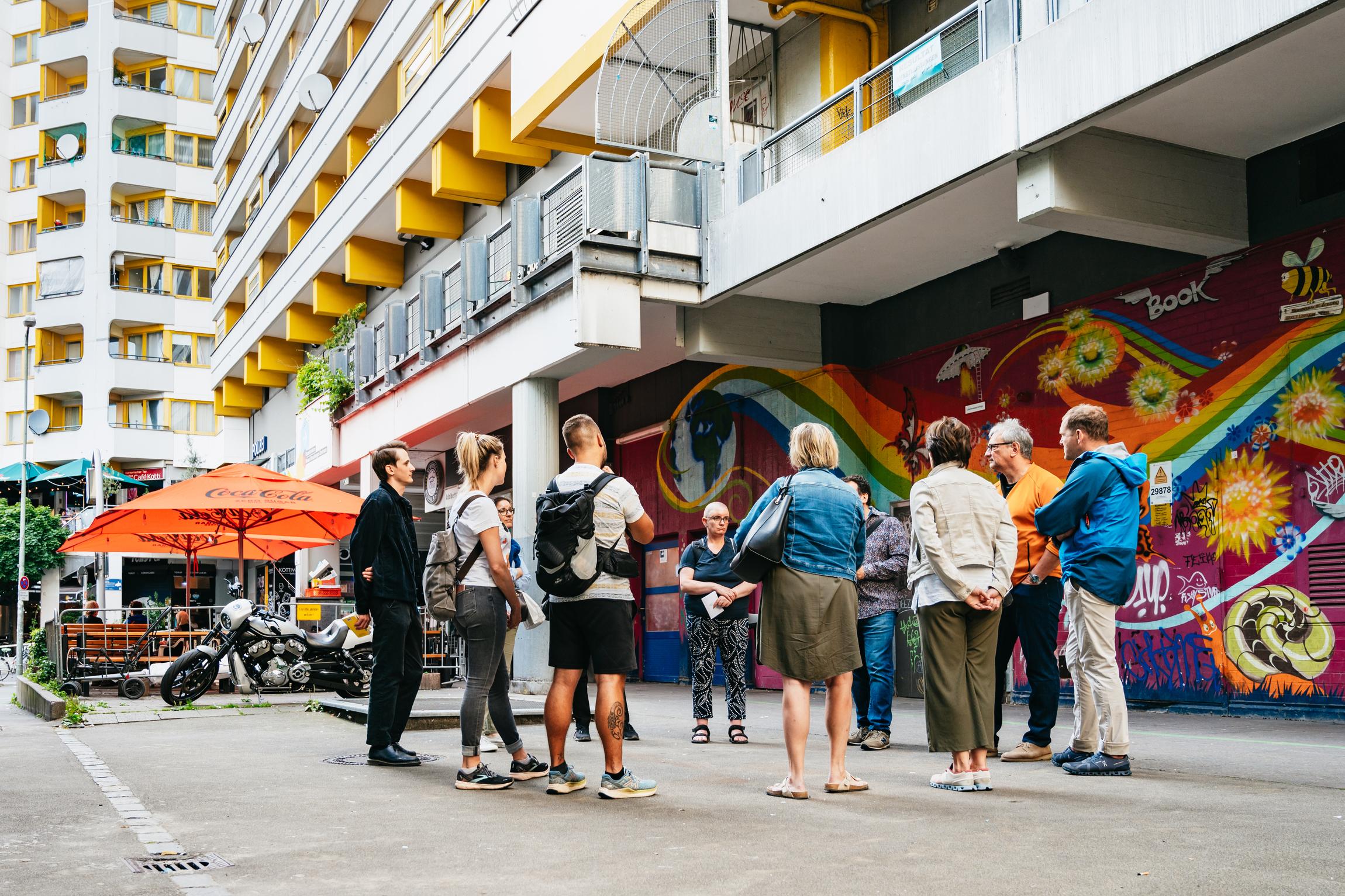
This guided tour covers Kreuzberg, Berlin's famously countercultural district that grew out of West Berlin's Cold War-era punk and squatter scene and the Turkish guest-worker community that settled around Kottbusser Tor, and it's timed deliberately for evening, when the neighborhood's bars, street art, and canal-side hangouts are at their liveliest. Guides typically weave through graffiti-covered courtyards, past remnants of the Berlin Wall's death strip, and along the Landwehr Canal, connecting the district's political history to what's now one of Berlin's most concentrated nightlife areas.

It's a useful orientation for first-time visitors who want context on Kreuzberg's reputation for street art, LGBTQ+ nightlife, and multicultural food before exploring further on their own. The tour runs at a relaxed pace but covers real distance across the district's two distinct halves.

✨ Reasons to go

  • 1Traces Kreuzberg's Cold War history as a district built along the former Berlin Wall's death strip
  • 2Explores the neighborhood's roots in West Berlin's punk and squatter movement alongside its Turkish guest-worker heritage around Kottbusser Tor
  • 3Follows the Landwehr Canal through a district now known for street art and concentrated nightlife

💡 Good to know

  • 1Book ahead for fixed evening departure times
  • 2bring a light jacket, as the tour runs into the night regardless of weather
  • 3extend the evening afterward with a bar or late-night food stop near where the tour ends.

⏱️ Typical visit

2h30

🕰️ Best time

early evening or evening

🚶 Walking intensity

Moderate walking

📍

Address

Reichenberger Str. 174, 10999 Berlin-Bezirk Friedrichshain-Kreuzberg, Germany · Bezirk Friedrichshain-Kreuzberg
🕐

Hours

Fixed evening tour departures, typically starting around 18:00 or 19:00, running into the night as Kreuzberg's bar and street-art scene comes alive.
Reuterkiez11
🚶
Free

Reuterkiez takes its name from Reuterplatz and covers the stretch of Neukölln along the Landwehr Canal that has become one of Berlin's densest concentrations of bars, cafés, and small restaurants catering to a young, heavily international crowd. Weserstraße is its main artery, transformed within the past decade from an unremarkable residential street into a strip of cocktail bars and late-night hangouts that rivals Kreuzberg's nightlife.

It sits directly across the canal from Kreuzberg's Maybachufer market, making the two areas feel like one continuous scene despite the district border. Rents and character here have shifted quickly, and longtime residents and newcomers still visibly coexist rather than one having fully replaced the other.

✨ Reasons to go

  • 1Weserstraße shifted from an ordinary residential street to a dense cocktail-bar strip within about a decade.
  • 2It faces Kreuzberg's Maybachufer Turkish market directly across the Landwehr Canal, blurring the district border between the two neighborhoods.

💡 Good to know

  • 1Bar-hop along Weserstraße starting in the early evening
  • 2cross the canal to Maybachufer for the Turkish market on Tuesday or Friday afternoons
  • 3expect the area to be quiet during the day and busiest from evening onward.

⏱️ Typical visit

1h15

🕰️ Best time

afternoon, early evening or evening

🚶 Walking intensity

Active — lots of walking

📍

Address

Reuterkiez, 12043 Berlin-Bezirk Neukölln, Germany · Reuterkiez
Schöneberg12
🚶
Free

Schöneberg has a layered history: it was a hub of 1920s Weimar-era queer nightlife, later the neighborhood where David Bowie and Iggy Pop lived and recorded in the late 1970s, and today it remains the center of Berlin's LGBTQ+ scene, particularly around Nollendorfplatz and Motzstraße. The Rathaus Schöneberg, its town hall, is where John F.

Kennedy delivered his famous Ich bin ein Berliner speech in 1963. Away from the nightlife strip, the neighborhood has a comfortable, residential, slightly bourgeois character with leafy squares like Winterfeldtplatz, home to one of Berlin's best twice-weekly markets.

It sits just southwest of the city center, easily combined with a day exploring western Berlin.

✨ Reasons to go

  • 1David Bowie and Iggy Pop lived and recorded music in Schöneberg in the late 1970s.
  • 2JFK delivered his 'Ich bin ein Berliner' speech at Rathaus Schöneberg in 1963.
  • 3The area around Nollendorfplatz was a center of queer nightlife during the Weimar era in the 1920s.

💡 Good to know

  • 1Visit the Winterfeldtplatz market on a Wednesday or Saturday morning
  • 2explore the LGBTQ+ bar scene around Nollendorfplatz and Motzstraße in the evening
  • 3see the Rathaus Schöneberg for its Kennedy speech history if in the area.

⏱️ Typical visit

1h15

🕰️ Best time

afternoon, early evening or evening

🚶 Walking intensity

Active — lots of walking

📍

Address

Schöneberg, Berlin-Tempelhof-Schöneberg, Germany · Tempelhof-Schöneberg
Wrangelkiez13
🚶
Free

Wrangelkiez sits in Kreuzberg 36 around Wrangelstraße, next to Görlitzer Park — a former railway station converted into green space that's also known for its more visible drug trade, giving the whole area a rougher edge than gentrified pockets elsewhere in the city. The streets are dense with graffiti and street art, döner and falafel shops, and casual bars that draw a young, budget-conscious, international crowd, plus a scattering of Vietnamese restaurants along Wrangelstraße itself.

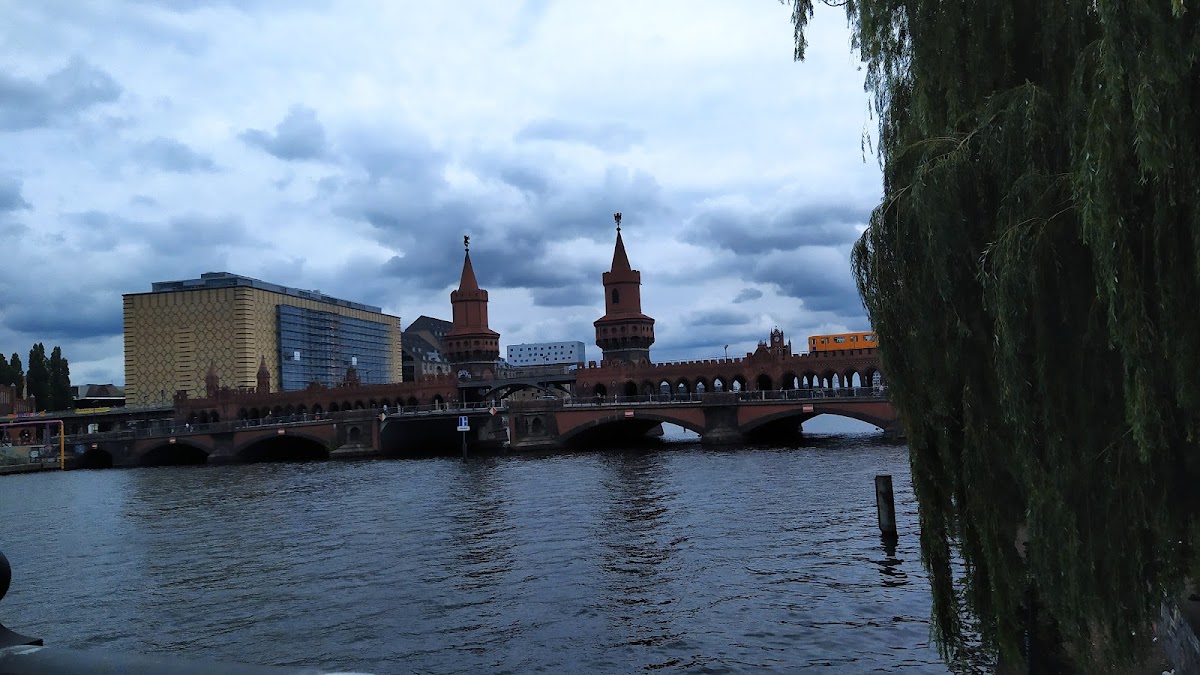
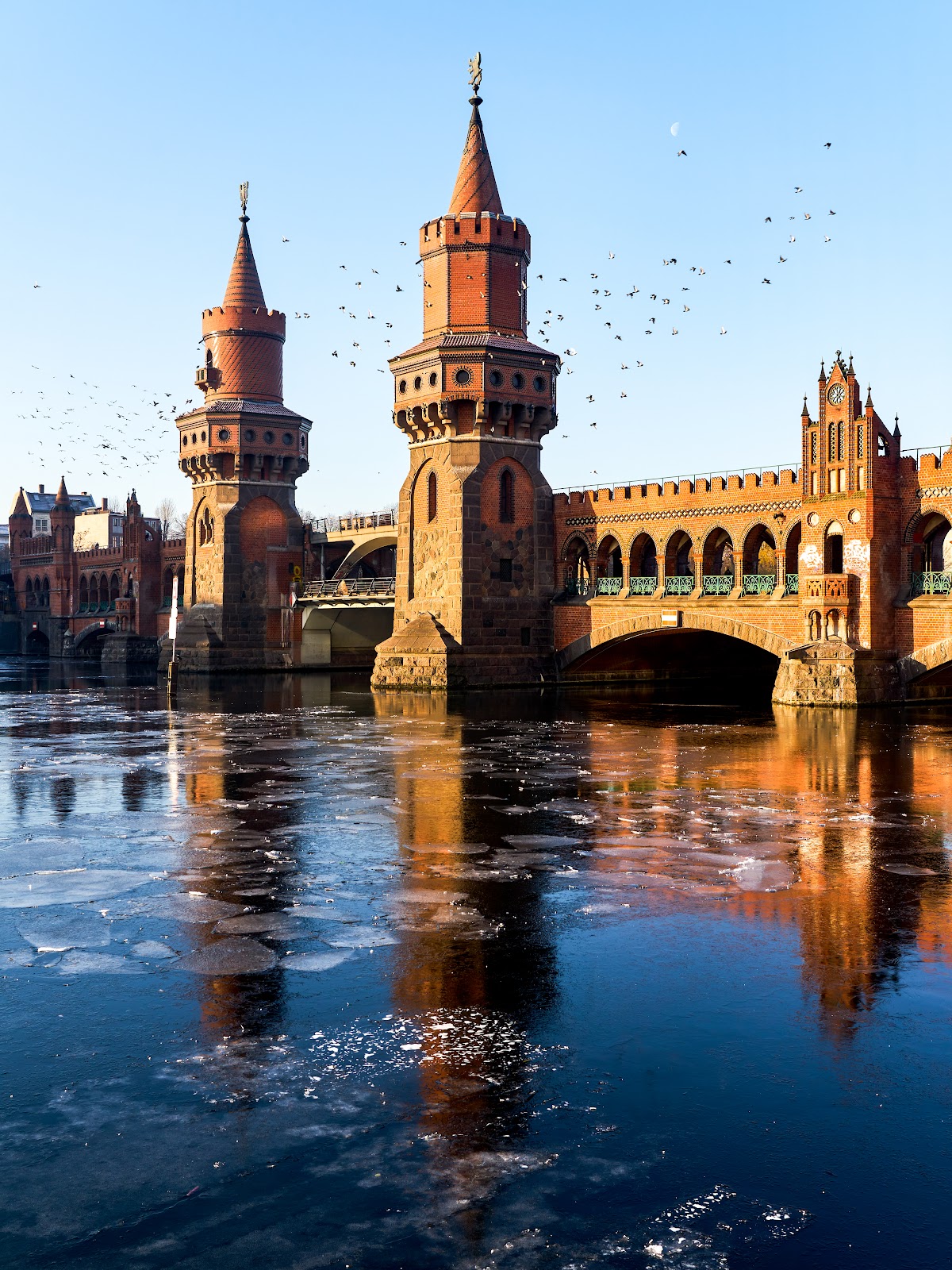
It's within walking distance of the East Side Gallery and the Oberbaumbrücke bridge into Friedrichshain, making it a natural stop on a walk between the two riverside districts. It's authentic and inexpensive rather than polished, and best appreciated with reasonable street-smarts after dark.

✨ Reasons to go

  • 1Görlitzer Park, right next to the kiez, occupies a former railway station site and is now known both as green space and for its open-air drug trade
  • 2Wrangelstraße has a notable cluster of Vietnamese restaurants alongside the more typical döner and falafel shops
  • 3It's within walking distance of the East Side Gallery and the Oberbaumbrücke, making it a natural link between Kreuzberg and Friedrichshain

💡 Good to know

  • 1Walk from here across the Oberbaumbrücke to Friedrichshain and the East Side Gallery
  • 2grab cheap Vietnamese or Middle Eastern food along Wrangelstraße
  • 3stay aware of your surroundings around Görlitzer Park, especially after dark.

⏱️ Typical visit

1h15

🕰️ Best time

afternoon, early evening or evening

🚶 Walking intensity

Active — lots of walking

📍

Address

Wrangelkiez, 10997 Berlin-Friedrichshain-Kreuzberg, Germany · Wrangelkiez
Bergmannkiez14
🚶
Free

Bergmannkiez is the calmer, more gentrified southern half of Kreuzberg, built around Bergmannstraße, a pedestrian-friendly street packed with antique shops, secondhand bookstores, cafés, and organic grocers. It borders the atmospheric Alter St.-Matthäus-Kirchhof cemetery, where the Brothers Grimm are buried, and Viktoriapark, a hilly green space with Berlin's only real waterfall and good skyline views.

The neighborhood has a settled, almost small-town feel that contrasts with the grittier nightlife of Kreuzberg 36 to the north, making it popular with families and long-term residents. It's an easy, pleasant walk from the Jewish Museum and connects naturally to the rest of Kreuzberg.

✨ Reasons to go

  • 1The Brothers Grimm are buried in the adjoining Alter St.-Matthäus-Kirchhof cemetery.
  • 2Viktoriapark contains Berlin's only real waterfall.

💡 Good to know

  • 1Browse the antique and secondhand shops along Bergmannstraße on a weekday morning
  • 2climb Viktoriapark for skyline views and the waterfall
  • 3combine with a visit to the nearby Jewish Museum.

⏱️ Typical visit

1h15

🕰️ Best time

morning, lunchtime or afternoon

🚶 Walking intensity

Active — lots of walking

📍

Address

Bergmannkiez, Berlin-Friedrichshain-Kreuzberg, Germany · Bergmannkiez
No photo available15
🚶
Free

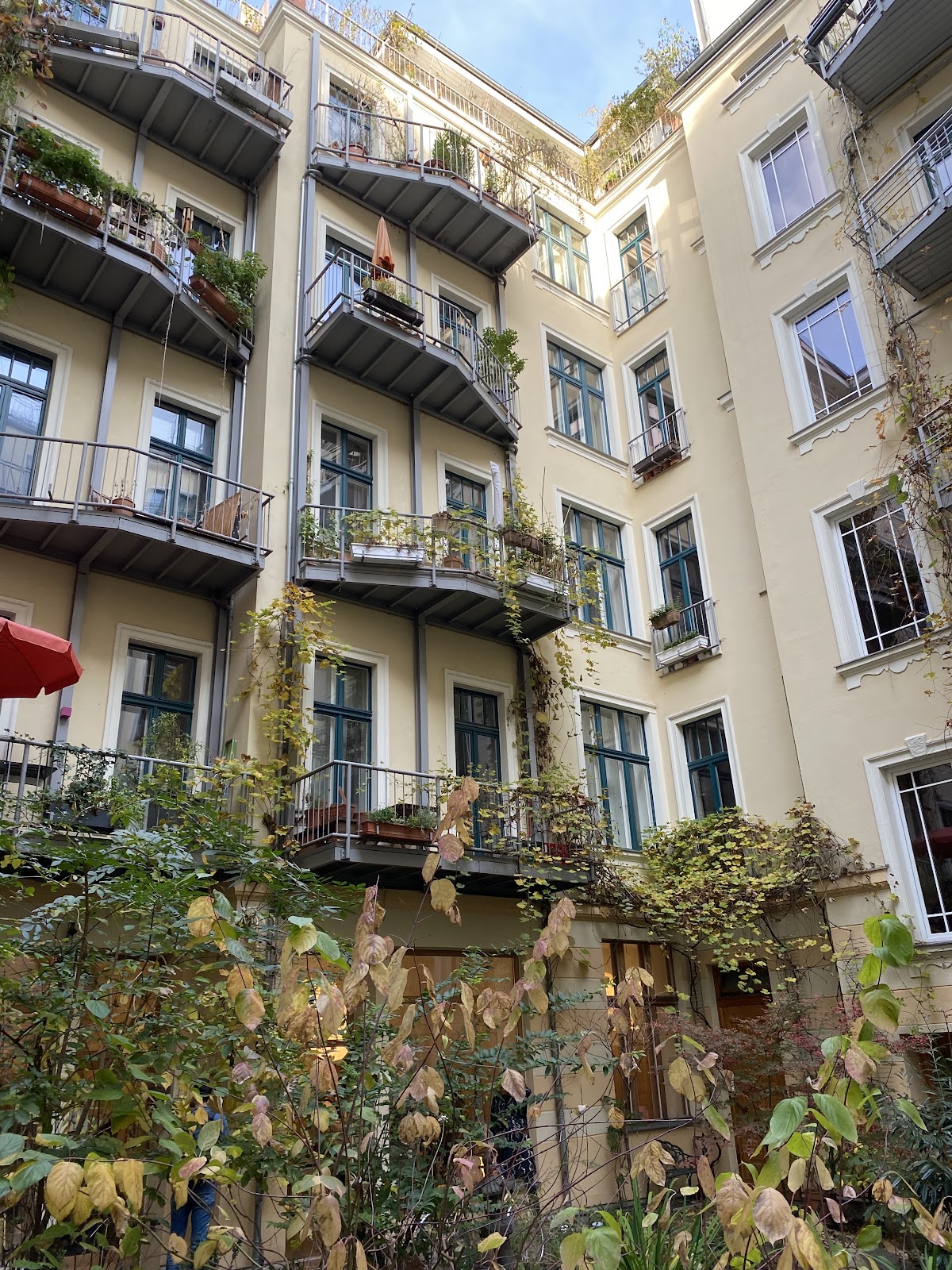
Savignyplatz is a quiet, tree-filled square in Charlottenburg surrounded by elegant 19th-century apartment buildings, and together with the shops and restaurants lining nearby Kantstraße, it forms one of former West Berlin's most pleasant areas for an unhurried evening. The area has long attracted writers, publishers, and an intellectual, slightly old-fashioned crowd, with secondhand bookshops nestled under the S-Bahn arches and long-standing bistros and wine bars rather than the trend-driven bars of eastern districts.

Kantstraße itself also has a small but well-established Vietnamese and Asian food scene tucked among antique shops and design stores. It's a good contrast to Mitte or Kreuzberg for visitors wanting a calmer, more residential evening out.

✨ Reasons to go

  • 1Secondhand bookshops occupy the arches beneath the Savignyplatz S-Bahn station
  • 2The square has long drawn writers and publishers, giving it an old-fashioned literary character
  • 3Kantstraße hosts a small but well-established Vietnamese and Asian food scene amid antique and design shops

💡 Good to know

  • 1Browse the secondhand bookshops in the arches beneath the Savignyplatz S-Bahn station
  • 2have dinner on Kantstraße, which has a strong concentration of Vietnamese and Asian restaurants
  • 3visit in the evening, when the square's cafés and bistros are at their liveliest.

⏱️ Typical visit

1h15

🕰️ Best time

early evening or evening

🚶 Walking intensity

Active — lots of walking

📍

Address

Kantstraße & Savignyplatz, 10623 Berlin-Bezirk Charlottenburg-Wilmersdorf, Germany · Bezirk Charlottenburg-Wilmersdorf
Wilmersdorf16
🚶
Free

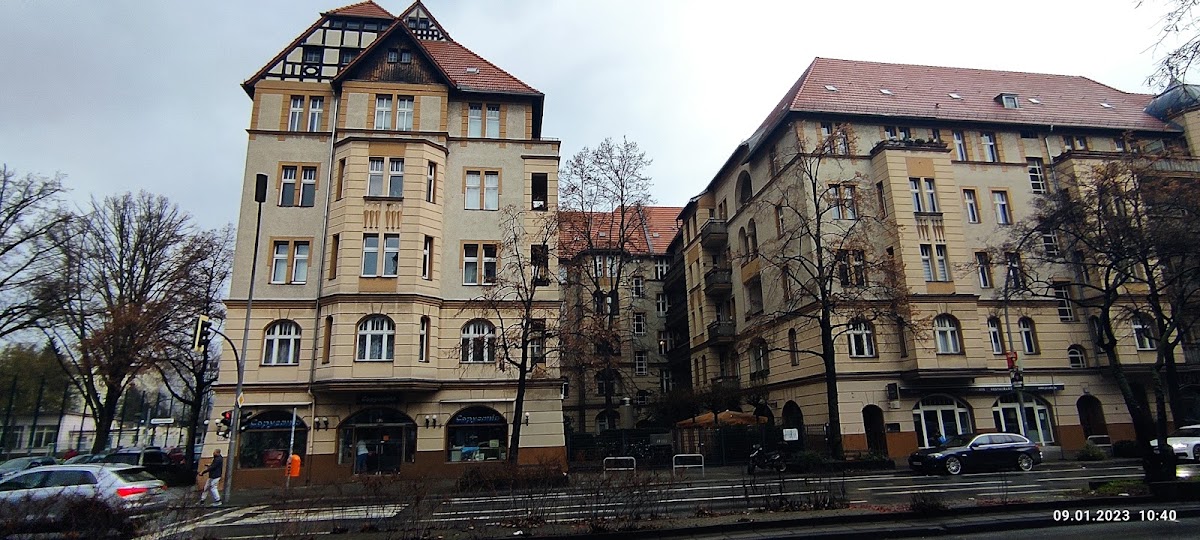
Wilmersdorf sits alongside Charlottenburg as one of former West Berlin's quieter, wealthier residential areas, characterized by grand Wilhelmine and Art Nouveau apartment buildings along wide, tree-lined streets. It has relatively few standalone tourist attractions, functioning more as an upscale backdrop of embassies, private schools, and leafy squares like Fehrbelliner Platz.

The Rüdesheimer Platz area has a small, distinctly non-Berlin wine-village theme, complete with a Rhineland-style fountain, a quirky historical curiosity. Most visitors experience Wilmersdorf in passing en route to Charlottenburg or the Grunewald forest rather than as a destination itself.

✨ Reasons to go

Rüdesheimer Platz is themed as a Rhineland wine village, complete with a fountain in that style, an unusual touch for Berlin.

💡 Good to know

  • 1Combine with a visit to neighboring Charlottenburg for its sights, since Wilmersdorf itself is light on major attractions
  • 2walk or cycle further west toward the Grunewald forest and lakes if time allows
  • 3see Rüdesheimer Platz for its curious wine-village theming if passing through.

⏱️ Typical visit

1h15

🕰️ Best time

morning, lunchtime or afternoon

🚶 Walking intensity

Active — lots of walking

📍

Address

Wilmersdorf, Berlin-Charlottenburg-Wilmersdorf, Germany · Charlottenburg-Wilmersdorf
Hansaviertel17
🚶
Free

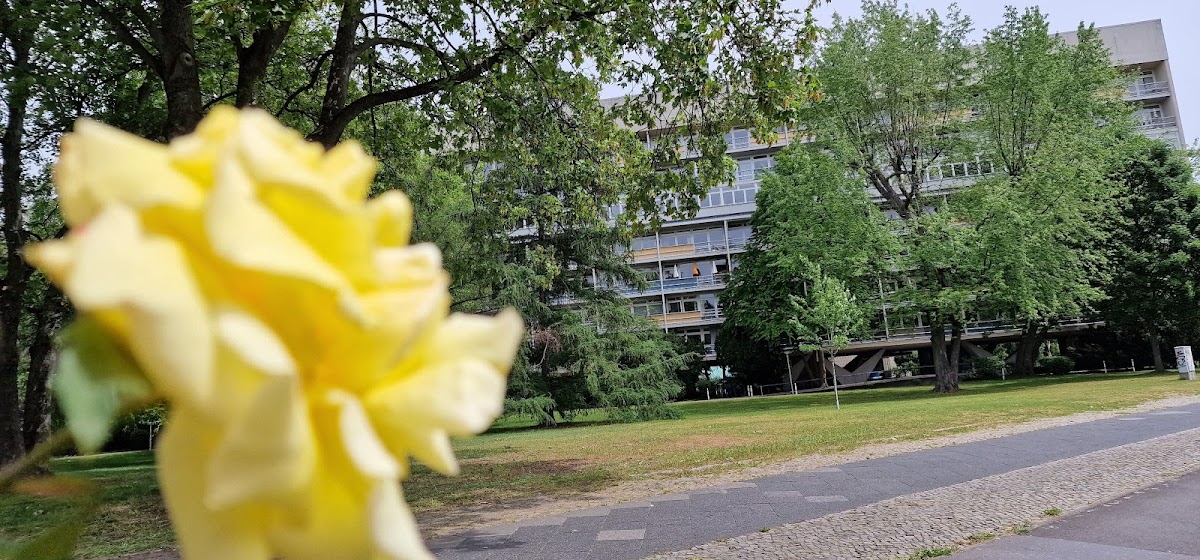
The Hansaviertel was largely destroyed in World War II and rebuilt from scratch for the 1957 Interbau exhibition, with internationally renowned architects including Walter Gropius, Alvar Aalto, and Oscar Niemeyer each designing individual apartment buildings set amid generous parkland — a deliberate West Berlin showcase of modern, humane urban planning set against the East's more monumental style. The result is an open, low-density district that feels closer to a landscaped campus than a typical city neighborhood, with buildings from different architects clearly distinguishable by name and style if you look them up beforehand.

It sits right on the edge of the Tiergarten and is an easy walk from Schloss Bellevue, the German president's residence. It has almost no shops or nightlife, making it worthwhile mainly for architecture enthusiasts.

✨ Reasons to go

  • 1Rebuilt from ruins as West Berlin's entry in the 1957 Interbau exhibition, deliberately contrasting with East Berlin's monumental architecture
  • 2Individual apartment buildings were designed by Walter Gropius, Alvar Aalto, and Oscar Niemeyer among other internationally renowned architects
  • 3Laid out as an open, low-density landscaped district rather than a conventional city neighborhood, bordering the Tiergarten

💡 Good to know

  • 1Bring a map or list of the Interbau buildings beforehand to identify individual architects' work
  • 2combine with a walk through the neighboring Tiergarten, which borders it directly
  • 3visit in daylight, since the district has little going on after dark.

⏱️ Typical visit

1h15

🕰️ Best time

morning or afternoon

🚶 Walking intensity

Active — lots of walking

📍

Address

Hansaviertel, Berlin, Germany · Mitte
Wedding18
🚶
Free

Wedding has traditionally been one of Berlin's poorer, more industrial districts, with a large immigrant population and a rougher reputation than its trendier neighbors, though rising rents elsewhere in the city have started pushing artists and young residents here in recent years. It has few conventional sights, but the Leopoldplatz area retains a genuine, unpolished, multicultural street life, and the Vietnamese community in the district has produced some excellent, inexpensive restaurants.

It borders Mitte immediately to its south, sharing the same historic roots as part of greater Berlin, but with none of the tourist infrastructure. It's a neighborhood for travelers curious about ordinary, non-touristy Berlin life rather than sightseeing.

✨ Reasons to go

  • 1Wedding's Vietnamese community has produced some of Berlin's best-value, high-quality restaurants.
  • 2It borders Mitte and shares the same historic roots but has almost none of the tourist infrastructure.

💡 Good to know

  • 1Look for Vietnamese restaurants in the streets around the district for some of Berlin's best-value food
  • 2visit during the day, as the neighborhood has less going on at night than central districts
  • 3treat it as an off-the-beaten-path extension of a Mitte visit.

⏱️ Typical visit

1h15

🕰️ Best time

morning or afternoon

🚶 Walking intensity

Active — lots of walking

📍

Address

Wedding, Berlin, Germany · Mitte
Moabit19
🚶
Free

Moabit is technically an island, ringed by the Spree river and the Berlin-Spandau Canal, and its relative isolation has kept it under the radar despite sitting just north of the Tiergarten and Berlin's government quarter. It's traditionally been a working-class, industrial area, home to the Tiergarten criminal court and the Arminius Markthalle, one of Berlin's oldest covered markets, still selling fresh produce and street food.

In recent years quieter streets and the area around Ottopark have started attracting young families and small cafés priced out of Mitte and Prenzlauer Berg. It remains one of central Berlin's more residential, low-key districts, worth a visit mainly for the market hall or a canal-side walk.

✨ Reasons to go

  • 1Moabit is technically an island, encircled by the Spree river and the Berlin-Spandau Canal.
  • 2It's home to the Arminius Markthalle, one of Berlin's oldest covered market halls.
  • 3The district houses the Tiergarten criminal court, reflecting its working-class, institutional history.

💡 Good to know

  • 1Visit the Arminius Markthalle for food stalls and fresh produce
  • 2walk along the Spree or the Spandau canal for a quieter alternative to the busier riverside paths in Mitte
  • 3combine with a nearby stop at the Tiergarten or Hauptbahnhof, both within walking distance.

⏱️ Typical visit

1h15

🕰️ Best time

morning, lunchtime or afternoon

🚶 Walking intensity

Active — lots of walking

📍

Address

Moabit, Berlin, Germany · Mitte