The Globe Map

Home · Barcelona · The Elegant Eye

For beautiful spaces

Discover Barcelona’s 200 best Elegant Eye spots for your trip

From the classic Palau de la Música Guided Tour and Sagrada Familia, Park Güell & Gothic Quarter Tour, to lesser-known spots worth adding to your trip.

  • Prices & booking information
  • Opening hours & visit duration
  • Best time to visit
  • Location & practical information
  • Local tips for every spot
Palau de la Música Guided Tour1
🏛️
4.7 (3,593)$ · Budget-friendlySkip-The-Line Ticket + Guided Tour

Unlike the self-guided entry ticket, this fixed-slot tour of Domènech i Montaner's 1908 concert hall comes with a guide explaining the building's dense symbolism — the bust of Beethoven facing a sculpted evocation of Wagner's Ride of the Valkyries, the ceramic sunburst dome, and the role the Orfeó Català choir played in commissioning it as a monument to Catalan cultural revival. That context turns what could be a quick photo stop into a fuller hour, which is reflected in its identical 100 culture score to the entry-only option but a guided narrative layer on top.

At a budget-friendly price and just an hour long, it's an easy addition to a morning in the Born or Ciutat Vella. It suits visitors who want the 'why' behind the ornamentation rather than just the view of it.

✨ Reasons to go

  • 1Designed by Lluís Domènech i Montaner and completed in 1908 as a Modernista concert hall.
  • 2The interior pairs a bust of Beethoven with a sculpted scene from Wagner's Ride of the Valkyries.
  • 3It was commissioned as a monument to Catalan cultural revival by the Orfeó Català choir.

💡 Good to know

  • 1Book a fixed morning or early-afternoon slot in advance, as tour times run on a set schedule rather than walk-in
  • 2arrive a few minutes early since group sizes are limited
  • 3the building is a short walk from Via Laietana, easy to combine with the Gothic Quarter or Santa Caterina Market.

⏱️ Typical visit

1h

🕰️ Best time

morning, lunchtime or afternoon

🚶 Walking intensity

Moderate walking

📍

Address

C/ Palau de la Música, 4-6, Ciutat Vella, 08003 Barcelona, Spain · Ciutat Vella
🕐

Hours

Fixed daytime guided-tour slots, ~1 hour.
Sagrada Familia, Park Güell & Gothic Quarter Tour2
🏛️
4.7 (879)$$$ · ExpensiveSkip-The-Line Ticket + Guided Tour

This tour compresses what many visitors try to see across several separate days into one guided outing — Gaudí's unfinished basilica with its tree-like columns and stained glass, the mosaic terraces and gingerbread-style gatehouses of Park Güell, and the narrow medieval streets of the Gothic Quarter around the cathedral and Plaça Sant Jaume. Perfect 100 scores for both must-see and culture reflect just how central all three are to any Barcelona itinerary, and having a guide thread them together in a single morning saves considerable time compared to arranging separate visits and transfers.

The high walking intensity is worth noting given the ground covered across three distinct parts of the city. It suits visitors with limited time in Barcelona who want the essential sights hit efficiently rather than spread across days.

✨ Reasons to go

  • 1Combines Gaudí's unfinished Sagrada Família, the mosaic terraces of Park Güell, and the medieval Gothic Quarter in a single guided outing.
  • 2Both Sagrada Família and Park Güell cap daily visitor numbers, so a guided route secures entry that independent same-day visits often can't.

💡 Good to know

  • 1Wear your most comfortable shoes, since this covers hilltop, city-center, and old-town walking in one outing
  • 2bring a refillable water bottle, especially in summer heat
  • 3book well ahead, since Sagrada Família and Park Güell both cap daily visitor numbers.

⏱️ Typical visit

5h

🕰️ Best time

early morning or morning

🚶 Walking intensity

Active — lots of walking

📍

Address

95JC+WPP Barcelona, Spain · Barcelona
🕐

Hours

Daily morning departures, ~5 hours.
Palau de la Música Catalana3
🏛️
4.7 (55,383)$$$ · Expensive

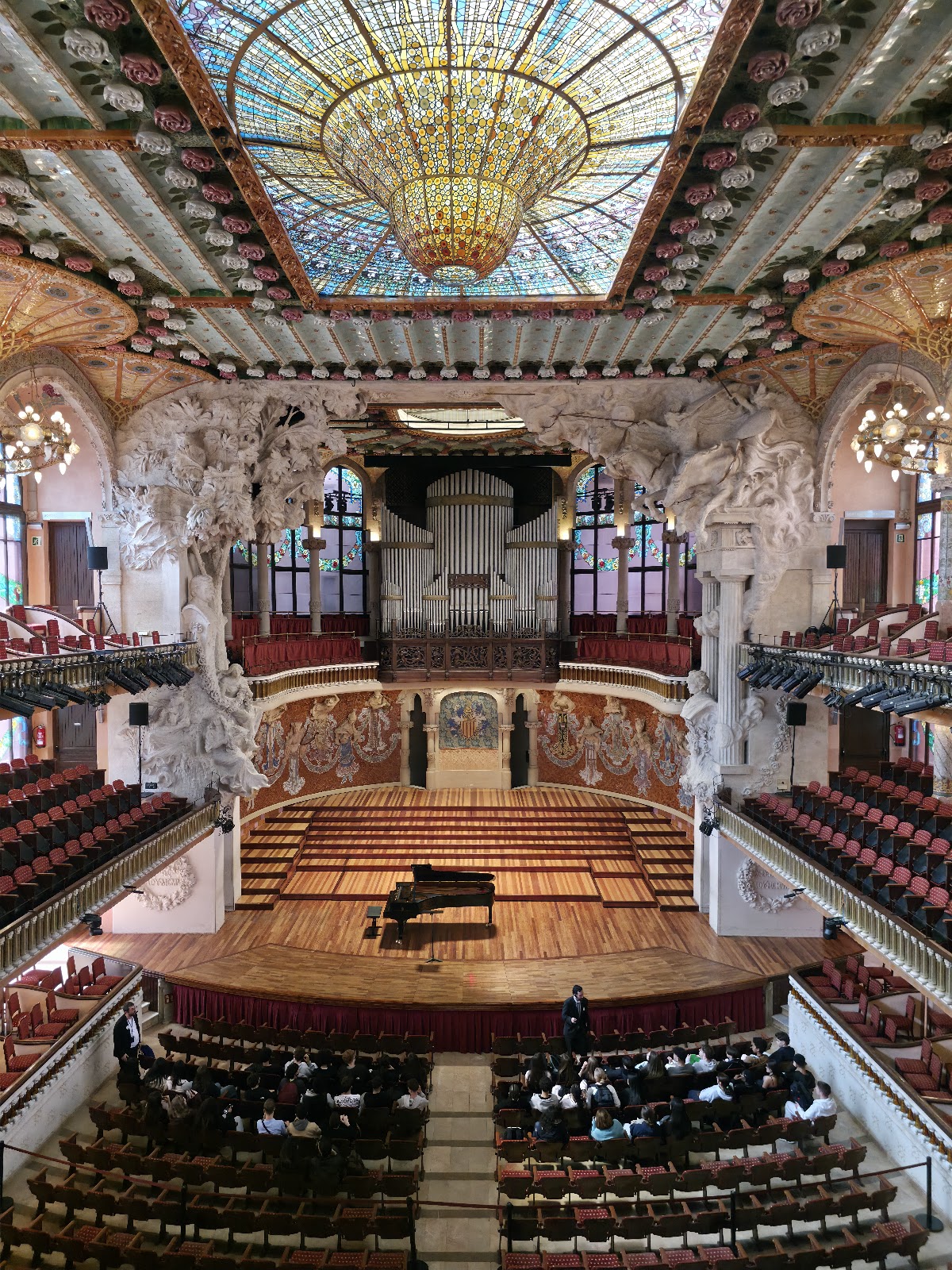
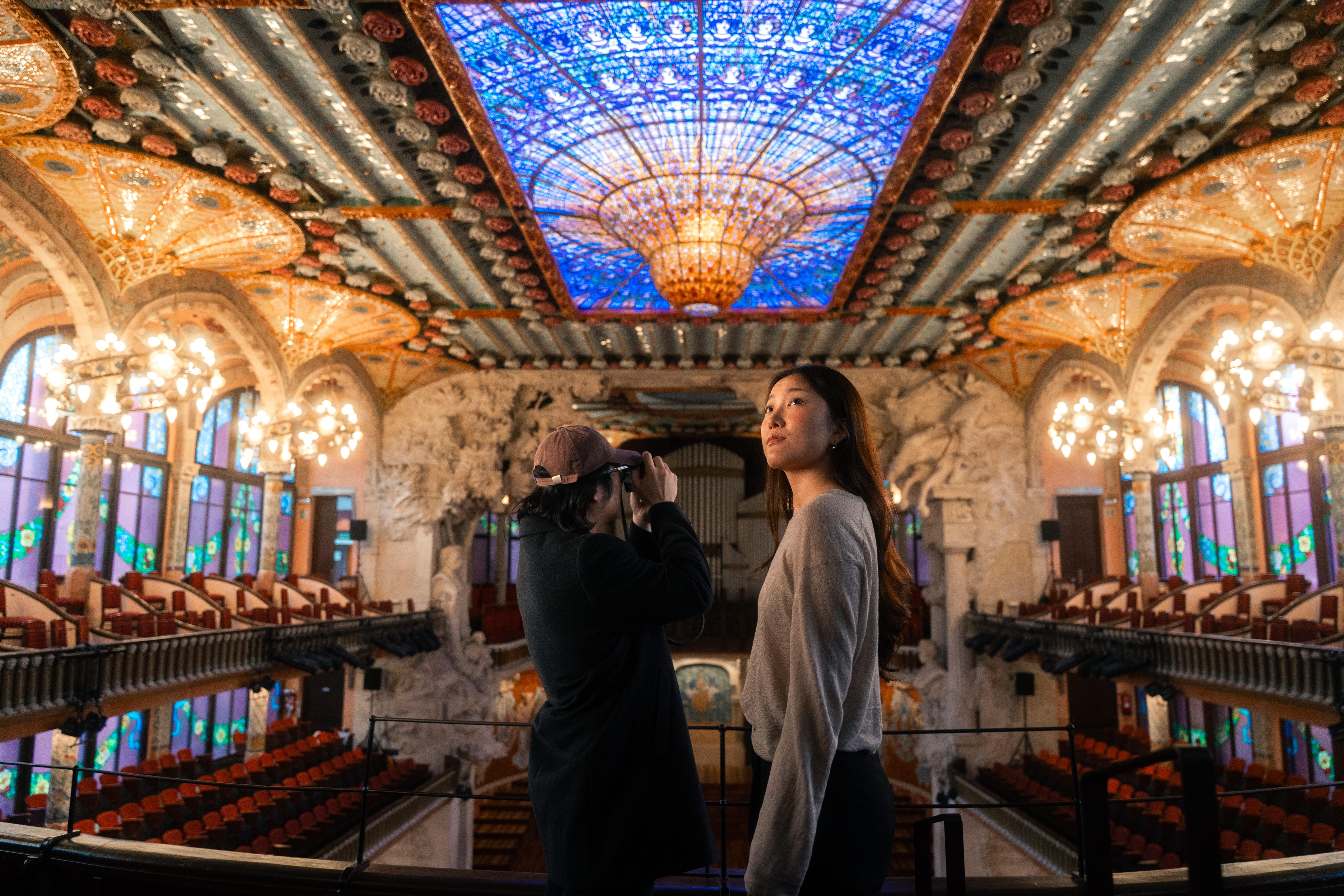
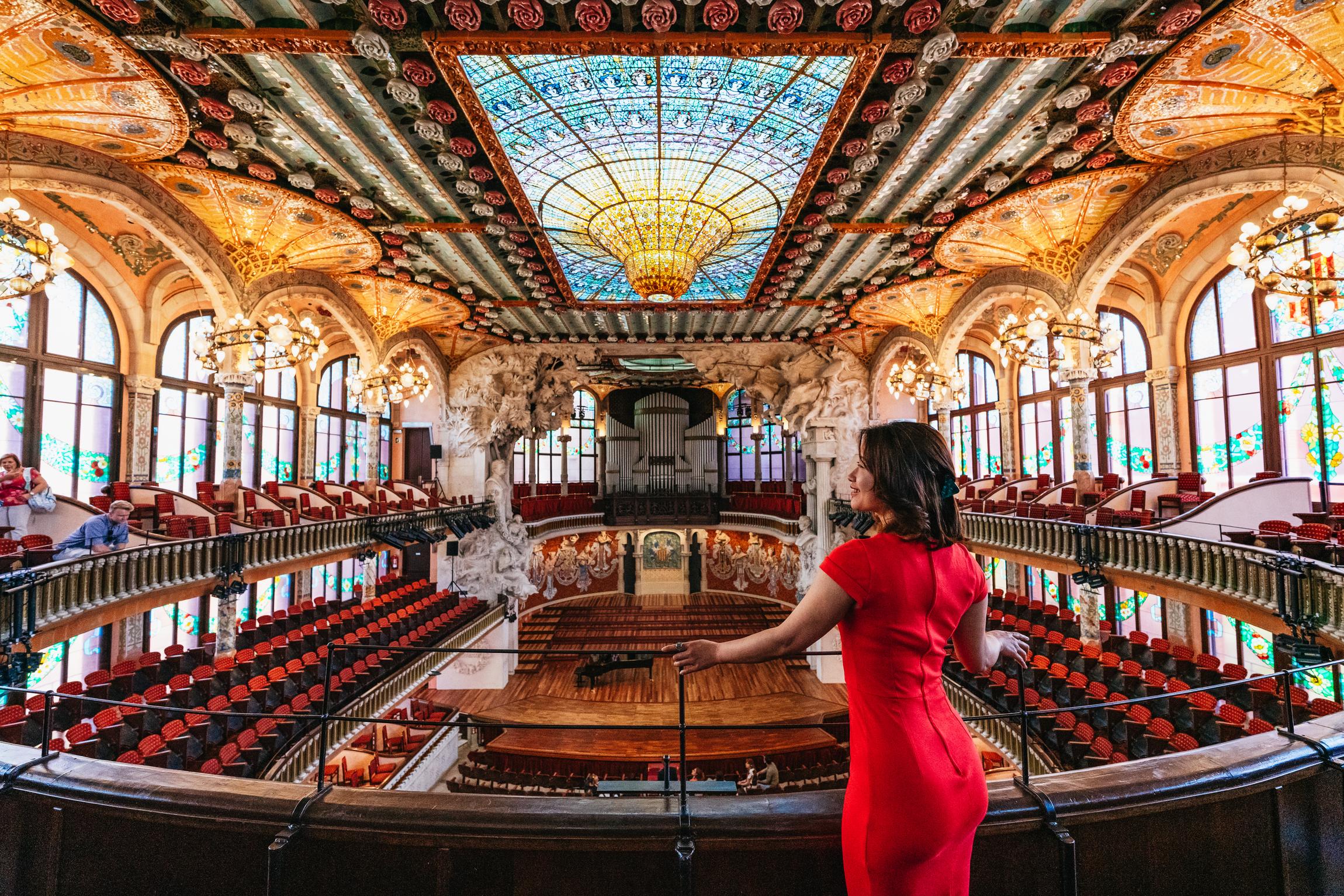
Built between 1905 and 1908 by architect Lluís Domènech i Montaner for the Orfeó Català choral society, the concert hall is considered one of the finest expressions of Catalan Modernisme, packed with sculpture, mosaic, and stained glass rather than restrained in the way most concert halls are. Its centerpiece is an enormous inverted stained-glass dome that floods the main hall with natural light, a striking departure from conventional theater design of the period.

A guided daytime tour covers the architecture and history, but attending an evening concert here is widely considered the fuller experience, letting the building's acoustics and lighting work together as intended. It suits music lovers and architecture fans in roughly equal measure.

✨ Reasons to go

  • 1Designed by Lluís Domènech i Montaner and built between 1905 and 1908 as the home of the Orfeó Català choral society.
  • 2The main hall is topped by an enormous inverted stained-glass dome that floods the space with natural light, unusual for concert halls of its era.
  • 3It's a UNESCO World Heritage Site recognized as one of the finest examples of Catalan Modernisme.

💡 Good to know

  • 1Book either a daytime guided tour or, for a fuller experience, tickets to an evening concert, both sell out ahead of time
  • 2arrive early for concerts to take in the ornate foyer and staircase before the show
  • 3photography during tours is generally allowed, but check current rules for concerts.

⏱️ Typical visit

1h

🕰️ Best time

afternoon or evening

🚶 Walking intensity

Easy pace

📍

Address

C/ Palau de la Música, 4-6, Ciutat Vella, 08003 Barcelona, Spain · Ciutat Vella
Park Güell & La Sagrada Familia Tickets and Tour4
🏛️
4.7 (1,534)$$$ · ExpensiveSkip-The-Line Ticket + Guided Tour

Pairing Park Güell's tiled serpentine bench, the mosaic salamander at its entrance, and sweeping views over Barcelona with the soaring interior of the Sagrada Família makes this one of the most efficient ways to see Gaudí's range in a single morning — from a public park originally conceived as a failed garden-city project to the basilica he devoted the last years of his life to. Both sites carry maximum 100 must-see and culture scores, and this tour bundles pre-booked, skip-the-line access to two of the hardest tickets in Barcelona to get on short notice.

At three hours across two separate locations, it moves at a brisk pace suited to first-time visitors prioritizing the headline sights over lingering. The early-morning slots help beat both the heat and the crowds at Park Güell's monumental zone.

✨ Reasons to go

  • 1Park Güell began as a failed early-20th-century garden-city development before becoming a public park.
  • 2Gaudí spent the final years of his life dedicated to the Sagrada Família's construction.
  • 3The tour bundles skip-the-line access to two of Barcelona's hardest-to-get tickets on short notice.

💡 Good to know

  • 1Book the earliest available departure, since both sites get progressively more crowded through the day
  • 2wear a hat and sunscreen at Park Güell, which has little shade in its main terraces
  • 3keep water on hand, as the tour involves outdoor walking between two separate hilltop and city-center locations.

⏱️ Typical visit

3h

🕰️ Best time

early morning or morning

🚶 Walking intensity

Moderate walking

📍

Address

Ctra. del Carmel, 23, Horta-Guinardó, 08024 Barcelona, Spain · Horta-Guinardó
🕐

Hours

Multiple daily morning departures, ~3 hours.
Montserrat Monastery, Easy Hike, Cable Car5
🏛️
4.9 (1,263)$$$ · ExpensiveGuided Tour (Day Expedition)

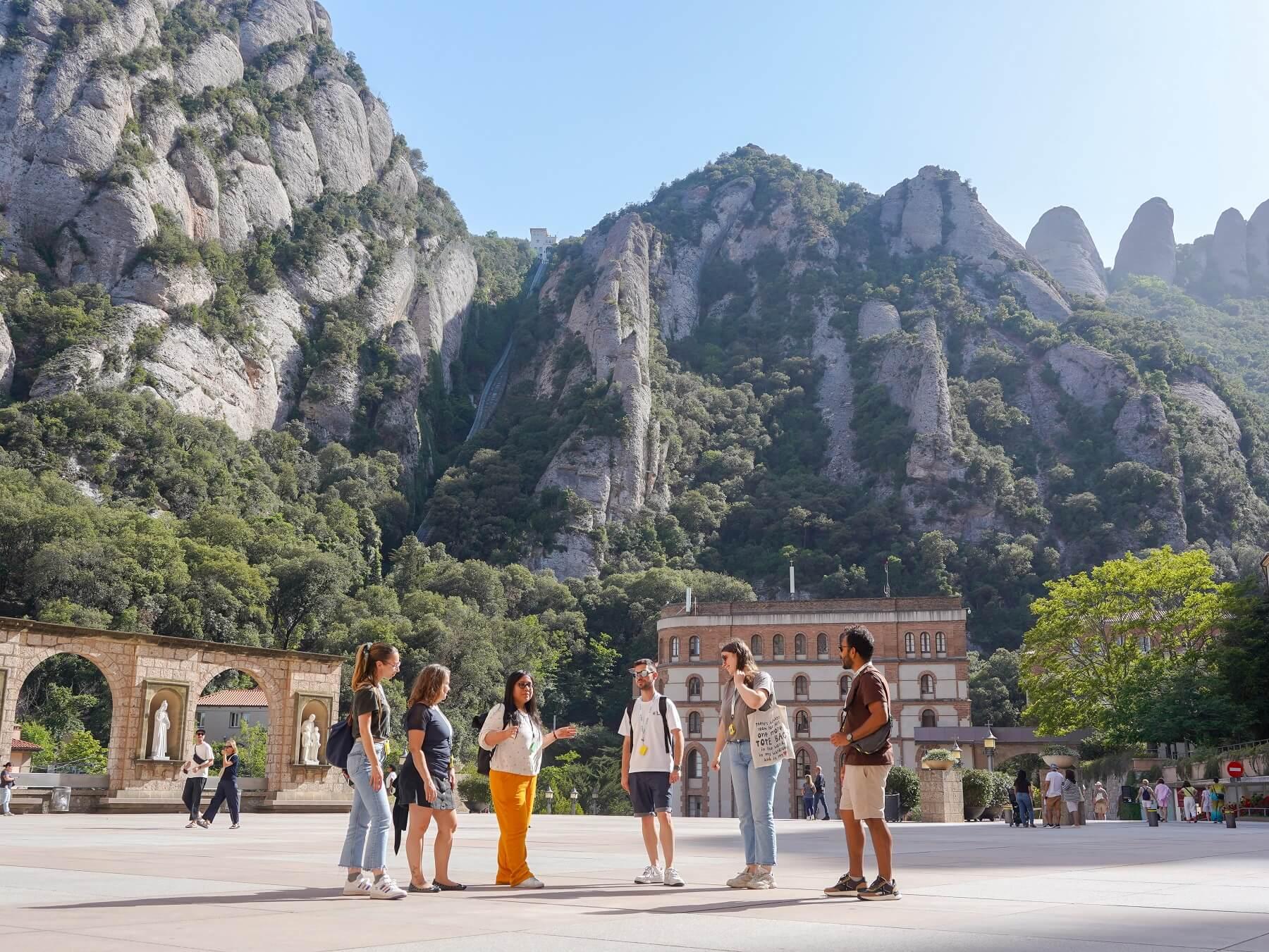
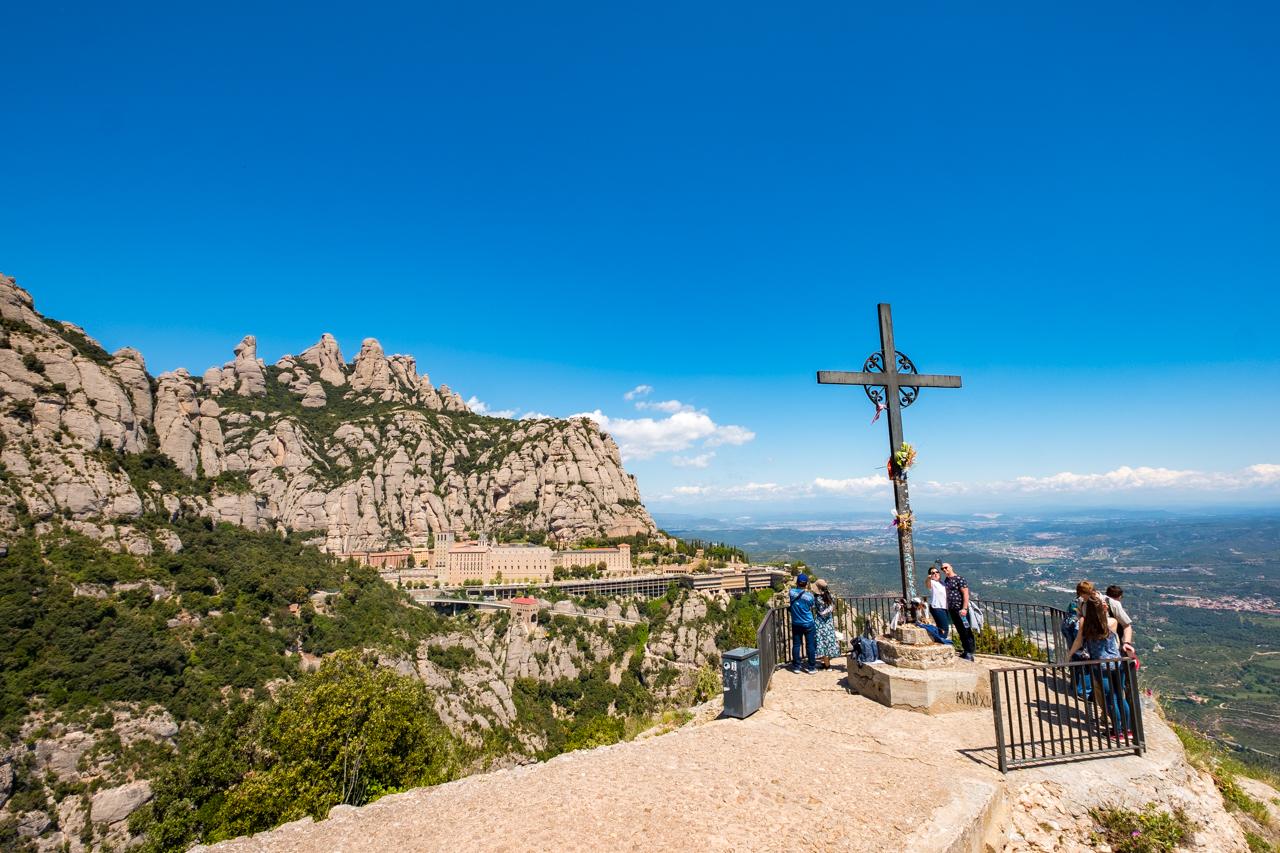
Where other Montserrat tours focus purely on the monastery and basilica, this six-hour version builds in time for an easy walking trail along the mountain's ridges, giving a closer look at the strange, wind-and-water-eroded rock formations that give Montserrat ('serrated mountain') its name, plus a ride on the Aeri cable car that climbs steeply from the valley floor. With culture and aesthetic scores of 91 and 100 respectively, it balances the site's religious significance with its genuinely dramatic natural setting.

The higher walking intensity reflects the added hiking component compared to monastery-only itineraries. It suits travelers who want some physical activity and mountain air worked into their cultural sightseeing rather than a purely sit-and-look day.

✨ Reasons to go

  • 1The mountain's name comes from the Catalan for 'serrated,' describing its jagged, wind- and water-eroded rock spires.
  • 2The Aeri cable car climbs steeply from the valley floor directly up to the monastery on the ridge.

💡 Good to know

  • 1Wear proper walking shoes, not sandals, given the trail and uneven rock surfaces
  • 2the cable car can have queues at peak times, so follow your guide's timing closely
  • 3bring water, as there's limited shade once you're out on the ridge trails.

⏱️ Typical visit

6h

🕰️ Best time

early morning or morning

🚶 Walking intensity

Active — lots of walking

📍

Address

Pg. de Gràcia, 69, Eixample, 08008 Barcelona, Spain · Eixample
🕐

Hours

Full-day tour, ~6 hours, morning departure from Barcelona.
La Pedrera-Casa Milà Ticket & Audio Guide Option6
🏛️
4.7 (29,226)$$ · Mid-rangeSkip-The-Line Ticket + Audio Guide

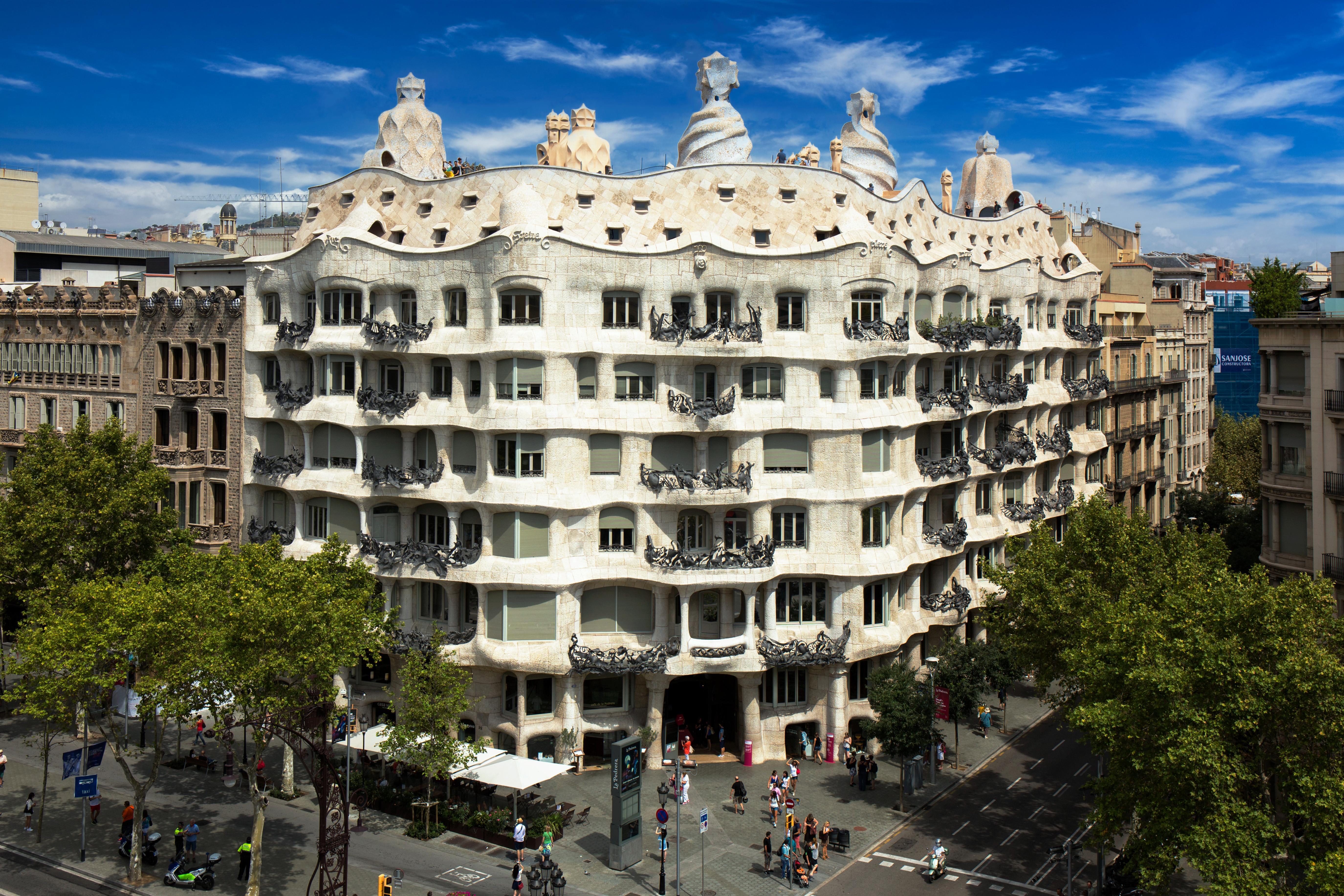
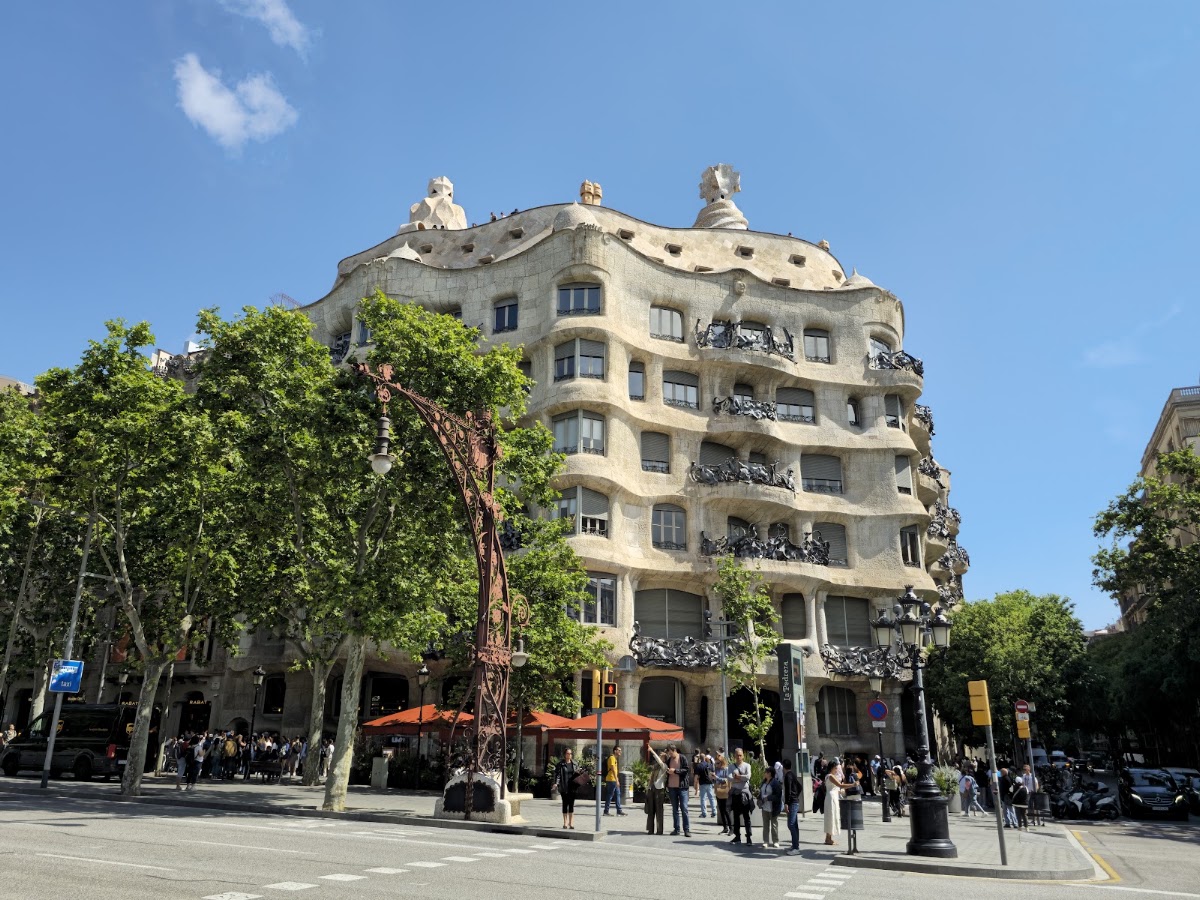
Completed in 1912, La Pedrera's wave-like limestone facade was controversial in its day for having almost no straight lines or right angles, an approach Gaudí carried through to the wrought-iron balconies and the attic's parabolic brick arches. The rooftop terrace, with its sculptural chimneys sometimes compared to warriors or something out of science fiction, is the building's signature moment and a UNESCO World Heritage element in its own right.

The optional audio guide adds context on Gaudí's structural innovations, unusual enough at the time to draw public mockery before later being recognized as ahead of their era.

✨ Reasons to go

  • 1Completed in 1912, the facade avoids almost all straight lines and right angles, a radical departure for its time.
  • 2The attic relies on parabolic brick arches, a structural technique that drew public mockery before later being recognized as innovative.
  • 3The rooftop's sculptural chimneys, often likened to warriors, are recognized individually as a UNESCO World Heritage element.

💡 Good to know

  • 1Save the rooftop for last and allow extra time there, since the chimney sculptures are the most photographed part of the visit
  • 2go early or take a late-afternoon slot, since midday brings the biggest queues on Passeig de Gràcia
  • 3add the audio guide if you want to understand the engineering, since the flowing shapes look decorative but are structurally functional.

⏱️ Typical visit

1h30

🕰️ Best time

morning, lunchtime, afternoon, early evening or evening

🚶 Walking intensity

Moderate walking

📍

Address

95W6+3QJ Barcelona, Spain · Barcelona
Museu Nacional d'Art de Catalunya7
🎨
4.7 (39,180)$$ · Mid-range

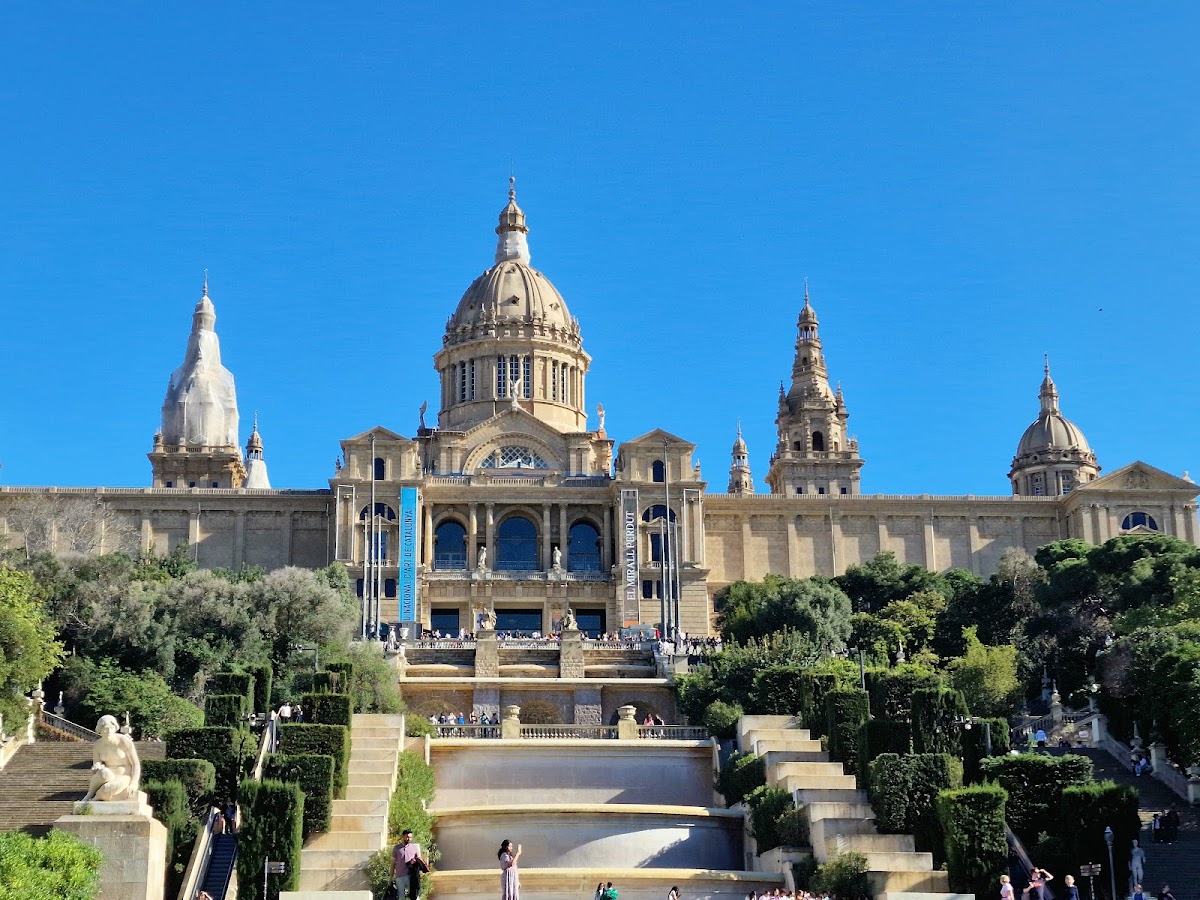
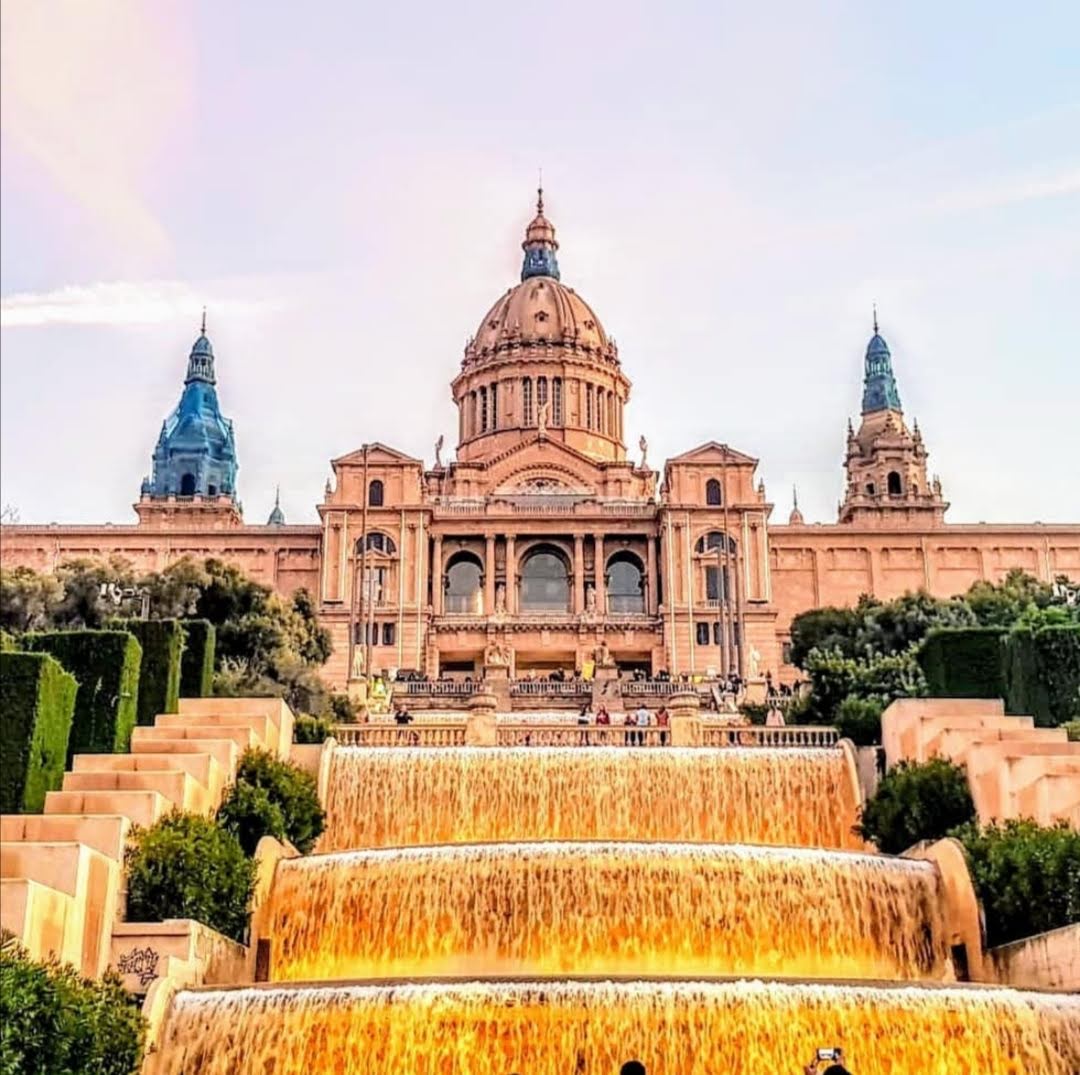
Housed in the monumental Palau Nacional built for the 1929 International Exhibition, MNAC holds what's widely considered the most important collection of Romanesque mural painting anywhere, alongside strong Gothic, Renaissance, Baroque, and modern Catalan art through the 20th century. The building itself, with its commanding hilltop position and grand dome, draws visitors even independent of the collection, sitting above the Magic Fountain and terraced gardens with sweeping views over the city.

A 4.7 rating and perfect must-see, culture, and aesthetic scores confirm its place among Barcelona's genuine flagship institutions rather than a secondary stop. The scale of both the building and the collection justifies the full two hours most visitors need.

✨ Reasons to go

  • 1Holds what's widely regarded as the most important collection of Romanesque mural painting in the world.
  • 2Housed in the Palau Nacional, a monumental building constructed for the 1929 International Exhibition.
  • 3Sits on a hilltop above the Magic Fountain, offering sweeping views over Barcelona.

💡 Good to know

  • 1Combine with the Magic Fountain and Montjuic gardens for a full afternoon
  • 2the Romanesque fresco rooms are the museum's signature highlight, so prioritize them if time is short
  • 3go in the morning or early evening to avoid the steepest crowds.

⏱️ Typical visit

2h

🕰️ Best time

morning, lunchtime, afternoon, early evening or evening

🚶 Walking intensity

Active — lots of walking

📍

Address

Palau Nacional, Parc de Montjuïc, s/n, Sants-Montjuïc, 08038 Barcelona, Spain · Sants-Montjuïc
🕐

Hours

  • Monday: Closed
  • Tuesday: 10:00 AM – 8:00 PM
  • Wednesday: 10:00 AM – 8:00 PM
  • Thursday: 10:00 AM – 8:00 PM
  • Friday: 10:00 AM – 8:00 PM
  • Saturday: 10:00 AM – 8:00 PM
  • Sunday: 10:00 AM – 3:00 PM
Montserrat Tour with Cog-Wheel & Black Madonna8
🏛️
4.6 (8,627)$$ · Mid-rangeGuided Tour (Day Expedition)

Montserrat's saw-toothed peaks rise dramatically from the plain northwest of Barcelona, and this tour reaches the Benedictine monastery via the cremallera cog-wheel train rather than a standard coach ride, which is itself part of the appeal as the track climbs through the rock formations. Inside the basilica, pilgrims and visitors queue to see and touch La Moreneta, the small carved wooden Madonna that is patron saint of Catalonia, and — timing allowing — hear the Escolania boys' choir, one of Europe's oldest, sing in the basilica around midday.

With a 93 culture score and a morning departure, it suits travelers who want the mountain's spiritual and geological drama without arranging transport themselves. The five-hour window leaves room to also walk a short trail along the ridge for the views over Catalonia.

✨ Reasons to go

  • 1The Escolania boys' choir performing at the basilica is one of Europe's oldest boys' choirs, dating back centuries.
  • 2La Moreneta, the carved wooden Black Madonna, is Catalonia's patron saint and draws pilgrims who queue to touch her.
  • 3The cremallera cog-wheel train climbs directly through Montserrat's jagged rock formations en route to the monastery.

💡 Good to know

  • 1Check whether the Escolania choir is scheduled to sing on your date, as it doesn't perform daily or in July
  • 2wear sturdy shoes if you plan to walk any of the ridge paths beyond the monastery square
  • 3bring a layer, as it's noticeably cooler and windier at altitude than in Barcelona.

⏱️ Typical visit

5h

🕰️ Best time

early morning or morning

🚶 Walking intensity

Moderate walking

📍

Address

Carrer d'Alí Bei, 80, Eixample, 08018 Barcelona, Spain · Eixample
🕐

Hours

Half-day tour, ~5 hours, morning departure from Barcelona.
Barcelona Maritime Museum9
🎨
4.4 (13,101)$$ · Mid-range

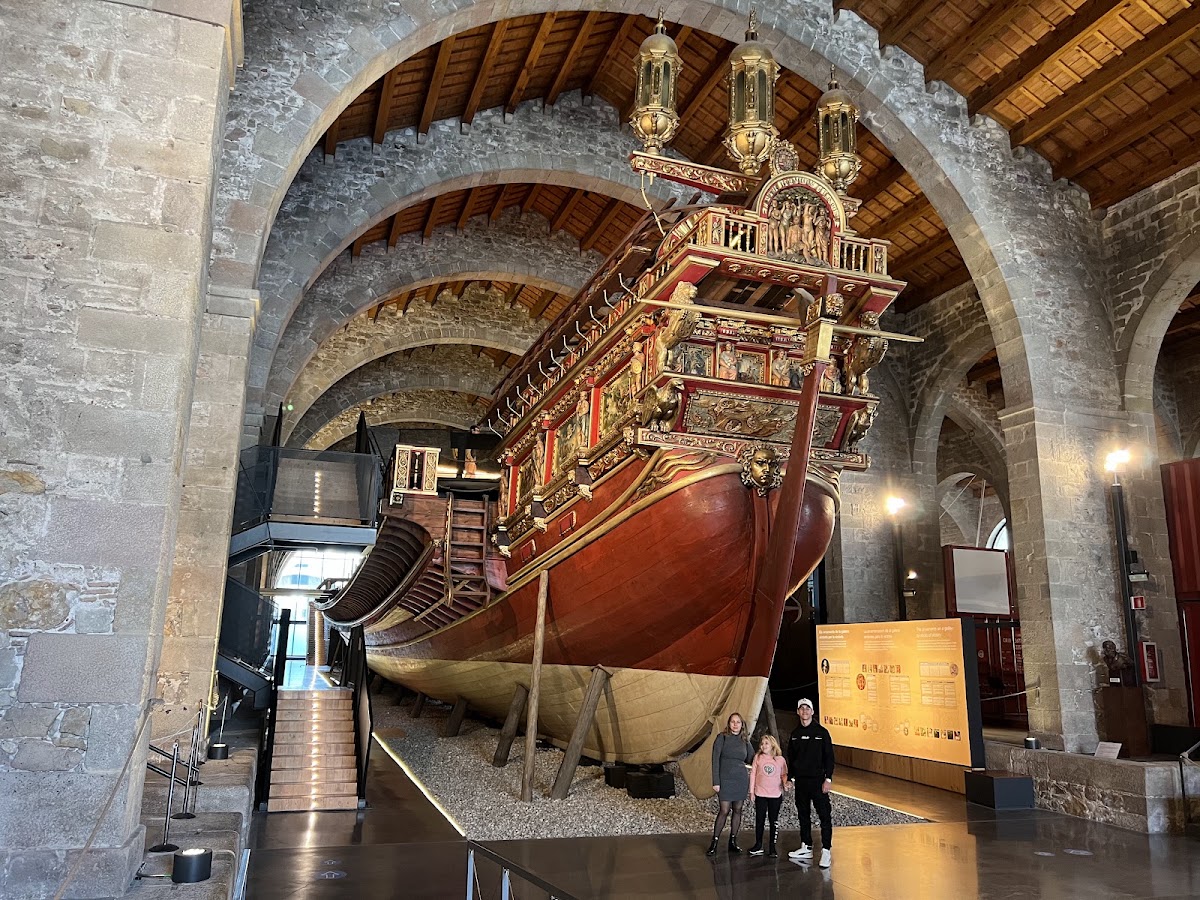
The Barcelona Maritime Museum occupies the Reials Drassanes, the city's medieval royal shipyards — vast Gothic stone halls originally built for constructing galleys, and reason enough on their own for the visit. Inside, full-size ship replicas and centuries of naval history fill the cavernous space, earning it a perfect culture score and a 100 on aesthetics, backed by a 4.4-star rating across more than 13,000 reviews.

It suits anyone drawn to maritime history or striking medieval architecture rather than casual browsers looking for a quick stop. The building alone, described by visitors as feeling like a cathedral built for ships, makes it worth the visit even before the exhibits come into focus.

✨ Reasons to go

  • 1The museum is housed in the Reials Drassanes, Barcelona's medieval royal shipyards where galleys were once built.
  • 2The vast Gothic stone halls with repeating stone arches are often compared to a cathedral built for ships.
  • 3Full-size ship replicas fill the same cavernous spaces originally used for actual shipbuilding.

💡 Good to know

  • 1Book ahead for the busiest hours
  • 2the shipyard architecture is worth lingering in even if maritime history isn't your main interest
  • 3combine with a walk along the nearby marina.

⏱️ Typical visit

1h30

🕰️ Best time

morning, lunchtime, afternoon, early evening or evening

🚶 Walking intensity

Moderate walking

📍

Address

Av. de les Drassanes, s/n, Ciutat Vella, 08001 Barcelona, Spain · Ciutat Vella
🕐

Hours

  • Monday: 10:00 AM – 8:00 PM
  • Tuesday: 10:00 AM – 8:00 PM
  • Wednesday: 10:00 AM – 8:00 PM
  • Thursday: 10:00 AM – 8:00 PM
  • Friday: 10:00 AM – 8:00 PM
  • Saturday: 10:00 AM – 8:00 PM
  • Sunday: 10:00 AM – 8:00 PM
Centre de Cultura Contemporània de Barcelona10
🎨
4.6 (11,448)$$ · Mid-range

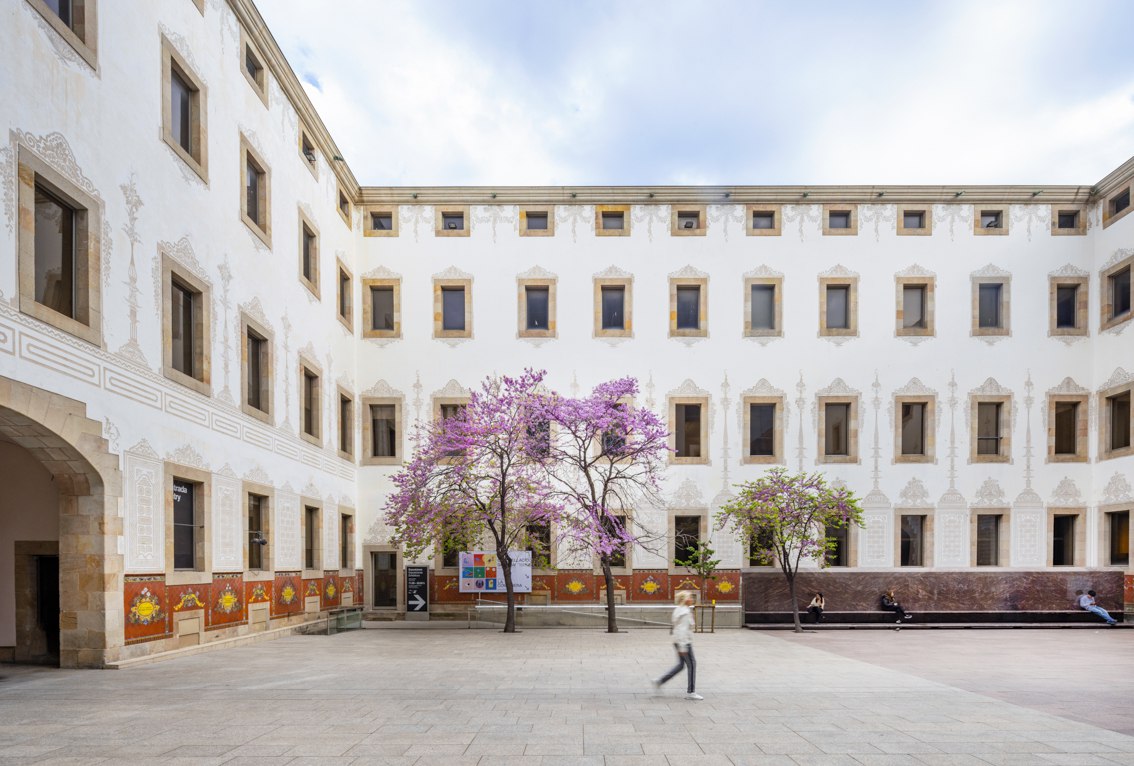
Built into a former charity hospice with a striking glass-walled modern courtyard extension, CCCB operates as a contemporary culture center rather than a traditional museum, staging exhibitions that range from literary retrospectives to explorations of urban design and social themes. Its programming changes completely between visits, and reviewers consistently describe the current show as well-curated and thoughtfully presented regardless of subject matter, a testament to the strength of the institution's curatorial approach rather than any single fixed highlight.

A 4.6 rating and maximum must-see and culture scores, alongside a high trendy score, reflect a venue that draws a design- and culture-literate audience as much as typical museum-goers. Its location right beside MACBA makes combining the two an efficient way to cover El Raval's contemporary culture scene.

✨ Reasons to go

  • 1Housed in a former charity hospice building fitted with a striking glass-walled modern courtyard extension.
  • 2Located right beside MACBA, making it easy to pair both for a full contemporary-culture visit in El Raval.
  • 3Exhibitions rotate completely between visits, covering topics from literary retrospectives to urban design and social themes.

💡 Good to know

  • 1Check the current exhibition before visiting, since content changes completely between shows
  • 2pair with neighboring MACBA for a fuller contemporary-culture visit to El Raval
  • 3the modern glass courtyard is worth a look even independent of the exhibitions.

⏱️ Typical visit

1h30

🕰️ Best time

morning, lunchtime, afternoon, early evening or evening

🚶 Walking intensity

Moderate walking

📍

Address

Carrer de Montalegre, 5, Ciutat Vella, 08001 Barcelona, Spain · Ciutat Vella
🕐

Hours

  • Monday: Closed
  • Tuesday: 10:00 AM – 8:00 PM
  • Wednesday: 10:00 AM – 8:00 PM
  • Thursday: 10:00 AM – 8:00 PM
  • Friday: 10:00 AM – 8:00 PM
  • Saturday: 10:00 AM – 8:00 PM
  • Sunday: 10:00 AM – 8:00 PM
Palau de la Música Entry Ticket11
🏛️
4.6 (5,844)$ · Budget-friendlyEntry Ticket

The Palau de la Música Catalana, tucked into a narrow street in the Ribera district, is a UNESCO World Heritage building whose auditorium is lit by an extraordinary inverted stained-glass dome and ringed with sculptures, mosaics, and ceramic columns celebrating Catalan music and culture. Designed by Lluís Domènech i Montaner and completed in 1908, it remains a working concert venue as well as a sightseeing destination, and this ticket gives access to explore its ornamentation at your own pace.

With a perfect 100 culture score against a budget-friendly price, it's an efficient way to see top-tier Modernisme without the crowds or price tag of Sagrada Família. The 90-minute allowance suits a focused midday or early-afternoon visit before continuing on to the nearby Gothic Quarter.

✨ Reasons to go

  • 1Designed by Lluís Domènech i Montaner and completed in 1908 as a centerpiece of Catalan Modernisme.
  • 2The concert hall's inverted stained-glass skylight is the building's signature feature.
  • 3It's a UNESCO World Heritage site that remains an active concert venue today.

💡 Good to know

  • 1Look up while inside — the skylight and ceiling are the highlight and easy to miss if you focus only on the stage level
  • 2pair with a walk through the adjacent Born and Gothic Quarter, both a few minutes away
  • 3check if a concert is on the same evening, since seeing the hall in use adds another dimension.

⏱️ Typical visit

1h30

🕰️ Best time

morning, lunchtime or afternoon

🚶 Walking intensity

Moderate walking

📍

Address

95QG+25C Barcelona, Spain · Barcelona
Sagrada Familia Entry Ticket with Audio Guide12
🏛️
4.6 (117,658)$$ · Mid-rangeSkip-The-Line Ticket + Audio Guide

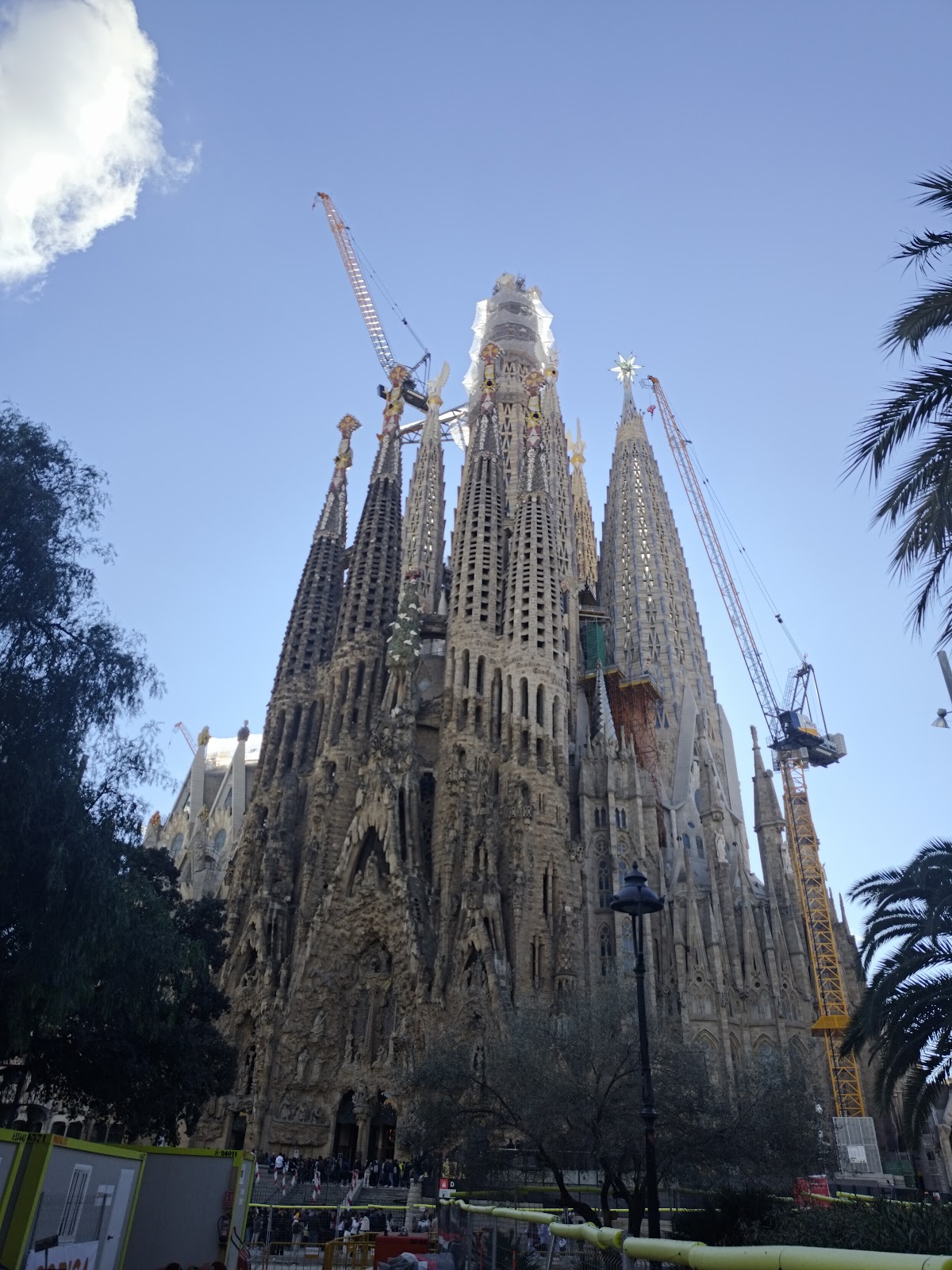
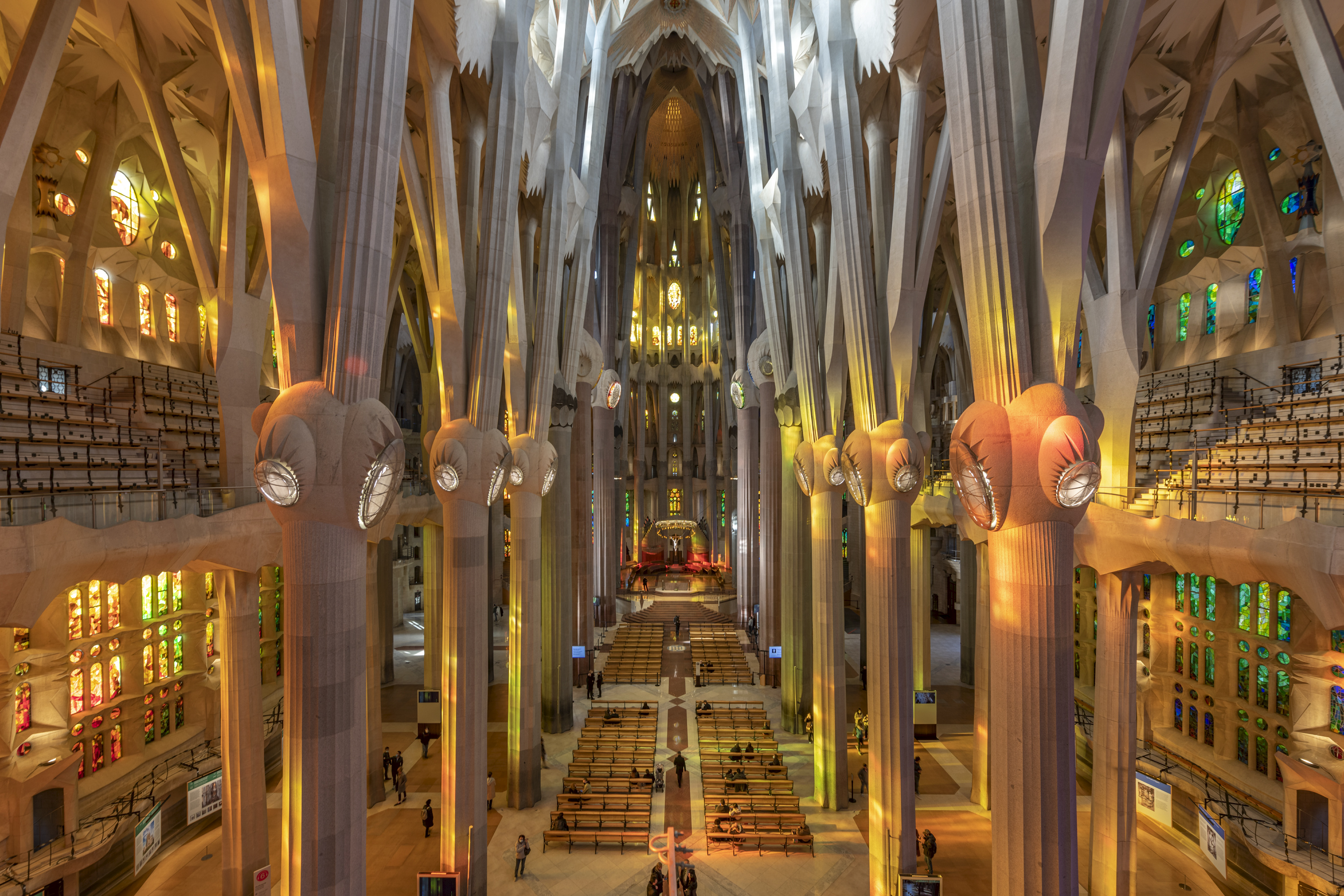
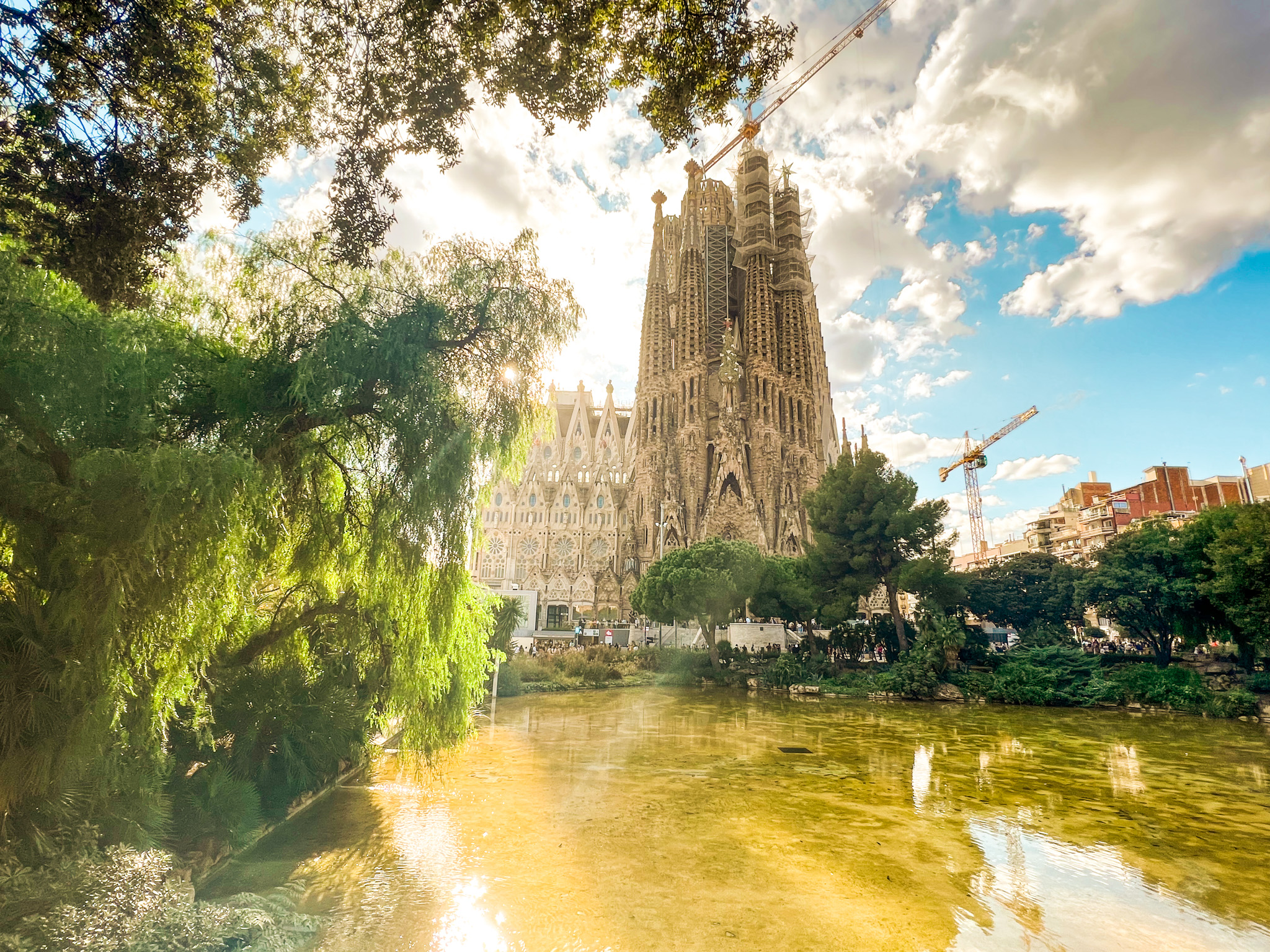
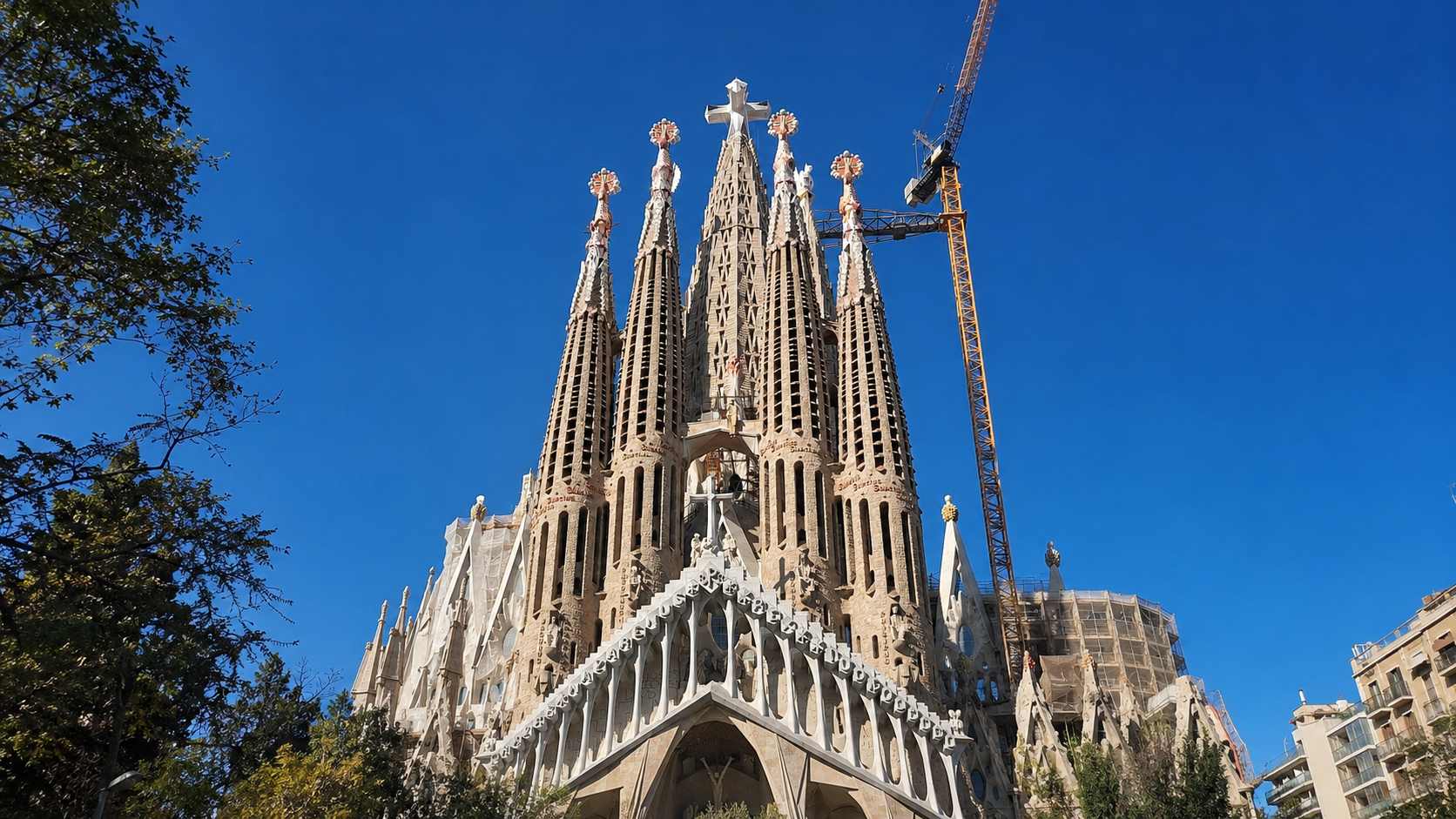
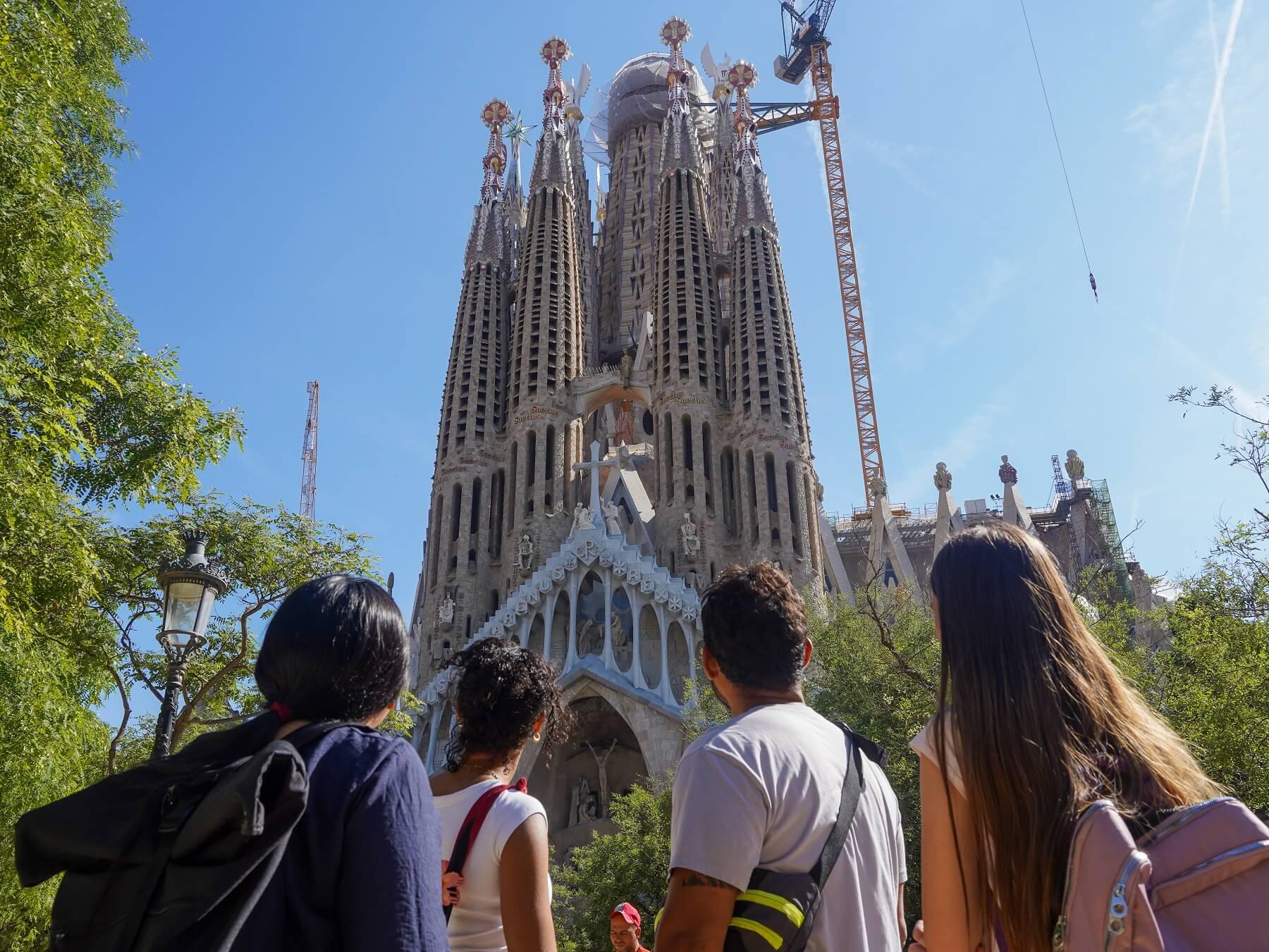
Antoni Gaudí took over the project in 1883 and worked on it until his death in 1926, leaving behind a design so intricate that construction is still ongoing today. Inside, forest-like columns branch into a canopy of stained glass that floods the nave with shifting colored light, a contrast to the elaborate stone facades outside depicting the Nativity and the Passion.

The audio guide format lets visitors move at their own pace through what is consistently the most visited site in the city, reflected in its perfect must-see and aesthetic scores.

✨ Reasons to go

  • 1Antoni Gaudí worked on the basilica from 1883 until his death in 1926, and construction still continues over a century later.
  • 2The interior columns branch upward like trees to support a canopy of stained glass that floods the nave with shifting colored light.
  • 3The Nativity and Passion facades were designed in deliberately contrasting styles, one ornate and the other stark and modern.

💡 Good to know

  • 1Book the earliest available morning slot, since midday brings the heaviest crowds and queues
  • 2the Nativity facade (older, more ornate) and Passion facade (starker, more modern) reward comparing side by side
  • 3consider tower access separately if you want views over the city, as it isn't always included in basic entry.

⏱️ Typical visit

1h30

🕰️ Best time

morning, lunchtime, afternoon or early evening

🚶 Walking intensity

Moderate walking

📍

Address

C53F+FP5 Barcelona, Spain · Barcelona
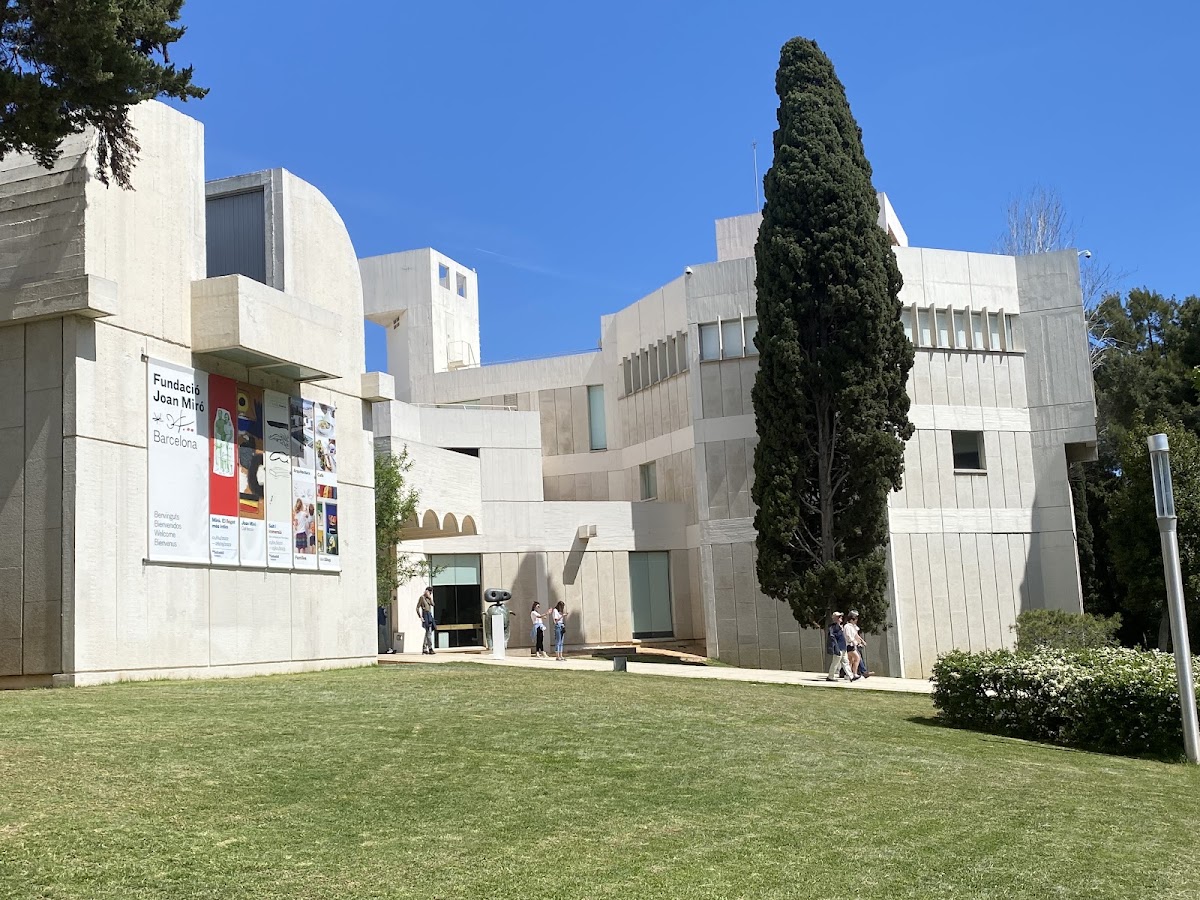
Fundació Joan Miró13
🎨
4.5 (14,880)$$ · Mid-range

Joan Miro personally worked with his friend, architect Josep Lluis Sert, to design this purpose-built museum overlooking Barcelona from Montjuic, and the airy, light-filled galleries were conceived specifically to showcase Miro's playful, symbol-rich abstract works. The collection spans his full career, from paintings and sculptures to tapestries and preparatory sketches, giving a comprehensive view of his development that few single-artist museums can match.

A 4.5 rating and top must-see and culture scores, alongside the highest trendy score among the classic institutions in this set, reflect a museum that feels both historically important and genuinely current. Some reviewers note the collection, while pleasant, didn't feel as overwhelming as expected - a reasonable trade-off for its manageable, well-paced scale.

✨ Reasons to go

  • 1Joan Miró worked directly with his friend, architect Josep Lluís Sert, to design the building itself
  • 2The museum sits on Montjuic hill with a rooftop sculpture terrace overlooking Barcelona
  • 3The collection traces Miró's full career, from early paintings to sculptures, tapestries and preparatory sketches

💡 Good to know

  • 1Combine with a wider Montjuic visit, given the hillside location and views
  • 2go with realistic expectations of a focused single-artist collection rather than an encyclopedic museum
  • 3the rooftop sculpture terrace is worth the extra few minutes.

⏱️ Typical visit

1h30

🕰️ Best time

morning, lunchtime, afternoon, early evening or evening

🚶 Walking intensity

Moderate walking

📍

Address

Parc de Montjuïc, s/n, Sants-Montjuïc, 08038 Barcelona, Spain · Sants-Montjuïc
🕐

Hours

  • Monday: Closed
  • Tuesday: 10:00 AM – 8:00 PM
  • Wednesday: 10:00 AM – 8:00 PM
  • Thursday: 10:00 AM – 8:00 PM
  • Friday: 10:00 AM – 8:00 PM
  • Saturday: 10:00 AM – 8:00 PM
  • Sunday: 10:00 AM – 7:00 PM
Bunkers del Carmel14
🏛️
4.7 (4,008)Free

The bunkers were built in 1937 to defend Barcelona against Francoist bombing raids during the Civil War, and their raised concrete platforms above the Carmel neighbourhood now offer one of the widest unobstructed views of the city, from Sagrada Família to the sea. Unlike the polished, ticketed viewpoints elsewhere in Barcelona, this one has an informal, locally-loved character, people bring their own drinks and picnics and gather especially at sunset, which explains both its high trendy score and its strong reviews.

There's no entry fee and no set hours, but it does require a genuine uphill walk through residential streets to reach. It rewards travelers willing to leave the main tourist circuit for a more local, unpolished experience.

✨ Reasons to go

  • 1Built in 1937 as anti-aircraft gun positions defending Barcelona during the Civil War against Francoist bombing raids
  • 2The raised concrete platforms give a 360° panorama stretching from Sagrada Família to the sea, with no entry fee or set hours
  • 3Unlike Barcelona's polished ticketed viewpoints, it retains an informal, locally-loved picnic atmosphere, especially at sunset

💡 Good to know

  • 1Time your visit for sunset, when it's busiest but most atmospheric
  • 2bring your own drinks and snacks, as there are no facilities on site
  • 3wear good shoes for the uphill walk, and note there's little shade in summer.

⏱️ Typical visit

30 min

🕰️ Best time

morning, lunchtime, afternoon, early evening or evening

🚶 Walking intensity

Easy pace

📍

Address

Carrer de la Gran Vista, 96, Horta-Guinardó, 08032 Barcelona, Spain · Horta-Guinardó
🕐

Hours

  • Monday: 9:00 AM – 7:30 PM
  • Tuesday: 9:00 AM – 7:30 PM
  • Wednesday: 9:00 AM – 7:30 PM
  • Thursday: 9:00 AM – 7:30 PM
  • Friday: 9:00 AM – 7:30 PM
  • Saturday: 9:00 AM – 7:30 PM
  • Sunday: 9:00 AM – 7:30 PM
Sagrada Familia Skip-the-Line Entry Ticket & Tour15
🏛️
4.8 (14,705)$$$ · ExpensiveSkip-The-Line Ticket + Guided Tour

This covers the same basilica as the audio-guide ticket but with a live guide interpreting Gaudí's symbolism directly — the columns designed to mimic a forest canopy, the natural forms borrowed from shells and bone structures, and the still-unfinished towers that will eventually mark the completed design. Live narration suits visitors who prefer to ask questions and get a guide's read on the more obscure details rather than working through an audio track alone.

It runs at a higher price point than the audio-guide version, reflecting the added cost of a live guide.

✨ Reasons to go

  • 1Gaudí modeled the basilica's interior columns to branch overhead like a forest canopy
  • 2Many of the building's forms were drawn directly from natural shapes like shells and bone structures
  • 3The towers remain unfinished, part of a design still being completed decades after Gaudí's death

💡 Good to know

  • 1Book well ahead, as Sagrada Família tickets of any kind sell out days in advance in peak season
  • 2arrive a few minutes before the tour's start time, since groups depart promptly
  • 3dress modestly, as it remains an active place of worship as well as a monument.

⏱️ Typical visit

1h30

🕰️ Best time

morning, lunchtime or afternoon

🚶 Walking intensity

Moderate walking

📍

Address

C53F+WMP Barcelona, Spain · Barcelona
🕐

Hours

Multiple daily departures, morning and afternoon.
Eixample16
🚶
Free

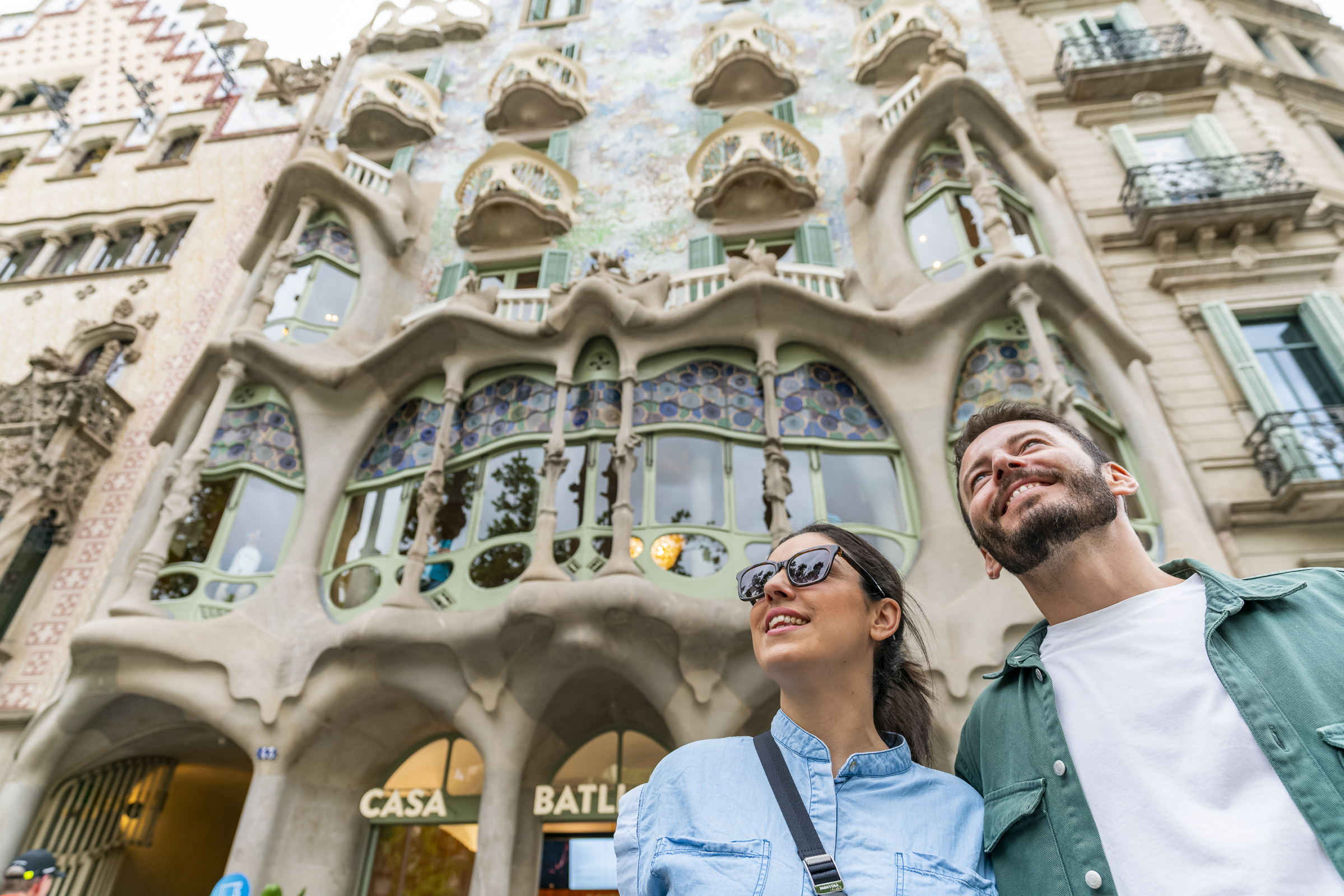
Eixample ('expansion') was Ildefons Cerdà's 19th-century plan to relieve the crowded old town, laid out as a strict grid of octagonal-cornered blocks designed for light, air, and traffic flow well ahead of its time. Wealthy families competed to build the most striking Modernisme facades along Passeig de Gràcia, resulting in Gaudí's undulating Casa Batlló and Casa Milà (La Pedrera) standing within blocks of each other, alongside works by Domènech i Montaner and Puig i Cadafalch.

The district splits into Dreta (right, more upscale and formal) and Esquerra (left, home to Barcelona's main LGBTQ+ scene, 'Gaixample'), each with a slightly different character. Sagrada Família, Gaudí's unfinished basilica, sits at its eastern edge.

✨ Reasons to go

  • 1Ildefons Cerdà designed the grid's distinctive octagonal-cornered blocks in the 19th century specifically to improve light, ventilation, and traffic flow.
  • 2Casa Batlló and Casa Milà, both by Gaudí, stand within a few blocks of each other on Passeig de Gràcia alongside works by Domènech i Montaner and Puig i Cadafalch.
  • 3The district splits into Dreta and Esquerra, with Esquerra known as 'Gaixample' for hosting Barcelona's main LGBTQ+ scene.

💡 Good to know

  • 1Walk Passeig de Gràcia to see Casa Batlló and Casa Milà together
  • 2note the difference in character between Eixample Dreta and Esquerra as you cross the district
  • 3save time for Sagrada Família at its eastern end.

⏱️ Typical visit

1h30

🕰️ Best time

morning, lunchtime or afternoon

🚶 Walking intensity

Active — lots of walking

📍

Address

Eixample, Barcelona, Spain · Eixample
La Pedrera - Casa Milà17
🏛️
4.6 (113,342)$$$ · Expensive

Completed in 1912, Casa Milà takes its nickname, 'La Pedrera' or 'the quarry,' from its rough, undulating stone façade, which drew ridicule from contemporaries used to more conventional apartment buildings. Structurally innovative for its time, it has no load-bearing internal walls, allowing for the flowing, irregular room layouts Gaudí favored.

Its rooftop terrace is the highlight for most visitors, populated by twisting, helmet-like chimneys and ventilation towers that feel more sculptural than functional. An apartment preserved in period style and an exhibition on Gaudí's working methods round out the visit for those interested in his broader career.

✨ Reasons to go

  • 1Completed in 1912 with no load-bearing internal walls, letting Gaudí design flowing, irregular room layouts
  • 2Its undulating stone façade earned it the mocking nickname 'La Pedrera' (the quarry) from contemporaries
  • 3The rooftop's chimneys and ventilation towers were sculpted into twisting, helmet-like forms rather than purely functional shapes

💡 Good to know

  • 1Book tickets online in advance, especially for a sunset or night visit to the rooftop, which runs on a different schedule
  • 2the rooftop surface is uneven, so wear sensible shoes
  • 3combine with nearby Casa Batlló for a full morning or afternoon of Gaudí architecture on the same street.

⏱️ Typical visit

1h15

🕰️ Best time

morning, lunchtime, afternoon, early evening, evening or late night

🚶 Walking intensity

Moderate walking

📍

Address

Pg. de Gràcia, 92, Eixample, 08008 Barcelona, Spain · Eixample
🕐

Hours

  • Monday: 9:00 AM – 11:00 PM
  • Tuesday: 9:00 AM – 11:00 PM
  • Wednesday: 9:00 AM – 11:00 PM
  • Thursday: 9:00 AM – 11:00 PM
  • Friday: 9:00 AM – 11:00 PM
  • Saturday: 9:00 AM – 11:00 PM
  • Sunday: 9:00 AM – 11:00 PM
Passeig de Gràcia18
🛍️
4.7 (3,757)Free

Passeig de Gràcia is Barcelona's premier avenue, where Modernista masterpieces including Gaudí's celebrated facades sit shoulder to shoulder with flagship stores from the world's biggest luxury brands. A guided walk here tends to focus as much on architectural history as on the shopfronts themselves, and the wide, tree-lined pavements make it comfortable to stroll even when busy.

Perfect scores for must-see, culture, and aesthetic appeal reflect its dual identity as both a shopping destination and one of the city's essential sightseeing routes, while its low hidden-gem score confirms this is very much on every visitor's list.

✨ Reasons to go

  • 1Gaudí-designed facades line the avenue alongside works by other Modernista architects, creating a stretch nicknamed the 'Block of Discord' where competing buildings sit side by side.
  • 2The avenue doubles as one of Europe's premier luxury shopping streets, with flagship stores from major global brands housed inside historic buildings.

💡 Good to know

  • 1Walk both sides of the street, since standout buildings alternate
  • 2go with a guide or audio guide if the architecture interests you as much as the shops
  • 3expect premium prices at nearly every storefront

⏱️ Typical visit

1h

🕰️ Best time

morning, lunchtime or afternoon

🚶 Walking intensity

Moderate walking

📍

Address

Pg. de Gràcia, Barcelona, Spain · Barcelona
Gothic Quarter19
🚶
Free

The Barri Gòtic occupies the site of the original Roman settlement of Barcino, and though much of its 'medieval' fabric was in fact restored or reconstructed in the early 20th century, the district still delivers Barcelona's most atmospheric tangle of shadowy lanes, hidden squares, and Gothic facades. Barcelona Cathedral, with its cloister of resident geese, and the Roman walls visible near Plaça Nova anchor its historic weight, while Plaça Reial and Plaça del Pi provide lively, cafe-lined open spaces to break up the maze.

Picasso spent formative years nearby, and the area's proximity to La Rambla and El Born makes it a natural hub for wandering between Barcelona's old-town districts. It's easy to lose your sense of direction here, which is part of the experience.

✨ Reasons to go

  • 1Built on the site of the Roman settlement of Barcino, with ancient walls still visible near Plaça Nova.
  • 2Much of the district's 'medieval' appearance dates from early 20th-century restoration and reconstruction rather than the Middle Ages.
  • 3Barcelona Cathedral's cloister keeps a flock of resident geese.

💡 Good to know

  • 1Get intentionally lost in the side streets between the cathedral and Plaça Reial
  • 2visit the cathedral cloister to see its resident geese
  • 3combine with a walk into neighbouring El Born or down La Rambla.

⏱️ Typical visit

1h30

🕰️ Best time

early morning, morning or evening

🚶 Walking intensity

Active — lots of walking

📍

Address

Gothic Quarter, Ciutat Vella, Barcelona, Spain · Gothic Quarter
Park Guell Guided Tour with Skip The Line Entry20
🏛️
4.7 (21,659)$$ · Mid-rangeSkip-The-Line Ticket + Guided Tour

This covers the same mosaic terraces, curved viaducts and gatehouse pavilions as the standalone admission ticket, but with a guide on hand to explain details easy to miss without context — why the columns lean at particular angles, how the trencadís mosaic technique reused broken ceramic tiles, and the park's failed origins as a housing development. Skip-the-line entry matters here given how tightly Park Güell manages visitor numbers in its ticketed core zone.

At 90 minutes, it's a tighter, more curated visit than wandering independently.

✨ Reasons to go

  • 1The park was originally designed by Antoni Gaudí as a failed luxury housing development before becoming a public park.
  • 2The trencadís mosaic technique throughout the park was made by reusing broken ceramic tile fragments.
  • 3The park's iconic columns and viaducts were engineered to lean at specific angles for structural reasons.

💡 Good to know

  • 1Arrive a few minutes before the tour's meeting time, as groups depart on schedule
  • 2bring water and sun protection, since much of the park has little shade
  • 3ask the guide about the trencadís mosaic technique used throughout, which is easy to admire without understanding until it's explained.

⏱️ Typical visit

1h30

🕰️ Best time

early morning or morning

🚶 Walking intensity

Moderate walking

📍

Address

C583+4W6 Barcelona, Spain · Barcelona
🕐

Hours

Multiple daily morning departures, ~90 minutes.
Casa Batlló Night Visit with Welcome Drink21
🏛️
4.4 (2,411)$$ · Mid-rangeEntry Ticket

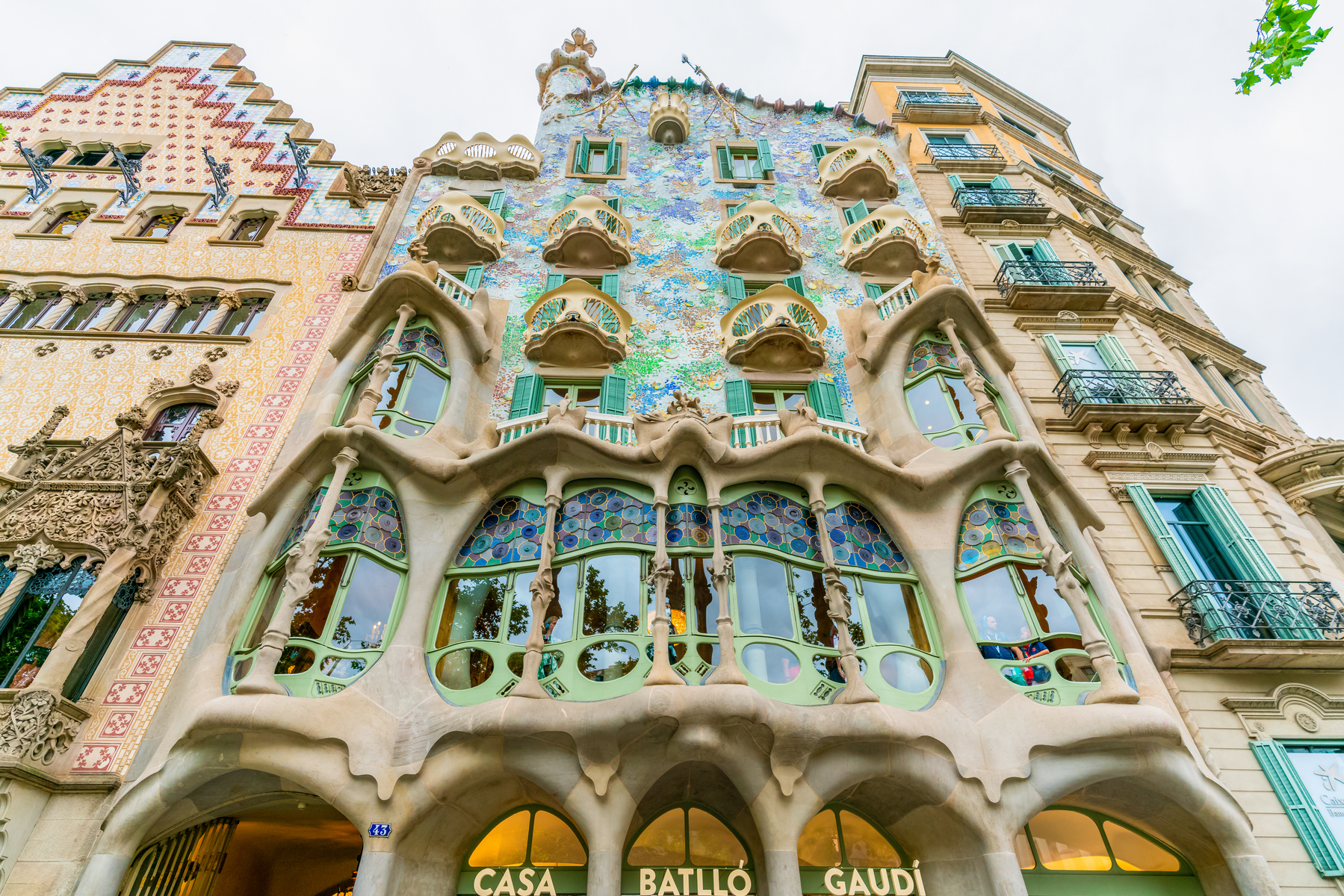
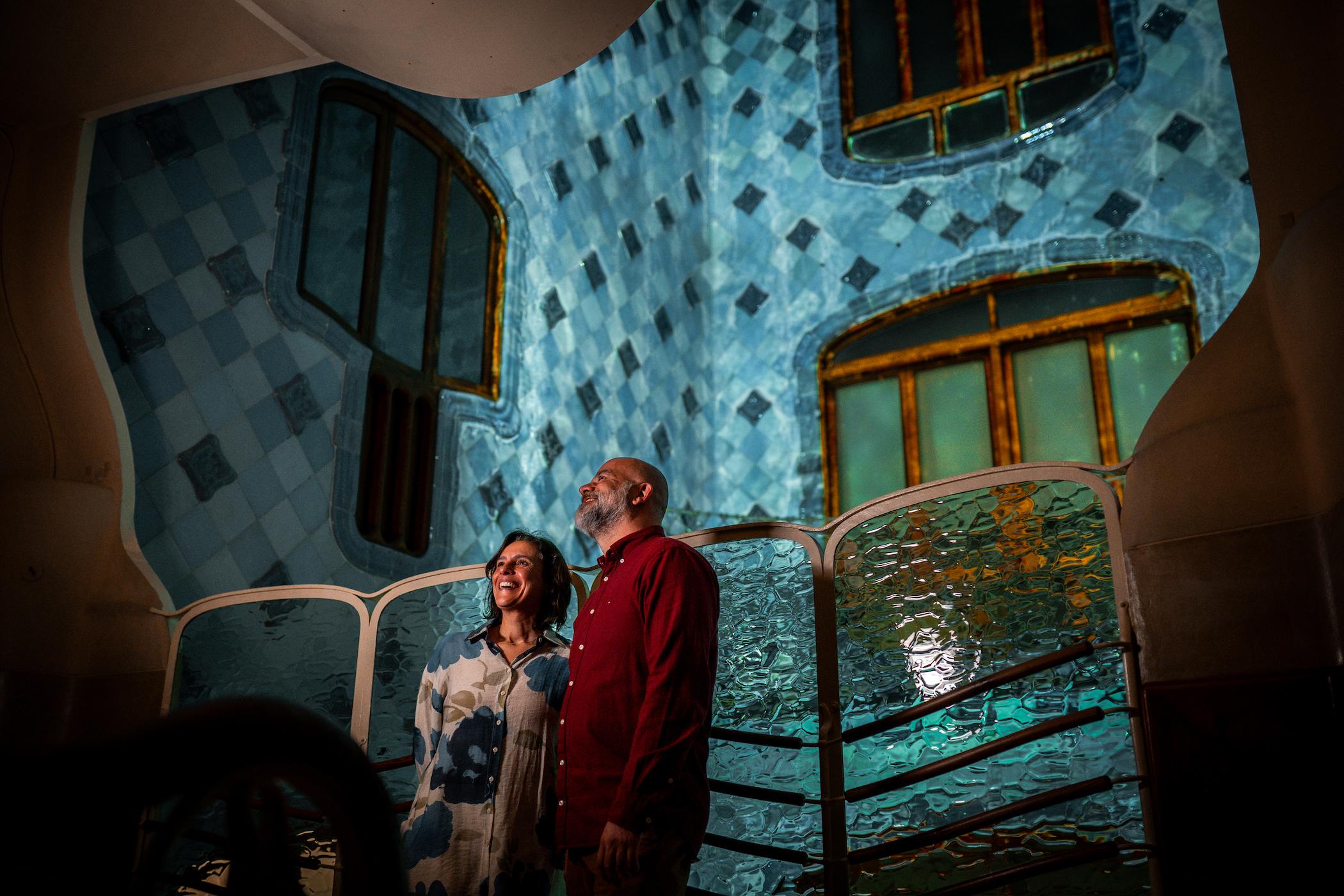
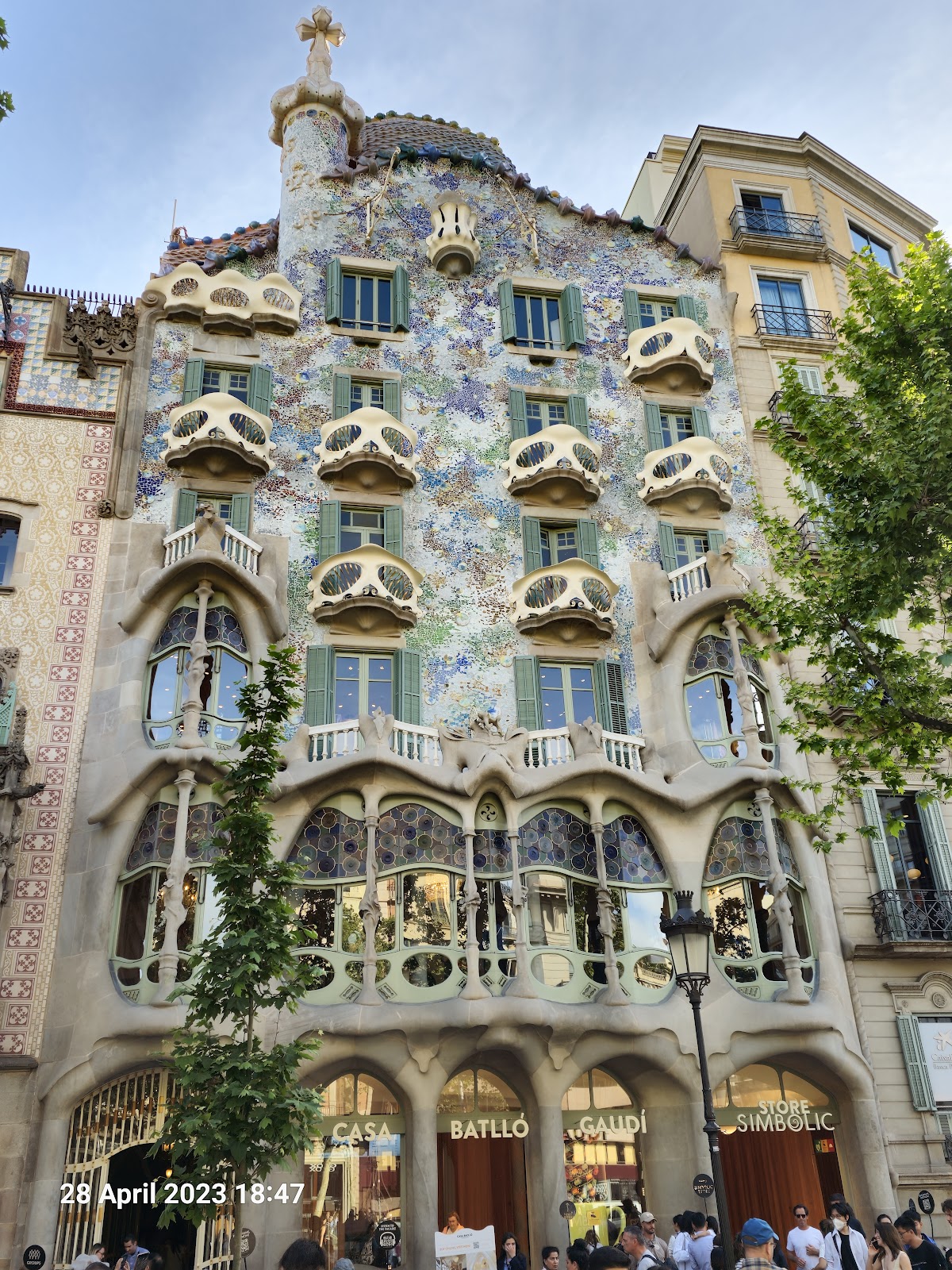
Casa Batlló's undulating, bone-like balconies and scaled, dragon-back roof make it one of the most striking buildings on the Passeig de Gràcia, part of the so-called Illa de la Discòrdia where three Modernista architects built in competing styles side by side. The night visit uses the same immersive, technology-driven tour the house is known for — augmented-reality elements that animate Gaudí's marine-inspired interior — but in evening light with smaller crowds, capped off with a drink included in the ticket.

Its 90 culture and 100 aesthetic scores are consistent with the building's status as a headline Gaudí site, while the evening timing and trendy score of 78 point to a livelier, date-night feel than a standard daytime ticket. It's well suited to visitors who've already done the major sights by day and want an atmospheric way to close out an evening on the avenue.

✨ Reasons to go

  • 1The building is part of the Illa de la Discòrdia, where three rival Modernista architects built side by side on the same block.
  • 2The facade's bone-like balconies and scaled roof are designed to evoke a dragon and marine imagery, a signature of Gaudí's style.
  • 3The night tour uses augmented-reality elements to animate the interior, a tech layer not used on all daytime visits.

💡 Good to know

  • 1Book the 19:00 slot if you still want some daylight on the facade before dark falls
  • 2the welcome drink is typically served partway through or at the end of the visit, so don't rush past it
  • 3the building sits directly on Passeig de Gràcia, making it easy to combine with dinner nearby afterward.

⏱️ Typical visit

1h

🕰️ Best time

evening

🚶 Walking intensity

Moderate walking

📍

Address

95R7+MXM Barcelona, Spain · Barcelona
🕐

Hours

Daily evening sessions, e.g. 19:00, 20:00, or 21:30.
Montjuïc22
🚶
4.7 (5,738)Free

Rising abruptly from the sea just south of the old town, Montjuïc has served Barcelona as a fortress, a 1929 World's Fair site, and the main stage for the 1992 Olympics, and today it's the city's largest green space and cultural hub in one. Highlights spread across the hillside include the Fundació Joan Miró, the National Art Museum of Catalonia (MNAC) in the vast Palau Nacional, the Magic Fountain, the Olympic stadium and pools, and the 17th-century castle at the summit with sweeping views over the port.

It's steep and spread out, so most visitors combine walking with the cable car, funicular, or outdoor escalators that climb parts of the hill. Because it's given over almost entirely to museums, gardens, and sports facilities rather than housing, it feels more like a cultural park than a neighborhood.

✨ Reasons to go

  • 1It hosted the 1929 World's Fair and served as the main venue for the 1992 Olympics
  • 2A 17th-century castle sits at its summit with sweeping views over the port and city
  • 3Outdoor escalators, a cable car, and a funicular help visitors climb the hill's steepest sections

💡 Good to know

  • 1Use the cable car or funicular to handle the steepest sections rather than walking the whole hill
  • 2catch the Magic Fountain show in the evening, timed with light and music
  • 3allow at least half a day if combining the castle, MNAC, and Miró Foundation.

⏱️ Typical visit

1h15

🕰️ Best time

morning, afternoon or early evening

🚶 Walking intensity

Active — lots of walking

📍

Address

Montjuïc, Sants-Montjuïc, 08038 Barcelona, Spain · Sants-Montjuïc
Museu d’Art Contemporani de Barcelona23
🎨
4.3 (15,252)$$ · Mid-range

Designed by American architect Richard Meier and opened in 1995, MACBA's blindingly white, geometric facade has become a defining image of the once-gritty El Raval neighborhood it helped transform, its front plaza famously adopted by the city's skateboarding scene as an unofficial extension of the museum's public identity. Inside, the collection focuses on Spanish and Catalan contemporary art from the postwar period onward, with reviewers split on the curatorial approach - some praise the spacious, uncluttered hang, while others find long stretches of near-empty gallery feel undercooked.

A 4.3 rating and maximum must-see and culture scores still place it firmly on Barcelona's essential circuit for contemporary art, and its high trendy score fits a museum as connected to street culture outside as to the art inside.

✨ Reasons to go

  • 1The stark white geometric building was designed by American architect Richard Meier and opened in 1995.
  • 2Its front plaza has been adopted by Barcelona's skateboarding scene as an unofficial extension of the museum itself.
  • 3The collection focuses on Spanish and Catalan contemporary art from the postwar era onward.

💡 Good to know

  • 1Watch the skateboarders on the plaza outside - it's a genuine part of the local scene
  • 2pair with the adjacent CCCB, since both cover contemporary culture from different angles
  • 3go with an open mind about sparse, minimalist hanging rather than dense traditional displays.

⏱️ Typical visit

1h15

🕰️ Best time

morning, lunchtime, afternoon, early evening or evening

🚶 Walking intensity

Moderate walking

📍

Address

Plaça dels Àngels, 1, Ciutat Vella, 08001 Barcelona, Spain · Ciutat Vella
🕐

Hours

  • Monday: 10:00 AM – 8:00 PM
  • Tuesday: Closed
  • Wednesday: 10:00 AM – 8:00 PM
  • Thursday: 10:00 AM – 8:00 PM
  • Friday: 10:00 AM – 8:00 PM
  • Saturday: 10:00 AM – 8:00 PM
  • Sunday: 10:00 AM – 3:00 PM
CosmoCaixa Museum of Science24
🎨
4.7 (48,826)$$ · Mid-range

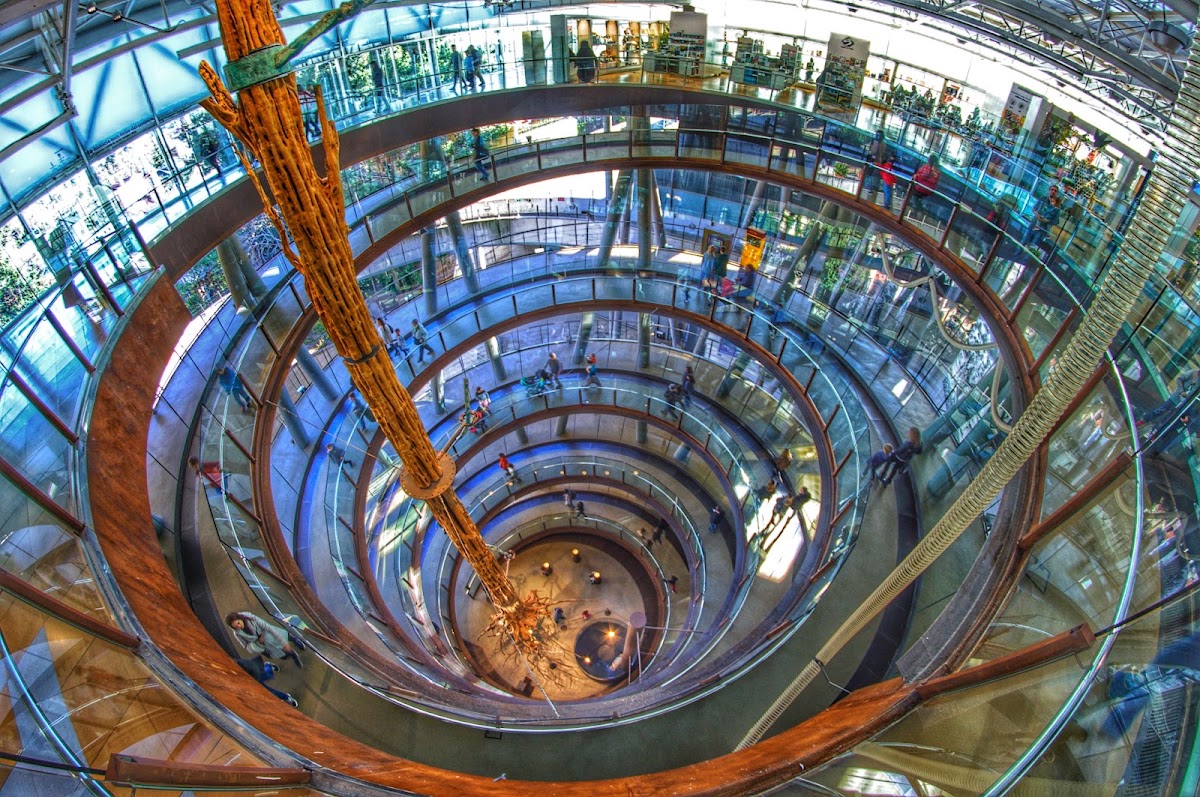
CosmoCaixa combines a historic Art Nouveau building with an expanded underground complex to create one of Europe's most engaging science museums, its signature exhibits including a real flooded Amazon rainforest environment complete with live animals and an exposed geological rock formation showing millions of years of the Earth's strata in cross-section. With a substantial 180-minute expected visit and reviewers routinely reporting spending four to five hours inside, it rewards a full dedicated outing rather than a quick stop.

A 4.7 rating across nearly 49,000 reviews, with perfect must-see, culture, and aesthetic scores, places it among Barcelona's genuinely essential attractions, particularly appealing for travelers with children given its hands-on, immersive approach to science education. Its high walking intensity reflects the sheer scale of ground to cover across multiple levels.

✨ Reasons to go

  • 1Houses a real flooded Amazon rainforest exhibit with live animals inside the museum
  • 2Features an exposed geological rock formation displaying millions of years of Earth's strata in cross-section
  • 3Combines a historic Art Nouveau building with an expanded underground complex

💡 Good to know

  • 1Plan for at least three to four hours, not a quick visit
  • 2book ahead given its popularity, especially with families
  • 3wear comfortable shoes given the scale of the exhibition floors.

⏱️ Typical visit

3h

🕰️ Best time

morning, lunchtime, afternoon, early evening or evening

🚶 Walking intensity

Active — lots of walking

📍

Address

Carrer d'Isaac Newton, 26, Sarrià-Sant Gervasi, 08022 Barcelona, Spain · Sarrià-Sant Gervasi
🕐

Hours

  • Monday: 10:00 AM – 8:00 PM
  • Tuesday: 10:00 AM – 8:00 PM
  • Wednesday: 10:00 AM – 8:00 PM
  • Thursday: 10:00 AM – 8:00 PM
  • Friday: 10:00 AM – 8:00 PM
  • Saturday: 10:00 AM – 8:00 PM
  • Sunday: 10:00 AM – 8:00 PM
Recinte Modernista de Sant Pau25
🏛️
4.6 (61,806)$$ · Mid-range

Built between 1902 and 1930, Hospital de Sant Pau was conceived by architect Lluís Domènech i Montaner as proof that healing environments could be beautiful, spreading dozens of mosaic-covered pavilions across garden grounds instead of stacking wards in a single grim block. It functioned as a working hospital until 2009, after which the complex was restored and opened to the public, and reviewers frequently describe it as a pleasant surprise that rivals Barcelona's more famous Gaudí sites for sheer decorative richness.

With a near-perfect culture and aesthetic score in this dataset, it earns its two-hour recommended visit length through sheer scale, and it feels more like exploring a small town than a museum. Its relatively lower foot traffic despite the acclaim makes it a smart booking for travelers who want Modernisme without the Sagrada Família crowds.

✨ Reasons to go

  • 1Designed by architect Lluís Domènech i Montaner and built between 1902 and 1930 as a hospital campus rather than a single building
  • 2It functioned as a working hospital until 2009 before being restored and opened to the public
  • 3An elevated corridor connects the mosaic-covered pavilions, offering an above-ground view of the garden layout

💡 Good to know

  • 1Book tickets online in advance, as it's a popular combo-ticket stop with the nearby Sagrada Família
  • 2walk the elevated corridor connecting the pavilions to see the site from above
  • 3pair it with the Sagrada Família, which sits at the end of the same avenue.

⏱️ Typical visit

2h

🕰️ Best time

morning, lunchtime, afternoon or early evening

🚶 Walking intensity

Active — lots of walking

📍

Address

Carrer de Sant Antoni Maria Claret, 167, Horta-Guinardó, 08025 Barcelona, Spain · Horta-Guinardó
🕐

Hours

  • Monday: 9:30 AM – 6:30 PM
  • Tuesday: 9:30 AM – 6:30 PM
  • Wednesday: 9:30 AM – 6:30 PM
  • Thursday: 9:30 AM – 6:30 PM
  • Friday: 9:30 AM – 6:30 PM
  • Saturday: 9:30 AM – 6:30 PM
  • Sunday: 9:30 AM – 6:30 PM
Casa Batlló Entry with Self-Audioguide Tour26
🏛️
4.7 (30,887)$$ · Mid-rangeSkip-The-Line Ticket + Audio Guide

Gaudí remodeled this existing building between 1904 and 1906, giving it an undulating stone facade, skeletal balcony railings and a roofline said to represent Saint George slaying the dragon, a design so distinctive it's locally nicknamed the House of Bones. The self-paced audioguide covers the interior's flowing, almost aquatic rooms, where straight lines are nearly absent by design.

With a near-perfect aesthetic score, it stands as one of Barcelona's most striking Gaudí interiors to actually walk through, rather than just view from the street.

✨ Reasons to go

  • 1Gaudí remodeled an existing building between 1904 and 1906 rather than building from scratch.
  • 2Locals nickname it the House of Bones for its skeletal balcony railings and bone-like facade elements.
  • 3The roofline is designed to represent Saint George slaying the dragon.

💡 Good to know

  • 1Book a morning or late-afternoon slot to avoid midday queues on Passeig de Gràcia
  • 2look up at the roof terrace's chimney pots, easy to rush past after the more dramatic lower floors
  • 3combine with La Pedrera a short walk up the same street for a comparison of two different Gaudí buildings in one outing.

⏱️ Typical visit

1h30

🕰️ Best time

morning, lunchtime, afternoon or early evening

🚶 Walking intensity

Moderate walking

📍

Address

95R7+MXM Barcelona, Spain · Barcelona
Casa Batlló Be The First Entry Ticket27
🏛️
4.8 (1,329)$$$ · ExpensiveEntry Ticket

Casa Batlló draws heavy crowds for its blue-tiled, bone-like facade and the augmented-reality tour that brings its marine-inspired interior to life, and this early-access ticket gets visitors inside at the very first slot of the day, often around 8:30 AM, before those crowds build. With must-see and culture scores maxed at 100, it's one of the most in-demand Gaudí sites in the city, and the trade-off of an earlier alarm buys noticeably clearer sightlines for photos of the famous chimney-topped roof terrace and the light-filled central stairwell.

At 90 minutes it moves at an unhurried pace given the extra room to move around. It suits early risers and photography-minded visitors who prioritize an uncrowded experience over sleeping in.

✨ Reasons to go

  • 1Antoni Gaudí designed the building with a marine-inspired interior and a bone-like, blue-tiled facade
  • 2The augmented-reality tour digitally reconstructs the marine theme throughout the noble floor and stairwell
  • 3The roof terrace features Gaudí's signature chimney sculptures

💡 Good to know

  • 1Arrive at least 15 minutes before your entry time, since early slots are strictly timed
  • 2the augmented-reality guide works best if you take your time in the main noble floor rather than rushing to the roof
  • 3combine with breakfast on Passeig de Gràcia afterward, since you'll be out early anyway.

⏱️ Typical visit

1h30

🕰️ Best time

early morning

🚶 Walking intensity

Moderate walking

📍

Address

Pg. de Gràcia, 43, Eixample, 08007 Barcelona, Spain · Eixample
🕐

Hours

Early access entry, first slot at opening, e.g. 8:30 AM.
Park Güell28
🏛️
4.4 (240,256)$$ · Mid-range

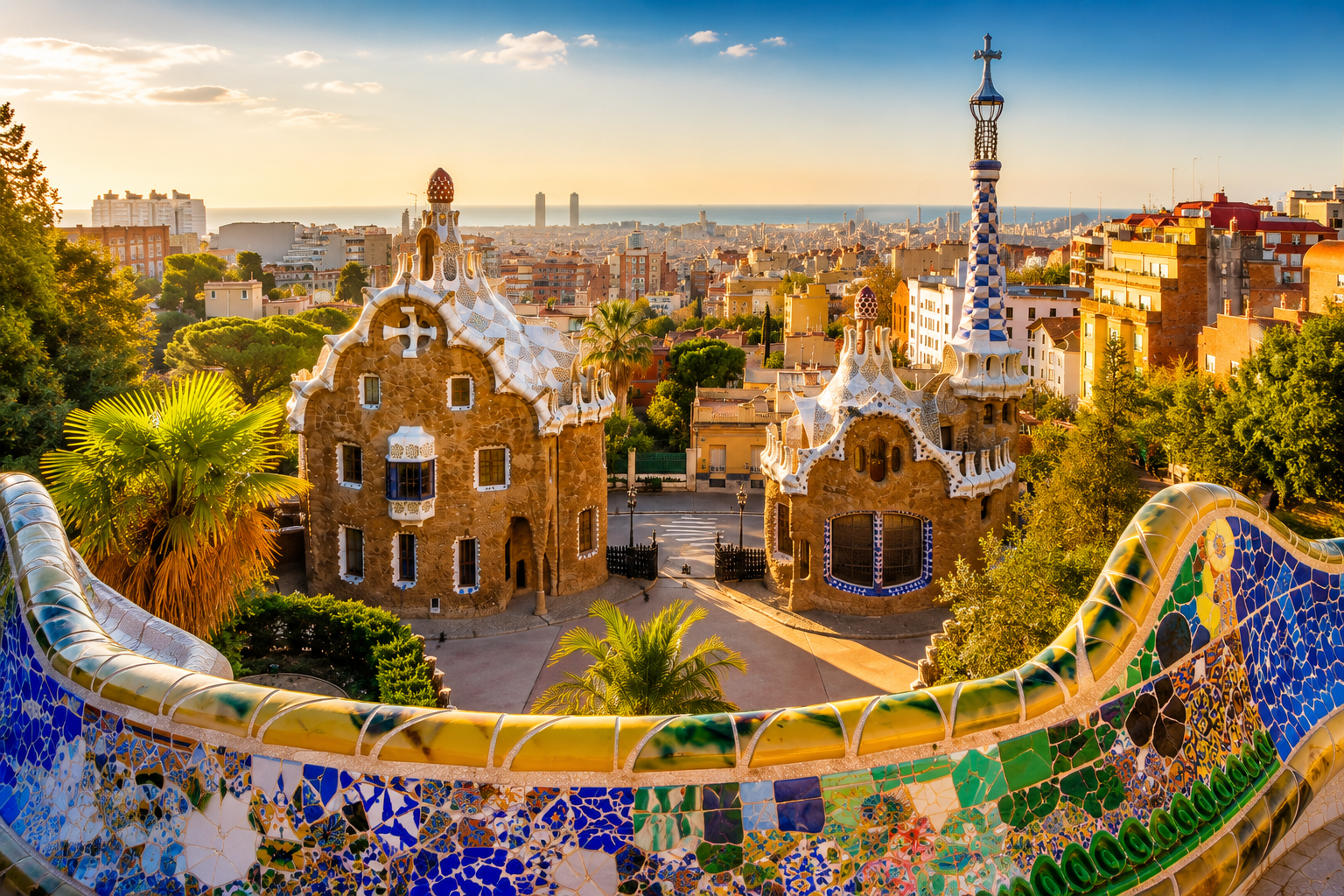
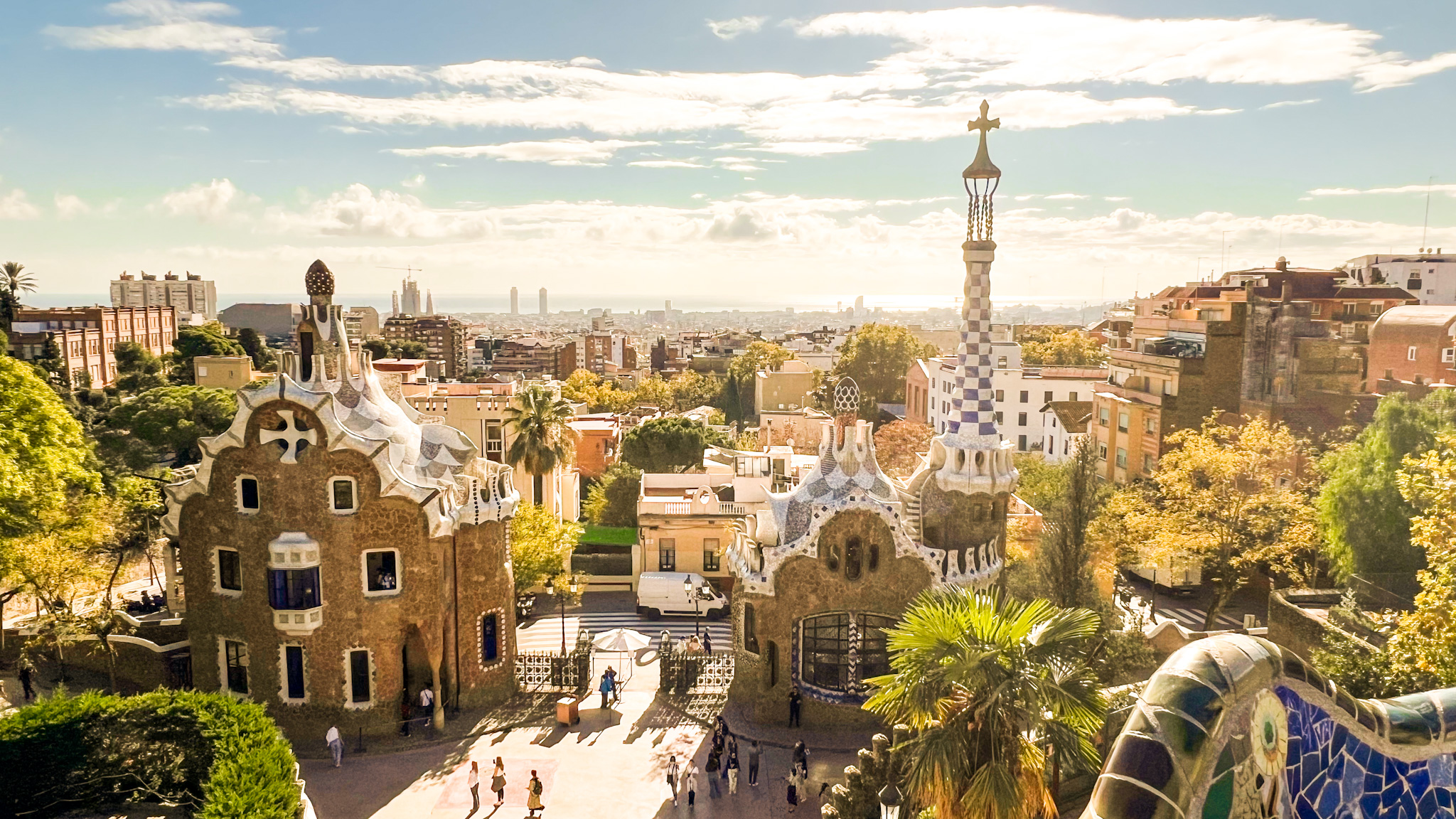
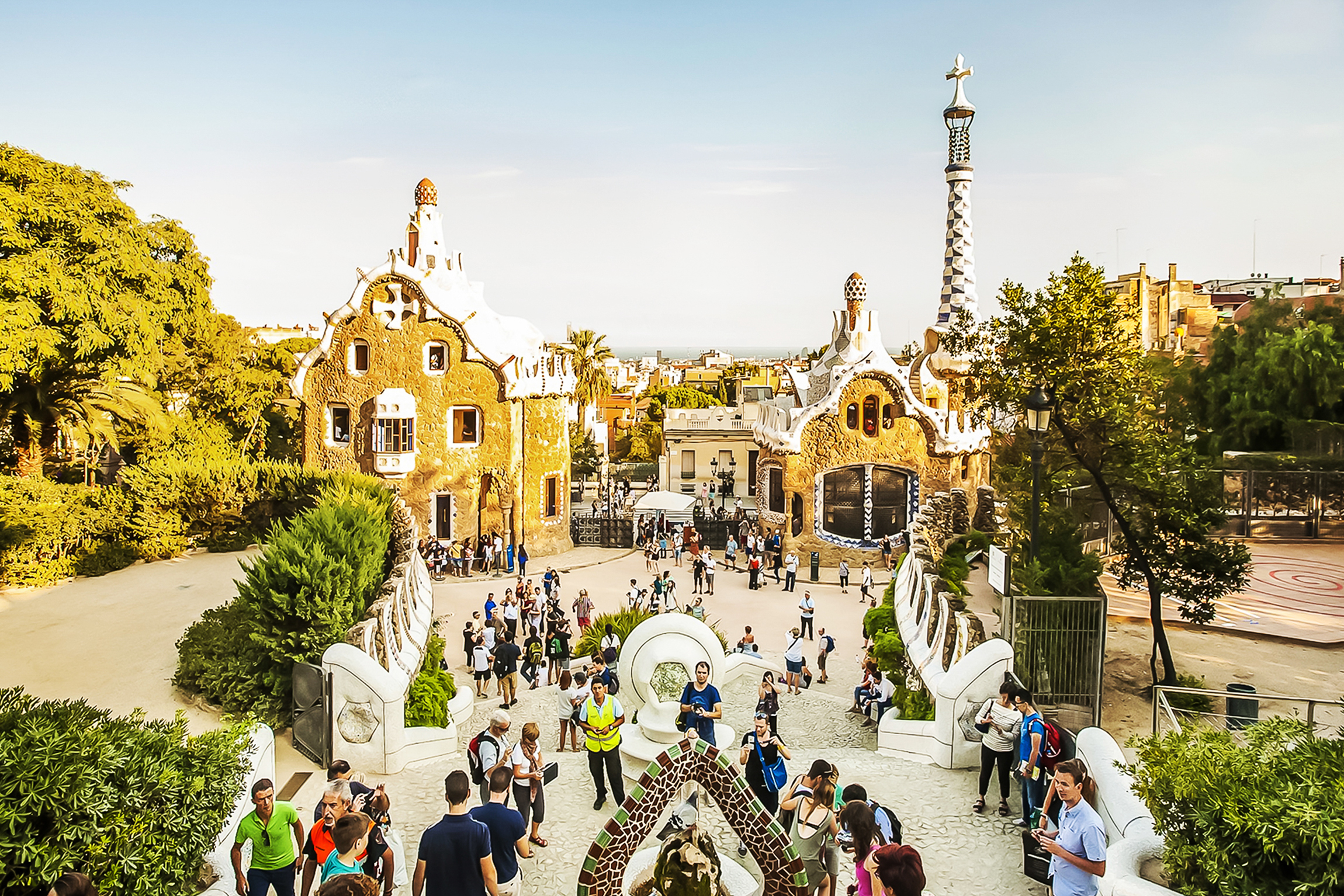
Commissioned by industrialist Eusebi Güell in 1900 as an English-style garden city for Barcelona's elite, the development failed to attract buyers and was eventually converted into a public park, leaving only a couple of houses, including Gaudí's own former home, from the original plan. Its trademark mosaic-tiled serpentine bench, the tiled salamander at the entrance, and the hypostyle hall of columns are all made using Gaudí's signature trencadís technique of broken ceramic tile.

The main monumental zone requires a timed ticket, while the surrounding hillside gardens remain free to wander, offering sweeping views over the city and out to the sea. It suits visitors who enjoy a mix of architecture, art, and open-air walking.

✨ Reasons to go

  • 1Commissioned in 1900 by Eusebi Güell as a failed English-style garden city, later repurposed as a public park
  • 2The serpentine bench, entrance salamander, and hypostyle hall showcase Gaudí's trencadís technique of broken ceramic tile mosaics
  • 3Gaudí's own former home still stands on the site as one of the few houses built from the original development plan

💡 Good to know

  • 1Book timed tickets online in advance for the monumental zone, which regularly sells out
  • 2wear comfortable shoes, since the site involves real hills and steps
  • 3the surrounding park areas beyond the ticketed zone are free, so budget extra time to explore them too.

⏱️ Typical visit

2h

🕰️ Best time

morning, lunchtime, afternoon, early evening or evening

🚶 Walking intensity

Active — lots of walking

📍

Address

Gràcia, 08024 Barcelona, Spain · Gràcia
🕐

Hours

  • Monday: 9:00 AM – 7:30 PM
  • Tuesday: 9:00 AM – 7:30 PM
  • Wednesday: 9:00 AM – 7:30 PM
  • Thursday: 9:00 AM – 7:30 PM
  • Friday: 9:00 AM – 7:30 PM
  • Saturday: 9:00 AM – 7:30 PM
  • Sunday: 9:00 AM – 7:30 PM
Gaudí House Museum29
🎨
4.3 (7,501)$$ · Mid-range

Inside Park Güell, this pink, turreted house was Antoni Gaudí's own home from 1906 to 1925, and it's preserved with his personal furniture, drawings, and everyday objects rather than presented as a generic Gaudí overview. A perfect must-see and aesthetic score, alongside a 4.3-star rating from over 7,500 reviews, confirm its status as an essential stop for anyone visiting Park Güell — though its modest hidden-gem score signals it's very much on the well-trodden tourist path.

Visitors describe it as an easy add-on to a Park Güell ticket rather than a separate expedition. At 45 minutes, it fits comfortably alongside the rest of the park visit.

✨ Reasons to go

  • 1Antoni Gaudí lived in this house from 1906 to 1925, and it displays his personal furniture and belongings rather than a general exhibition.
  • 2The house was built between 1903 and 1905 as a model residence for the Park Güell development.

💡 Good to know

  • 1Book ahead, since it pairs with timed Park Güell entry
  • 2visit in the morning to avoid the worst of the crowds
  • 3treat it as an add-on to your park visit rather than a separate trip.

⏱️ Typical visit

45 min

🕰️ Best time

morning, lunchtime, afternoon or early evening

🚶 Walking intensity

Moderate walking

📍

Address

Parc Güell, Gràcia, 08013 Barcelona, Spain · Gràcia
🕐

Hours

  • Monday: 9:00 AM – 6:30 PM
  • Tuesday: 9:00 AM – 6:30 PM
  • Wednesday: 9:00 AM – 6:30 PM
  • Thursday: 9:00 AM – 6:30 PM
  • Friday: 9:00 AM – 6:30 PM
  • Saturday: 9:00 AM – 6:30 PM
  • Sunday: 9:00 AM – 6:30 PM
Sagrada Familia Guided Tour with Tower Access30
🏛️
4.3 (5,788)$$$ · ExpensiveSkip-The-Line Ticket + Guided Tour

The Sagrada Família has been under construction since 1882 and remains Antoni Gaudí's defining, unfinished masterpiece — a building where columns branch like trees to hold up a ceiling meant to evoke a forest canopy, and where stained glass floods the nave with color that shifts through the day. This guided version adds tower access, letting visitors ride the lift partway up one of the spires for views over the Eixample grid and a closer look at the mosaic-covered pinnacles that are invisible from ground level.

Scoring a maximum 100 on both must-see and culture, it's the kind of landmark that anchors a first visit to Barcelona regardless of prior interest in architecture, and a guide's context on Gaudí's symbolism — the Nativity and Passion façades, the geometry drawn from nature — adds real depth to what can otherwise feel overwhelming. The expensive price and multiple daily departures reflect steady, high demand.

✨ Reasons to go

  • 1Construction began in 1882 and continues today, making it one of the longest-running building projects in the world, with columns inside branching upward like trees to form a stone forest canopy.
  • 2The guided tower access includes a lift ride partway up one of the spires, revealing mosaic-covered pinnacles up close that are invisible from street level, though the way down is a one-way descent by stairs.
  • 3The Nativity and Passion façades encode Gaudí's own symbolism and geometry drawn from nature, details a guide can unpack that are easy to miss on a self-guided visit.

💡 Good to know

  • 1Book the earliest morning slot available to beat both crowds and the worst of the heat on the tower stairs
  • 2tower access typically involves a one-way descent by stairs, so wear comfortable shoes
  • 3check baggage restrictions in advance, as large bags aren't permitted inside.

⏱️ Typical visit

1h30

🕰️ Best time

morning, lunchtime or afternoon

🚶 Walking intensity

Moderate walking

📍

Address

C53F+C2H Barcelona, Spain · Barcelona
🕐

Hours

Multiple daily departures, morning and afternoon.