The Globe Map

Home · London · Walking tours

Discover London’s 20 best Walking tours spots for your trip

From the classic Covent Garden and Greenwich, to lesser-known spots worth adding to your trip.

  • Prices & booking information
  • Opening hours & visit duration
  • Best time to visit
  • Location & practical information
  • Local tips for every spot
Covent Garden1
🚶
Free

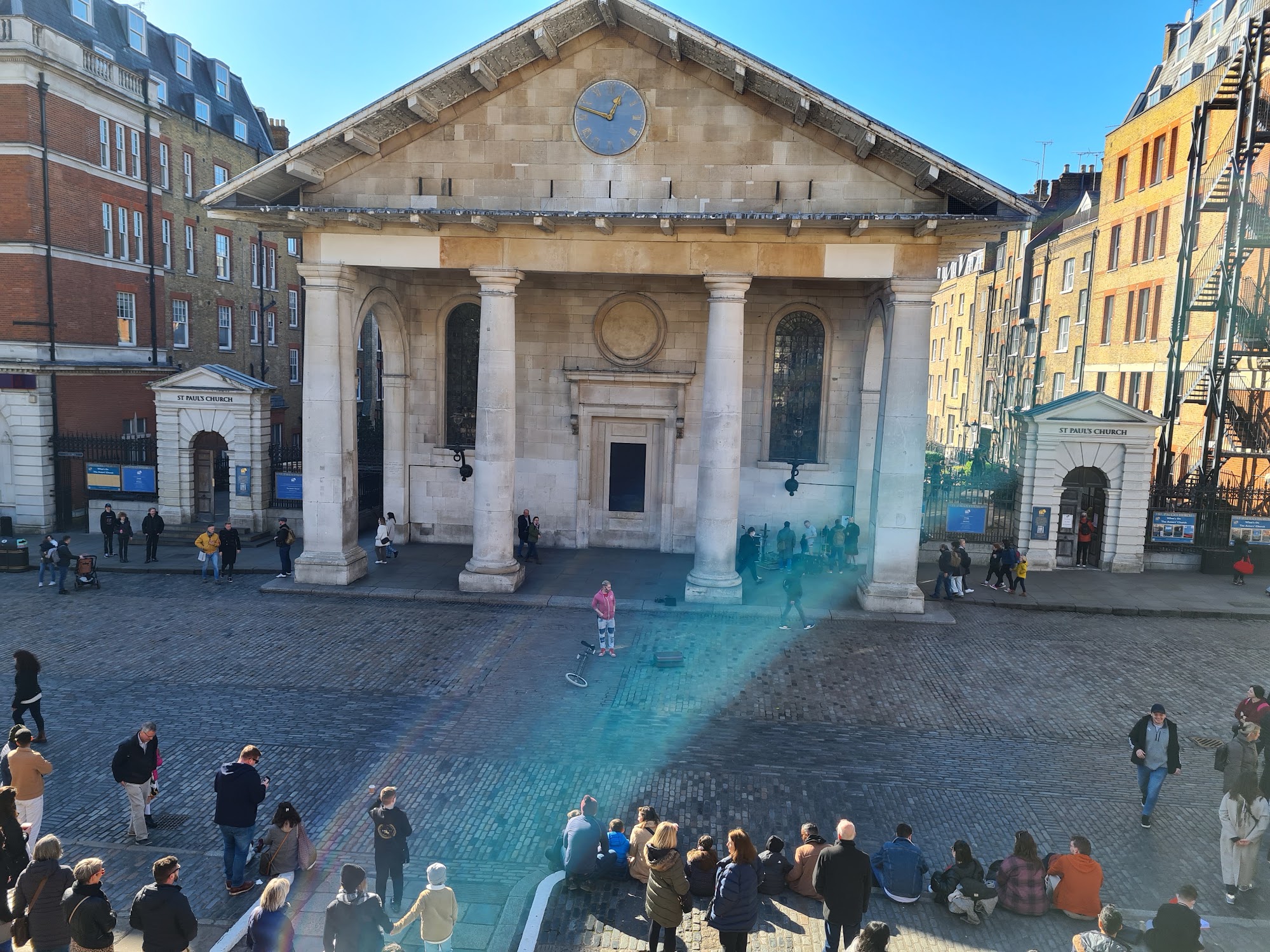
Once London's main fruit and vegetable market, Covent Garden's cast-iron market hall was saved from demolition in the 1970s and reborn as a covered shopping arcade ringed by cafes. Street performers — jugglers, opera singers, escapologists — work the cobbled piazza on a rota overseen by the market itself, and the Royal Opera House and several West End theatres sit just off it.

Neal's Yard's candy-coloured courtyard and the narrow lanes of Seven Dials add pockets of independent shops nearby. It's unapologetically touristy, but the architecture and street theatre make it worth the crowds.

✨ Reasons to go

  • 1The cast-iron market hall was slated for demolition before being saved and converted into a shopping arcade in the 1970s
  • 2Street performers are selected and scheduled by the market itself on a formal rota
  • 3The Royal Opera House sits just off the piazza

💡 Good to know

  • 1Catch the street performers around midday when the schedule is busiest
  • 2duck into Neal's Yard and Seven Dials for quieter corners
  • 3pair with a matinee at the Royal Opera House or a West End theatre.

⏱️ Typical visit

1h15

🕰️ Best time

morning, lunchtime or afternoon

🚶 Walking intensity

Active — lots of walking

📍

Address

Covent Garden, London, UK · Covent Garden
Greenwich2
🚶
Free

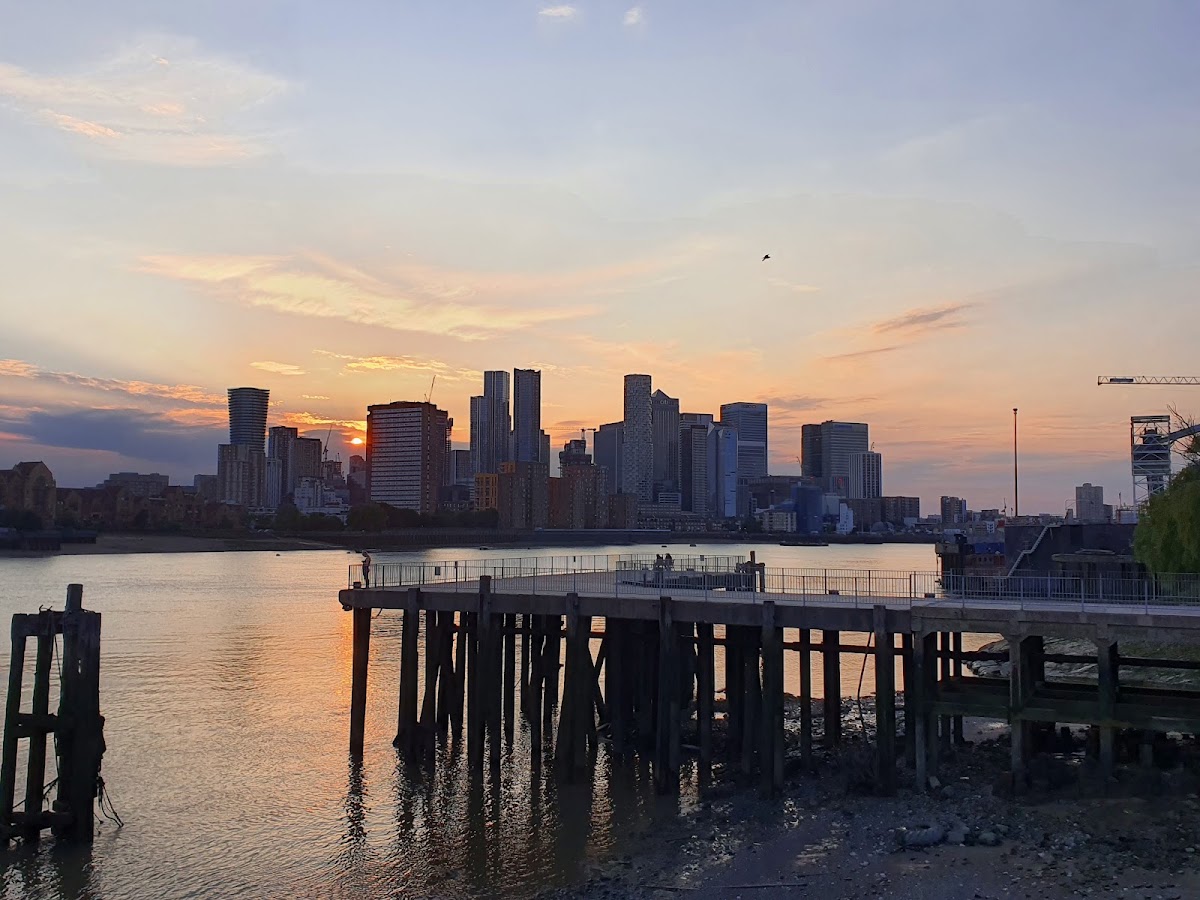
Greenwich built its reputation on the sea: the Old Royal Naval College's baroque courtyards, the preserved tea clipper Cutty Sark, and the National Maritime Museum all trace Britain's naval and trading past. Climb through Greenwich Park to the Royal Observatory and you can straddle the Prime Meridian line itself, with one of London's best skyline views over Canary Wharf spread out below.

The weekend market around Greenwich Church Street adds crafts and street food to the mix of Georgian streets and university buildings. It's easily reached by boat down the Thames, which is arguably the best way to arrive.

✨ Reasons to go

  • 1The Royal Observatory sits directly on the Prime Meridian, letting visitors stand astride 0° longitude.
  • 2The Old Royal Naval College's baroque courtyards were designed as part of Britain's naval heritage complex.
  • 3The preserved tea clipper Cutty Sark is docked here as a relic of Britain's maritime trading era.

💡 Good to know

  • 1Arrive by riverboat from central London for the views along the way
  • 2climb to the Royal Observatory for sunset over the Canary Wharf skyline
  • 3browse Greenwich Market, busiest on weekends.

⏱️ Typical visit

1h30

🕰️ Best time

morning, lunchtime or afternoon

🚶 Walking intensity

Active — lots of walking

📍

Address

Greenwich, London, UK · Greenwich
Soho3
🚶
Free

Soho grew from an 18th-century immigrant quarter into London's red-light and jazz district before reinventing itself as the city's media and nightlife hub. Old Compton Street anchors one of Europe's most established gay villages, while Berwick Street's market stalls and record shops recall its bohemian past.

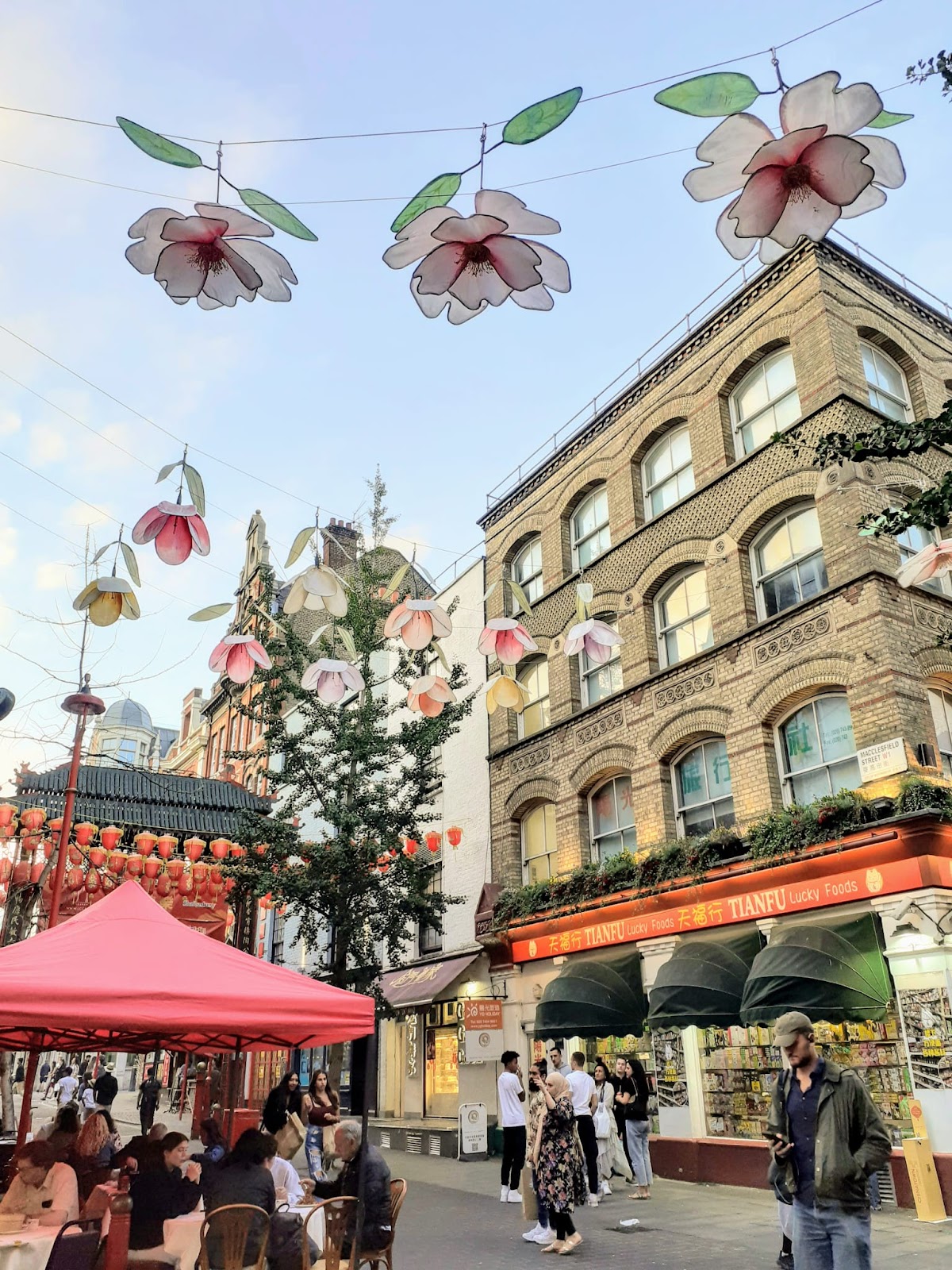
By day it's full of production companies and lunch crowds; by night, theatre-goers spill from West End stages into pubs, cocktail bars, and Chinatown's edge on Gerrard Street. It remains determinedly un-precious — grubby in patches, glamorous in others, and always crowded.

✨ Reasons to go

  • 1Old Compton Street anchors one of Europe's most established gay villages
  • 2Berwick Street's market stalls and record shops recall Soho's bohemian, jazz-era past
  • 3It sits at the edge of Chinatown on Gerrard Street and a short walk from Carnaby Street

💡 Good to know

  • 1Wander Old Compton Street and Berwick Street in the early evening when it's liveliest
  • 2combine with a West End show or Chinatown dinner
  • 3Carnaby Street is a short walk north.

⏱️ Typical visit

1h15

🕰️ Best time

early evening or evening

🚶 Walking intensity

Active — lots of walking

📍

Address

Soho, London, UK · Soho
Notting Hill4
🚶
Free

Notting Hill's rows of candy-coloured Victorian houses, especially around Lancaster Road and Elgin Crescent, have made it one of the most photographed corners of London, a reputation cemented by the 1999 film of the same name. Portobello Road hosts one of the world's largest antiques markets on Saturdays, its stalls giving way to fruit, vinyl, and street food further down the hill.

The area is also home to Europe's biggest street festival, the Notting Hill Carnival, a Caribbean-rooted celebration held every August Bank Holiday that traces back to the neighbourhood's Windrush-generation community. Today it's largely affluent and quiet outside market days and carnival weekend.

✨ Reasons to go

  • 1The neighborhood's fame was cemented by the 1999 film "Notting Hill" starring Hugh Grant and Julia Roberts.
  • 2Portobello Road hosts one of the world's largest antiques markets, held every Saturday.
  • 3It's home to Notting Hill Carnival, Europe's biggest street festival, rooted in the area's Windrush-generation Caribbean community.

💡 Good to know

  • 1Visit Portobello Road on a Saturday for the full antiques market
  • 2the pastel houses cluster around Lancaster Road, Elgin Crescent, and St Luke's Mews
  • 3expect street closures during Carnival weekend in late August.

⏱️ Typical visit

1h15

🕰️ Best time

morning or lunchtime

🚶 Walking intensity

Active — lots of walking

📍

Address

Notting Hill, London, UK · Notting Hill
Bloomsbury5
🚶
Free

Bloomsbury takes its name from the circle of early 20th-century writers and thinkers — Virginia Woolf, E.M. Forster, John Maynard Keynes among them — who lived and met around its Georgian garden squares, and the area has stayed intellectual ever since, anchored by the University of London and the British Museum.

Russell Square, the largest of the squares, offers a shaded place to rest between museum visits, and the British Library sits just north near King's Cross. Charles Dickens lived on Doughty Street, now a small museum to his life and work.

It's a quieter, more studious counterpart to the West End just to its south.

✨ Reasons to go

  • 1Named after the Bloomsbury Group of writers and thinkers, including Virginia Woolf, E.M. Forster and John Maynard Keynes, who lived and met around its garden squares.
  • 2Charles Dickens's former home on Doughty Street is now a museum devoted to his life and work.
  • 3Home to the British Museum, which is free to enter, and near the British Library by King's Cross.

💡 Good to know

  • 1Set aside real time for the British Museum, which is free to enter
  • 2rest in Russell Square between sights
  • 3visit the Charles Dickens Museum on Doughty Street if time allows.

⏱️ Typical visit

1h15

🕰️ Best time

morning, lunchtime or afternoon

🚶 Walking intensity

Active — lots of walking

📍

Address

Bloomsbury, London, UK · Bloomsbury
No photo available6
🚶
Free

Shoreditch turned from garment-trade backstreet into the epicentre of London's hipster and street-art scenes in the 2000s, its brick warehouses colonised by galleries, converted into loft offices for tech startups, and repainted with rotating murals, particularly around Great Eastern Street and the Truman Brewery. Brick Lane, on its southern edge, adds curry houses, vintage shops, and a Sunday market to the mix.

By night the area's converted warehouses and rooftop bars make it one of London's busiest nightlife zones, especially around Old Street and Curtain Road. It changes fast — today's gallery is tomorrow's coworking space — which is part of its appeal.

✨ Reasons to go

  • 1Former garment-trade backstreets that became London's street-art and startup hub in the 2000s
  • 2Rotating murals cluster around Great Eastern Street and the Truman Brewery
  • 3Brick Lane's Sunday market combines curry houses, vintage shops, and street stalls

💡 Good to know

  • 1Follow Great Eastern Street and the streets around Brick Lane for the best street art
  • 2visit Brick Lane market on a Sunday
  • 3return after dark for the bar and club scene around Old Street.

⏱️ Typical visit

1h15

🕰️ Best time

afternoon, early evening or evening

🚶 Walking intensity

Active — lots of walking

📍

Address

Shoreditch, London E2 8DA, UK · Shoreditch
St Katharine Docks7
🚶
4.7 (7,119)Free

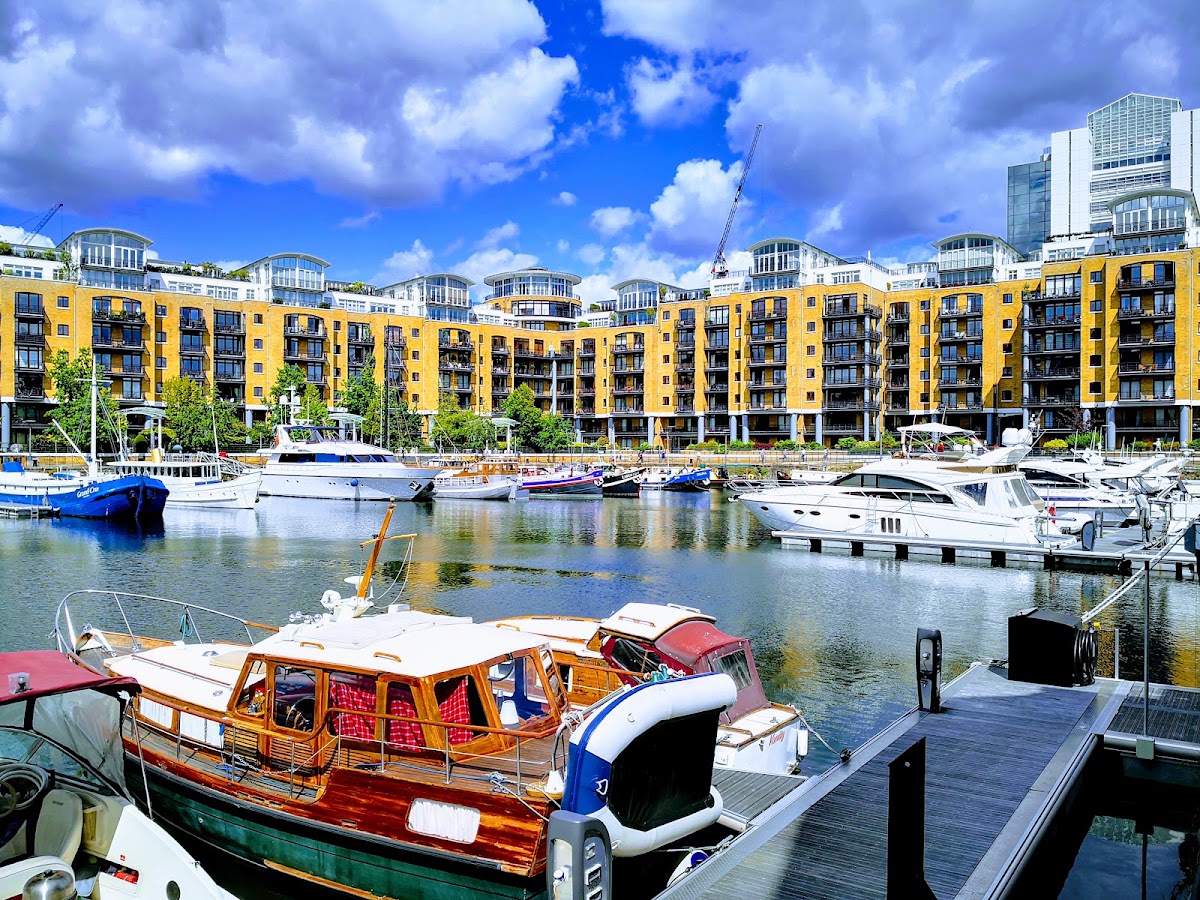
St Katharine Docks opened in 1828 on the site of a medieval hospital and became one of the busiest docks of Victorian London before falling out of use and being redeveloped as a yacht marina in the 1970s. Today its cobbled quaysides are lined with restored warehouses turned into restaurants and pubs, with expensive yachts and houseboats moored where cargo ships once unloaded.

It sits just a few minutes' walk from Tower Bridge and the Tower of London, making it an easy, quieter add-on to that stretch of the river. The Dickens Inn, a converted warehouse pub, is one of its more recognisable buildings.

✨ Reasons to go

  • 1The docks were built in 1828 on the site of the medieval St Katharine's Hospital, founded in 1148
  • 2It was among the busiest cargo docks of Victorian London before closing and being redeveloped as a yacht marina in the 1970s
  • 3The Dickens Inn is a converted 18th-century warehouse repurposed as a pub

💡 Good to know

  • 1Combine with a visit to the Tower of London or Tower Bridge nearby
  • 2walk the quaysides in the late afternoon light
  • 3have a drink at the Dickens Inn or one of the waterside pubs.

⏱️ Typical visit

45 min

🕰️ Best time

morning, lunchtime or afternoon

🚶 Walking intensity

Moderate walking

📍

Address

50 St Katharine's Way, London E1W 1LA, UK
🕐

Hours

  • Monday: 9:00 AM – 5:00 PM
  • Tuesday: 9:00 AM – 5:00 PM
  • Wednesday: 9:00 AM – 5:00 PM
  • Thursday: 9:00 AM – 5:00 PM
  • Friday: 9:00 AM – 5:00 PM
  • Saturday: 9:00 AM – 5:00 PM
  • Sunday: 9:00 AM – 5:00 PM
Chelsea8
🚶
Free

Chelsea's King's Road was ground zero for 1960s Swinging London and later punk fashion, and the street still runs the length of the neighbourhood as its main artery of boutiques and cafes. Sloane Square marks its eastern edge, giving its name to the affluent 'Sloane Ranger' archetype long associated with the area, while the Saatchi Gallery and the Chelsea Physic Garden add cultural weight.

Rows of white stucco townhouses and quiet garden squares make it one of London's wealthiest and most manicured residential districts. The Thames-side Chelsea Embankment offers a calmer, leafier walk than the shopping streets inland.

✨ Reasons to go

  • 1King's Road was the epicenter of 1960s Swinging London and later the birthplace of punk fashion, including Vivienne Westwood's early shops
  • 2Sloane Square gave its name to the 'Sloane Ranger' social archetype
  • 3The Chelsea Physic Garden is one of Europe's oldest botanic gardens, tucked within the neighborhood

💡 Good to know

  • 1Walk the length of King's Road from Sloane Square toward World's End
  • 2visit the Saatchi Gallery, which is free
  • 3combine with a stroll along Chelsea Embankment or into the Chelsea Physic Garden.

⏱️ Typical visit

1h15

🕰️ Best time

morning, lunchtime or afternoon

🚶 Walking intensity

Active — lots of walking

📍

Address

Chelsea, London, UK · Chelsea
King’s Cross9
🚶
4.4 (4,520)Free

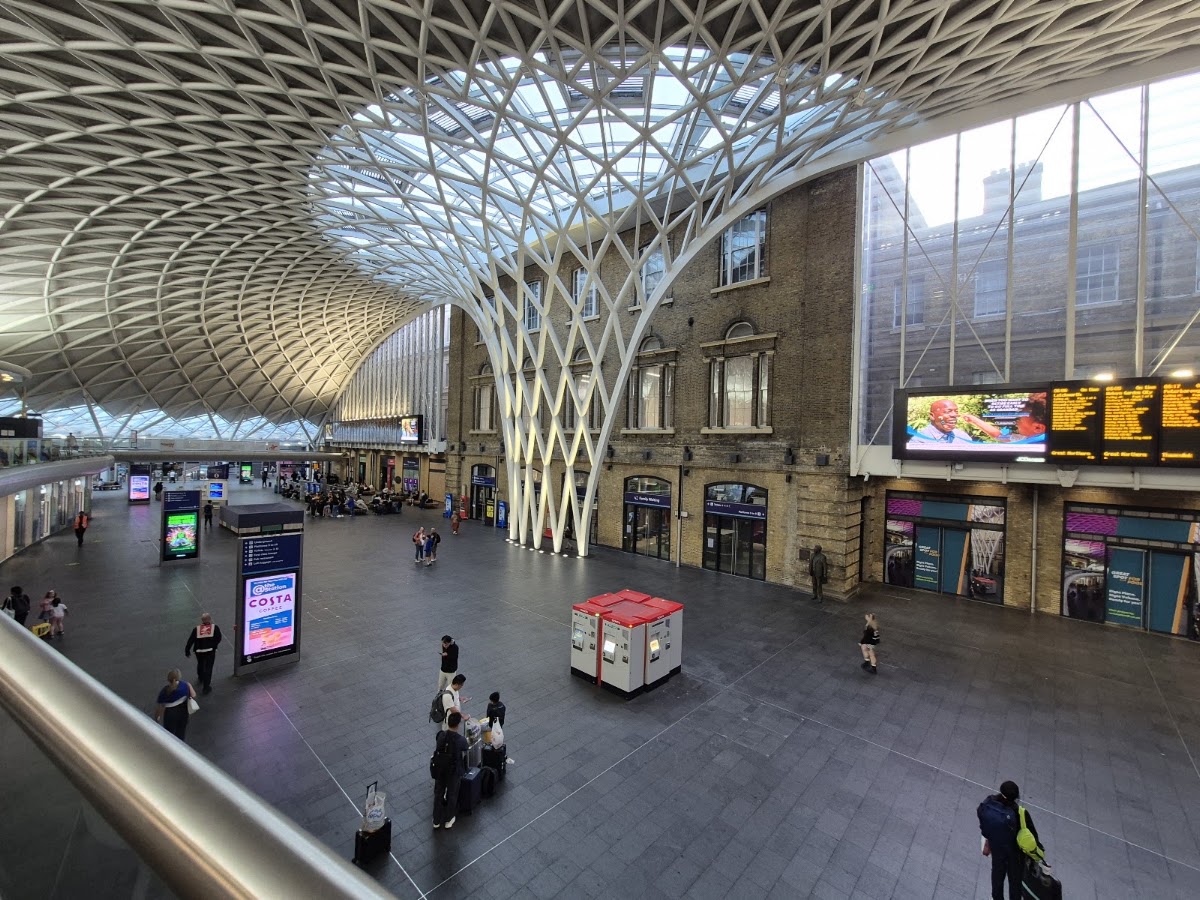
King's Cross was long known mainly for its enormous train station and a rough reputation, but a major regeneration has turned the industrial land behind it into Granary Square and Coal Drops Yard, with fountains, converted grain warehouses, and shops ranging from design brands to independent boutiques. The station itself is a landmark in its own right — its restored 1852 facade and vast curved roof sit beside St Pancras next door, whose Victorian Gothic frontage and Eurostar terminal make for one of London's most striking architectural contrasts.

Regent's Canal runs along the back of the development, offering a quieter towpath walk. The area also draws Harry Potter fans to the 'Platform 9¾' sign inside the station.

✨ Reasons to go

  • 1King's Cross station's restored facade dates from 1852, with a vast curved roof standing beside St Pancras's Victorian Gothic terminal next door.
  • 2The former industrial grain warehouses behind the station have been converted into Coal Drops Yard and Granary Square, now home to design and boutique shops.
  • 3A Platform 9¾ sign and luggage trolley inside the station draw Harry Potter fans for photos.

💡 Good to know

  • 1Walk from the station through to Granary Square and Coal Drops Yard along the canal
  • 2photograph the Platform 9¾ trolley inside King's Cross station
  • 3combine with a canal walk toward Camden.

⏱️ Typical visit

1h15

🕰️ Best time

afternoon or early evening

🚶 Walking intensity

Active — lots of walking

📍

Address

Euston Rd., London N1C 4AP, UK
Mayfair10
🚶
Free

Named after a raucous May fair banned in the 18th century for its unruliness, Mayfair is now the opposite — a discreet grid of Georgian squares, embassies, and private members' clubs that also happens to occupy the most expensive square on the UK Monopoly board. Bond Street and Savile Row anchor its reputation for luxury shopping and bespoke tailoring, while Berkeley and Grosvenor Squares provide leafy, quiet centrepieces.

Shepherd Market, a small cluster of pubs and restaurants tucked behind the grand facades, offers a more human-scaled corner. It rewards slow walking rather than a checklist of sights — much of its appeal is architectural and atmospheric.

✨ Reasons to go

  • 1Its name comes from a raucous May fair that was banned in the 18th century for unruliness.
  • 2It is the most expensive square on the UK Monopoly board.
  • 3Savile Row gave its name to bespoke tailoring and remains lined with tailors' shopfronts.

💡 Good to know

  • 1Walk Savile Row for the tailoring shopfronts and Bond Street for flagship stores
  • 2duck into Shepherd Market for a quieter pub lunch
  • 3combine with Green Park or Hyde Park Corner, both on its edges.

⏱️ Typical visit

1h15

🕰️ Best time

morning, lunchtime or afternoon

🚶 Walking intensity

Active — lots of walking

📍

Address

Mayfair, London, UK · Mayfair
Richmond11
🚶
Free

Richmond feels more like a self-contained country town than part of London, its riverside green stretching along the Thames past Georgian houses and boathouses. Richmond Park, the largest of the city's royal parks, is home to several hundred free-roaming red and fallow deer and offers a protected view of St Paul's Cathedral from King Henry's Mound, over ten miles away.

The view from Richmond Hill itself, looking down over a bend in the Thames, is one of the few views in England protected by its own Act of Parliament. It's an easy, scenic escape from central London by train or riverboat.

✨ Reasons to go

  • 1Richmond Park hosts several hundred free-roaming red and fallow deer across London's largest royal park
  • 2King Henry's Mound offers a protected sightline to St Paul's Cathedral over ten miles away
  • 3The view from Richmond Hill is safeguarded by its own Act of Parliament, one of the few in England

💡 Good to know

  • 1Walk or cycle through Richmond Park to spot the deer, keeping a respectful distance
  • 2take in the view from Richmond Hill, especially near sunset
  • 3combine with a riverside walk toward Petersham or Kew Gardens.

⏱️ Typical visit

1h15

🕰️ Best time

morning or afternoon

🚶 Walking intensity

Active — lots of walking

📍

Address

Richmond, UK · Richmond
Soho Music and Historic Pubs Walking Tour12
🚶
4.9 (962)$$ · Mid-rangeGuided Tour

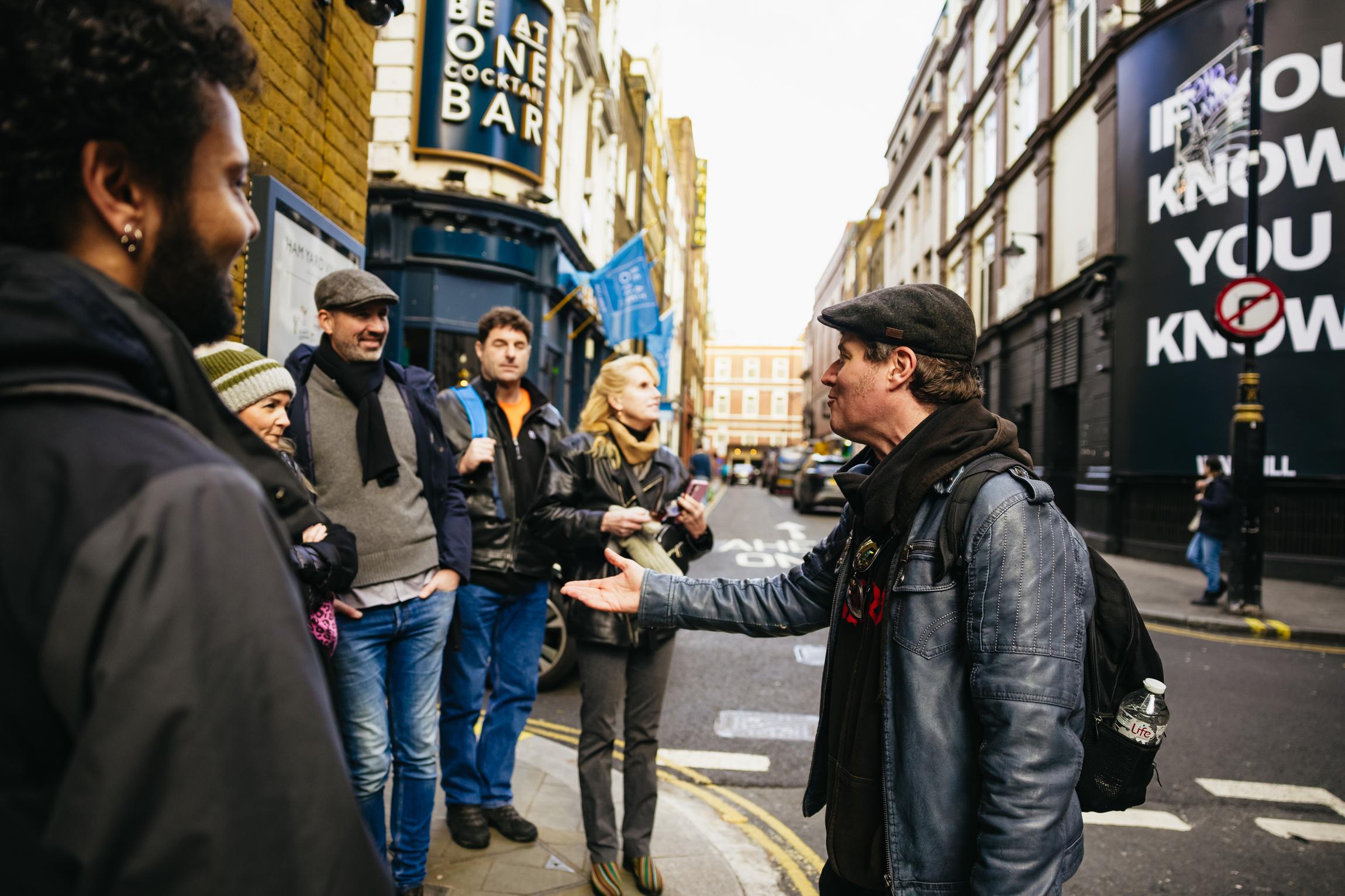
Soho has been London's entertainment engine for centuries, from its 18th-century reputation as a home for immigrants and radicals to its 20th-century role as the epicenter of British music, jazz clubs, and the punk scene, with landmarks around Denmark Street and Wardour Street marking former studios and legendary gig venues. Its narrow streets are still dense with historic pubs — some dating back centuries — that have hosted musicians, writers, and actors, alongside Chinatown's restaurants just to the west and the West End's theatres bordering to the east.

This particular walking tour threads through those streets in the evening, timed to when the pubs fill with the after-work and pre-theatre crowd, pairing pub history with London's music heritage. It's one of the most walkable, atmospheric ways to experience central London after dark without needing a car or the Tube between stops.

✨ Reasons to go

  • 1The route passes Denmark Street, long nicknamed London's Tin Pan Alley for its cluster of music shops and recording studios.
  • 2It traces Wardour Street's former gig venues that were central to Britain's jazz and punk scenes.
  • 3The tour visits historic Soho pubs, some centuries old, that once hosted musicians, writers, and actors.

💡 Good to know

  • 1Book ahead, since departures are fixed and evening slots fill up
  • 2wear comfortable shoes, as the tour covers Soho's narrow streets at a leisurely pace
  • 3combine with dinner in nearby Chinatown either before or after the tour.

⏱️ Typical visit

2h

🕰️ Best time

early evening or evening

🚶 Walking intensity

Moderate walking

📍

Address

Piccadilly Circus, London W1B, UK
🕐

Hours

Evening pub-crawl style walking tour with fixed departures, typically around 18:30 or 19:00, timed to when Soho's historic pubs fill up for the night.
Marylebone13
🚶
Free

Marylebone keeps a village atmosphere despite sitting minutes from Oxford Street's crowds, its Georgian streets laid out in an orderly grid that's easy to wander without a map. Marylebone High Street is the draw, lined with independent bookshops, delis, and boutiques rather than chains, and Daunt Books' Edwardian, galleried travel shop is one of London's loveliest bookstores.

The fictional Sherlock Holmes supposedly lived at 221B Baker Street on the neighbourhood's western edge, now a small museum, and Regent's Park borders the area to the north. It's a relatively quiet, affluent pocket best suited to unhurried browsing rather than big sights.

✨ Reasons to go

  • 1Daunt Books occupies an original Edwardian shop with a long oak-galleried interior, considered one of London's most distinctive bookstores.
  • 2Sherlock Holmes' fictional address, 221B Baker Street, sits on the neighbourhood's edge and is now a museum.
  • 3The area's Georgian streets follow an orderly grid layout, making it easy to explore without a map.

💡 Good to know

  • 1Browse Marylebone High Street and stop at Daunt Books
  • 2visit the Sherlock Holmes Museum on Baker Street if a fan
  • 3combine with a walk into Regent's Park just to the north.

⏱️ Typical visit

1h15

🕰️ Best time

morning, lunchtime or afternoon

🚶 Walking intensity

Active — lots of walking

📍

Address

Marylebone, London, UK · Marylebone
Brixton14
🚶
Free

Brixton became a centre of Black British culture in London after Windrush-generation Caribbean immigrants settled here from the late 1940s, and that history still shapes the area — Brixton Market and the covered lanes of Brixton Village and Market Row are packed with Caribbean and African grocers, fabric stalls, and some of London's best cheap eats. The O2 Academy Brixton is one of the city's premier live music venues, and Electric Avenue, name-checked in the Eddy Grant song, was one of Britain's first streets lit by electricity.

Gentrification has brought speciality coffee and craft beer alongside the older market stalls, creating a district visibly in flux. It's at its most alive in the late afternoon and evening.

✨ Reasons to go

  • 1Became a centre of Black British culture after Windrush-generation Caribbean immigrants settled here from the late 1940s
  • 2Electric Avenue, immortalized in Eddy Grant's song, was one of Britain's first streets lit by electricity
  • 3O2 Academy Brixton is one of London's premier live music venues

💡 Good to know

  • 1Explore Brixton Village and Market Row for food stalls and browsing
  • 2check what's playing at the O2 Academy Brixton
  • 3visit in late afternoon when the market and street life are busiest.

⏱️ Typical visit

1h15

🕰️ Best time

afternoon, early evening or evening

🚶 Walking intensity

Active — lots of walking

📍

Address

Brixton, London, UK · Brixton
Clerkenwell15
🚶
Free

Clerkenwell has been a centre of skilled trades for centuries — first printing and clockmaking, more recently a dense concentration of architecture and design studios. Exmouth Market's small square of independent restaurants gives it a village feel, while St John restaurant, credited with kick-starting Britain's nose-to-tail dining movement, is a genuine culinary landmark on St John Street.

Remnants of its medieval past survive in St John's Gate and the Charterhouse, a former monastery. It sits conveniently between the City and the West End, making it an easy add-on rather than a destination in its own right.

✨ Reasons to go

  • 1St John restaurant on St John Street is credited with starting Britain's nose-to-tail dining movement
  • 2St John's Gate and the Charterhouse are surviving remnants of Clerkenwell's medieval monastic past
  • 3The area has been a historic centre for printing and clockmaking trades, now home to architecture and design studios

💡 Good to know

  • 1Have a meal, or at least a look, at St John on St John Street
  • 2browse the independent restaurants around Exmouth Market
  • 3combine with a walk to the Barbican Centre nearby.

⏱️ Typical visit

1h15

🕰️ Best time

morning, lunchtime or afternoon

🚶 Walking intensity

Active — lots of walking

📍

Address

Clerkenwell, London, UK · Clerkenwell
Belgravia16
🚶
Free

Built in the early 19th century by property developer Thomas Cubitt for the aristocracy, Belgravia remains one of the wealthiest addresses in the world, its cream-coloured stucco terraces arranged around Belgrave Square and a network of smaller garden squares. Many of the grand houses are now embassies or the London bases of the very rich, which keeps the streets notably hushed compared to almost anywhere else in central London.

Eaton Square and Chester Square continue the pattern of manicured private gardens behind black iron railings. Mews streets tucked behind the main terraces, once stables, now hold some of the area's most charming cottages.

✨ Reasons to go

  • 1Belgravia was developed in the early 19th century by builder Thomas Cubitt for the aristocracy
  • 2Many of the grand stucco terraces now serve as embassies or private residences for the ultra-wealthy
  • 3Mews streets behind the main terraces were originally stables, now converted into small cottages

💡 Good to know

  • 1Walk Belgrave Square and Eaton Square for the full stucco-terrace effect
  • 2peek into the mews streets behind the main roads for a different scale
  • 3visit in daytime, as the area is very quiet after dark.

⏱️ Typical visit

1h15

🕰️ Best time

morning, lunchtime or afternoon

🚶 Walking intensity

Active — lots of walking

📍

Address

Belgravia, London, UK · Belgravia
Seven Dials17
🛍️
Free

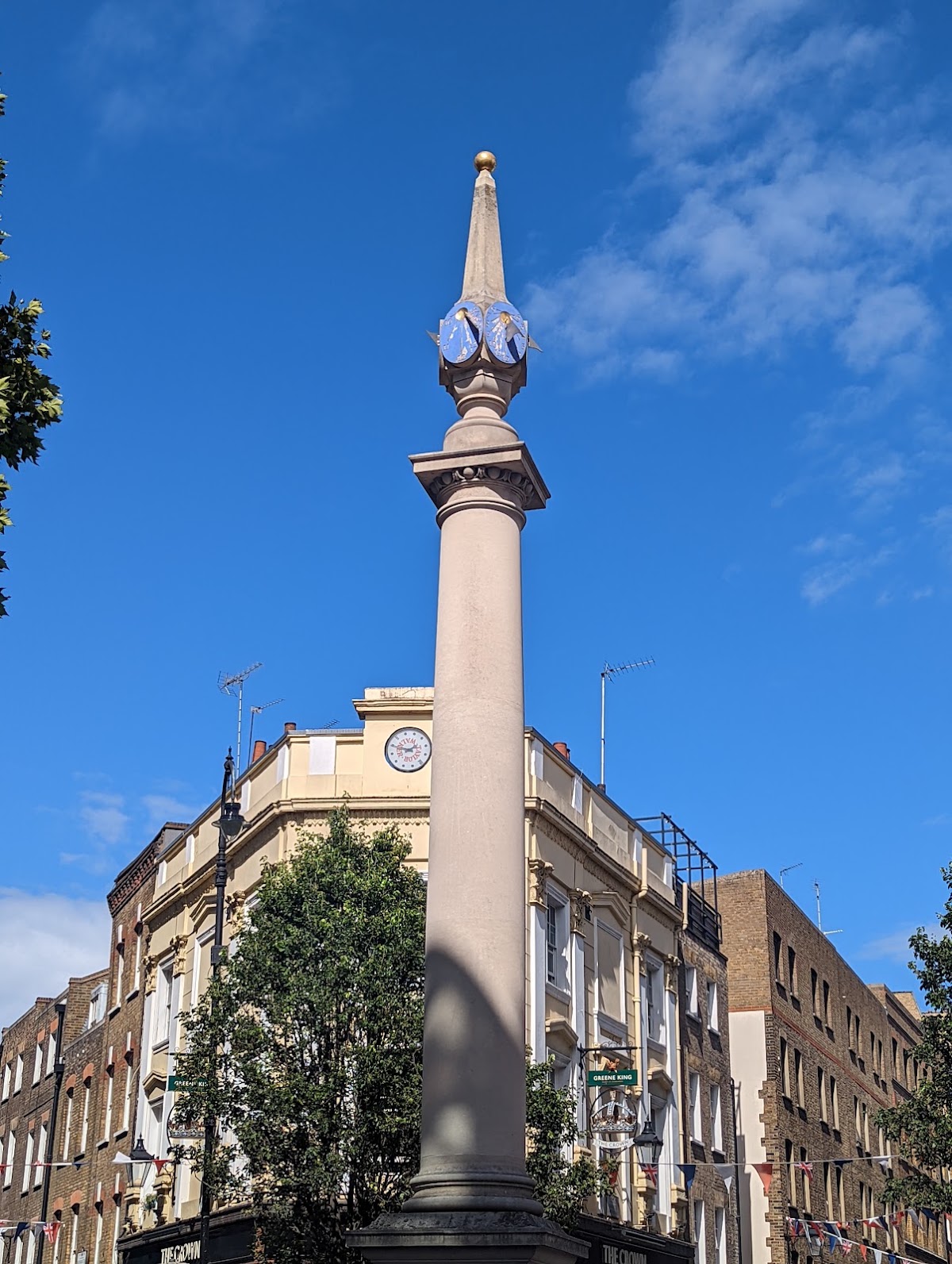
Where seven narrow streets converge around a distinctive sundial column, Seven Dials packs a dense cluster of independent fashion boutiques, restaurants, and cafés into a small, walkable footprint just steps from Covent Garden. Its moderate scores across the board suggest a pleasant, well-liked pocket of the West End rather than a headline attraction, appealing to those who enjoy discovering smaller shops over big-name flagship stores.

The compact layout makes it easy to cover on foot even with limited time, and it connects naturally into a longer walk through Covent Garden and Soho. It suits travelers looking to break up bigger sightseeing with a quieter shopping interlude.

✨ Reasons to go

  • 1The junction is marked by a sundial pillar where seven streets converge, giving the area its name.
  • 2The layout is compact enough to explore fully on foot in a short amount of time.

💡 Good to know

  • 1Combine the visit with Covent Garden, since the two areas connect directly on foot
  • 2look out for the sundial pillar at the junction's center, the area's namesake landmark
  • 3visit on a weekday for a calmer, less crowded stroll.

⏱️ Typical visit

1h15

🕰️ Best time

morning, lunchtime or afternoon

🚶 Walking intensity

Active — lots of walking

📍

Address

Seven Dials, London, UK
Peckham18
🚶
Free

Peckham's high street holds one of London's largest African and Caribbean markets, with fabric shops, fishmongers, and hair salons that reflect one of the city's most diverse communities. Over the past decade an arts scene has grown up alongside it — the multi-storey Bold Tendencies sculpture project and Frank's Cafe rooftop bar occupy a former car park with skyline views, and Peckham Rye park offers green space nearby.

The mix of long-standing market stalls and newer bars and studios makes it one of London's more genuinely mixed neighbourhoods rather than a uniformly gentrified one. It's still finding its balance between the two.

✨ Reasons to go

  • 1Bold Tendencies sculpture project and Frank's Cafe rooftop bar occupy a former multi-storey car park with skyline views
  • 2Rye Lane and Peckham High Street host one of London's largest African and Caribbean markets

💡 Good to know

  • 1Visit Frank's Cafe or Bold Tendencies in summer for rooftop views (seasonal, check opening)
  • 2walk the market stalls on Rye Lane and Peckham High Street
  • 3combine with a stroll in Peckham Rye park.

⏱️ Typical visit

1h15

🕰️ Best time

afternoon, early evening or evening

🚶 Walking intensity

Active — lots of walking

📍

Address

Peckham, London, UK · Peckham
Dalston19
🚶
Free

Dalston built its reputation on nightlife — Kingsland Road and the streets around it hold a dense cluster of small clubs, live-music pubs, and DJ bars that have made it one of East London's main after-dark destinations. Ridley Road Market, running since the Victorian era, keeps a different character by day, its stalls stocked with Caribbean, African, and Turkish groceries reflecting the area's long-settled communities.

Dalston's Turkish and Kurdish population also means some of London's best and cheapest grills and mezze are found on its side streets. It's rougher around the edges than neighbouring Shoreditch, which is part of why it still feels less polished.

✨ Reasons to go

  • 1Ridley Road Market has traded since the Victorian era, stocking Caribbean, African, and Turkish groceries.
  • 2Kingsland Road forms one of East London's densest clusters of small clubs and DJ bars.
  • 3A long-settled Turkish and Kurdish community supplies some of London's cheapest grill and mezze restaurants.

💡 Good to know

  • 1Come in the evening for the bar and club scene along Kingsland Road
  • 2visit Ridley Road Market during the day for a completely different, more local atmosphere
  • 3look for Turkish grill restaurants on the side streets for a cheap dinner.

⏱️ Typical visit

1h15

🕰️ Best time

early evening or evening

🚶 Walking intensity

Active — lots of walking

📍

Address

Dalston, London, UK · Dalston
Hackney Wick20
🚶
Free

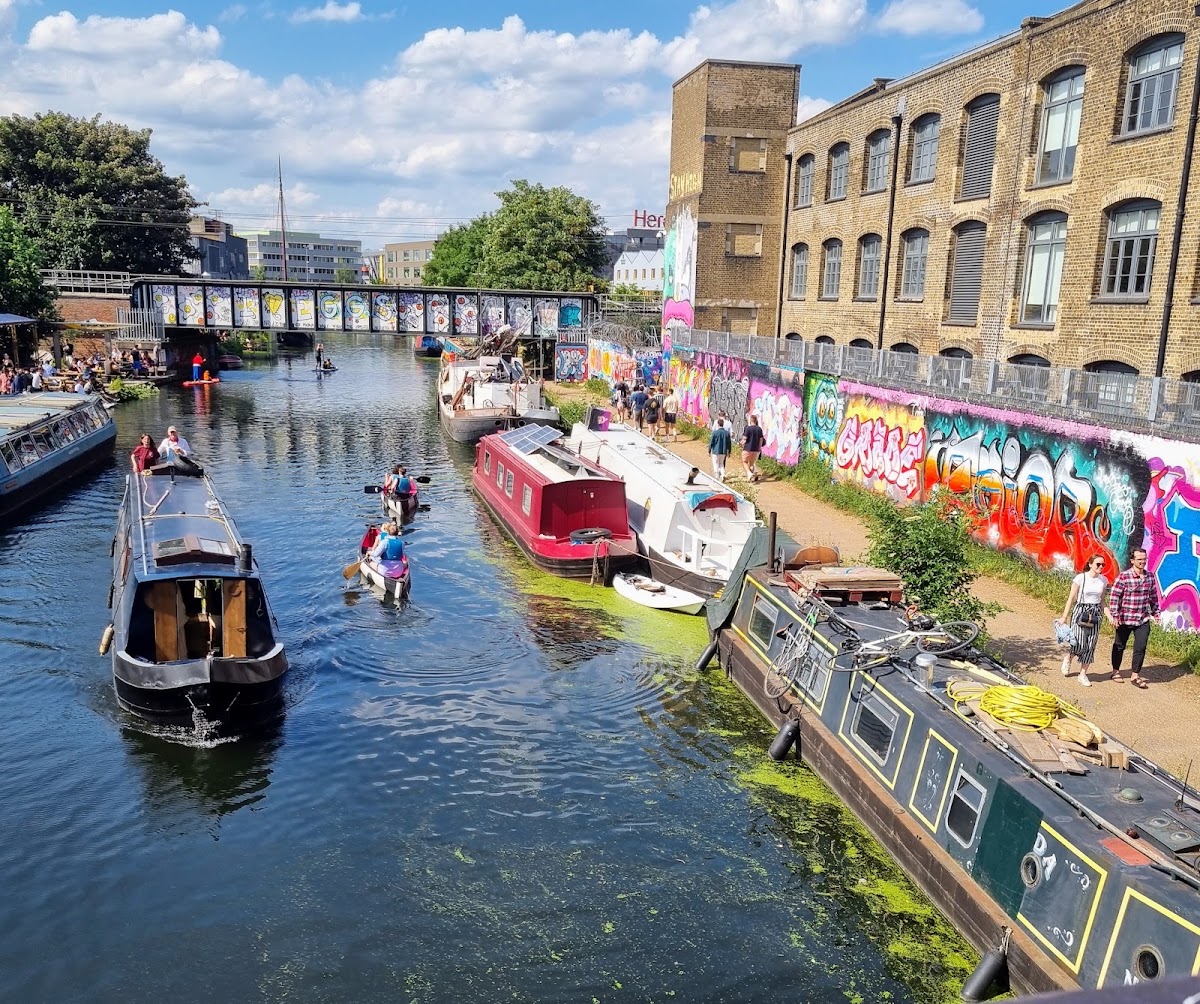
Hackney Wick's cheap warehouse space made it one of East London's biggest concentrations of artist studios before the 2012 Olympics, and though redevelopment has chipped away at that scene, murals and graffiti still cover much of the area along the canal. It sits directly against Queen Elizabeth Olympic Park, so a walk here can combine former Olympic venues with the grittier, more improvised feel of the Wick itself.

Independent breweries and taprooms have moved into old factory units, taking advantage of the same low-cost spaces that once housed artists. It remains one of London's rawer, less finished neighbourhoods, which is largely the point.

✨ Reasons to go

  • 1Cheap warehouse space made it one of East London's largest artist-studio districts before the 2012 Olympics
  • 2Old factory units now house independent breweries and taprooms alongside the remaining studios
  • 3It borders Queen Elizabeth Olympic Park, so former Olympic venues sit next to canal-side street art

💡 Good to know

  • 1Walk the canal towpath from the Wick into the Olympic Park
  • 2look out for street art on Wallis Road and around the old factory units
  • 3visit a canalside taproom or brewery on a weekend afternoon.

⏱️ Typical visit

1h15

🕰️ Best time

afternoon or early evening

🚶 Walking intensity

Active — lots of walking

📍

Address

Hackney Wick, London, UK · Hackney Wick