4.6 ·
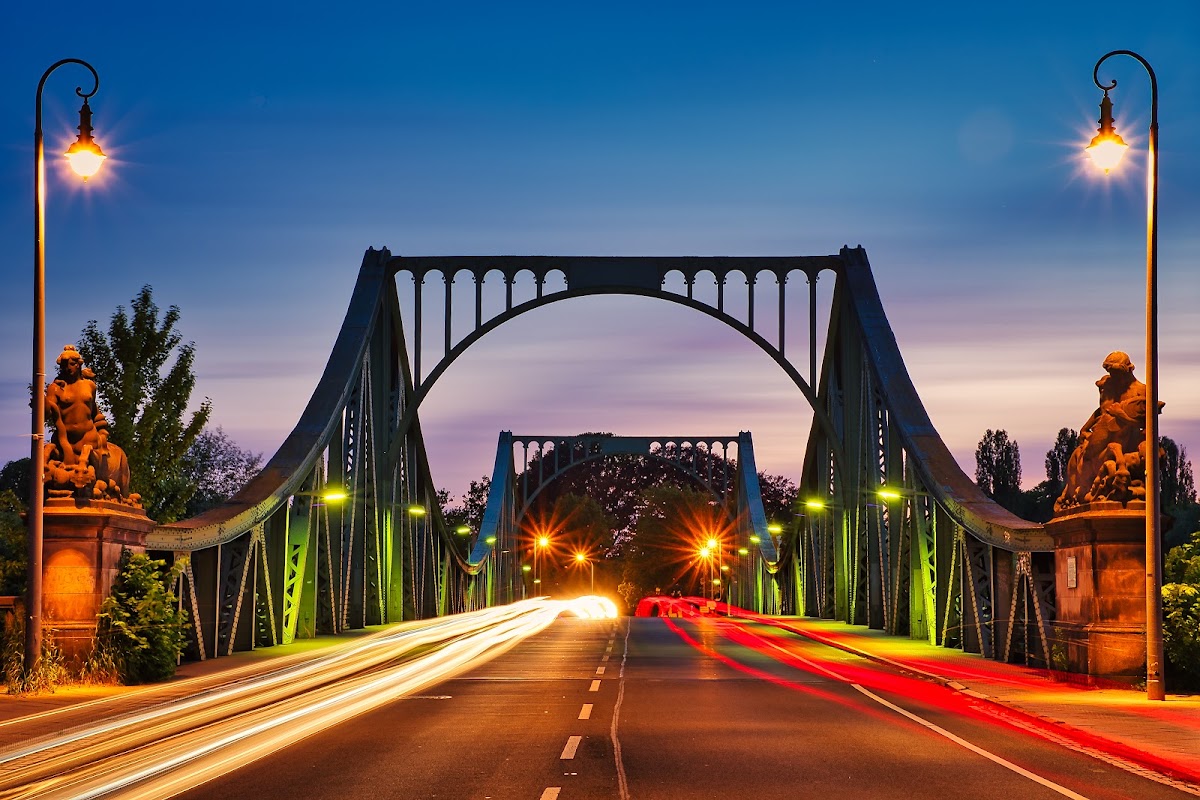
Walk across the legendary "Bridge of Spies" linking Wannsee to Potsdam. Stand where Cold War prisoner exchanges once played out, then continue on foot or bike into the green, waterside scenery along the Havel.
Reasons to go
Full description
Glienicke Bridge connects Berlin's Wannsee district to Potsdam across the Havel River, and its elegant steel-arch design belies its fame as the site of several dramatic Cold War prisoner exchanges, including the 1962 swap of Soviet spy Rudolf Abel for downed American U-2 pilot Francis Gary Powers — the episode later dramatized in the film 'Bridge of Spies.' During the division of Germany it also marked the border between East and West, accessible only to diplomats and Allied personnel. Today it's simply a scenic bridge connecting two green, waterside districts, popular with cyclists and walkers exploring the Wannsee area, and its combination of striking architecture and Cold War intrigue earns it a 4.6 rating.
It's a quick stop best combined with the wider Wannsee/Potsdam day out.
Glienicke Bridge connects Berlin's Wannsee district to Potsdam across the Havel River, and its elegant steel-arch design belies its fame as the site of several dramatic Cold War prisoner exchanges, including the 1962 swap of Soviet spy Rudolf Abel for downed American U-2 pilot Francis Gary Powers — the episode later dramatized in the film 'Bridge of Spies.' During the division of Germany it also marked the border between East and West, accessible only to diplomats and Allied personnel. Today it's simply a scenic bridge connecting two green, waterside districts, popular with cyclists and walkers exploring the Wannsee area, and its combination of striking architecture and Cold War intrigue earns it a 4.6 rating.
It's a quick stop best combined with the wider Wannsee/Potsdam day out.
Address
Hours
Booking
Duration
20 min
Intensity
Easy pace
Good to know
Reviews
This historic waypoint was infamous for its prisoner exchange between the amerivans and the soviets during the cold war. If you want to experience the actualities around the prisoner exchanges, go and watch the movie "Bridge of Spies"
Sebastiaan Kramer
3/5Build your itinerary
City
Dates
Choose your Explorer profile