Landmark
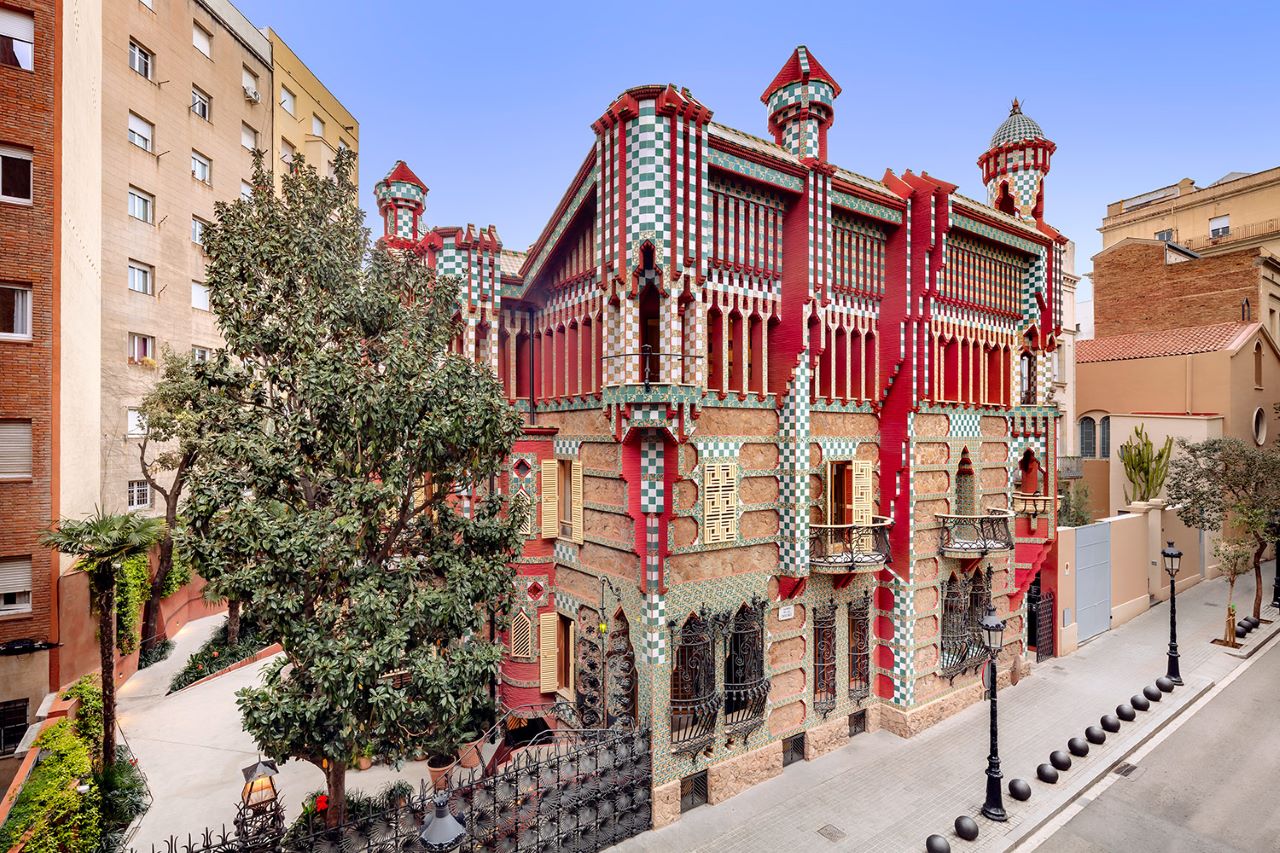
Completed in 1888 for a tile manufacturer, Casa Vicens let a young Gaudí experiment freely with Moorish-influenced patterns, checkerboard ceramics, and wrought iron palm fronds, ideas he would later push further at Park Güell and the Sagrada Família. It sits away from the Passeig de Gràcia crowds in the residential Gràcia district, which reviewers note gives it a more intimate, less rushed feel than his later, more famous buildings. UNESCO-listed since 2005 alongside Gaudí's other works, it opened to the public only in 2017 after decades as a private home, so the interiors remain unusually well preserved. It's a good pick for architecture fans who want to trace Gaudí's development rather than just see his greatest hits.
✨ Reasons to go
💡 Good to know
⏱️ Typical visit
1h
🕰️ Best time
morning, lunchtime, afternoon, early evening or evening
🚶 Walking intensity
Moderate walking
Booking
What people say
"Gaudi’s architecture is phenomenal. As a big fan of architecture myself, I visited each in every architecture of what Gaudi has designed. This one is beautiful on its own. We did not buy the museum ticket, as the architecture itself is quite charming. Compared to other buildings, this was quite less crowded so we could take good images out of it."
— Aman Jain