Landmark
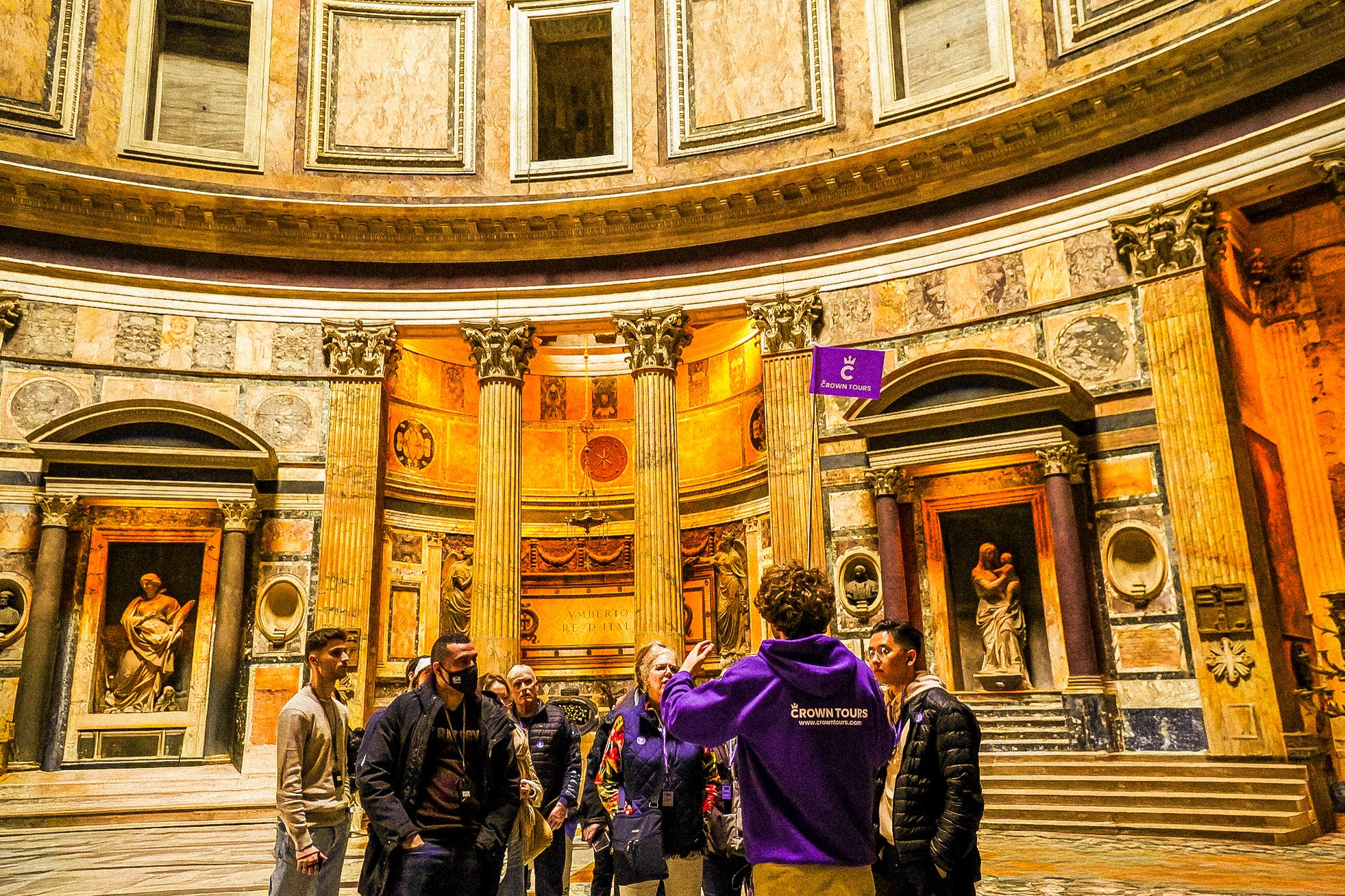
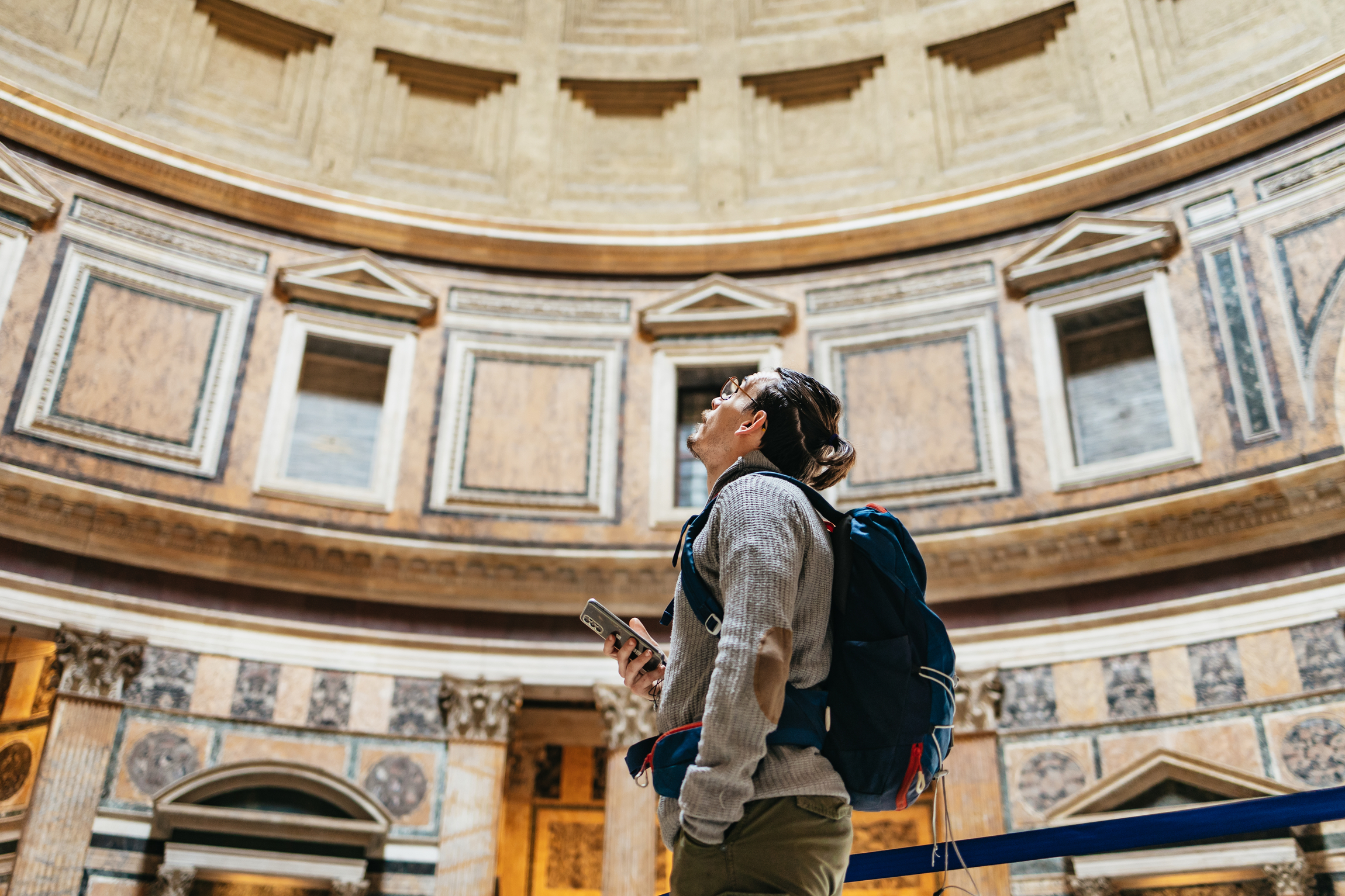
Originally commissioned by Marcus Agrippa under Augustus and rebuilt in its current form by Hadrian around AD 126, the Pantheon has survived nearly two millennia largely intact thanks to its continuous use, first as a Roman temple to all the gods and later, from the 7th century, as a Christian church. Its dome remains the largest unreinforced concrete dome ever built, with a central oculus open to the sky that floods the interior with light and occasional rain, and reviewers with a 4.8 rating from over 285,000 reviews consistently call the sheer scale of the columned portico and dome unforgettable in person. Free to enter but increasingly requiring booked timed slots, it's a quick but essential stop that rewards visiting more than once at different times of day for how the light changes inside.
✨ Reasons to go
💡 Good to know
⏱️ Typical visit
30 min
🕰️ Best time
morning, lunchtime, afternoon, early evening, evening or late night
🚶 Walking intensity
Easy pace
What people say
"The Pantheon in Rome is one of the best-preserved monuments of the ancient world. Originally commissioned by Marcus Agrippa during the reign of Augustus and later rebuilt by Emperor Hadrian around 126 AD, it is a masterpiece of Roman engineering. Key Highlights: The Dome: It still holds the record for the world’s largest unreinforced concrete dome. Its structural integrity has remained intact for nearly 2,000 years. The Oculus: At the very center of the dome is a 9-meter (30-foot) wide circular opening, known as the "oculus." It is the building's only source of natural light, and when it rains, water falls through onto a slightly convex floor equipped with a sophisticated drainage system. Architecture: The building features a massive portico with granite columns imported from Egypt, leading into a breathtaking rotunda. Historical Significance: In the 7th century, it was converted into a Christian church (the Basilica of St. Mary and the Martyrs), which is largely why it survived the widespread destruction and looting that leveled many other ancient Roman structures. Famous Burials: It serves as the final resting place for several notable figures, most famously the Renaissance artist Raphael and two Italian kings (Vittorio Emanuele II and Umberto I). Visitor Information: Access: It is located in the Piazza della Rotonda. Tickets: Entry now requires an admission fee. It is highly recommended to book your tickets in advance through the official website to skip the significant lines. Etiquette: As it is an active place of worship, visitors are expected to dress modestly (covering shoulders and knees) and maintain a quiet demeanor."
— Nick N